

Giant Swallowtail Caterpillar: The Orange Dog Guide
If you’ve ever walked past a citrus tree and spotted what looked like a fresh bird dropping perched on a leaf, look again. What you’re probably seeing is a giant swallowtail caterpillar doing exactly what it evolved to do: blend in so well that predators don’t give it a second glance. It’s one of the more clever tricks in the butterfly world.
These caterpillars go by a few names depending on where you are. In Florida and other citrus-growing states, growers call them “orange dogs” because they show up on orange, lemon, and grapefruit trees and chew through the leaves. To a backyard butterfly gardener, though, they’re a prize sighting.
What Does a Giant Swallowtail Caterpillar Look Like?
The coloring is really the whole story here. Giant swallowtail caterpillars are mottled brown and creamy white, sometimes with hints of olive or rust depending on the individual and how old they are. The pattern closely mimics a bird dropping, complete with irregular blotches and a lighter central area that makes the illusion more convincing up close.
Young caterpillars (early instars) are small enough that the disguise is almost absurdly effective. As they grow through five instars, the body gets bulkier but the basic color pattern stays consistent. By the final instar, they can reach about 2 inches long and look like a lumpy, somewhat unappetizing bit of bird waste.
One feature that sets them apart from ordinary caterpillars is the osmeterium. When threatened, the caterpillar extends a bright orange, forked gland from behind its head that smells strongly of citrus and other compounds. It’s not toxic, but the smell and sudden appearance of the orange “horns” can startle predators long enough for the caterpillar to escape.
Why Are They Called Orange Dogs?
The orange dog nickname comes straight from the agricultural world. Florida citrus growers have dealt with these caterpillars for generations, watching them strip the foliage from young trees. The name stuck because orange trees were (and still are) a major crop in the state, and the caterpillars were seen as pests that “plagued” the groves like dogs.
On established, mature citrus trees, a few orange dogs won’t cause any real damage. The tree has plenty of leaves to spare, and the caterpillars only eat so much. Where they become a problem is on young, newly planted trees with limited foliage. A handful of hungry caterpillars can strip a small tree pretty thoroughly.
Commercial growers sometimes use pesticides to manage them, but home gardeners usually have better options. Handpicking works well on small trees, and if you can tolerate some leaf loss, you might just enjoy watching the caterpillars grow and eventually leave to pupate. You get a giant swallowtail butterfly in the end, which is a fair trade for most people.
Host Plants: What Do They Eat?
Giant swallowtail caterpillars eat plants in the rue family (Rutaceae), which includes most citrus species. Orange, lemon, lime, grapefruit, and tangerine all work. Beyond commercial citrus, they also feed on wild lime (Zanthoxylum fagara), Hercules club (Zanthoxylum clava-herculis), and prickly ash.
In Florida specifically, wild lime is an important native host plant that supports giant swallowtail populations outside of citrus groves. If you’re gardening for butterflies rather than fruit, planting wild lime or Hercules club gives the caterpillars a home without risking your harvest. Both plants are native to the Southeast and fairly low maintenance.
For more on choosing the right plants to support caterpillars, check out our caterpillar host plants guide. It covers a wide range of species and helps you match plants to the butterflies you want to attract.
The Life Cycle from Egg to Butterfly
The female giant swallowtail lays single, round eggs directly on the leaves or stems of host plants. The eggs are orange or brownish and about 1mm across. She’s selective about placement, choosing fresh growth when she can because young leaves are easier for the newly hatched caterpillar to eat.
After hatching, the caterpillar feeds continuously, pausing only to molt between instars. The whole caterpillar stage lasts roughly 3 to 4 weeks under warm conditions. When the caterpillar is ready to pupate, it wanders away from the host plant and attaches itself to a branch or stem with a silk girdle and cremaster.
The chrysalis is brown or grayish and has an interesting twig-like shape with a humped thorax. It blends in on bark or woody stems almost as well as the caterpillar mimics bird droppings. Depending on the season, the adult butterfly emerges in 2 to 4 weeks, or the chrysalis overwinters and hatches in spring.
Giant Swallowtail Caterpillar vs. Other Swallowtail Caterpillars
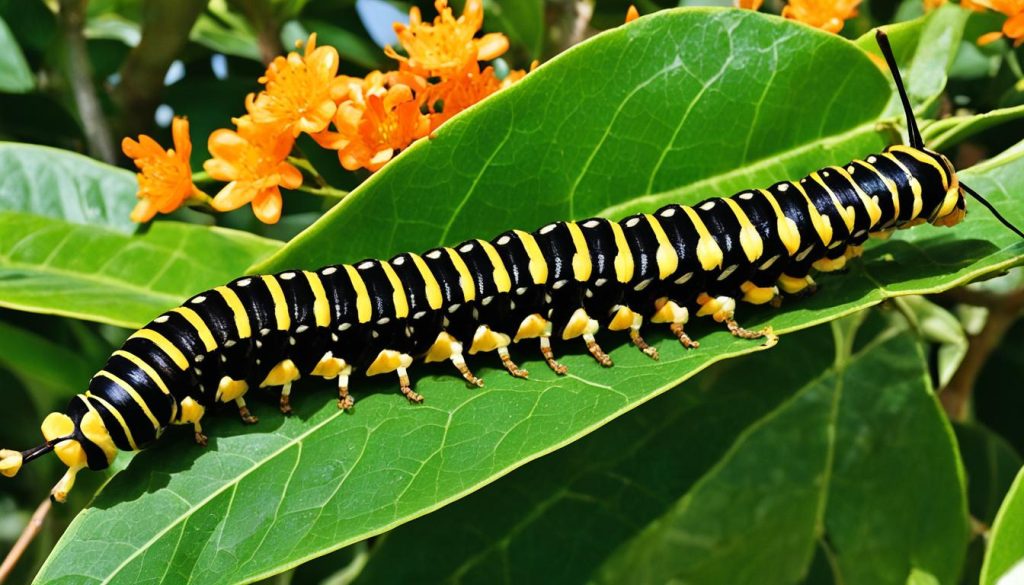
Several swallowtail caterpillars use camouflage, but the bird-dropping mimicry of the giant swallowtail is among the most convincing. Spicebush swallowtail caterpillars take a different approach, developing large false eyespots to look like a small snake. Black swallowtail caterpillars are bright green with yellow-dotted black bands, going for warning coloration instead of hiding.
The giant swallowtail is the largest butterfly species in North America, which means its caterpillar is also among the biggest. That size makes it easier to spot once you know what to look for, though the camouflage still fools most casual observers. For a broader look at the family, our swallowtail butterfly identification guide covers all the major North American species.
Raising Giant Swallowtail Caterpillars at Home
If you want to raise them, start with a clean container with ventilation. A mesh cage or a container with a screened top works well. Put fresh cuttings of your host plant in a small water-filled container (cover the water opening so the caterpillar can’t fall in and drown), and replace the cuttings every couple of days to keep them fresh.
Remove frass (caterpillar droppings) daily to keep things clean and reduce the risk of disease. Giant swallowtail caterpillars are fairly hardy and don’t require special temperature or humidity conditions beyond keeping them out of extreme heat. Once you see the caterpillar stop eating and start moving restlessly, it’s about to pupate, so give it some twigs to attach to.
After the butterfly emerges, release it outdoors on a warm, dry day. Hold off on releasing in the early morning when it’s cool and damp, since the butterfly needs warmth to fly properly. Most people find the whole process takes about a month from egg to adult.
Are Orange Dogs Actually Pests?
The pest question depends a lot on context. On young citrus trees in a backyard setting, a few caterpillars can set back growth noticeably. If you’ve just planted a small tree and you find several orange dogs on it, handpicking them off and moving them to a larger host plant nearby is a reasonable option.
On a mature tree, though, the damage is usually cosmetic. Citrus trees are vigorous growers and can replace lost foliage quickly. Many butterfly gardeners deliberately plant extra host plants to support caterpillars without worrying about the harvest, and some even keep citrus specifically to attract giant swallowtails.
The broader point is that what counts as a pest depends on your priorities. If you’re running a commercial grove, that’s a different calculation than if you’re growing two orange trees in a suburban backyard and happen to love butterflies.
Key Takeaways
- Giant swallowtail caterpillars are brown and white, mimicking bird droppings to avoid predators throughout all five instars.
- They feed on plants in the rue family, especially citrus, wild lime, Hercules club, and prickly ash.
- When threatened, they extend a bright orange osmeterium that smells strongly of citrus compounds.
- On mature trees, caterpillar damage is usually minor; on young trees, handpicking is the most practical solution.
Frequently Asked Questions
How can I tell a giant swallowtail caterpillar apart from a real bird dropping?
Look for a slightly raised, cylindrical body and watch for movement. Real droppings don’t have a visible head or legs. If you nudge it gently and it extends orange “horns” from behind the head, it’s definitely a caterpillar.
Will giant swallowtail caterpillars kill my citrus tree?
On a mature, established citrus tree, probably not. The tree can handle moderate defoliation. Young trees with limited foliage are more vulnerable, but even then, the caterpillars rarely cause permanent damage if you monitor them.
What do I do if I find a caterpillar in my yard?
You can leave it alone if the plant is established and healthy, or move it to a different host plant if you’re concerned about your tree. If you want to watch it develop, raising it indoors in a ventilated container is a satisfying project.
How long does the caterpillar stage last?
Roughly 3 to 4 weeks in warm weather. The caterpillar passes through five instars before pupating, and each molt takes a day or two. The pace slows in cooler temperatures.
What plants can I add to my garden to attract giant swallowtails without risking citrus damage?
Wild lime (Zanthoxylum fagara) and Hercules club (Zanthoxylum clava-herculis) are both native options that work well as host plants. They’re hardy, attractive in their own right, and give caterpillars a dedicated food source away from your fruit trees.