


Free Butterfly Coloring Sheet: Educational Fun for Kids
Learning about butterflies becomes an adventure when you combine education with creativity. A butterfly coloring sheet transforms ordinary coloring time into an opportunity for discovery, making science accessible and fun for young learners. Explore our collection of artistic butterfly coloring pages for more creative options.
🦋 Free Educational Coloring Sheets!
Download our 4-page butterfly coloring book perfect for teaching and learning.
Download Educational PDF (4 Pages)Key Takeaways
- Butterfly coloring sheets combine creativity with science education for engaging learning
- Printable worksheets help children learn butterfly anatomy while developing fine motor skills
- Educational coloring activities support STEM learning through hands-on exploration
- Free butterfly coloring sheet includes labeled parts and fascinating facts
- Perfect resource for teachers, homeschoolers, and parents seeking educational activities
What Makes Educational Butterfly Coloring Sheets Special?
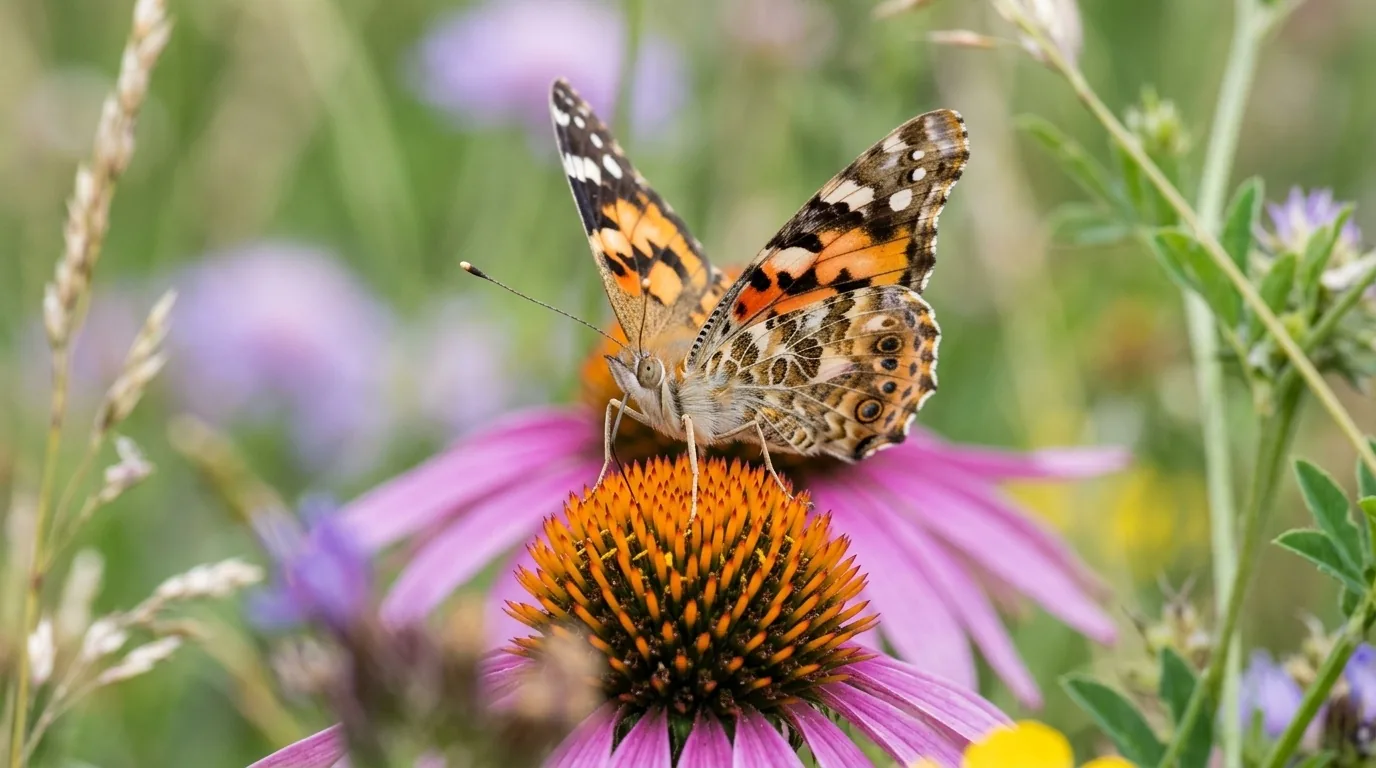
Educational butterfly coloring sheets go beyond simple outlines. These specially designed worksheets incorporate learning elements that teach children about butterfly anatomy, life cycles, and species identification while they color. Each sheet becomes a mini science lesson wrapped in an artistic activity.
The combination of visual learning and hands-on activity helps information stick. When kids color a butterfly’s thorax, they’re more likely to remember what it is and where it’s located. This multi-sensory approach to learning engages different parts of the brain simultaneously, creating stronger neural connections and better retention. Research from the National Association for the Education of Young Children confirms that combining art with science enhances learning outcomes.
Butterfly Anatomy Learning Through Coloring
Understanding Body Parts
A well-designed butterfly coloring sheet includes clearly labeled sections that teach proper terminology. Children learn to identify:
The head contains compound eyes and antennae, which butterflies use for navigation and finding food. The thorax, the middle section, houses all six legs and four wings. The abdomen, often overlooked in simple drawings, contains vital organs for digestion and reproduction.
When children color each section differently, they create a visual map of butterfly anatomy. This hands-on approach makes abstract concepts concrete and memorable. Teachers report that students who use anatomical coloring sheets score higher on identification tests compared to those who only study diagrams.
Wing Pattern Recognition
Butterfly wings offer endless opportunities for pattern exploration. Educational coloring sheets can highlight symmetry, teaching mathematical concepts alongside biology. Children observe how patterns on the left wing mirror those on the right, introducing concepts of reflection and balance.
Different butterfly species have distinct wing patterns that serve various purposes. Some patterns camouflage, others warn predators, and some attract mates. By coloring realistic patterns, children learn to recognize common butterfly species in their area. The Butterflies and Moths of North America database provides excellent species identification resources.
Benefits of Using Butterfly Coloring Sheets in Education
Cognitive Development
Coloring within lines develops hand-eye coordination and fine motor control. These skills transfer directly to writing readiness and other academic tasks. The focus required for detailed coloring also builds attention span and concentration abilities.
Decision-making skills grow as children choose colors and plan their approach. Should the monarch butterfly be orange and black, or would purple look interesting? These choices, while seemingly simple, exercise critical thinking and creative problem-solving abilities.
Scientific Observation Skills
Educational butterfly coloring sheets encourage careful observation of details. Children notice that butterfly wings have tiny scales, antennae have club-shaped ends, and legs have joints. This attention to detail forms the foundation for scientific thinking and methodology.
Comparing colored sheets with photographs of real butterflies reinforces observation skills. Children learn to spot differences and similarities, developing analytical thinking that extends beyond butterfly study into all areas of learning.
How to Use Butterfly Coloring Sheets Effectively
Classroom Integration
Start lessons by distributing butterfly coloring sheets before introducing new vocabulary. Let students explore the image, making predictions about different parts. This activation of prior knowledge prepares minds for new information.
Create butterfly lifecycle stations where each coloring sheet represents a different stage. Students rotate through egg, caterpillar, chrysalis, and adult butterfly sheets, coloring and learning about each phase. This kinesthetic approach suits different learning styles and keeps engagement high.
Home Learning Activities
Transform coloring time into quality educational moments without feeling like formal schoolwork. Ask open-ended questions while children color: “Why do you think butterflies have antennae?” or “What might happen if a butterfly’s wings got wet?”
Create a butterfly journal where children paste their completed coloring sheets alongside observations from nature walks. When they spot a real butterfly, they can compare it to their colored versions, noting similarities and differences.
Age-Appropriate Butterfly Coloring Activities

Perfect for ages 3-5 with simple, bold designs.
- Large coloring areas
- Basic shapes practice
- Primary color focus
- Counting activities
Challenging designs for ages 6-10 with educational elements.
- Detailed patterns
- Species identification
- Scientific accuracy
- Habitat exploration
Adapted materials for diverse learning needs.
- Thicker outlines
- Sensory elements
- Adaptive tools friendly
- Multi-sensory approach
Preschool and Kindergarten
Young learners benefit from simpler butterfly coloring sheets with bold outlines and larger sections. Focus on primary colors and basic shapes. Incorporate counting by adding spots or stripes to wings. These additions make math tangible and fun.
Story integration works wonderfully with this age group. Read butterfly books, then color sheets featuring story characters. This connection between literature and art reinforces comprehension and extends learning beyond single subjects.
Elementary School Students
Older children can handle more complex butterfly coloring sheets with intricate patterns and smaller details. Introduce scientific accuracy by researching real butterfly species before coloring. This research component develops information literacy alongside artistic skills.
Challenge students to create habitat backgrounds for their butterflies. Where would this species live? What plants would surround it? These extensions transform simple coloring sheets into comprehensive ecosystem studies.
Incorporating Butterfly Facts and Learning
Fun Facts to Share While Coloring
Butterflies taste with their feet, a fact that never fails to amaze children. Share this while they color butterfly legs, making the connection between fact and illustration. Butterflies can see ultraviolet colors invisible to humans, opening discussions about different ways of perceiving the world.
Some butterflies migrate thousands of miles, traveling farther than many birds. The monarch’s journey from Canada to Mexico captures imagination and provides geography connections. These facts transform coloring time into mini science lessons.
Frequently Asked Questions
Ready to Start Your Butterfly Learning Adventure?
Download your free educational butterfly coloring sheet and watch young minds soar!
Download Free Coloring Book (PDF)