


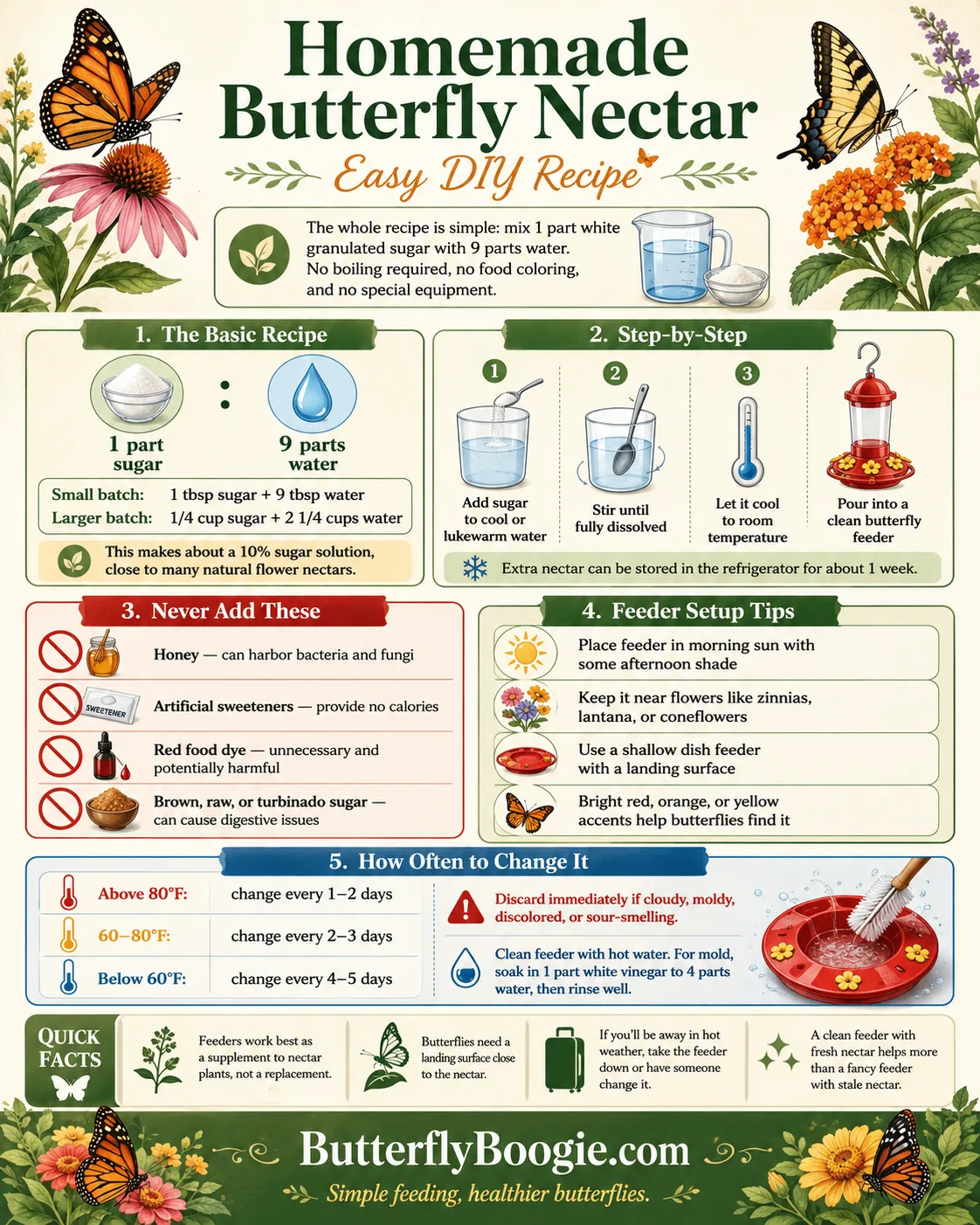
Making homemade butterfly nectar is one of the easiest things you can do to support butterflies in your yard. The whole recipe fits in one sentence: mix one part white granulated sugar with nine parts water.
That is it. No boiling required, no food coloring, no special equipment.
A batch takes about two minutes and costs almost nothing, yet it can turn a basic feeder into a regular stop for swallowtails, fritillaries, and painted ladies all season long.
If you have been wondering whether to try a butterfly feeder or you already have one sitting empty, this guide walks through everything you need to know. We will cover the exact ratio, why some common additions cause harm, and the two other feeding stations you can pair with the nectar feeder to bring in more species.
Key Takeaways
- The correct ratio for homemade butterfly nectar is 1 part white granulated sugar to 9 parts water, which closely mirrors the sugar concentration found in many wildflowers.
- Never add honey, artificial sweeteners, or red food dye to butterfly nectar. All three can harm or kill the butterflies you are trying to help.
- Change nectar every two to three days in warm weather. Fermentation and mold set in quickly and are dangerous for butterflies.
- Feeders work best as a supplement alongside live nectar plants, a mineral puddling station, and overripe fruit, not as a stand-alone replacement for a garden.
The Basic Recipe
The ratio that consistently gets recommended by butterfly gardens and wildlife rehabilitators is 1 part sugar to 9 parts water. So if you are making a small batch, that is 1 tablespoon of sugar dissolved in 9 tablespoons of water, or about half a cup of water.
For a larger batch that fills most standard feeders, 1/4 cup of sugar dissolved in 2 and 1/4 cups of water works well.
This 1:9 ratio might surprise people who are familiar with hummingbird nectar, which uses a much sweeter 1:4 ratio. Butterfly nectar is intentionally more dilute.
Most flowers that butterflies prefer in the wild have nectar sugar concentrations somewhere between 10 and 25 percent. The 1:9 solution lands right in that range at roughly 10 percent, which means butterflies can drink it comfortably without it being too thick or too sweet for their physiology.
Some recipes suggest a 1:4 ratio instead. The 1:4 mix is not harmful, but it is richer than most natural nectar sources butterflies evolved to drink from.
The 1:9 ratio is a closer match to what they find in the wild, which is why most butterfly conservation organizations recommend it. If you want to go deeper on how butterflies process different food sources, the butterflies’ diet guide covers exactly what they eat and drink throughout their life cycle.
Butterfly Nectar vs Hummingbird Food at a Glance
Step-by-Step Instructions
You do not need to do anything fancy here, but a few small steps make the nectar last longer and stay cleaner in the feeder.
Start with cool or lukewarm water. Measure your sugar and add it to the water, then stir until it is fully dissolved.
This usually takes 30 to 60 seconds. You do not need to heat the water unless you are making a large batch where the sugar is slow to dissolve, but even then, just warming the water slightly is enough.
Bringing it to a full boil is not necessary for the nectar to work, though it does marginally reduce microbial activity and can help it stay fresh a day or two longer.
Let the nectar cool to room temperature before filling the feeder. Hot liquid in a plastic feeder is not ideal, and warm nectar will ferment more quickly once it is out.
Pour into a clean feeder and store any extra in a sealed container in the refrigerator. Refrigerated nectar stays fresh for about a week, which makes it easy to prep a batch at the start of the week and top off the feeder as needed.
That is genuinely the whole process. If you have spent time making hummingbird food, this is even simpler since you are skipping the boiling step entirely.
What NOT to Use
This section matters more than most people expect, because several additions that seem reasonable at first glance are actually harmful to butterflies.
Honey is probably the most common mistake. It seems like a natural choice since it is sweeter and more “wholesome” than white sugar, but the bacteria and fungi it can carry are dangerous for butterflies.
Artificial sweeteners like stevia, sucralose, or aspartame should never go into butterfly nectar. Butterflies need the caloric energy from real sucrose to fuel flight and other metabolic processes.
Red food dye is another common addition that should be avoided completely. The idea behind it is understandable: red attracts butterflies, so red-colored nectar must be better, right?
Research on hummingbirds has raised serious concerns about the safety of red dye No. 40, and the same logic applies to butterflies. There is no evidence that colored nectar draws more butterflies than clear nectar anyway.
If you want a visual attractant, use a red or orange feeder or add colorful artificial flowers near the feeder opening. Leave the nectar itself clear.
Brown sugar, turbinado sugar, and raw sugar also fall in the “skip it” category. The refining process that produces plain white granulated sugar removes the molasses and trace compounds that can upset butterflies.
The USDA Forest Service pollinator resources similarly emphasize keeping supplemental feeding stations simple and free of additives.
Setting Up a Butterfly Feeder
The nectar recipe is easy. Getting butterflies to actually find and use the feeder takes a little more thought about placement and setup.
Location is the first thing to get right. Butterflies are cold-blooded and need warmth to be active, so a feeder in deep shade all day will see very little traffic.
A spot that gets morning sun and some afternoon shade tends to work well. The morning sun warms butterflies up early and encourages feeding activity, while afternoon shade keeps the nectar from heating up and fermenting too fast.
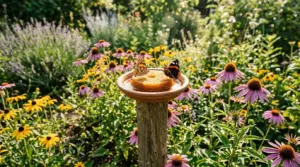
Place the feeder near flowers if you can. Butterflies navigate largely by sight and smell, and a feeder sitting in the middle of a lawn with no floral context nearby is harder for them to discover.
Putting it close to a patch of zinnias, lantana, or coneflowers gives it a context they are already visiting.
The feeder design matters too. Butterflies have a proboscis, not a beak, so they need a landing surface close to the nectar.
Shallow dish feeders with a sponge or mesh feeding surface work better than tube-style feeders designed for hummingbirds. Adding a landing perch or placing the feeder near a flat stone where butterflies can bask between feeding sessions increases the time they spend in the area.
Bright colors on the feeder itself help with initial discovery. Red, orange, and yellow are all good choices.
Some feeders come with plastic flowers around the feeding ports that serve this function. If yours does not have that, attaching a few silk flowers near the opening is a simple fix that genuinely makes a difference, especially at the start of the season when butterflies are first scouting the area.
For a full breakdown of feeder types and placement strategies, the guide to attracting butterflies with nectar feeders goes through the options in detail.
Adding a Mineral Puddling Station
Sugar water alone covers calories, but male butterflies also need sodium and amino acids that pure nectar does not provide. They get those minerals from damp soil, wet sand, and shallow puddles in a behavior called puddling.
Pairing a small puddling station with your nectar feeder is the single best add-on for attracting a wider range of species. Florida Wildlife Federation reports that males who puddle are then able to transfer sodium to females during mating, which the females need to lay viable eggs.
Use a wide, shallow container. A terracotta plant saucer or ceramic plate works perfectly, since the rim is low and the surface stays damp without pooling.
Fill the saucer with clean sand mixed with a small amount of garden soil. Add just enough water to make the mix damp, not soaking.
A single pinch of unrefined sea salt or crushed eggshell sprinkled on top adds the sodium and calcium butterflies cannot get from nectar. Avoid table salt with iodine and anti-caking agents.
Place a few flat stones or small pieces of wood across the surface as landing spots. Butterflies prefer to perch on something firm while their proboscis pulls minerals from the damp medium underneath.
Re-moisten the puddler daily in hot weather, and refresh the whole mix once a week to prevent mold and algae. Use dechlorinated water or collected rainwater if possible.
Adding Fruit to Your Feeder
Some butterfly species prefer overripe fruit to nectar entirely. Red admirals, mourning cloaks, hackberry emperors, and many wood nymphs spend most of their feeding time at fermenting fruit, tree sap, and rotting flesh rather than flowers.
The Natural History Museum’s butterfly feeder guide recommends pairing a sugar-water feeder with a small dish of soft fruit to widen the range of species your station can attract.
Slice the fruit and place it in a shallow dish near the nectar feeder. Wasps and ants will also show up, so set the dish on a small stand surrounded by a moat of water if pests become an issue.
Refresh the fruit every two days in hot weather. The fermentation that makes it irresistible to butterflies also tips into rot, mold, and fruit fly territory fast.
Hand-Feeding a Rescued or Injured Butterfly
If you find a butterfly with damaged wings or one that emerged too late in the season to fly far, you can hand-feed it sugar water using a cotton ball or small sponge. This is the same method used by butterfly houses and wildlife rehabilitators.
Mix the standard 1:9 sugar to water ratio. Saturate a clean cotton ball or small piece of clean kitchen sponge with the solution, and place it in a shallow bottle cap or saucer.
Gently encourage the butterfly to climb onto your finger. Lower your finger so the butterfly’s feet touch the wet sponge. Butterflies “taste” with their feet, and contact with sugar water usually triggers the proboscis to unfurl and drink within a few seconds.
If the proboscis does not unfurl on its own after a minute, use a clean toothpick or sewing pin to very gently coax it down toward the wet sponge. Do this only if the butterfly is alert and active, not on one that appears unresponsive.
Offer fresh sugar water every few hours. Replace the cotton ball or sponge daily to prevent fermentation. A small slice of orange or banana alongside the cotton ball is welcomed by most species.
An adult butterfly’s natural lifespan is two to six weeks, and a rescue does not extend that biological clock. The goal is comfort and dignity for the time it has left, not lifelong rehabilitation.
How Often to Change the Nectar
This is where a lot of people run into problems. Sugar water does not stay fresh very long once it is in a feeder, and nectar that has gone off is actively harmful to butterflies.
Signs that nectar has gone bad include cloudiness, visible mold, a sour or fermented smell, or any discoloration. If you see any of these, discard the nectar immediately and clean the feeder before refilling.
Do not just top it off with fresh nectar over old. Contaminated nectar can cause digestive problems and in severe cases can kill butterflies.
Cleaning the feeder properly matters as much as changing the nectar on schedule. Rinse with hot water and scrub with a bottle brush to remove any film or residue.
Avoid soap if you can, since soap residue in a feeder can be harmful. If the feeder has developed mold or significant buildup, a solution of one part white vinegar to four parts water, left to soak for a few minutes, does a good job of cleaning without leaving harmful residue.
Rinse thoroughly with plain water before refilling.
Keeping the feeder clean and the nectar fresh is honestly the most important maintenance task. A well-placed feeder with stale nectar will do less for butterflies than a simpler setup that gets changed regularly.
Monarch butterflies in particular are sensitive feeders, and the guide to feeding monarch butterflies covers how their nectar needs differ from other species and what plants and feeders work best for them.
One more practical note: if you are going away for several days in hot weather, either take the feeder down or ask someone to change it while you are gone. An unattended feeder with bad nectar is worse than no feeder.
It is a small detail, but it is the difference between helping butterflies and accidentally harming them. You can also get tips on seasonal nectar sources from the National Wildlife Federation’s butterfly gardening resources, which pair well with feeder use.
- Birds Choice butterfly feeder (red disc with sponge)
The classic shallow-dish design with feeding sponge. Just refill with the recipe above. - Replacement feeder sponges (pack of 4)
Swap these every couple of weeks to prevent mold. - Butterfly puddler kit (ceramic with stones)
The third feeding station this guide recommends — minerals, not nectar. - Bringing Nature Home by Doug Tallamy
Why feeders work best paired with native nectar plants in the surrounding garden.
Affiliate links. We earn a small commission on qualifying purchases at no extra cost to you.
Frequently Asked Questions
What is the correct sugar to water ratio for homemade butterfly nectar?
The recommended ratio is 1 part white granulated sugar to 9 parts water, which produces a solution of roughly 10 percent sugar. This matches the natural sugar concentration found in many wildflowers that butterflies prefer.
Some sources suggest 1:4, which is stronger and will not harm butterflies, but the 1:9 ratio is a closer match to what they encounter in nature.
Can I use honey instead of sugar in butterfly nectar?
No. Honey can contain bacteria and fungi that are harmless to humans but potentially dangerous for butterflies, and it also ferments faster than a plain sugar solution.
Always use plain white granulated sugar. Brown sugar, raw sugar, and turbinado sugar contain molasses and other compounds that can cause digestive issues, so those should be avoided too.
Does homemade butterfly nectar need to be boiled?
No, boiling is not required. The sugar will dissolve in room temperature or slightly warm water with stirring.
Boiling can marginally extend how long the nectar stays fresh by reducing microbial activity from the start, but it is not necessary for a batch you are planning to use within a few days. If you want to make a week’s worth and store some in the refrigerator, briefly heating the water to help the sugar dissolve fully is not a bad idea.
Is red food coloring safe for butterflies?
No, and it is not necessary either. Red dye No. 40 has been linked to potential health concerns in research on similar wildlife like hummingbirds, and there is no evidence that colored nectar attracts more butterflies than clear nectar.
If you want to make your feeder more visible to butterflies, use a red or orange feeder or add colorful artificial flowers near the feeding area. Keep the nectar itself clear.
How long does homemade butterfly nectar last?
In the feeder, butterfly nectar should be changed every one to two days in hot weather above 80 degrees Fahrenheit, or every two to three days in moderate temperatures. In the refrigerator, a sealed batch of nectar stays fresh for about a week.
Discard any nectar that looks cloudy, smells sour, or shows any sign of mold, and clean the feeder thoroughly before refilling.
Will a butterfly feeder attract bees and wasps?
Yes, sometimes. Sugar water is attractive to many insects, not just butterflies.
A few strategies help reduce bee and wasp activity: use a feeder with a smaller feeding surface, place it in a partially shaded spot since bees tend to prefer sunny locations, and avoid overfilling so there is less nectar exposed. Some people add a small amount of fruit nearby to draw bees away from the feeder.
If wasps become a persistent problem, bee guards on feeder ports can help, though these work better on tube-style feeders than shallow dish designs.
How do I hand-feed a butterfly that cannot fly?
Saturate a clean cotton ball with the 1:9 sugar water solution and place it in a small bottle cap or saucer. Gently transfer the butterfly so its feet touch the wet cotton.
Butterflies taste through their feet, so contact with sugar water usually triggers the proboscis to unfurl within seconds. Replace the cotton ball daily and add a small slice of orange or banana alongside it for variety.
How do I build a butterfly puddling station?
Fill a shallow saucer with clean sand mixed with a little garden soil, add water until it is damp but not soaking, and sprinkle a pinch of unrefined sea salt or crushed eggshell on top.
Add a few flat stones for landing spots and refresh the mix once a week. Male butterflies will use it for the sodium they cannot get from nectar alone.