


Poisonous butterflies are real, and there are more of them than most people expect. Several species carry chemical defenses strong enough to make a bird gag, vomit, or simply learn to avoid anything that looks like them in the future. The toxins aren’t produced by the butterflies themselves, though – they come almost entirely from the plants the caterpillars eat. That detail turns out to explain a lot about which butterflies are toxic, where they live, and why so many non-toxic species have evolved to look exactly like them.
Key Takeaways
- Butterflies don’t produce their own toxins – they sequester chemicals from host plants during the caterpillar stage and carry them into adulthood.
- Monarch butterflies are the most well-known toxic species, getting their cardenolide poisons from milkweed.
- Pipevine swallowtails, Queen butterflies, and several tropical species are also genuinely toxic to predators.
- None of the toxic butterfly species pose any meaningful danger to humans through casual contact or handling.
How Butterflies Become Toxic
The mechanism behind butterfly toxicity is called sequestration. When a caterpillar eats a plant that contains defensive chemicals – compounds the plant evolved to deter its own grazers – the caterpillar doesn’t break those chemicals down. It stores them in its tissues. When the caterpillar transforms, those stored compounds carry through into the adult butterfly, where they sit in the wings, body, and sometimes the eggs.
This is why the relationship between a butterfly species and its caterpillar host plants is so central to understanding toxicity. A monarch raised on milkweed is toxic. A monarch raised on a non-toxic plant in a lab setting is not. The butterfly itself is just the delivery system – the plant loaded the weapon during the larval stage.
The toxins most commonly involved are cardiac glycosides (also called cardenolides), pyrrolizidine alkaloids, and aristolochic acids. Each comes from a different plant family and affects predators differently, but the general effect is the same: a bird that eats a toxic butterfly feels sick, and it remembers. That’s the whole point. The butterfly doesn’t survive the attack, but the predator learns to avoid its pattern. Over time, that learned avoidance shapes which color patterns survive in the population – which is exactly why so many toxic butterflies wear such distinctive, conspicuous colors. The pattern needs to be memorable.
This defense strategy is called aposematism – using bright coloration to advertise toxicity. Research published in Proceedings of the National Academy of Sciences has shown that predators can learn to associate specific wing patterns with bad experiences after just a few encounters, which explains why the strategy works across so many different butterfly lineages.
Monarch Butterflies – The Most Famous Toxic Species
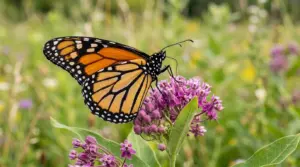
Monarch butterflies are probably the most studied toxic insect in North America. Their toxicity comes from cardenolides – chemicals present in milkweed, the only plant monarch caterpillars eat. Cardenolides interfere with sodium-potassium pumps in animal cells. In high enough concentrations, they can disrupt heart function. Birds that eat monarchs often regurgitate them within minutes and show visible distress.
Not all monarchs are equally toxic. Toxicity varies based on the milkweed species the caterpillar ate, since different milkweed species contain different concentrations of cardenolides. Monarchs raised on tropical milkweed tend to carry higher toxin loads than those raised on native swamp milkweed. Individual monarchs from the same population can vary considerably in how much cardenolide they carry.
Some experienced bird species, notably black-headed grosbeaks and black-backed orioles at the monarch overwintering sites in Mexico, have learned to tolerate or partially detoxify cardenolides and can eat monarchs without getting sick. They tend to select monarchs with lower toxin loads, which researchers can predict based on the butterfly’s fat content. It’s a predator-prey arms race that’s been running for a long time.
The orange-and-black coloration of the monarch is the warning signal that makes all of this work. The monarch butterfly’s adaptations go well beyond just the toxins – the pattern, the flight behavior, and the tendency to fly slowly and conspicuously all work together to make sure predators get a good look at what they should be avoiding.
Other Poisonous Butterfly Species
Monarchs get most of the attention, but they’re far from the only toxic butterflies in North America or worldwide.
Pipevine Swallowtail
The pipevine swallowtail (Battus philenor) gets its toxicity from aristolochic acids, which come from pipevine plants in the genus Aristolochia. Aristolochic acids are genuinely nasty compounds – they’re nephrotoxic (damaging to kidneys) and have been classified as carcinogens. Birds that eat pipevine swallowtails tend to have strong reactions, and the effect on avian predators is pronounced enough that the pipevine swallowtail has become a model species that other butterflies in its range have converged on mimicking.
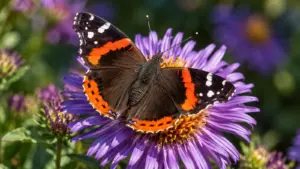
The adult pipevine swallowtail has iridescent blue-black hindwings and orange spots on the underside – a distinctive enough pattern that at least a dozen other butterfly species in eastern North America have evolved to resemble it, including the female black swallowtail, the female tiger swallowtail, the spicebush swallowtail, and the red-spotted purple.
Queen Butterfly
The Queen butterfly (Danaus gilippus) is a close relative of the monarch and uses the same basic strategy. Queen caterpillars also feed on milkweed, sequestering cardenolides just as monarchs do. Adults carry toxic compounds in both their wings and their body. Queen butterflies are also notable for a second chemical defense: males have structures on their hindwings called hair pencils that release pyrrolizidine alkaloid-derived compounds during courtship. The female evaluates these compounds as part of mate selection – higher alkaloid load is apparently a good sign.
Heliconius and Tropical Species
In the tropics, the Heliconius genus (longwing butterflies) represents some of the most sophisticated examples of butterfly chemical defense. Heliconius caterpillars feed on passionflowers, which contain cyanogenic glycosides – compounds that can release hydrogen cyanide when metabolized. The butterflies sequester these compounds and also, uniquely, have the ability to synthesize some cyanogenic compounds on their own as adults, making them one of the very few butterfly groups that actually produce rather than just store toxins.
The Heliconius system is also the best-documented example of Mullerian mimicry – where multiple genuinely toxic species converge on the same wing pattern, reinforcing the predator’s learned avoidance across a wider range of prey. In some regions of South America, you can find four or five completely unrelated butterfly species that look nearly identical because they’ve all converged on the same warning pattern.
For the most extreme examples of butterfly chemical defenses, some species in Papua New Guinea accumulate batrachotoxins – the same class of compounds found in poison dart frogs – though the mechanism there is still being studied. The Queen Alexandra’s birdwing, the world’s largest butterfly and also a Papua New Guinea native, is considered unpalatable to predators as well, though the specific chemistry is less well characterized than in monarchs or Heliconius.
Mimicry – Copying the Toxic Look
One of the most interesting consequences of butterfly toxicity is what it does to non-toxic species. Once a predator has learned to avoid a specific wing pattern, any butterfly that resembles that pattern gets protection too – even if it carries no toxins at all. This is Batesian mimicry, named after the naturalist Henry Walter Bates who first described it in the Amazon in the 1860s.
The viceroy butterfly is the textbook example. For most of the 20th century, it was taught as the classic Batesian mimic of the monarch – a non-toxic butterfly that gains protection by resembling a toxic one. That picture turned out to be more complicated. Research in the 1990s found that viceroys are actually somewhat toxic themselves, having sequestered salicylic acid compounds from willow and poplar, the plants their caterpillars eat. So the viceroy-monarch relationship is now understood as Mullerian mimicry, with both species getting mutual benefit from sharing a warning pattern.
The female black swallowtail, female tiger swallowtail, spicebush swallowtail, and red-spotted purple are all considered Batesian mimics of the pipevine swallowtail. The males of those same species, interestingly, often look quite different – more colorful or distinct. The theory is that female butterflies are on the wing longer (they need more time to find host plants and lay eggs), so they face more predation pressure, making the mimicry more advantageous for them.
Understanding which butterflies are genuine models and which are mimics matters for understanding predator behavior in your local area. Butterfly predators are often surprisingly good at detecting the difference between toxic and non-toxic species once they have enough exposure to both.
Are Poisonous Butterflies Dangerous to Humans?
No, not in any practical sense. The toxins that make butterflies dangerous to birds and other small predators are present in concentrations that pose no meaningful risk to humans through normal contact. You can handle a monarch butterfly without any concern about absorbing cardenolides through your skin. The same goes for pipevine swallowtails and queens.
The cardenolides in monarchs are genuinely toxic compounds – they’re closely related to digitalis, the heart medication derived from foxglove. But the amount present in even a heavily loaded monarch is nowhere near a dose that would affect a human. You would need to eat a significant quantity of monarchs to encounter any risk, and even then your body’s response would likely be nausea before anything more serious occurred. It’s not a scenario that comes up.
Aristolochic acids, found in pipevine swallowtails, are more legitimately concerning chemicals – they’ve been studied in the context of herbal medicines that use Aristolochia plants, where long-term consumption has been linked to kidney damage. But again, contact with a butterfly carries no comparable exposure. The compounds are concentrated in the butterfly’s tissues, not secreted on its surface.
The USDA’s monarch butterfly resources confirm that monarchs are safe to handle and are not a health risk to people or pets through incidental contact. If your dog ate a monarch, it might experience mild stomach upset – nothing more. A cat eating several could theoretically get a bigger dose of cardenolides, but even that scenario is unlikely to cause serious harm.
The main thing to take away is that butterfly toxicity evolved specifically as a defense against animals that eat butterflies whole – birds, spiders, and some insects. It was never scaled to work on something as large as a human, and there’s no delivery mechanism for it even if it were.
FAQ
What makes a butterfly poisonous?
Butterflies become toxic by sequestering chemicals from the plants their caterpillars eat. The caterpillar stores defensive compounds from the host plant in its tissues, and those compounds carry through into the adult butterfly. The butterfly itself doesn’t produce the toxins – it’s entirely dependent on eating the right plant during the larval stage. Monarchs eating milkweed, pipevine swallowtails eating Aristolochia, and Heliconius eating passionflowers are all examples of this relationship.
Are monarch butterflies poisonous to touch?
No. Monarch butterflies are not dangerous to touch. The cardenolide toxins they carry are stored inside their body tissues, not on their wings or body surface. There’s no contact transfer risk for humans. Handling a monarch is completely safe, and it’s a common activity for butterfly enthusiasts, researchers, and people doing tagging programs. The toxicity is relevant only to predators that eat the butterfly whole.
Which butterfly is the most poisonous?
It depends on how you measure it, but the Heliconius longwing butterflies of Central and South America are among the most chemically defended butterflies known. Unlike most toxic butterflies that only sequester plant toxins as caterpillars, Heliconius adults can continue synthesizing cyanogenic compounds on their own. Some tropical species in Papua New Guinea are also believed to carry extremely potent compounds, though the data there is less complete. In North America, pipevine swallowtails produce particularly strong reactions in avian predators.
Is the viceroy butterfly poisonous or just a mimic?
Both, technically. The viceroy was long held up as the classic example of a non-toxic butterfly mimicking a toxic one (Batesian mimicry), but research published in the 1990s showed that viceroys are actually mildly toxic themselves. They sequester salicylic acid compounds from willow, cottonwood, and poplar – the plants their caterpillars eat. So the viceroy-monarch relationship is now classified as Mullerian mimicry, where two toxic species share a warning pattern for mutual benefit.
Can birds learn to eat poisonous butterflies?
Yes, some can. Black-headed grosbeaks and black-backed orioles at monarch overwintering sites in Mexico have developed the ability to tolerate significant cardenolide loads and eat monarchs regularly. They tend to select individuals with lower toxin levels, but they can handle doses that would make most birds sick. This adaptation appears to have developed in bird populations with long-term exposure to monarch aggregations – it’s not a universal avian ability. Most bird species that encounter toxic butterflies for the first time still learn avoidance through a bad experience rather than tolerance.
Do toxic butterflies have any predators?
Yes. Beyond the specialized birds mentioned above, some predatory insects – including certain mantises and spiders – appear largely unaffected by butterfly toxins and will eat toxic species without hesitation. Invertebrate predators seem to have different sensitivities to cardenolides and alkaloids than vertebrates do. Parasitic wasps and flies that attack caterpillars also sidestep the issue entirely since they target the larval stage before toxins fully accumulate. The chemical defenses butterflies carry are effective against a broad range of vertebrate predators but are far from universal protection against everything in the food web. For a fuller picture of what threatens butterflies despite their defenses, this overview of butterfly predators covers the full range.