

If you’ve ever watched a caterpillar disappear and come out a butterfly, you’ve probably called what it made a “cocoon.” Almost everyone does. But here’s the thing, butterflies don’t make cocoons. That’s actually a moth thing.
What a butterfly makes is called a chrysalis, and the two structures are completely different in how they form, what they’re made of, and what happens inside them.
This mix-up is everywhere, from picture books to nature documentaries, so you’re definitely not alone if you’ve been using the wrong word your whole life. Let’s clear it up once and for all.
Key Takeaways
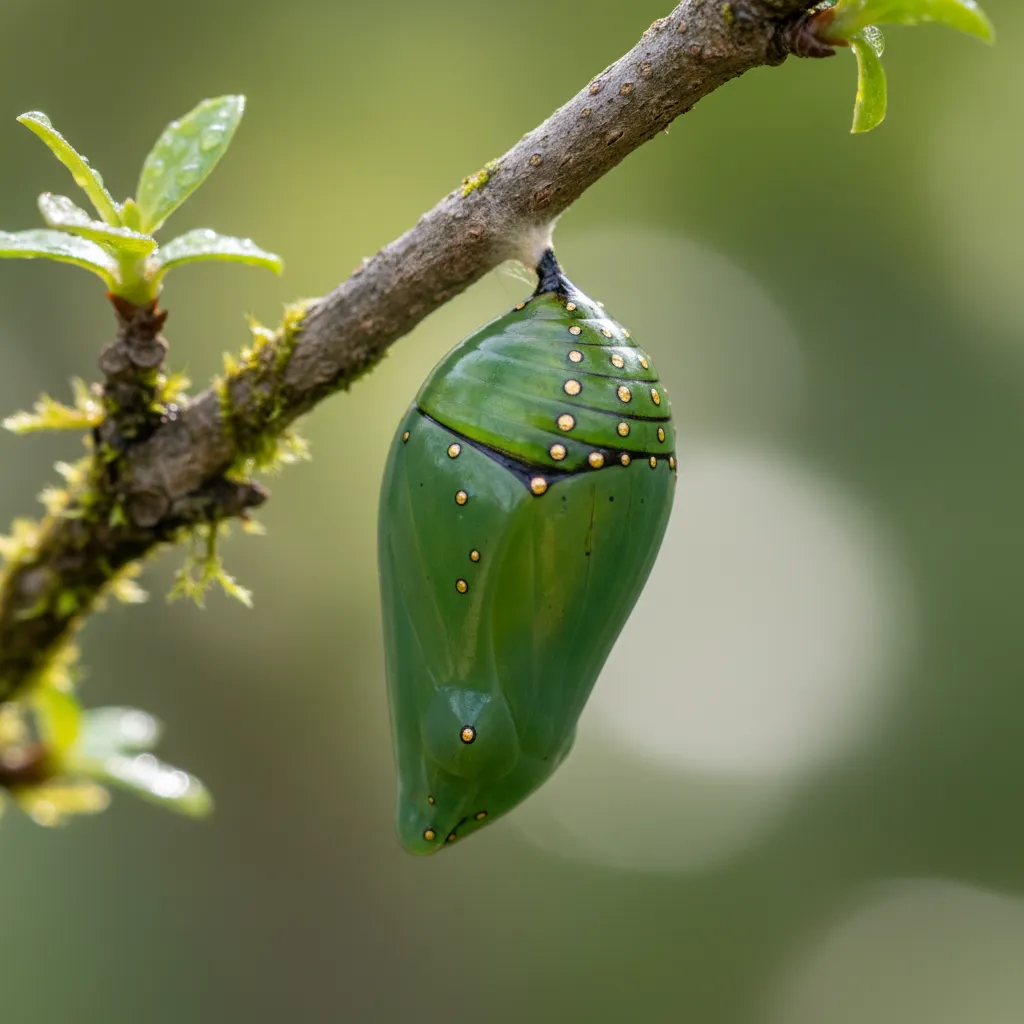
- Butterflies form a chrysalis, not a cocoon, the chrysalis is a hard shell that develops directly from the caterpillar’s own outer skin.
- Cocoons are built by moths (and some other insects), spun from silk as an external protective covering around the pupa.
- Inside the chrysalis, the caterpillar’s body essentially breaks down and rebuilds itself into a butterfly through a process called metamorphosis.
- The chrysalis stage typically lasts one to three weeks for most butterfly species, though some can overwinter inside for several months.
Cocoon vs Chrysalis: The Key Difference
The simplest way to remember the difference: a cocoon is something an insect makes, while a chrysalis is something an insect becomes.
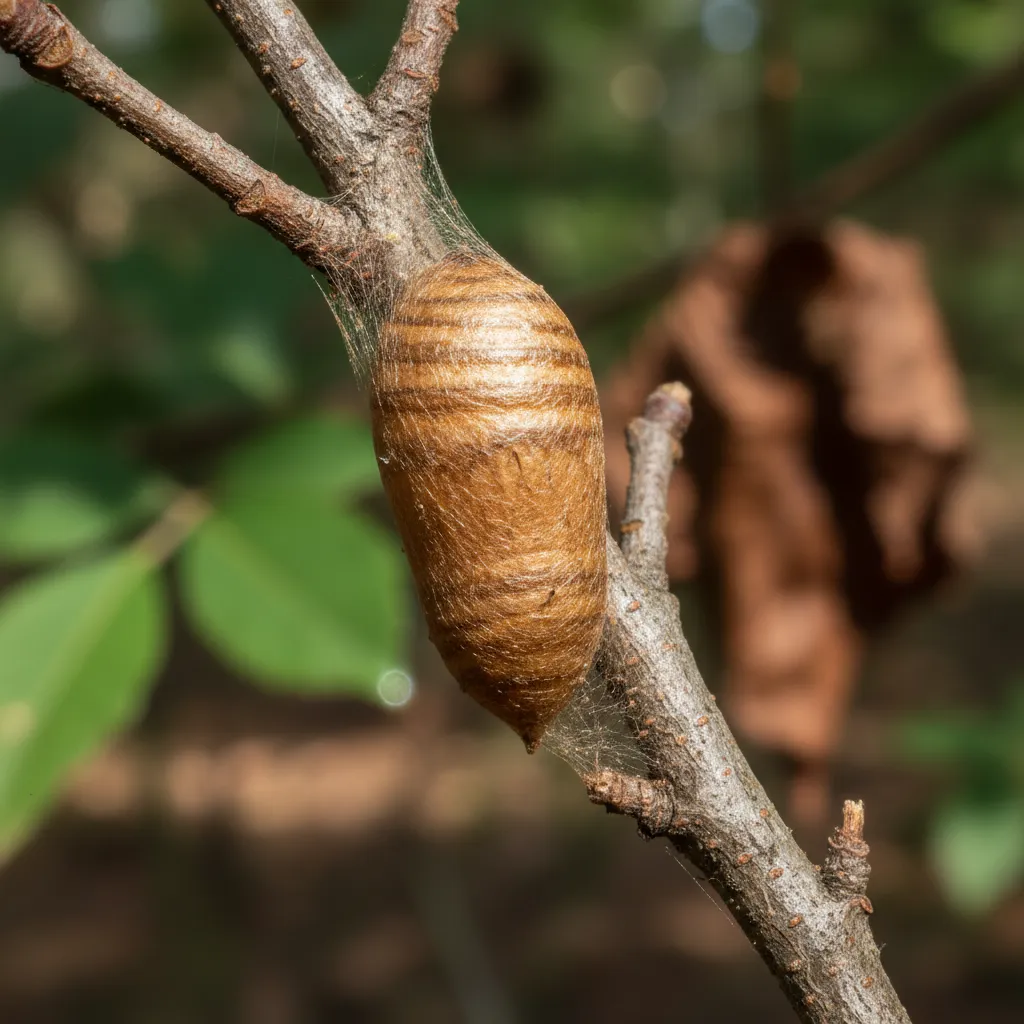
A cocoon is a silk casing that a moth caterpillar spins around itself before it pupates. The silk comes from glands near the caterpillar’s mouth, and the animal weaves it into a protective shell. The pupa (the transforming insect) is inside the cocoon, but the cocoon itself is a separate structure.
A chrysalis is different in a fundamental way. It’s not spun or built, it’s formed from the caterpillar’s own cuticle, the outermost layer of its skin. When a butterfly caterpillar is ready to transform, it sheds that final layer of caterpillar skin, and underneath is the chrysalis, already taking shape.
No silk, no spinning. The pupa is the chrysalis.
Butterflies belong to the order Lepidoptera, which they share with moths. You can read more about what separates these two groups in this guide to the world of Lepidoptera. While they share a lot of biology, the cocoon vs. chrysalis distinction is one of the clearest ways to tell their life cycles apart.
How a Chrysalis Forms
The process starts when a fully grown caterpillar finds a safe spot to pupate. It attaches itself to a twig, leaf, or stem using a silk pad and a loop of silk called a cremaster (for hanging chrysalises) or just a silk button (for upright ones). Then it hangs still, sometimes for hours, before anything visible happens.
What’s actually going on internally during this waiting period is a dramatic hormonal shift. The caterpillar’s juvenile hormone levels drop, and a surge of ecdysone (a molting hormone) triggers the final shed.
When the moment comes, the caterpillar’s skin splits near the head and the whole outer layer peels back, revealing the chrysalis beneath. The chrysalis then hardens over the course of a few hours, forming a firm, protective shell. Many chrysalises have ridges, bumps, or even metallic gold spots, those aren’t decoration; they’re structural features that reinforce the casing.
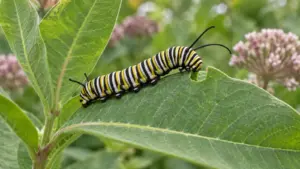
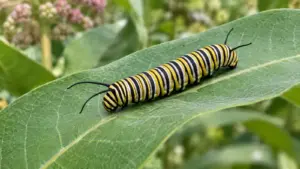
Different species end up with very different-looking chrysalises. Monarch chrysalises are famously jade green with a row of gold dots. Swallowtail chrysalises tend to stand upright and look like a piece of bark or a rolled leaf.
If you want to get into the specifics of a couple of well-known species, take a look at the monarch butterfly chrysalis guide and the swallowtail chrysalis guide for detailed breakdowns.
What Happens Inside the Chrysalis
This is the part that sounds like science fiction, but it’s real: the caterpillar’s body largely liquefies inside the chrysalis.
The caterpillar releases enzymes that break down most of its tissues into a kind of biological soup. Not everything dissolves, clusters of cells called imaginal discs survive. These discs were present in the caterpillar the whole time, basically dormant, and they contain the blueprints for every adult butterfly structure: wings, legs, antennae, eyes, mouthparts.
Once the caterpillar tissues break down, those imaginal discs start using the nutrient-rich fluid around them to grow and organize. Cells divide and differentiate rapidly. A wing that started as a flat disc becomes a layered structure with venation.
A compound eye assembles from thousands of individual facets. Over the course of one to three weeks, the entire body plan of a butterfly is constructed from scratch.
Research has even shown that some memories from the caterpillar stage survive this process, a finding that surprised scientists when it was published, since so much of the nervous system is reconstructed. It suggests the remodeling isn’t quite as total as it looks from the outside.
As the butterfly nears completion, the chrysalis often becomes transparent or changes color, and you can sometimes see the folded wings and body of the adult butterfly right through the shell. This is a sign that emergence is close.
How Long Does the Chrysalis Stage Last?
For most butterfly species in temperate climates, the chrysalis stage runs somewhere between 10 days and 3 weeks. Temperature plays a big role, warmer conditions speed up development, while cooler temps slow it down.
Some species have a much longer chrysalis stage. Certain swallowtails, for example, will overwinter as a chrysalis and not emerge until spring. This extended dormancy period is called diapause, and it’s essentially a programmed pause in development that keeps the insect safe during conditions that wouldn’t support a newly hatched butterfly.
Here’s a rough breakdown of chrysalis duration for some common species:
| Species | Chrysalis Duration |
|---|---|
| Monarch butterfly | 8–15 days |
| Painted lady | 7–10 days |
| Black swallowtail | 10–14 days (or overwinter) |
| Eastern tiger swallowtail | 10–20 days (or overwinter) |
| Cabbage white | 10–14 days |
If you’re raising caterpillars at home, the chrysalis will generally take longer in a cool room and shorter in a warm one. Avoid misting the chrysalis directly, too much moisture can cause problems. Just keep the environment reasonably humid and leave it alone.
For a full picture of the butterfly life cycle from egg to adult, this butterfly lifecycle guide covers each stage in detail.
Moth Cocoons: How They’re Different
Now that we’ve covered the chrysalis, it’s worth spending a moment on cocoons so you can actually spot the difference in the wild.
Moth caterpillars spin their cocoons from silk produced in their salivary glands. The silk comes out as a continuous thread, and the caterpillar wraps it around itself in layers. Some moth cocoons are tightly wound and smooth (like those of the silkworm moth, Bombyx mori, which is the basis of the silk textile industry).
Others are loosely woven or mixed with plant material, debris, or even shed hairs from the caterpillar itself.
Inside the cocoon, there’s still a pupa, the moth equivalent of a chrysalis. The key point is that this pupa is a separate stage from the cocoon. If you carefully opened a cocoon, you’d find the pupa inside.
With a butterfly, the chrysalis is the pupa, there’s nothing extra around it.
A few other insects also make cocoons. Many wasps and some beetles spin or construct protective cases around their pupae. But in everyday language, “cocoon” has come to mean any kind of pupal case, and that’s where the butterfly confusion originates.
People see a butterfly caterpillar pupate and call whatever it made a cocoon, even though butterflies never spin one.
According to the Smithsonian Institution, cocoons are found across many insect orders and serve primarily as physical protection during the vulnerable pupal stage, a function the chrysalis serves just as well through its hardened shell, without any silk at all.
If you find something in your garden that looks like a papery or silky bundle, it’s almost certainly a moth (or possibly a wasp). If you find something hard and smooth hanging from a stem, with a more sculptural appearance, that’s a butterfly chrysalis. The texture alone is usually enough to tell them apart.
For more on moth cocoons and how the silk moth industry works, the University of Kentucky Entomology department has a solid breakdown of silkworm biology and cocoon construction.
- Insect Lore Live Butterfly Garden (painted ladies)
Watch a chrysalis form and a butterfly emerge from start to finish. - Pop-up mesh butterfly habitat (24-inch)
Roomy enough for raising several caterpillars at once. - Chrysalis hanger / floral wire kit
For when a chrysalis falls and you need to safely reattach it. - Raising Butterflies in the Garden (Brenda Dziedzic)
The most practical book on home butterfly rearing in print.
Affiliate links. We earn a small commission on qualifying purchases at no extra cost to you.
FAQ
Do any butterflies make cocoons?
No. No butterfly species makes a cocoon. All butterflies form a chrysalis, which develops from the caterpillar’s own outer skin.
If someone tells you a butterfly made a cocoon, they’re using the word loosely, what they’re actually describing is a chrysalis.
Is a chrysalis alive?
Yes, the chrysalis is very much alive. It’s not dormant in the way a seed is dormant, there’s active, rapid biological transformation happening inside the entire time. The insect is breathing through tiny openings called spiracles, and its tissues are breaking down and rebuilding throughout the process.
It just looks still from the outside.
What does it mean when a chrysalis turns black?
It depends on timing. If the chrysalis turns dark or nearly black in the day or two before the butterfly is due to emerge, that’s normal, you’re actually seeing the butterfly’s dark wings through the now-transparent shell. If it turns black earlier in the process, especially if it becomes soft or starts to smell, that can indicate the pupa has died, possibly due to disease, parasites, or physical damage.
Can you move a chrysalis?
Yes, but with care. In the first 24 hours after the chrysalis forms, it’s still soft and should not be moved. Once it hardens, you can gently relocate it if needed.
The safest method is to move whatever it’s attached to (a stick, leaf, or mesh). If you must detach it, use a small piece of dental floss or thread looped around the cremaster (the silk thread at the top) and hang it vertically so the butterfly has room to expand its wings when it emerges.
How do you know when a butterfly is about to emerge from the chrysalis?
The clearest sign is a color change. Most chrysalises will become noticeably darker or more transparent in the 12 to 24 hours before the butterfly emerges, and you’ll often be able to see the folded wings pressing against the shell. The chrysalis may also twitch or spin slightly if disturbed.
Emergence usually happens in the morning, and the whole process from the first crack in the shell to the butterfly pulling itself free takes only a few minutes.