
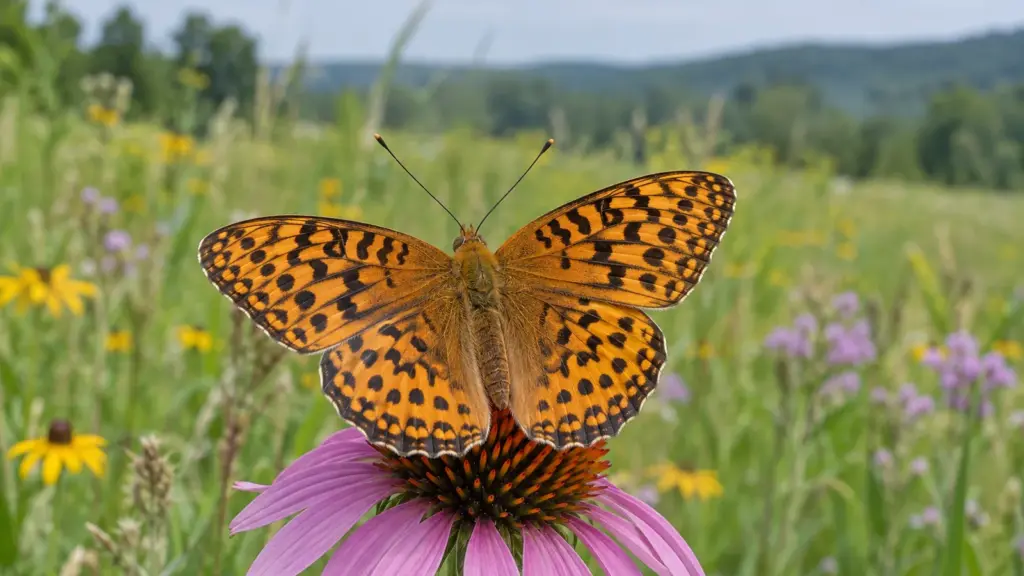

Fritillary butterflies are orange-and-black brushfoots, and most of the North American species raise their caterpillars on violets. Flip one over and you’ll often find the clue to its name: bright silver spots on the underside of the hindwing.
This guide covers how to tell the common fritillaries apart, what they eat and why one of them, the regal fritillary, has been proposed for federal protection.
Key Takeaways
- Most North American fritillaries lay eggs on or near violets, which their caterpillars eat.
- The great spangled fritillary has silvery spots on a dark brown underside with a tan band along the outer edge.
- The gulf fritillary isn’t a true fritillary, since it belongs to the tropical longwing group.
- The U.S. Fish and Wildlife Service proposed protecting the regal fritillary in 2024, as endangered in the East and threatened in the West.
What Is a Fritillary Butterfly?
“Fritillary” is a common name for several groups of orange butterflies in the brushfoot family, Nymphalidae. The biggest North American group is the greater fritillaries, which many references now place in the genus Argynnis instead of their older name, Speyeria.
The lesser fritillaries, in the genus Boloria, are smaller and include the meadow fritillary. The variegated fritillary sits in its own genus and links the fritillaries to their tropical relatives.
How to Identify the Common Fritillaries
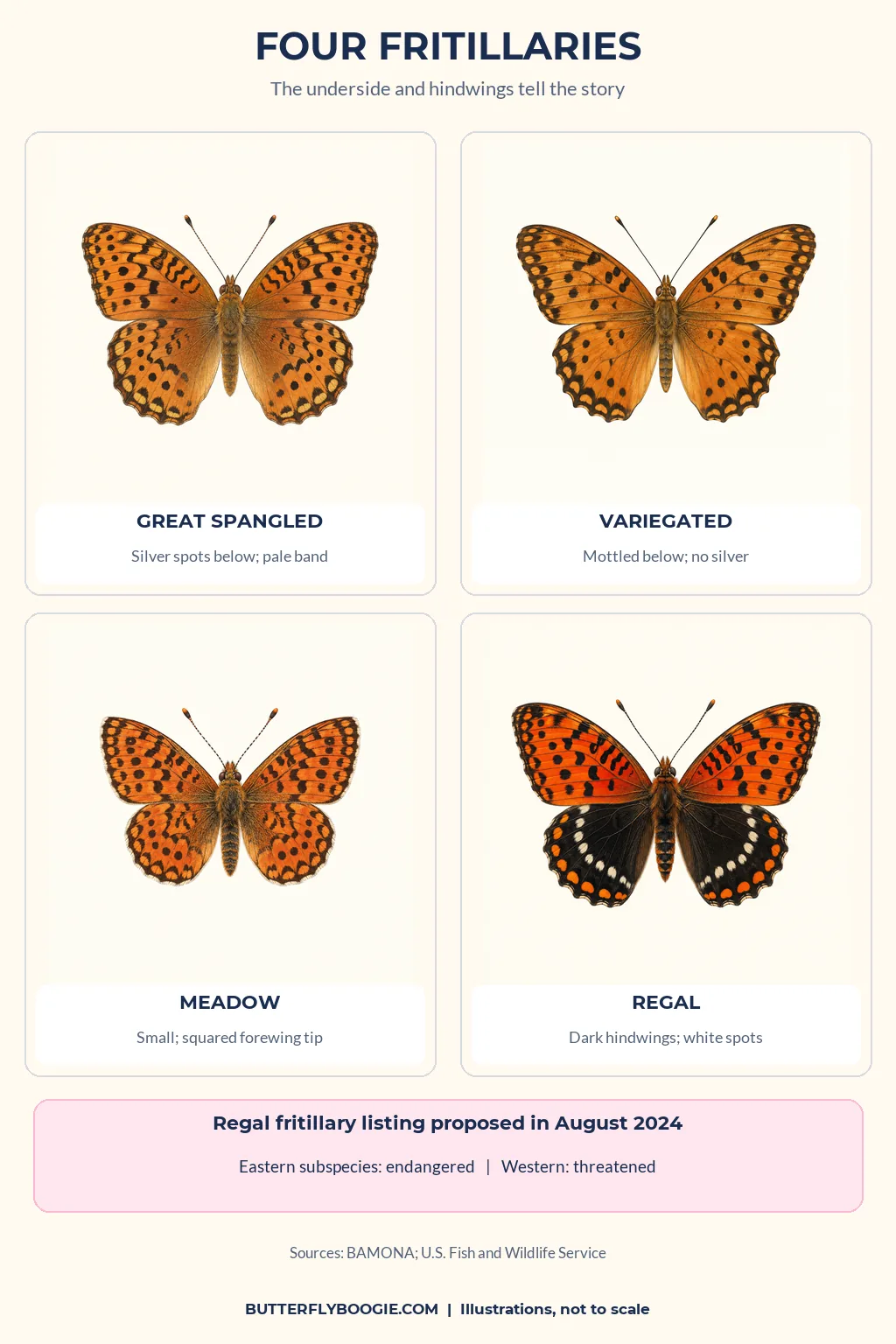
Most fritillaries look alike from above, so check the underside of the hindwing whenever the butterfly lands and closes its wings. These four are the species most people in the U.S. see.
- The great spangled fritillary is rusty orange with dark markings, and its underside shows prominent silvery white spots on dark brown with a tan band along the outer edge.
- The variegated fritillary is smaller and lacks the bold silver spots, with a mottled brown and orange underside.
- The meadow fritillary is a small Boloria with a squared-off forewing tip and a plain, purplish-brown underside.
- The regal fritillary has blackish gray hindwings above, which sets it apart from every other fritillary.
The Missouri Department of Conservation points to the regal’s dark hindwings and the variegated’s smaller size and missing silver spots as the key differences from the great spangled.
Great Spangled Fritillary
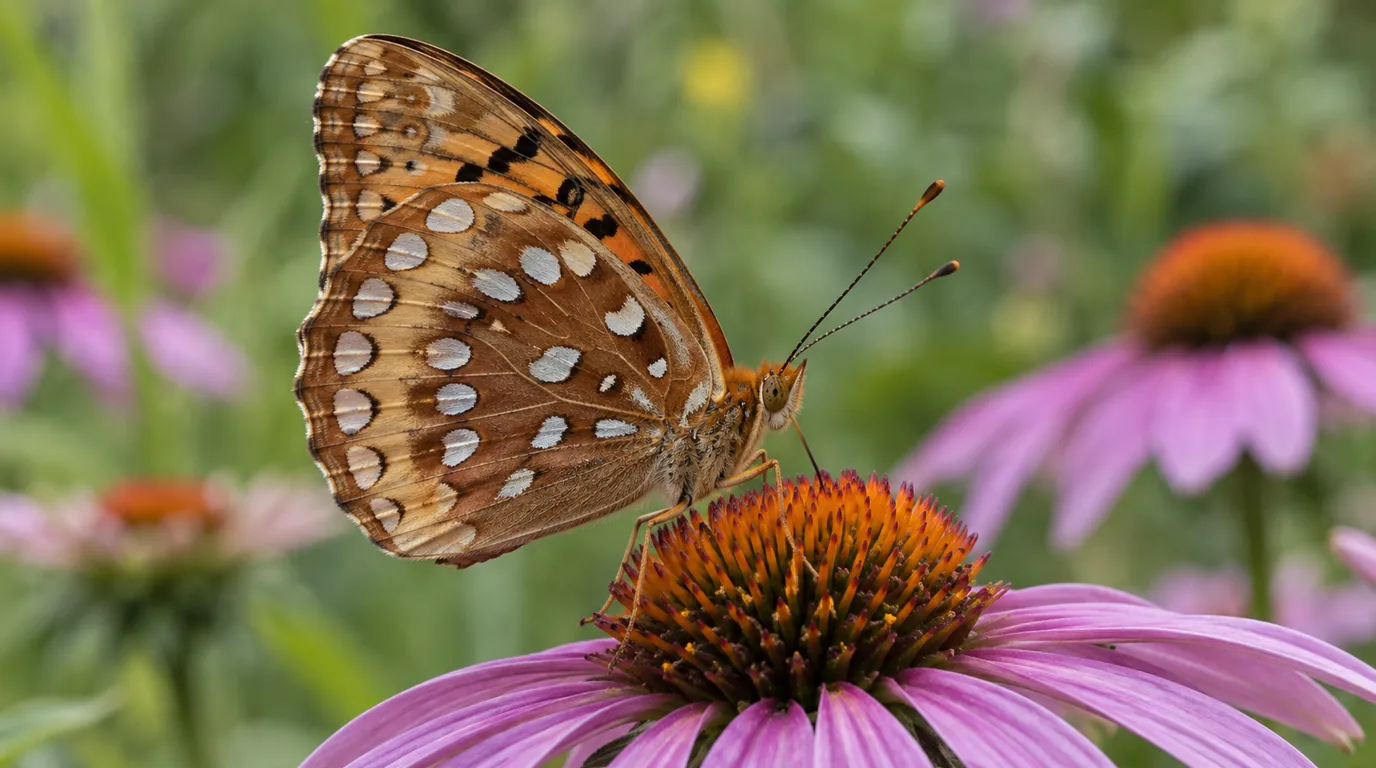
The great spangled fritillary is the one most gardeners meet. It has a wingspan of 2.5 to 3.5 inches and flies from mid-May through early October in Missouri, visiting open, moist places from prairies to backyards.
Its life cycle has a twist. Females lay eggs in late summer and fall, and the tiny caterpillars hatch but don’t eat; they spend the winter unfed and start feeding on violets in spring.
Adults drink from many flowers. Butterflies and Moths of North America lists milkweeds, thistles, ironweed, joe-pye weed, bergamot, red clover and purple coneflower among their nectar sources.
Variegated, Meadow and Gulf Fritillaries
The variegated fritillary is more flexible about food. Its caterpillars eat violets, passionflower, flax and other plants, and that passionflower habit hints at its ties to the tropical longwings.
The meadow fritillary (Boloria bellona) favors wet meadows and pastures. Females often lay their eggs on twigs and plants near the violets instead of on the violets themselves.
The gulf fritillary is the odd one out. Its caterpillars feed on passionflower, and it belongs to the longwing tribe, Heliconiini, alongside the zebra longwing; many references now call it Dione vanillae.
The Regal Fritillary Is in Trouble
The regal fritillary once flew across tallgrass prairies from the East Coast to the Great Plains. Prairie loss has cut it back to scattered sites, and the eastern population is down to very few places.
In August 2024, the U.S. Fish and Wildlife Service proposed listing the eastern regal fritillary as endangered and the western regal fritillary as threatened. The final decision was still pending in late 2025, when the agency moved it to its long-term list.
For more on how butterfly numbers are changing, see our look at butterfly population decline.
How to Attract Fritillaries to Your Garden
Plant violets and leave them alone. Many gardeners pull violets as weeds, but they are the main caterpillar food for most fritillaries.
- Let native violets spread under shrubs and along lawn edges.
- Add passionflower in warm regions for variegated and gulf fritillaries.
- Grow nectar plants like milkweed, coneflower and joe-pye weed for the adults.
- Leave leaf litter in fall, since overwintering caterpillars shelter near the ground.
Our lists of the best butterfly plants and caterpillar host plants can round out a fritillary-friendly garden.
FAQ
What do fritillary caterpillars eat?
Most North American fritillary caterpillars eat violets.
The variegated fritillary also eats passionflower and flax, and the gulf fritillary eats passionflower.
How do you tell a fritillary from a monarch?
Fritillaries are smaller and patterned with black spots and short lines instead of the monarch’s bold black veins.
Many fritillaries also have silver spots under the hindwing, which monarchs never have.
Is the gulf fritillary a real fritillary?
No. It’s a longwing, related to the zebra longwing, and it only shares the fritillary’s orange color and name.
Is the regal fritillary endangered?
It has been proposed for protection, as endangered in the East and threatened in the West.
The final decision was still pending in late 2025.