
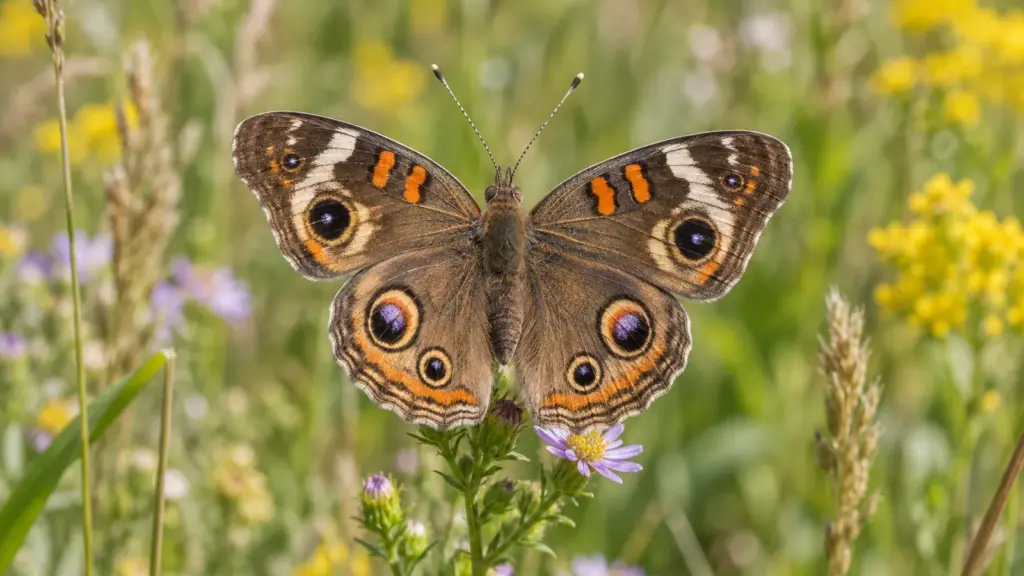

The common buckeye butterfly (Junonia coenia) is a brown butterfly with big, target-like eyespots on all four wings and two orange bars on each forewing. Look for it on bare ground and short grass in open, sunny spots, where males perch low and chase off anything that flies past.
Buckeyes live year-round in the Deep South and spread north each summer. By fall they turn up in gardens, fields and roadsides across much of the country.
Key Takeaways
- Buckeyes are brown with two orange bars on each forewing and eyespots on all four wings, and fall butterflies often show a reddish underside.
- The wingspan runs about 1.5 to 2.75 inches, according to Butterflies and Moths of North America.
- Caterpillars eat plantains, snapdragons, toadflax, ruellias and verbenas.
- Buckeyes can’t survive cold northern winters, so most northern states are recolonized from the South each spring.
How to Identify a Buckeye Butterfly
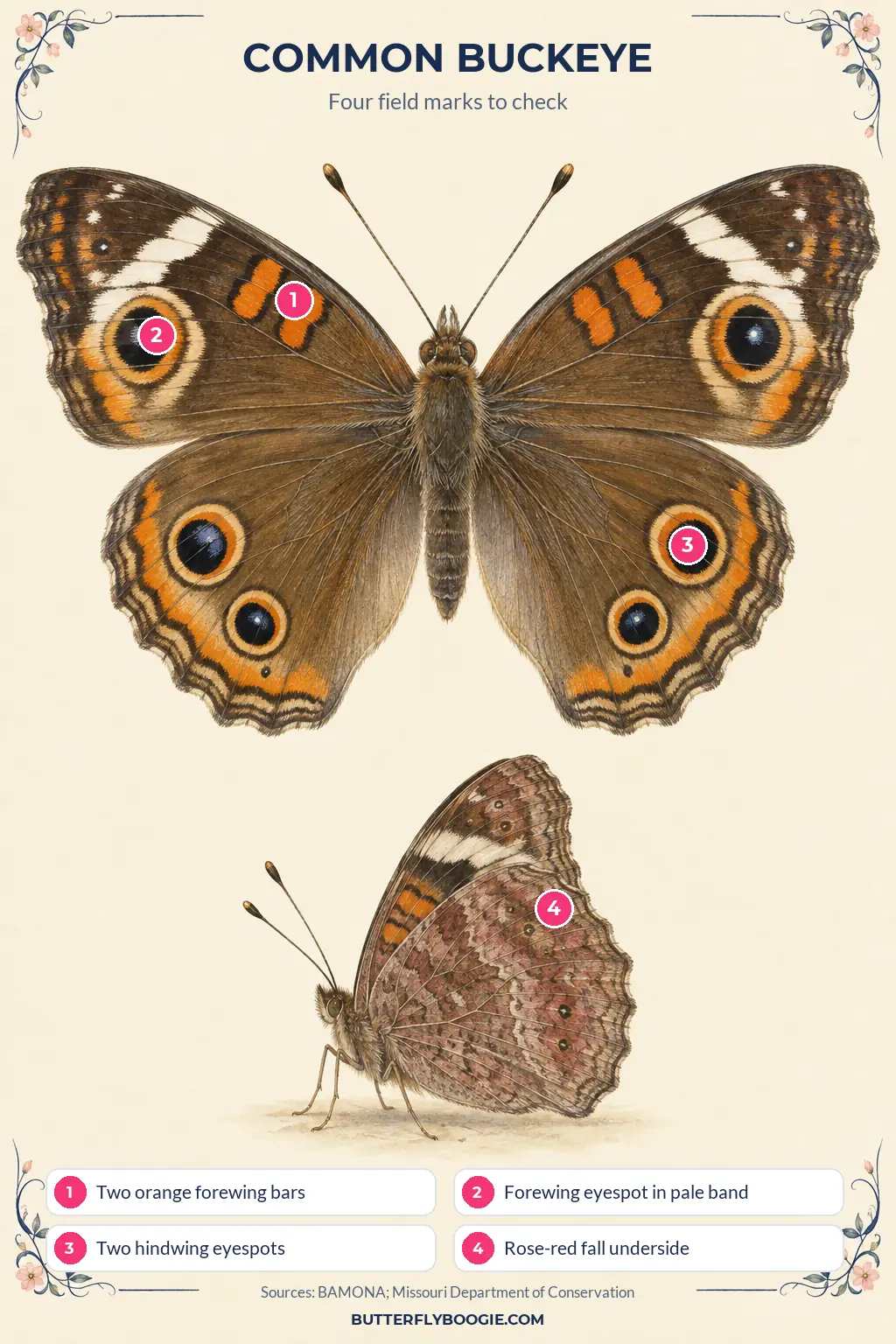
Start with the eyespots. Each forewing has a large eyespot set inside a pale band, and each hindwing carries two more, with the upper one larger.
Next, check the leading edge of the forewing for two short orange bars. The Missouri Department of Conservation points to these bars and the eyespots as the marks that make the buckeye easy to identify.
The underside changes with the season. Summer buckeyes tend to be tan below, while butterflies that develop in cooler fall weather often show a reddish tint.
Size helps you separate it from bigger look-alikes. Butterflies and Moths of North America gives a wingspan of 1.5 to 2.75 inches, smaller than most swallowtails and about half the size of a monarch.
Why the Buckeye Has Eyespots
Eyespots are a defense. A bird that strikes at a large fake eye near the wing edge often grabs wing instead of body, and a sudden flash of spots can startle a predator long enough for the butterfly to escape.
The buckeye is also a laboratory favorite. Developmental biologists have studied it for decades to work out how butterflies build eyespots, and our guide to butterfly wing structure and patterns explains how scales create these designs.
Where Buckeyes Live
Buckeyes are residents of the southern United States. Their permanent range reaches north along the coasts to central California and North Carolina, and south through Mexico and the Caribbean.
Each spring and summer, buckeyes spread north into states where they can’t survive the winter. The Missouri Department of Conservation notes that Missouri’s buckeyes die off in cold weather and the state is repopulated from the Deep South every year.
Open, sunny ground is the common thread. Look along field edges, roadsides, sandy lots, pastures and garden paths, especially where low plants grow between patches of bare soil.
Host Plants and Life Cycle
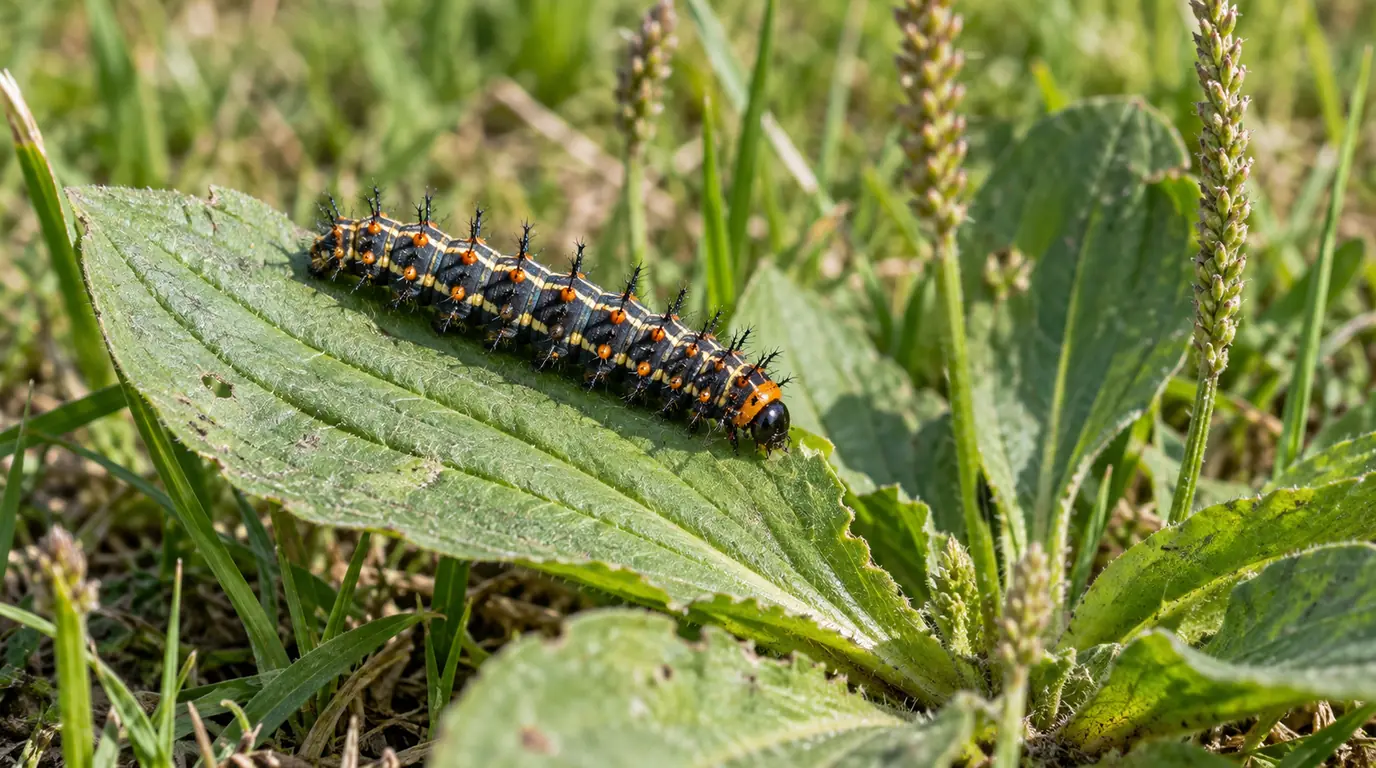
Buckeye caterpillars feed on plants in the plantain, snapdragon and acanthus families. The Missouri Department of Conservation lists verbenas, plantains, toadflax, ruellias and snapdragons as the main foods.
Females lay single eggs on the leaves or buds of those plants. The dark, spiny caterpillars feed out in the open, and the chrysalis is a mottled brown that blends into dead leaves and stems.
Buckeyes fly from spring through fall and have two to three broods between May and October across much of their range, according to Butterflies and Moths of North America. In the Deep South they breed all year.
If you want buckeyes in your yard, a patch of plantain or a pot of snapdragons doubles as a nursery. Our caterpillar host plant guide covers more plants that feed caterpillars.
Buckeye Behavior
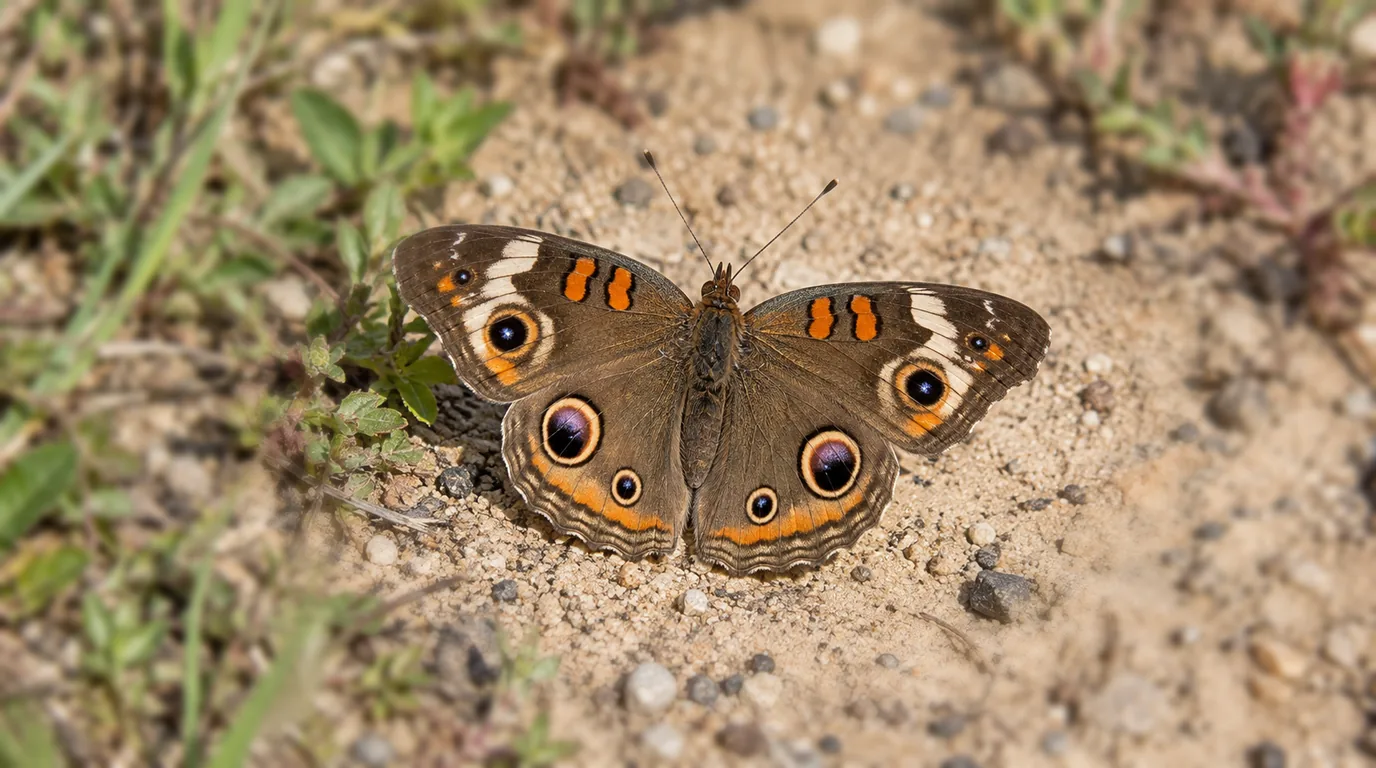
Male buckeyes are some of the most territorial butterflies you’ll see. They perch on low plants or bare ground, wait for females, and chase away other insects that come near.
Buckeyes often bask with their wings spread flat, which shows off all four eyespots at once. They also sip minerals from damp soil and visit flowers such as asters, coreopsis and chicory for nectar.
Our guide to butterfly behavior covers basking, puddling and territory defense across other species.
FAQ
Is the buckeye butterfly rare?
No. It’s one of the most common butterflies in the southern U.S. and a regular summer and fall visitor farther north.
What does a buckeye caterpillar eat?
Plants in the plantain, snapdragon and acanthus families.
Common choices include plantain, snapdragon, toadflax, ruellia and verbena.
When can I see buckeye butterflies?
From spring through fall across most of the U.S., with the most sightings in late summer and fall farther north.
In the Deep South, buckeyes fly and breed all year.
Do buckeye butterflies migrate?
They spread north in spring and summer into areas where they can’t survive the winter.
Northern populations die out in the cold, and the South sends new butterflies north again the next year.