

Key Takeaways
- Butterflies bask with open wings to raise their body temperature, and you can predict their activity levels based on sun exposure in your yard.
- Puddling behavior, where butterflies gather on wet soil or mud, is a mineral-seeking strategy most common in males before mating season.
- Territorial chasing, hilltopping, and roosting all serve specific survival purposes that backyard observers can identify with a little practice.
- Predator avoidance tactics range from camouflage and mimicry to flash coloration and playing dead, each adapted to different threats.
Every wing angle, flight pattern, and landing spot has a reason behind it. Understanding butterfly behavior turns casual backyard watching into real knowledge about what these insects need and how they survive.
Basking and Thermoregulation
Butterflies are ectothermic, meaning they rely on external heat sources to warm their bodies. According to research from the Journal of the Lepidopterists’ Society, most species need a thoracic temperature of at least 30 degrees Celsius (86 degrees Fahrenheit) before they can fly effectively.
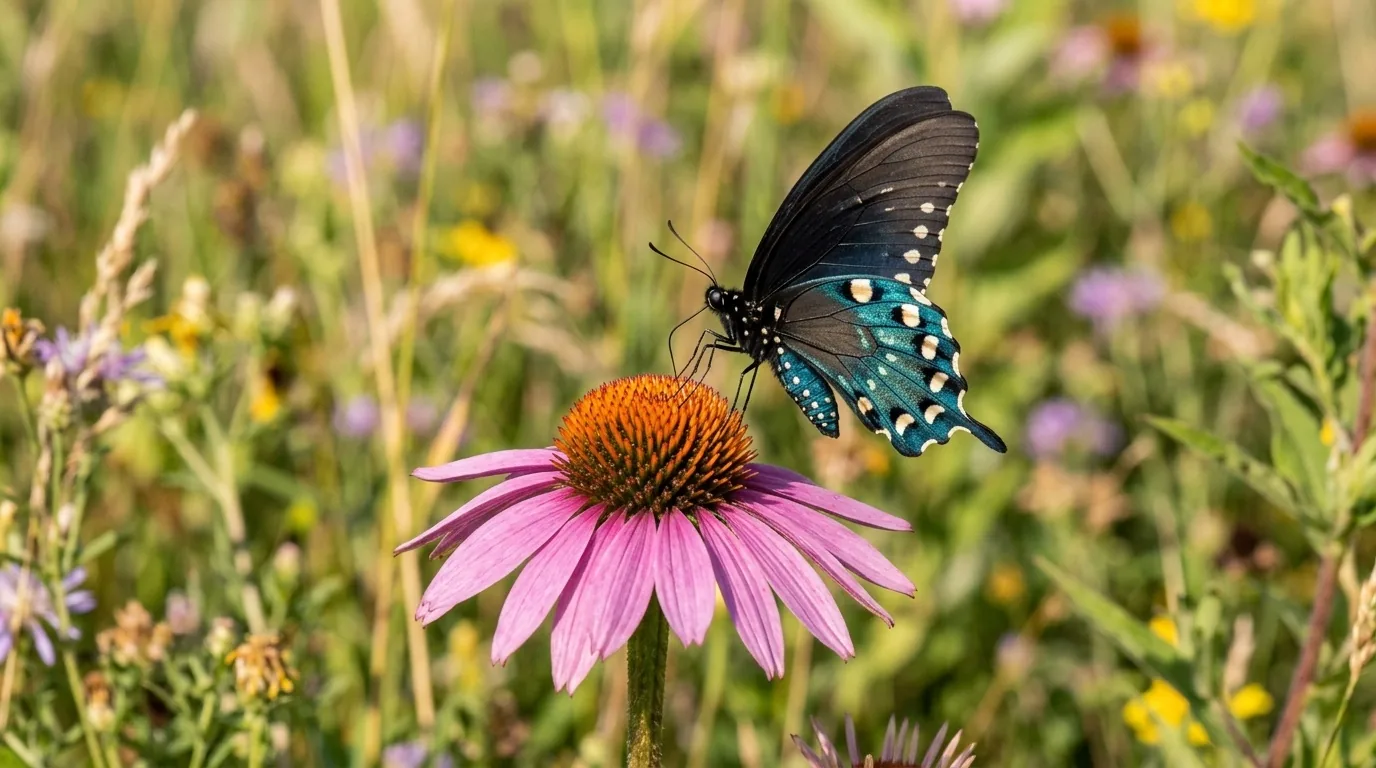
Lateral baskers close their wings and tilt sideways to absorb the sun’s rays, a style common in sulphurs and whites. Dorsal baskers do the opposite, opening their wings flat so the dark upper surfaces soak up heat directly. Swallowtails and painted ladies are frequent dorsal baskers.
On cool mornings, check flat rocks, bare soil, and south-facing fence rails. These are the first spots butterflies land on before their day begins.
Puddling for Minerals
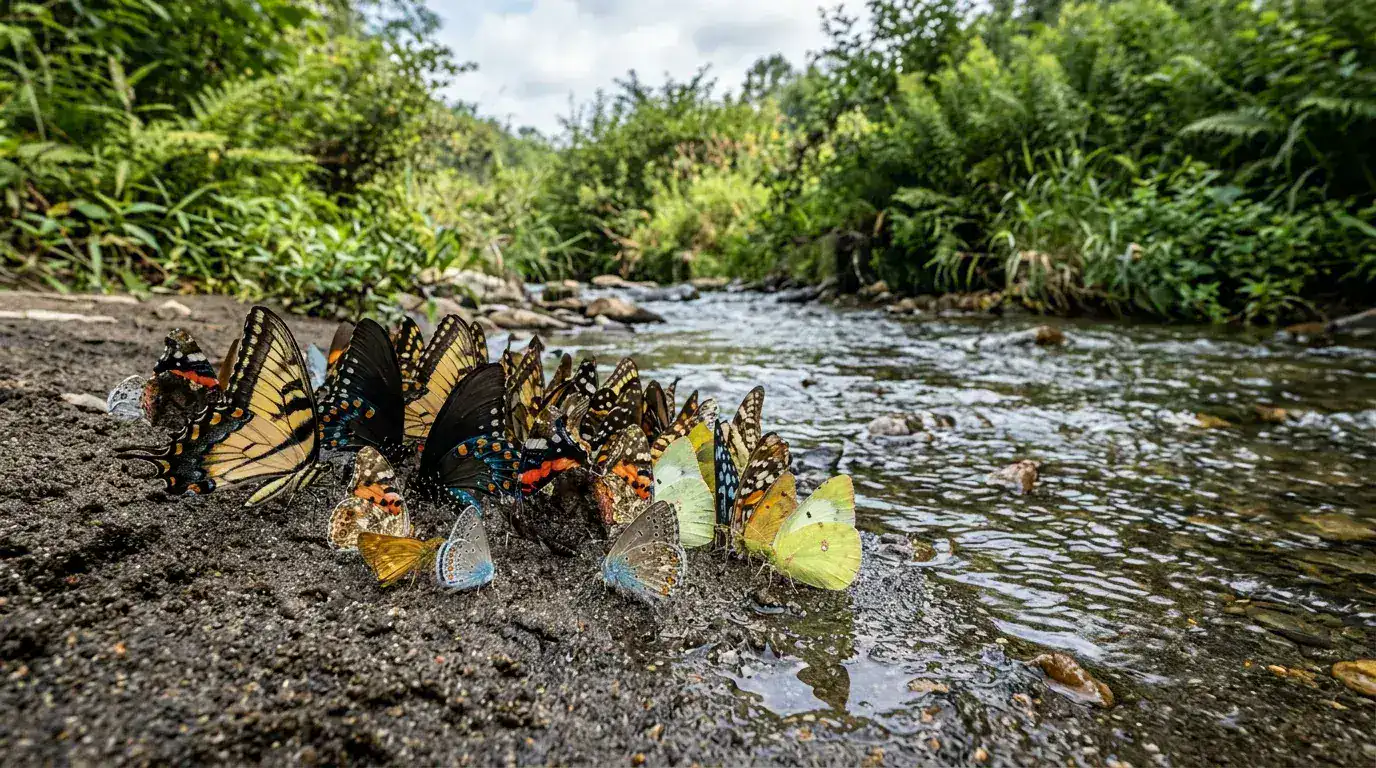
If you have ever seen a cluster of butterflies gathered on a patch of damp earth, a sandy creek bank, or even animal droppings, you witnessed puddling. This behavior is driven by a need for sodium and amino acids that nectar alone does not provide.
Males puddle far more often than females. A 2005 study published in Behavioral Ecology and Sociobiology by researchers at the University of Cambridge confirmed that males transfer sodium to females during mating as a nuptial gift, which improves egg viability.
You can create a simple puddling station in your garden by filling a shallow dish with sand, adding a pinch of sea salt, and keeping it damp. Place it near your butterfly-friendly plants and you may attract species you have never seen in your yard before.
Hilltopping as a Mate-Finding Strategy
Hilltopping is exactly what it sounds like. Males of certain species fly to the highest point in the local landscape, whether that is a literal hilltop, a ridge, or even the tallest tree in a flat field, and wait for females to arrive.
The strategy works because both sexes agree on a meeting point, which increases the odds of finding each other across a large area. Black swallowtails and common buckeyes are well-known hilltoppers.
If you live near a hill or elevated clearing, watch the summit on warm afternoons between 10 a.m. and 2 p.m. You will often see males patrolling tight circuits and chasing away rivals.
Territorial Behavior and Chasing
Many butterfly species are surprisingly aggressive defenders of space. A male perching on a sunlit leaf may launch at anything that enters his patch, including other butterflies, bees, and sometimes even birds.
These chases involve rapid spiraling flights where two butterflies circle each other upward before one gives up. Research published in the journal Ecological Entomology showed that prior residency, not body size, is the strongest predictor of who holds the territory.
Sit quietly near a sunny gap in your garden during midday to watch these battles. The same male will often return to the exact same perch after each chase.
Migration Patterns
The monarch migration is the most famous example. Each fall, monarchs east of the Rocky Mountains travel up to 4,800 kilometers (about 3,000 miles) to their wintering grounds in the oyamel fir forests of central Mexico, according to the World Wildlife Fund.
Monarchs are not the only travelers. Painted ladies undertake multi-generational migrations across North America and Europe, and red admirals and cloudless sulphurs also make seasonal movements.
Migrants fly in a consistent direction, maintain a steady altitude, and rarely stop to feed for long. If you see dozens of butterflies all heading the same way on an autumn afternoon, you are watching a migration event. Knowing your local species makes it easier to tell which are passing through and which are year-round residents.
Feeding Behavior and the Proboscis
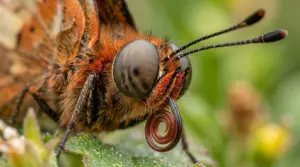
A butterfly’s proboscis is a coiled, straw-like mouthpart that unrolls to reach deep into flowers for nectar. When not in use, it stays tightly coiled beneath the head like a watch spring.
Feeding visits are not random. Butterflies learn which flower colors and shapes offer the best nectar rewards and return to them repeatedly, a behavior called flower constancy. Flat-topped blooms like zinnias, lantana, and coneflowers are popular because they provide easy landing platforms.
Some species prefer rotting fruit, tree sap, or carrion over nectar. Leaving overripe bananas or watermelon slices in a shallow tray can attract red admirals, question marks, and mourning cloaks.
Roosting Behavior
As the sun drops and temperatures fall, butterflies need a safe place to spend the night. Roosting spots are chosen for shelter from wind and rain, and many species return to the same spot night after night.
Some butterflies roost alone, tucked under a leaf or pressed flat against bark. Others form communal roosts. Zebra longwings will cluster 30 or more individuals on a single branch at dusk, returning to that exact branch each evening for weeks.
To find roosting butterflies, check the undersides of broad leaves, sheltered fence posts, and dense shrubs about 30 minutes after sunset. They will be still and easy to observe up close.
Predator Avoidance Tactics
Butterflies face threats from birds, spiders, lizards, and praying mantises. Their survival depends on a set of defensive behaviors, each suited to a different threat.
Camouflage and Crypsis
The underside of many butterfly wings mimics dead leaves, bark, or lichen. When a common buckeye or Indian leaf butterfly closes its wings, it nearly vanishes against a branch.
Mimicry
Batesian mimicry is when a harmless species evolves to look like a toxic one. The viceroy butterfly, for example, closely resembles the monarch, which birds avoid because of its milkweed-derived toxins. Predators that have learned to avoid monarchs will also leave viceroys alone.
Flash Coloration and Startle Displays
Some species hide bright wing patches until threatened, then suddenly flash them to startle a predator. The red admiral’s sudden wing spread reveals bold red-orange bands that buy just enough confusion for an escape.
Owl butterflies take this further with large eyespots on their hindwings that mimic the face of a predator, causing birds to hesitate or flee.
Playing Dead
When grabbed or knocked to the ground, some butterflies go completely limp with their wings folded. This death-feigning response, called thanatosis, is effective against birds that prefer live, moving prey.
Putting It All Together in Your Backyard
The best way to learn butterfly behavior is to sit in one spot for 20 minutes with a notebook. Record the time, the temperature, which species you notice, and what they are doing.
Over a few weeks, patterns will emerge. You will start to predict where basking happens, which flowers get the most feeding visits, and where territorial males set up patrol routes.
FAQ
Why do butterflies open and close their wings while sitting still?
This is thermoregulation in action.
Opening the wings absorbs heat from the sun, while closing them can either reduce heat gain or expose cryptic undersides for camouflage.
If you see rapid opening and closing, the butterfly is likely fine-tuning its body temperature.
Why do butterflies fly in circles around each other?
Spiraling flights are usually territorial disputes between two males.
They circle upward together until one gives up and leaves the area.
The resident male, the one who was there first, almost always wins.
What does it mean when butterflies land on me?
Butterflies are attracted to the salts in human sweat.
This is essentially puddling behavior directed at your skin instead of mud.
It is harmless and actually a sign that the butterfly needs minerals.
Do butterflies sleep at night?
Butterflies enter a dormant state called torpor at night, which is similar to sleep but not identical.
They find a sheltered roosting spot, slow their metabolism, and remain motionless until morning warmth wakes them.
Some species roost in groups for added safety.
Why do butterflies gather in large groups on mud or wet sand?
This is puddling, a mineral-seeking behavior.
Males are the most frequent puddlers because they need extra sodium and amino acids, which they transfer to females during mating.
Damp soil, rotting fruit, and even animal waste can attract puddle clubs.
How can I tell if a butterfly is migrating or just flying around my yard?
Migrating butterflies fly in a consistent compass direction without circling back.
They tend to maintain a steady altitude and pause only briefly to refuel at flowers.
Resident butterflies circle, patrol, chase rivals, and return repeatedly to the same area throughout the day.