

Key Takeaways
- A butterfly’s body is divided into three main sections: the head, thorax, and abdomen, each performing distinct biological functions.
- Each compound eye contains over 12,000 individual lenses called ommatidia, giving butterflies a nearly 360-degree field of vision according to the Smithsonian Institution.
- Butterflies taste with their feet, using chemoreceptors on their tarsi to detect sugar concentrations in potential food sources and host plants for egg-laying.
- Wing color comes from two different sources: pigment molecules that absorb certain wavelengths, and microscopic scale structures that refract light to produce iridescent blues and greens.
Butterfly Anatomy Starts With Three Body Sections
Butterfly anatomy follows the same basic blueprint as all insects: a body divided into three distinct regions. The head handles sensory input and feeding, the thorax powers movement, and the abdomen manages digestion and reproduction.
What separates butterflies from other insects is how specialized each region has become. Every body part has been shaped for a life spent flying between flowers.
The Head: Senses and Feeding
Compound Eyes
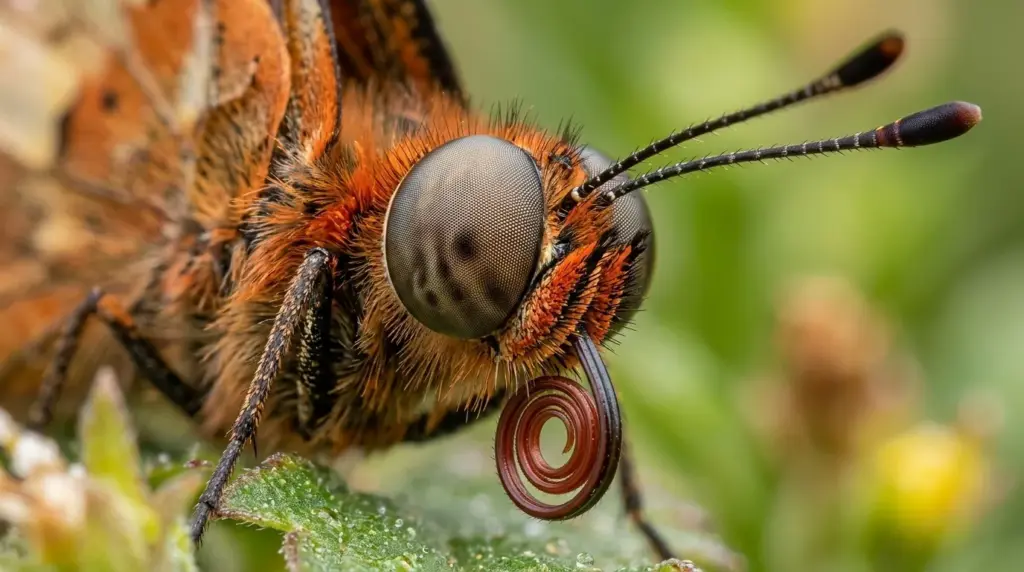
Butterfly eyes are nothing like ours. Each compound eye is made up of more than 12,000 tiny units called ommatidia, according to the Smithsonian Institution, and each unit captures its own small piece of the visual field.
The brain stitches these thousands of signals together into a mosaic image. Butterflies can detect ultraviolet light that humans cannot see, which means flowers look completely different to them than they do to us.
A 2016 study in Frontiers in Ecology and Evolution confirmed that some butterfly species possess up to 15 classes of photoreceptors, compared to our three.
Antennae
The two antennae are club-shaped, meaning they have a gradual thickening at the tip. This club shape is actually one of the quickest ways to tell a butterfly apart from a moth, since moths typically have feathery or tapered antennae instead.
Antennae are packed with chemoreceptors that detect scent molecules drifting through the air. Butterflies rely on these sensors to locate nectar sources from long distances and to find mates based on pheromone trails.
Proboscis
The proboscis is a long, flexible feeding tube that coils up like a watch spring when not in use. When a butterfly lands on a flower, it unfurls the proboscis and inserts it deep into the blossom to sip nectar.
This tube works through capillary action combined with muscular pumping. Some species have a proboscis long enough to reach nectar in deep tubular flowers that shorter-tongued insects cannot access.
The Thorax: Movement and Locomotion
Six Legs With Built-In Taste Sensors
All butterflies have six legs attached to the thorax, though in some families like the Nymphalidae (brush-footed butterflies), the front pair is reduced in size and tucked against the body. This can make them appear to have only four functional legs.
The tarsi, or foot segments, contain chemoreceptors that allow butterflies to “taste” surfaces just by standing on them. A female monarch can determine whether a milkweed leaf is a suitable place to lay eggs simply by drumming her feet on the leaf surface, according to research from the University of Kentucky Department of Entomology.
Four Wings and How They Work
Two forewings and two hindwings attach to the thorax, and each pair works together during flight. The forewings are typically larger and more triangular, while the hindwings are rounder and sit closer to the body.
Powerful flight muscles inside the thorax do not attach directly to the wings. Instead, they deform the thorax walls, which causes the wings to move up and down, a system that allows wingbeats ranging from 5 to 12 per second depending on the species.
For a deeper look at wing mechanics and pattern formation, check out our guide on butterfly wing structure and how they work.
Wing Scales: Where Color Comes From
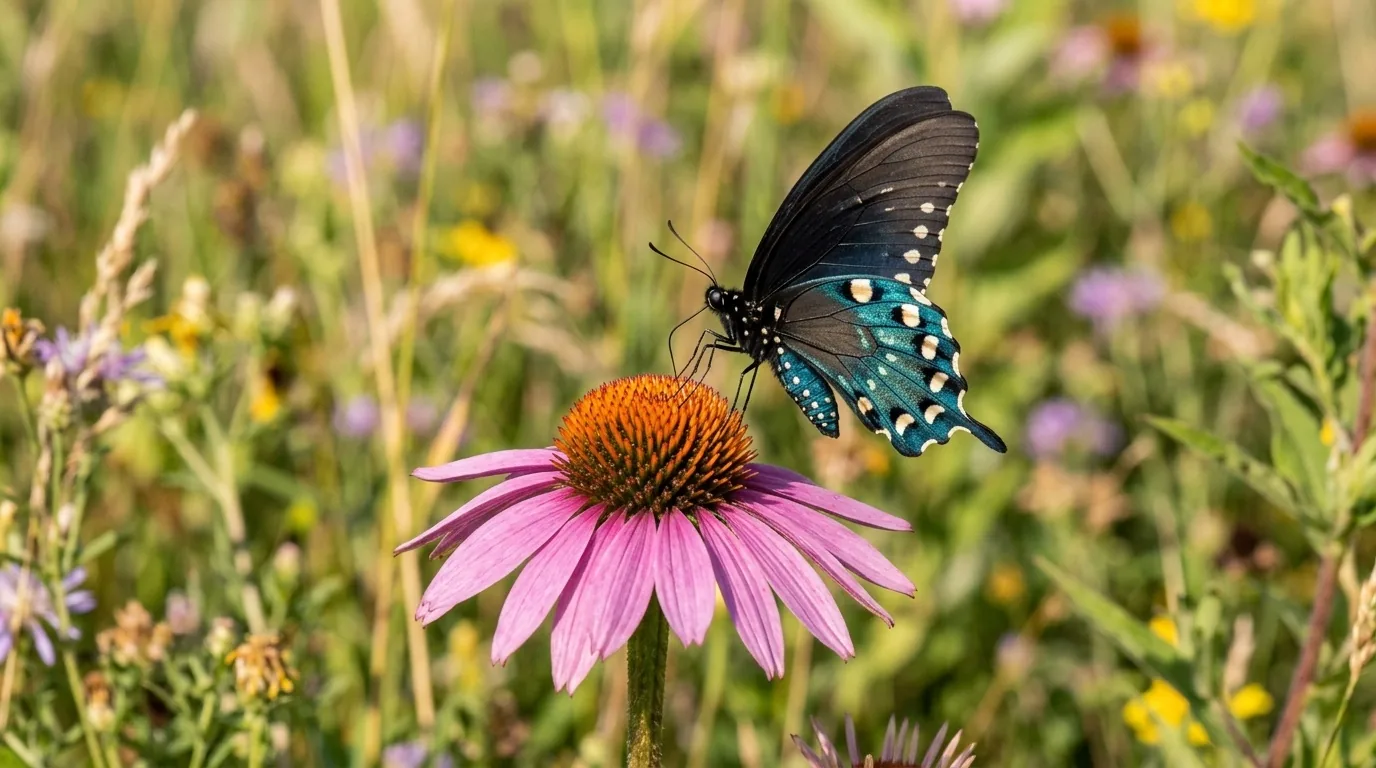
Every butterfly wing is covered in thousands of tiny overlapping scales arranged like shingles on a roof. These scales are what give butterflies their color, and they produce color through two completely different mechanisms.
Pigment-based color comes from molecules within the scale that absorb certain wavelengths of light and reflect the rest. Melanin produces blacks and browns, while pterins create yellows and whites.
Structural color works differently. Nano-scale ridges and layers within certain scales bend and split light to produce the brilliant blues, greens, and purples you see on species like the Morpho butterfly.
The scales serve practical purposes beyond appearance. They help regulate body temperature by absorbing solar heat, and their loose attachment means they can shed into a predator’s grip, allowing the butterfly to escape.
The Abdomen: Breathing, Digestion, and Reproduction
Spiracles and the Tracheal System
Butterflies do not have lungs. They breathe through a network of tiny openings called spiracles that line both sides of the thorax and abdomen.
Air enters through these spiracles and travels through branching tubes called tracheae, which deliver oxygen directly to tissues. This passive system limits how large an insect can grow, which is one reason butterflies stay relatively small.
Digestive System
Nectar passes through the proboscis into the foregut, then into the midgut where enzymes break down sugars. Nutrients absorb through the gut wall into the hemolymph, the insect equivalent of blood.
Waste products are processed by Malpighian tubules, which function like simplified kidneys. These tubules filter the hemolymph and pass waste into the hindgut for excretion.
Reproductive Organs
Male butterflies have a pair of claspers at the end of the abdomen used to grip the female during mating. Internally, they produce spermatophores, packets of sperm transferred to the female during copulation.
Females have an ovipositor for depositing eggs, along with a spermatheca that stores sperm after mating. Some species mate only once and use stored sperm to fertilize eggs over several weeks.
Butterfly vs. Moth Anatomy: The Key Differences
Butterflies and moths both belong to the order Lepidoptera and share the same basic body plan. The differences are subtle but consistent across most species you will encounter.
Butterfly antennae end in a distinct club shape, while moth antennae are typically feathery or thread-like. Butterflies tend to rest with their wings held upright over the body, but moths usually fold their wings flat against their sides.
Body shape differs too. Moths generally have thicker, fuzzier bodies with denser scales on the thorax, which helps them retain heat for nighttime activity.
Moths also use a hook-and-bristle structure called a frenulum to couple their forewing and hindwing during flight. According to the Australian Museum, the frenulum is one of the more reliable anatomical markers for classifying Lepidoptera, and most butterfly families have lost it entirely.
FAQ
How many body parts does a butterfly have?
A butterfly’s body is organized into three main sections: the head, thorax, and abdomen.
Each section contains specialized organs and structures. The head houses sensory organs and the proboscis, the thorax carries the wings and legs, and the abdomen contains the digestive and reproductive systems.
Can butterflies see color?
Yes, butterflies have some of the best color vision in the animal kingdom.
Their compound eyes can detect a wide spectrum that includes ultraviolet light invisible to humans. This expanded vision helps them locate flowers and recognize potential mates by UV patterns on wings.
Why do butterflies taste with their feet?
Chemoreceptors on the tarsi (feet) allow butterflies to analyze the chemical composition of any surface they land on.
This ability is especially important for females choosing where to lay eggs. By tasting a leaf with her feet, a female can tell whether it belongs to the right host plant species for her caterpillars.
Do butterflies have bones?
No. Butterflies are invertebrates with an exoskeleton, a hard outer shell made primarily of chitin.
The exoskeleton provides structural support, protects internal organs, and prevents water loss. It serves the same purpose as a skeleton but sits on the outside of the body.
How do butterfly wings get their color?
Wing color comes from two sources: pigment molecules and structural light manipulation.
Pigments like melanin absorb certain wavelengths to produce browns, blacks, and yellows. Structural color arises from nano-scale ridges on the wing scales that bend light, creating iridescent blues, greens, and purples that change depending on the angle.
What is the difference between butterfly and moth antennae?
Butterfly antennae are thin with a rounded club at the tip, while moth antennae are typically feathery, comb-like, or tapered to a point.
The feathery structure of moth antennae increases surface area for capturing pheromone molecules in the dark. Butterfly antennae trade that surface area for a more compact shape suited to daytime navigation.