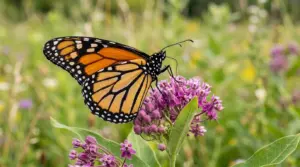



Butterfly feeding habits are more interesting than most people expect. These insects don’t just float from flower to flower sipping nectar all day – though they do plenty of that. They also drink from mud puddles, feed on rotting fruit, lap up tree sap, and in some cases land on animal dung or even dead animals. Understanding what butterflies actually eat, and how they eat it, gives you a much better picture of why they behave the way they do in the garden and in the wild.
Key Takeaways
- Butterflies feed through a long, coiled tube called a proboscis, which works like a straw to pull up liquid food.
- Nectar is the primary food source for most adult butterflies, but many species regularly feed on fruit, tree sap, and minerals from mud.
- Mud puddling is a real feeding behavior – butterflies gather at wet soil to absorb sodium and amino acids they can’t get from nectar alone.
- Butterflies taste food with their feet before they ever uncurl their proboscis, using chemical receptors in their tarsal claws.
The Proboscis – How Butterflies Eat
The proboscis is the centerpiece of butterfly feeding. It’s a long, flexible tube that stays coiled up beneath the butterfly’s head when not in use, a bit like a rolled-up garden hose. When a butterfly lands on a food source, it unrolls this tube and uses it to suck up liquid. The whole structure is made from two separate channels – called galeae – that zip together when the butterfly is a newly emerged adult. If you’ve ever watched a butterfly spend a minute or two opening and closing its mouthparts right after coming out of a chrysalis, that’s exactly what it’s doing: forming its proboscis for the first time.
The length of the proboscis varies quite a bit between species, and it’s closely matched to the flowers that butterfly tends to use. Sphinx moths are the extreme example, with proboscises longer than their entire body, but plenty of butterfly species show the same evolutionary pattern at a smaller scale. A butterfly with a short proboscis is going to favor open, shallow flowers. A species with a longer one can reach nectar in tubular blooms that other butterflies can’t access.
According to research from the Kansas State University Department of Entomology, the proboscis isn’t just a passive straw – it has muscle control that lets the butterfly adjust the flow of liquid and even move the tip to probe different parts of a flower. The tip also has sensory receptors that help the butterfly detect the sugar content of what it’s drinking.
Nectar – Their Main Food Source
For most adult butterflies, floral nectar is the foundation of their diet. Nectar is a sugar-rich liquid produced by flowers specifically to attract pollinators, and butterflies are among the most common visitors. The sugar in nectar – primarily sucrose, glucose, and fructose – gives butterflies the energy they need for flight, reproduction, and thermoregulation.
Not all nectar is equally useful. Butterflies tend to prefer nectar with a sugar concentration somewhere between 20 and 35 percent. Below that range and the energy payoff isn’t worth the effort. Above it and the liquid gets too thick to drink efficiently. This is why you’ll see butterflies passing over some flowers entirely while feeding repeatedly at others – they’re making real-time assessments of the food quality available to them.
If you want to attract more butterflies to your yard, planting native flowering species is the most reliable approach. You can also supplement with nectar feeders or even make your own solution at home. There’s a straightforward homemade butterfly nectar recipe that works well and costs almost nothing to prepare.
Butterflies don’t feed randomly. They tend to stay loyal to particular flower species during a single foraging trip – a behavior called flower constancy – which makes them more efficient at finding and extracting nectar. It also makes them useful pollinators, since they’re more likely to transfer pollen between flowers of the same species rather than cross-pollinating unrelated plants.
Beyond Nectar – Fruit, Sap, Puddles, and More
Nectar gets most of the attention, but it’s far from the only thing butterflies eat. Many species are perfectly happy feeding on things that most people would never connect with butterfly behavior.
Rotting fruit is a significant food source for a wide range of species, particularly in tropical environments. Overripe and fermenting fruit contains sugars that are easy to access without needing a deep proboscis, along with amino acids and other nutrients. Some butterfly species that rarely visit flowers will feed almost exclusively on fermenting fruit. You can take advantage of this yourself – putting out a plate of overripe bananas or peaches in a sunny spot in your yard can attract species you’d never see at a flower garden.
Tree sap is another option, especially for woodland species. When trees are damaged and sap flows to the surface, it ferments slightly and becomes highly attractive to butterflies, as well as to beetles, wasps, and other insects. Hackberry emperors and some anglewing butterflies are particularly known for this behavior.
Some butterfly species feed on animal dung or even carrion. This sounds strange, but these materials are rich in amino acids and minerals – nutrients that nectar simply doesn’t provide in adequate amounts. Male butterflies in particular need sodium for sperm production and mating activity, which is one reason you’ll often see males engaging in these unusual feeding behaviors more often than females. Understanding this puts butterfly feeding into the broader context of the butterfly food chain and ecology.
Mud Puddling Behavior
If you’ve ever seen a group of butterflies clustered around a puddle, a damp patch of soil, or a pile of animal waste, you’ve witnessed mud puddling. It’s one of the more striking butterfly behaviors to observe, especially when dozens of individuals gather in one spot.
Butterflies puddle to absorb dissolved minerals – mainly sodium, but also nitrogen compounds and amino acids – that are present in wet soil, urine-soaked ground, and similar surfaces. Nectar is relatively low in sodium, so many species compensate by seeking out other sources. The behavior is much more common in males than females, which lines up with the theory that sodium plays a role in sperm production and is passed to females during mating as a nutritional contribution to egg development.
Research published through the University of Florida’s entomology department has documented puddling aggregations involving dozens of species simultaneously, particularly in tropical regions where mineral-poor soils make this behavior more of a necessity. In temperate zones the behavior is less dramatic but still common, especially in early summer when male butterflies are actively seeking mates.
You can create a puddling station in your own garden with very little effort. A shallow dish or tray filled with sand and kept consistently moist will attract butterflies. Adding a small pinch of sea salt or placing the tray near a compost area increases the mineral content and makes it more appealing.
When and Where Butterflies Feed
Butterflies are ectotherms, meaning their body temperature depends on the temperature of their surroundings. This has a direct effect on when and where they feed. Most feeding activity happens during the warmest parts of the day, typically between mid-morning and mid-afternoon when temperatures are high enough for butterflies to be fully active. On cooler days or in early morning, you’ll often see butterflies basking – spreading their wings to absorb sunlight – before they start foraging.
Location matters as much as timing. Butterflies tend to feed at flowers that are growing in full sun rather than shade, partly because sun-exposed flowers produce more nectar and partly because warmer temperatures help the butterfly stay active longer. Open areas, garden edges, and meadows are preferred over deep woodland interiors for exactly this reason.
Wind also affects feeding. Butterflies don’t fly well in strong winds, and they tend to stay close to the ground or sheltered areas when conditions are breezy. This is why planting butterfly gardens near fences, hedgerows, or buildings – anything that provides a windbreak – tends to attract more consistent feeding activity than open exposed sites.
Seasonal timing plays a role too. Migrating species like monarchs need to feed heavily in late summer and fall to build up fat reserves for the journey south. Their feeding behavior during this period is noticeably more intensive and less selective than at other times of year.
Frequently Asked Questions
Do butterflies only eat nectar?
No. While nectar is the most common food source for adult butterflies, many species also feed on rotting fruit, tree sap, animal dung, carrion, and the mineral-rich water found in mud puddles. The exact diet depends on the species and what’s available in their habitat.
How do butterflies find their food?
Butterflies use a combination of vision and chemical detection. They can see ultraviolet light, which helps them identify flowers that have UV-reflective petal patterns invisible to human eyes. They also taste with their feet – sensory receptors in their tarsal claws detect sugars and other chemicals when they land on a surface, which tells them immediately whether it’s worth feeding there.
Can butterflies drink water?
Yes. Butterflies drink water, though they typically get most of their fluid intake from nectar and fruit juice. They also drink from puddles and wet soil, which serves the dual purpose of hydration and mineral absorption. Providing a water source in your garden – particularly a shallow dish with wet sand – can support butterfly health alongside food plants.
Why do butterflies feed on dung or dead animals?
It comes down to nutrition. Nectar provides carbohydrates for energy but is low in sodium, nitrogen, and amino acids. Dung and carrion are rich in exactly those nutrients. Males in particular seek out these food sources because sodium plays a role in sperm production. It’s an unusual behavior that makes complete sense when you look at the nutritional gaps that a nectar-only diet would leave.
How much do butterflies eat in a day?
This varies a lot by species, season, and activity level. A butterfly preparing for migration may spend most of the day feeding to build fat reserves. A resting adult in mild weather might feed for only a short period. Because they’re ectotherms with relatively slow metabolisms compared to warm-blooded animals, they don’t need to eat enormous amounts – but they do need to feed regularly when active to fuel flight.
What flowers are best for feeding butterflies?
Native flowering plants are almost always the best choice, since butterflies in your region have evolved alongside those species. Milkweed, coneflower, goldenrod, lantana, and native asters are consistently strong performers in North American gardens. Flat or shallow flower heads tend to work better than tubular blooms for species with shorter proboscises. Planting in clusters rather than single specimens also makes it easier for butterflies to locate and return to a food source.