

If you’ve ever spotted an orange-and-black butterfly fluttering through a meadow, a garden, or even a city park, there’s a good chance you were looking at a painted lady butterfly (Vanessa cardui). This species holds a title no other butterfly can claim: it is the most widespread butterfly on Earth, found on every continent except Antarctica. From the highlands of the Himalayas to the scrublands of the Mojave Desert, painted ladies show up where other butterflies simply don’t bother to go.
What makes them so successful? It’s a mix of adaptability, an unusually broad diet as caterpillars, and a migration strategy that covers thousands of miles across multiple generations. This article covers everything you need to know about the painted lady butterfly, from how to identify one in your backyard to the science behind one of the longest insect migrations ever documented.
Key Takeaways
- The painted lady butterfly (Vanessa cardui) is found on every continent except Antarctica, making it the world’s most widespread butterfly species.
- Their caterpillars feed on over 300 host plant species, which is a big part of why this butterfly thrives in so many different environments.
- Painted ladies complete a multi-generational migration route that can span up to 9,000 miles in total, one of the longest known insect migrations on record.
- Despite looking similar to monarch butterflies, painted ladies are a separate species with distinct wing patterns, shorter lifespans, and different migration behavior.
Identifying the Painted Lady
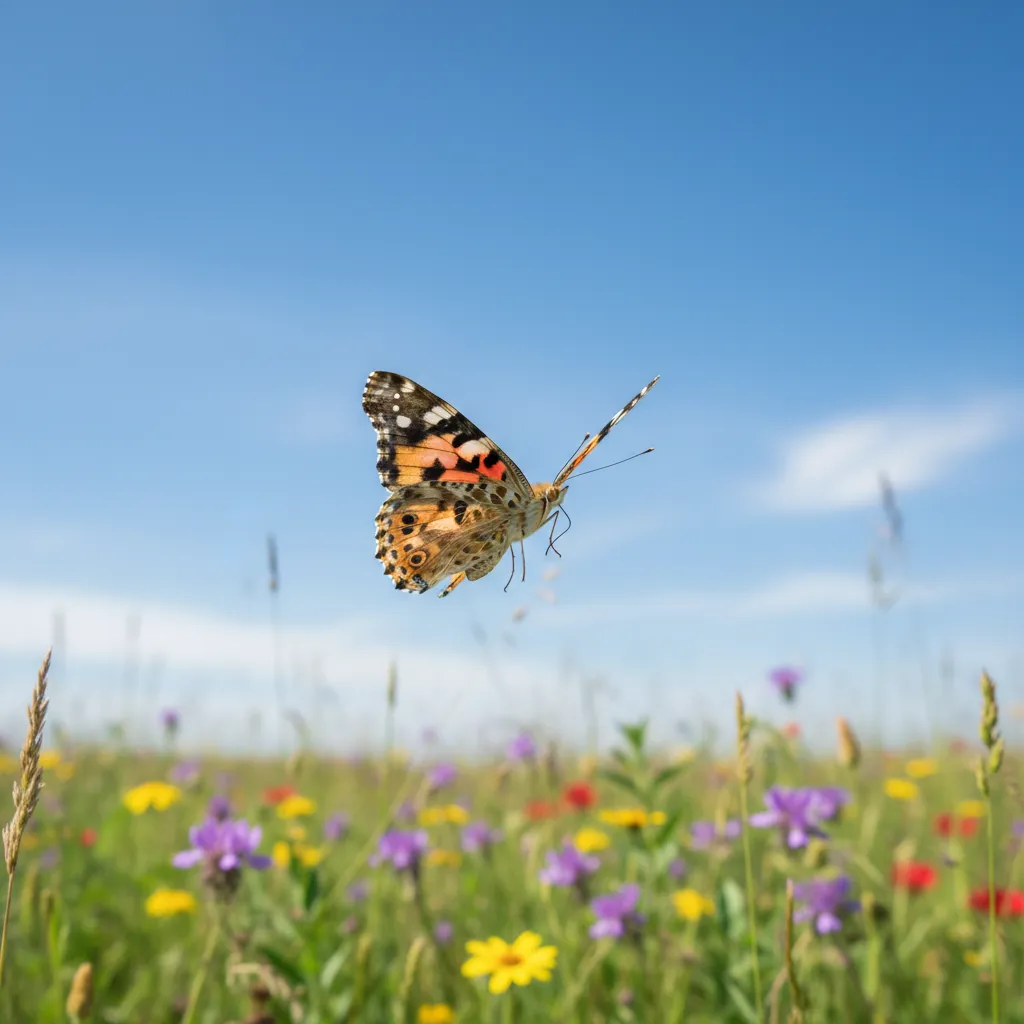
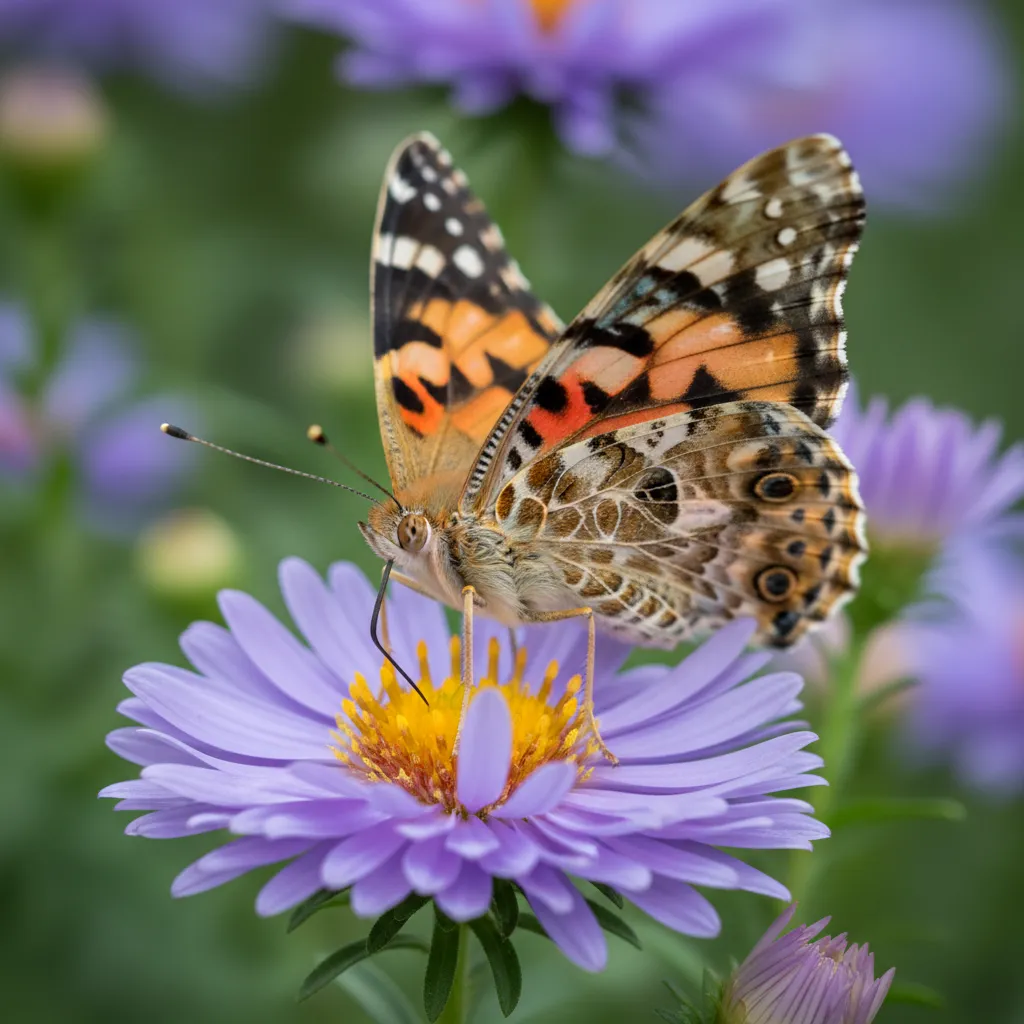
The painted lady has a fairly recognizable look once you know what to search for. The upper side of its wings is a warm orange-brown with black patches near the tips and small white spots scattered across those dark areas. The hindwings carry a row of small blue or greenish eyespots along the edge, which are more visible when the wings are spread open.
Flip a painted lady over and the underwing is where the real detail shows. The hindwing underside has a complex, muted pattern of tan, brown, and white that resembles a mosaic. This camouflage pattern makes a resting painted lady nearly invisible against tree bark or dried leaves.
Adults have a wingspan ranging from about 2 to 2.9 inches (5 to 7.3 cm). The body is stout compared to other butterflies of similar size. In flight, painted ladies have a rapid, slightly erratic wing beat that can make them tricky to track with binoculars.
The caterpillar stage is easier to identify by host plant than by appearance alone. Painted lady larvae are dark-colored with yellowish stripes running along the sides and a covering of branched spines. They typically feed inside a loosely spun silk tent built among the leaves of whatever plant they’re on.
Where Painted Ladies Live
Painted ladies are generalists in every sense of the word. They have been recorded in grasslands, deserts, mountain meadows, agricultural fields, forest edges, coastal dunes, and suburban gardens. The main requirements are open sunny areas with nectar sources for adults and suitable host plants for caterpillars.
In North America, they are resident year-round only in the warmer parts of the southwestern United States and Mexico. From there they migrate north each spring, reaching Canada and even Alaska during peak years. In Europe, the resident population stays in North Africa and southern Europe through winter before pushing north in spring.
The species also breeds in sub-Saharan Africa, across Asia, Australia, and various Pacific islands. The only landmasses without painted ladies are Antarctica, South America, and most of the remote island chains of the Pacific. Researchers believe South America’s absence of painted ladies is related to the barrier effect of the Atlantic Ocean combined with wind patterns that simply don’t bring migrants across.
One of the main reasons painted ladies can occupy so many different habitats is the diet of their caterpillars. Larvae will eat plants from over 300 species, with thistles, mallows, and legumes being favorites. This means that wherever the butterflies land, there’s usually something for their caterpillars to eat.
If you’re thinking about planting for them, check out this guide on caterpillar host plants for ideas that will attract painted ladies and a range of other species.
Painted Lady Migration
The painted lady migration is one of the most extraordinary phenomena in the insect world, and scientists are still piecing together exactly how it works. The full route, at least for the population that moves between sub-Saharan Africa and the Arctic Circle via Western Europe, spans roughly 9,000 miles when you add up all generations involved.
No single butterfly makes the entire journey. Instead, multiple generations are born, breed, and die along the route, each one moving further in the same direction than the last. This means the butterflies navigating north in spring have never been to their destination, and the ones heading south in autumn have never been to their wintering grounds either.
How they maintain directional consistency across generations is still being studied, but researchers believe a combination of the sun’s position, the Earth’s magnetic field, and wind patterns all play a role.
A 2019 study published in Nature Communications used chemical isotope analysis on wing tissue to confirm that painted ladies reaching the UK had indeed originated from sub-Saharan Africa, flying across the Sahara Desert and the Mediterranean Sea in the process. That’s a remarkable confirmation of what had been suspected but never definitively proven.
In North America, painted ladies follow a different but equally impressive route. They breed in the deserts of northern Mexico and the southwestern US during winter, then push north as spring brings blooming plants. By summer, they reach the northern US and Canada.
The return migration in autumn is less studied but appears to use high-altitude winds to cover large distances with less energy. For a broader look at how butterflies navigate long distances, the article on butterfly migration patterns covers multiple species and the science behind their navigation.
Population sizes vary dramatically from year to year. In some years, painted ladies arrive in such enormous numbers that observers describe clouds of butterflies moving through the landscape. In other years, the migration is barely noticeable.
These swings are tied to rainfall patterns in their winter breeding grounds. When winter rains are good, plants grow, caterpillars thrive, and the following migration is massive. Drought years produce the opposite effect.
Life Cycle of the Painted Lady
Like all butterflies, painted ladies go through complete metamorphosis with four stages: egg, caterpillar, chrysalis, and adult.
Females lay eggs singly on the leaves of host plants, placing each tiny green egg on a leaf that will provide first food for the hatching caterpillar. Eggs hatch within three to five days in warm weather.
The caterpillar stage lasts about two to four weeks. Larvae spin silk tents among leaves, using the shelter to feed and molt through five instar stages. By the final instar, caterpillars are roughly an inch long.
When fully grown, a caterpillar will wander away from the host plant and find a sheltered spot to pupate.
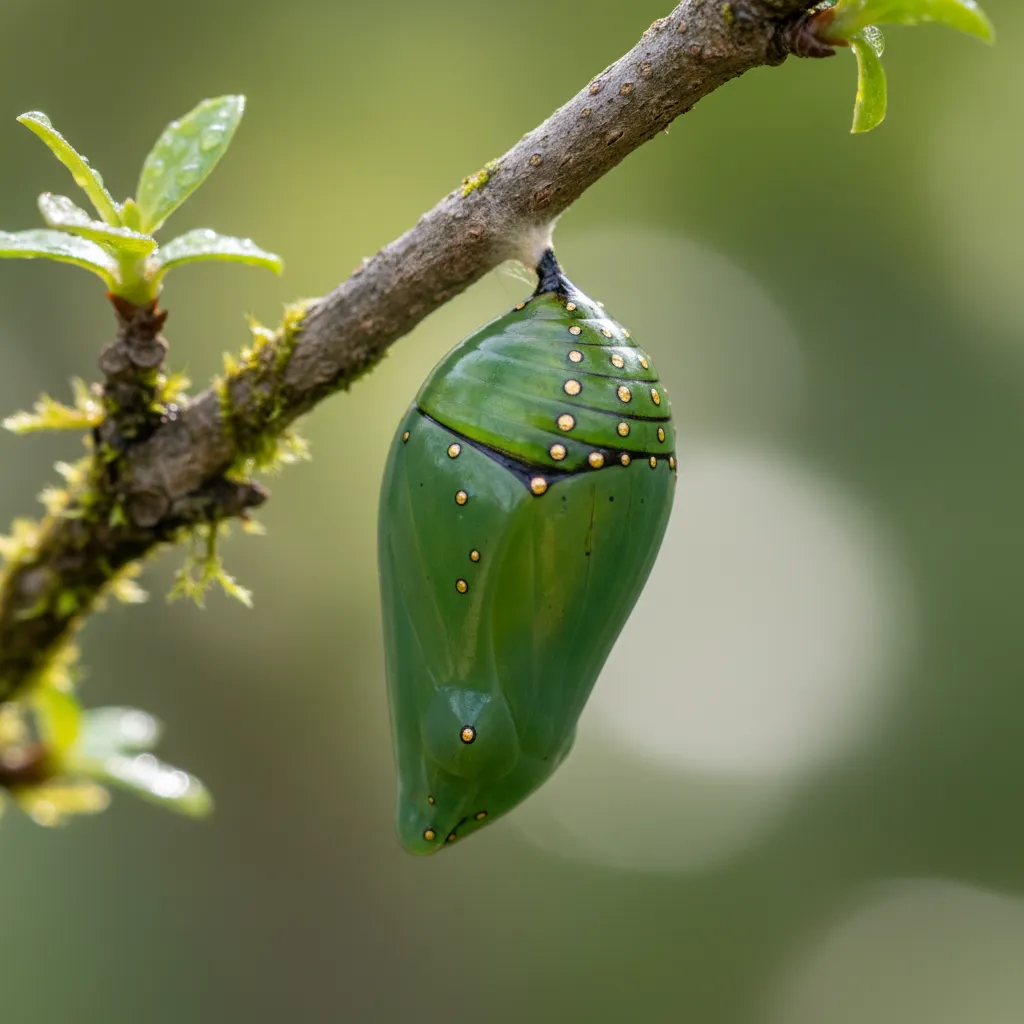
The chrysalis is grayish-brown with small metallic gold spots along its surface. This stage lasts seven to ten days depending on temperature. Adults emerge, pump fluid into their wings, and are ready to fly within a few hours.
Adult painted ladies live for approximately two to four weeks. In that time, they need to feed on nectar, find mates, and for females, locate and deposit eggs on suitable host plants. They are strong fliers and can cover substantial distances daily, which is part of what makes their long migrations possible.
If you want to try raising them yourself, the butterfly breeding guide is a good place to start, since painted ladies are one of the most beginner-friendly species to rear indoors.
Unlike monarchs, painted ladies do not enter diapause (a dormant overwintering state). They stay active year-round by following warmth and food availability, which is why their migration is tied to seasonal plant growth rather than a fixed calendar date. Attracting them to your yard is also very doable with the right plants.
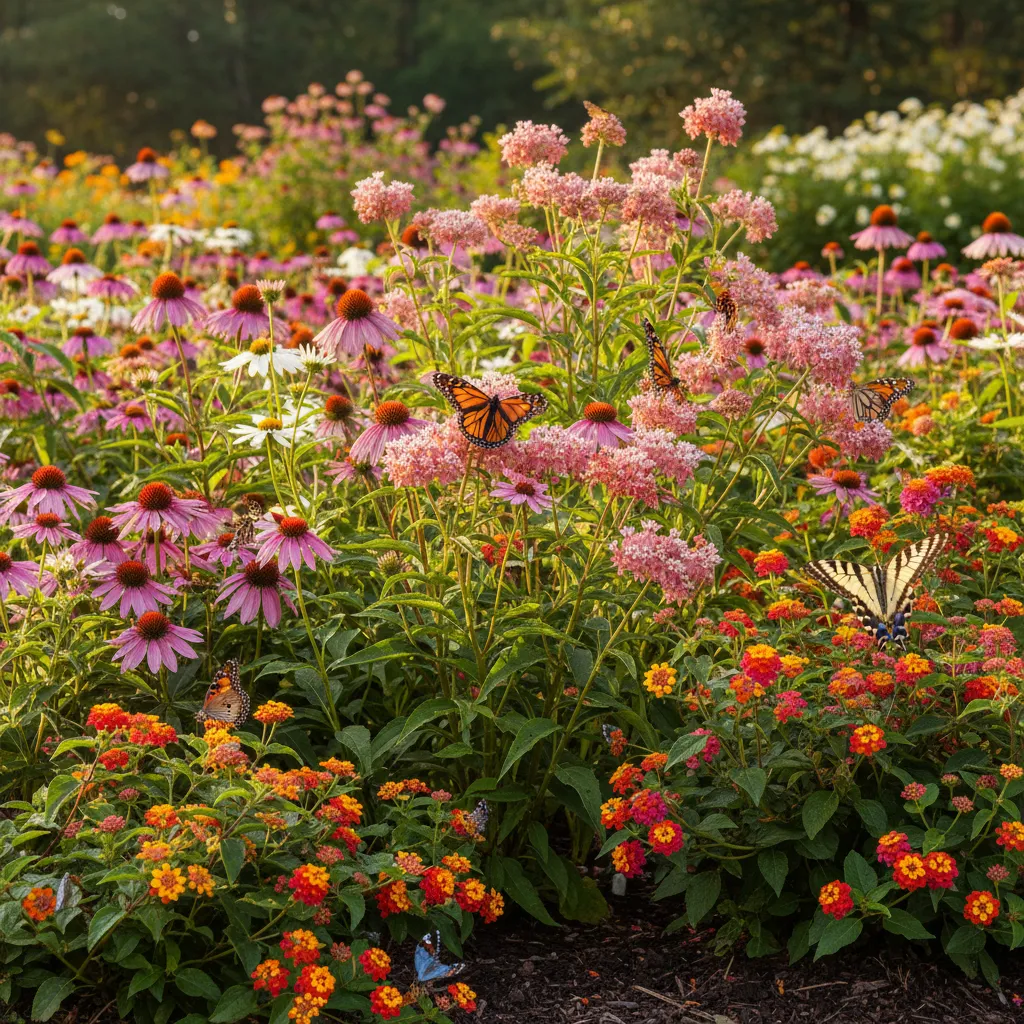
The guide on creating a butterfly garden covers what to plant for painted ladies alongside other common species.
Painted Lady vs Monarch: Key Differences
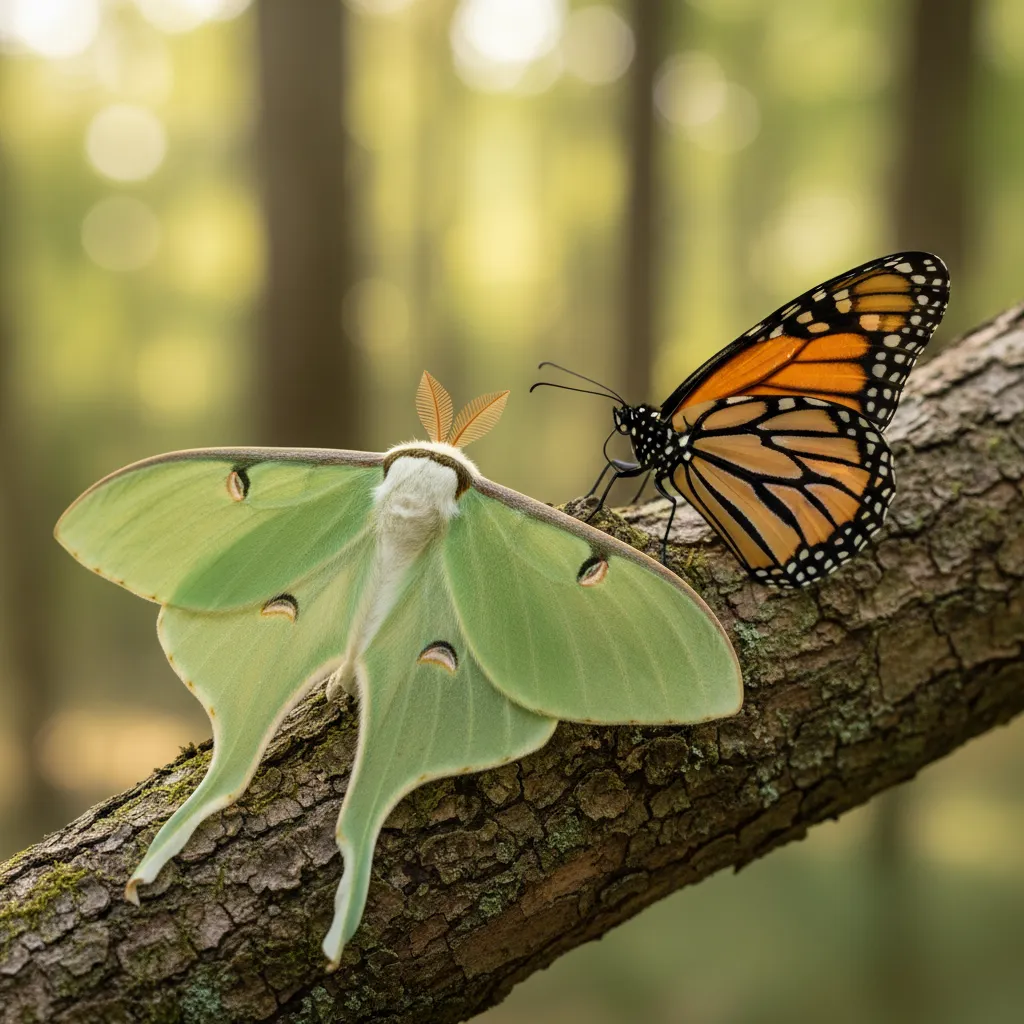
Painted ladies and monarchs get confused fairly often, especially at a quick glance. Both are medium to large orange-and-black butterflies, and both migrate. But there are straightforward ways to tell them apart once you know what to look at.
Wing pattern is the clearest difference. Monarchs have bold, clean black vein lines running across their orange wings and a thick black border with small white spots around the edge. Painted ladies have a more complex, less symmetrical pattern with brownish tones mixed into the orange and a fuzzier overall look.
The white spots on a painted lady’s forewing are inside a dark patch near the tip, whereas a monarch’s white spots line the outer border of the entire wing.
Size is another indicator. Monarchs are noticeably larger, with wingspans reaching 3.5 to 4 inches compared to the painted lady’s 2 to 2.9 inches. A monarch next to a painted lady is visibly bigger.
Behavior differs too. Monarchs are famous for their single-destination migration to overwintering sites in Mexico or coastal California, where millions roost together. Painted ladies don’t congregate like this.
They travel as individuals and don’t have a fixed overwintering site. Monarchs also spend winter in a semi-dormant state, while painted ladies stay continuously active wherever conditions allow.
From an ecological standpoint, monarchs depend almost entirely on milkweed as a caterpillar host plant. Painted ladies, as mentioned earlier, will eat from hundreds of different plant species. This makes painted ladies far less vulnerable to habitat changes than monarchs, whose populations have declined sharply alongside milkweed loss across North America.
Both species are worth watching and supporting in your yard, but they have quite different needs and life histories despite their similar appearance.
Frequently Asked Questions
Is the painted lady butterfly rare?
No. The painted lady is actually one of the most common butterflies in the world. Its population fluctuates from year to year based on weather conditions in its breeding grounds, so it can feel rare in some years and extremely common in others.
Globally, it is not considered threatened or endangered.
What do painted lady butterflies eat?
Adult painted ladies drink nectar from a wide range of flowering plants. They are especially attracted to thistles, zinnias, asters, cosmos, and ironweed. Caterpillars eat the leaves of host plants, with a preference for thistles, mallows, hollyhocks, and various legumes, though they’ll feed on over 300 plant species in total.
How long does a painted lady butterfly live?
Adult painted ladies typically live two to four weeks. The full life cycle from egg to adult takes about four to six weeks depending on temperature. In warmer conditions, development speeds up and multiple generations can be completed in a single season.
Where do painted ladies go in winter?
Painted ladies don’t overwinter in the same way monarchs do. Instead of entering a dormant state, they follow warmth and food availability. In North America, winter populations are found in the desert areas of Mexico and the southwestern United States.
In Europe and Africa, they survive the winter in the warmer regions of North Africa and southern Europe.
How far do painted lady butterflies migrate?
The painted lady migration route between sub-Saharan Africa and the Arctic Circle covers approximately 9,000 miles in total across multiple generations. Individual butterflies travel hundreds to over a thousand miles during their short adult lives. The North American migration route is shorter but still spans several thousand miles from Mexico to Canada.
Can I attract painted ladies to my garden?
Yes, and it’s not difficult. Plant nectar-rich flowers like zinnias, cosmos, lantana, asters, and milkweed to attract feeding adults. For caterpillar habitat, allow some thistles or plant hollyhocks, mallows, or borage.
Painted ladies are generalists, so a diverse garden with plenty of sunny open space will attract them during their migration and breeding seasons. Avoid pesticide use, which kills caterpillars and reduces the insect populations that butterflies depend on indirectly through the food web.