


Papilio Rumiko: Western Giant Swallowtail Guide
Papilio rumiko is the Western Giant Swallowtail, a species most butterfly watchers didn’t even know existed until 2014. That’s when researchers formally split it from the familiar Eastern Giant Swallowtail (Papilio cresphontes) based on DNA barcoding and subtle wing pattern differences. If you’ve spotted a massive black-and-yellow swallowtail anywhere from the American Southwest through Mexico, you were almost certainly looking at Papilio rumiko – not its better-known eastern relative.
I’ll admit, when I first heard about this split, I was skeptical. The two species look extremely similar to the naked eye. But the science is solid, and once you know what to look for, the differences start to make sense in the field.
Key Takeaways
- Papilio rumiko was separated from Papilio cresphontes in 2014 by Shiraiwa and Grishin, based on DNA barcoding, wing pattern analysis, and genital morphology.
- The species ranges across western North America from Arizona and southern California south through Mexico and into Central America.
- Adults are slightly smaller on average than their eastern counterparts, with subtle differences in the yellow band pattern on the hindwing underside.
- Host plants include citrus, Casimiroa, and native Rutaceae species found in arid and semi-arid habitats.
How Papilio Rumiko Got Its Name
The story behind this species starts with a 2014 paper by Kojiro Shiraiwa and Nick Grishin, both working out of the University of Texas Southwestern Medical Center. Their research published in Zootaxa used DNA barcodes from the mitochondrial COI gene to show that what everyone had been calling Papilio cresphontes was actually two genetically distinct lineages. The western populations diverged enough to warrant full species status.
The name “rumiko” honors Rumiko Shiraiwa, the lead author’s mother. It’s a fitting tribute baked into a paper that reshaped how we think about giant swallowtails across the continent. For anyone interested in the broader world of Papilio butterflies, this kind of cryptic species split is becoming more common as DNA tools get cheaper and more accessible.
Not all entomologists immediately embraced the split. Some argued the morphological differences were too subtle, or that hybridization in the contact zone muddied the picture. But subsequent genetic work has largely supported the two-species model, and both the Butterflies of America database and most modern field resources now treat them as separate.
Where to Find the Western Giant Swallowtail
Papilio rumiko occupies a range stretching from the southwestern United States down through Mexico and into parts of Central America. In the US, confirmed records come from southern California, Arizona, New Mexico, and western Texas. The species is common in Baja California and across mainland Mexico wherever suitable host plants grow.
Habitat preferences lean toward drier, more open landscapes compared to the Eastern Giant Swallowtail’s fondness for deciduous woodlands and citrus groves. You’ll find Papilio rumiko in desert washes, thorn scrub, suburban gardens with citrus trees, and riparian corridors. In my experience, any backyard with a mature citrus tree in the Phoenix or Tucson area has a good shot at attracting them from spring through fall.
There’s an overlap zone where the ranges of P. rumiko and P. cresphontes meet, roughly along a line through central Texas and possibly into the southern Great Plains. Hybrids have been documented in this area, which is one reason the two were lumped together for so long. The Butterflies of America distribution records show the most complete picture of confirmed sightings if you want to check whether your area falls in rumiko territory.
Seasonality depends on latitude. In southern Arizona, adults fly from March through October with multiple broods. Farther north at the edge of the range, you might see a single extended brood from late spring into early fall. In tropical Mexico, they can fly year-round.
How to Tell Papilio Rumiko from Papilio Cresphontes
Let me be upfront: telling these two apart in the field is hard. The differences are real but subtle, and even experienced lepidopterists sometimes need a specimen in hand (or a DNA test) to be certain. That said, there are a few features worth checking.
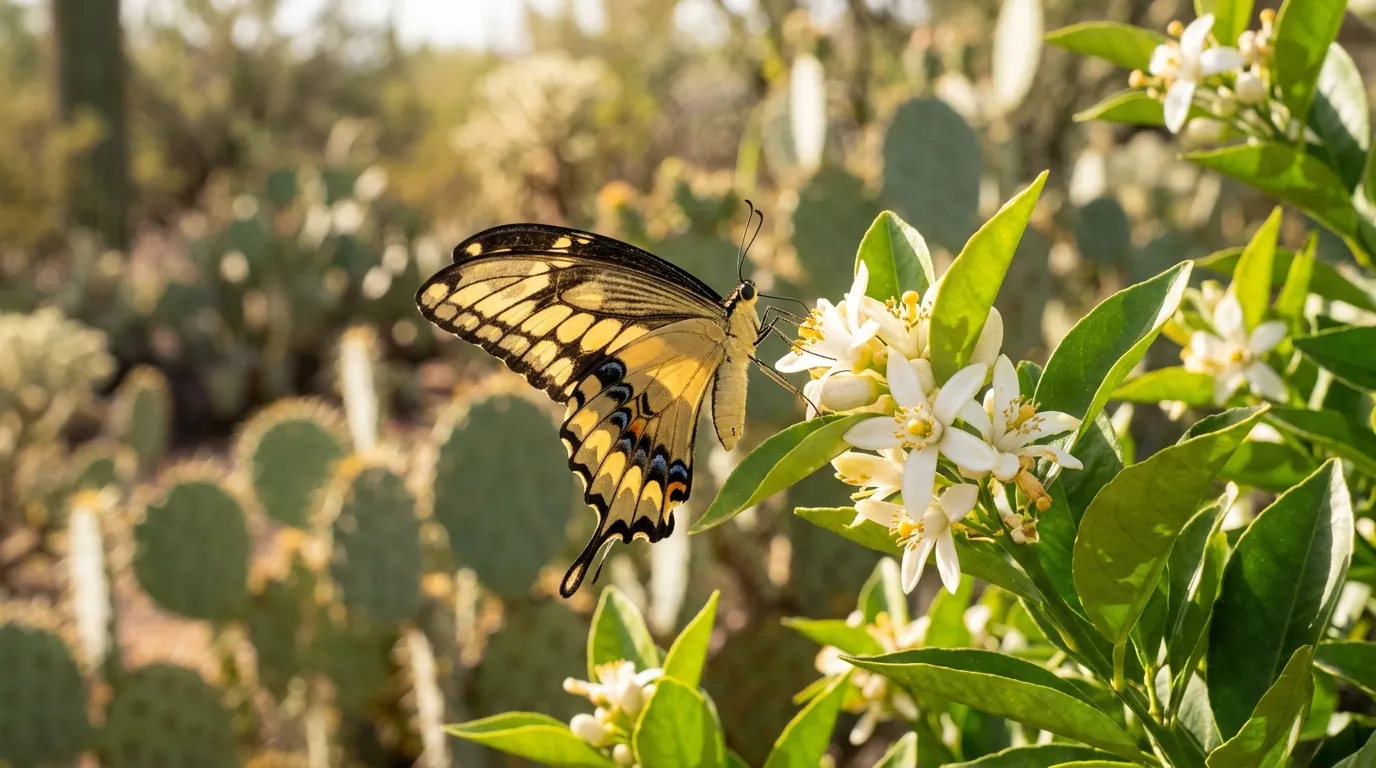
The most accessible field mark involves the yellow band crossing the hindwing underside. On P. rumiko, this band tends to be narrower and more interrupted, with the dark scaling encroaching into it. On P. cresphontes, the band is usually broader and more continuous. This varies between individuals, but it’s the character most likely to help you in the field with a good photo.
Body size is another clue, though not a reliable one on its own. P. rumiko averages slightly smaller, with a wingspan typically around 4 to 5 inches. Eastern birds regularly push past 5.5 inches. Wing shape can differ subtly too – rumiko tends toward slightly more pointed forewings, though this takes practice to notice.
The definitive differences are in the male genitalia and DNA. Shiraiwa and Grishin documented consistent structural differences in the valvae and aedeagus that separate the two species cleanly. For citizen scientists, though, the practical answer is usually geography. If you’re in Arizona or Baja California, it’s rumiko. If you’re in Florida or Ohio, it’s cresphontes. The tricky spots are in Texas and the southern Plains where both occur.
Comparing swallowtails can become a rabbit hole. If you enjoy the detective work, you might also like reading about Eastern Tiger Swallowtail caterpillars or Pipevine Swallowtail range patterns across the US.
Host Plants and Caterpillar Biology
Like its eastern relative, Papilio rumiko larvae feed on plants in the rue family (Rutaceae). In the western part of the range, the host plant list reflects the drier climate. Cultivated citrus – especially orange, lemon, and grapefruit – is a major larval food source in suburban and agricultural areas. In wilder settings, the caterpillars use native Rutaceae species including Casimiroa edulis (white sapote) and Zanthoxylum species.
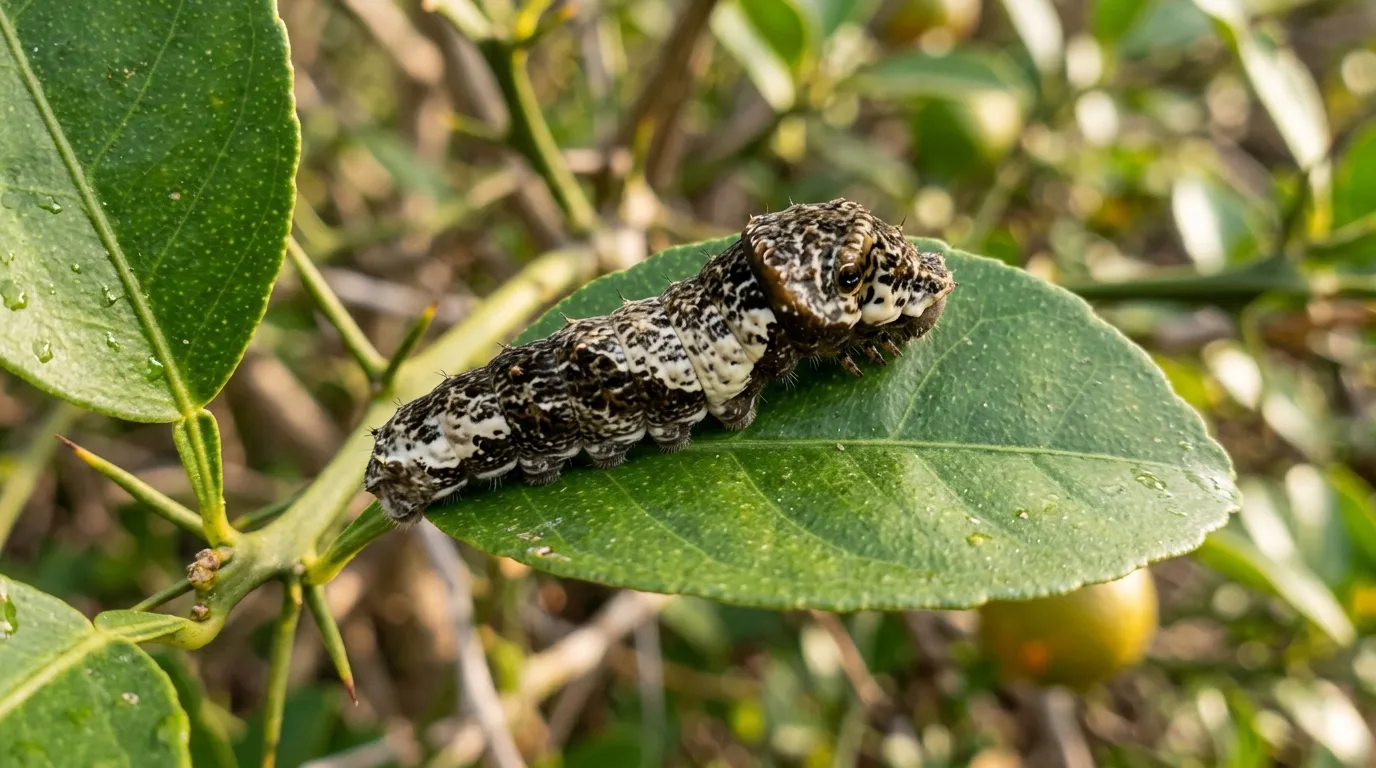
The caterpillars look nearly identical to Eastern Giant Swallowtail larvae. Early instars mimic bird droppings with mottled brown and white coloring, while later instars become larger but keep the same basic camouflage pattern. They also share the orange osmeterium – that forked gland behind the head that releases a pungent citrus smell when the caterpillar feels threatened.
If you garden in the Southwest and want to support this species, planting native rue family shrubs alongside your citrus gives caterpillars options beyond your fruit trees. For a broader look at matching host plants to swallowtail species, our Spicebush Swallowtail host plant guide covers a similar approach for eastern gardens.
Pupation follows the typical Papilio pattern. The chrysalis is brown and twig-like, attached by a silk girdle to a branch or stem. In the warmer parts of the range, the pupal stage lasts about two weeks. At the northern edges, fall-generation chrysalises enter diapause and overwinter, producing adults the following spring.
Conservation and Future Research
Papilio rumiko doesn’t currently have any formal conservation status, and that’s partly because it was only recognized as a full species a little over a decade ago. Population assessments haven’t caught up yet. In Mexico and Central America, where most of the range lies, systematic butterfly surveys are sparse outside of a few well-studied reserves.
The biggest potential threats are habitat loss in the arid Southwest and pesticide use on citrus. Urban expansion in Arizona and southern California keeps eating into the thorn scrub and desert wash habitats where this species occurs naturally. On the flip side, the widespread planting of citrus trees in suburban yards creates artificial habitat that may partly offset wild habitat loss.
From a research perspective, the contact zone between P. rumiko and P. cresphontes is where the interesting questions live. How much hybridization occurs? Are the two species staying genetically distinct even with ongoing gene flow? And as climate patterns shift, will rumiko expand northward? These are questions that iNaturalist observations and citizen science can help answer – every geotagged photo from the overlap zone adds a data point.
Understanding species-level distinctions like this one also matters for broader questions about butterfly lifespans and ecology. When two species get lumped together, all the data on flight periods, voltinism, and population trends gets muddled. Splitting them lets researchers build accurate baselines for each.
Frequently Asked Questions
Is Papilio rumiko the same as the Giant Swallowtail?
Not exactly. The name “Giant Swallowtail” traditionally referred to Papilio cresphontes as a single widespread species. Since the 2014 split, the western populations are now classified as Papilio rumiko (Western Giant Swallowtail), while the eastern populations remain P. cresphontes. They look very similar but are genetically distinct.
Can I tell Papilio rumiko from Papilio cresphontes by looking at them?
With difficulty. The most useful field mark is the yellow band on the hindwing underside, which tends to be narrower and more broken in P. rumiko. Body size averages slightly smaller too. But individual variation overlaps considerably, so geography is usually the most reliable indicator for casual observers.
What do Papilio rumiko caterpillars eat?
They eat plants in the rue family (Rutaceae), just like their eastern counterparts. Cultivated citrus trees are a primary food source in developed areas. In the wild, they feed on native species like white sapote (Casimiroa edulis) and various Zanthoxylum species found in their western and Mexican range.
Where does Papilio rumiko live?
The range covers the southwestern United States (Arizona, southern California, New Mexico, western Texas), Baja California, mainland Mexico, and parts of Central America. They favor drier habitats than the Eastern Giant Swallowtail, including desert washes, thorn scrub, and suburban gardens with citrus.
Do Papilio rumiko and Papilio cresphontes hybridize?
Yes. Hybrids have been documented in the overlap zone, primarily in central and southern Texas. The extent of hybridization and whether it threatens the genetic distinctiveness of either species are active research questions. Most populations away from the contact zone appear to be genetically clean.
Is Papilio rumiko endangered?
There is no formal conservation listing for this species at the moment. It was only described in 2014, so population-level assessments are still in early stages. The species appears to be locally common throughout much of its range, though habitat loss in the southwestern US is a concern worth monitoring.