




What do butterflies mean? They are one of the most universally recognized symbols in human culture, standing for transformation, the human spirit, hope, and freedom. Almost every civilization across history has attached some kind of deeper significance to butterflies, and the meanings overlap in ways that suggest something genuinely hardwired in how we respond to these insects. A creature that crawls, dissolves its own body, and rebuilds itself with wings hits us on a level that goes beyond admiration for a pretty animal.
The specific meaning people draw from butterflies depends heavily on context – the color of the butterfly, where and when it appears, and the cultural lens of the person watching. But a handful of core themes show up again and again across continents and centuries.
Key Takeaways
- Butterflies carry layered symbolism across cultures, most commonly representing transformation, the spirit’s journey after death, hope during hard times, and personal freedom.
- Different butterfly colors carry distinct meanings – white butterflies are tied to purity and angels, black to transition and mystery, yellow to joy, blue to calm, and orange to energy and passion.
- When a butterfly lands on you, many traditions read it as a message from a deceased loved one or a sign that personal change is underway.
- The ancient Greek word for butterfly, psyche, is the same word they used for the spirit – a connection that shaped Western symbolic traditions for over two thousand years.
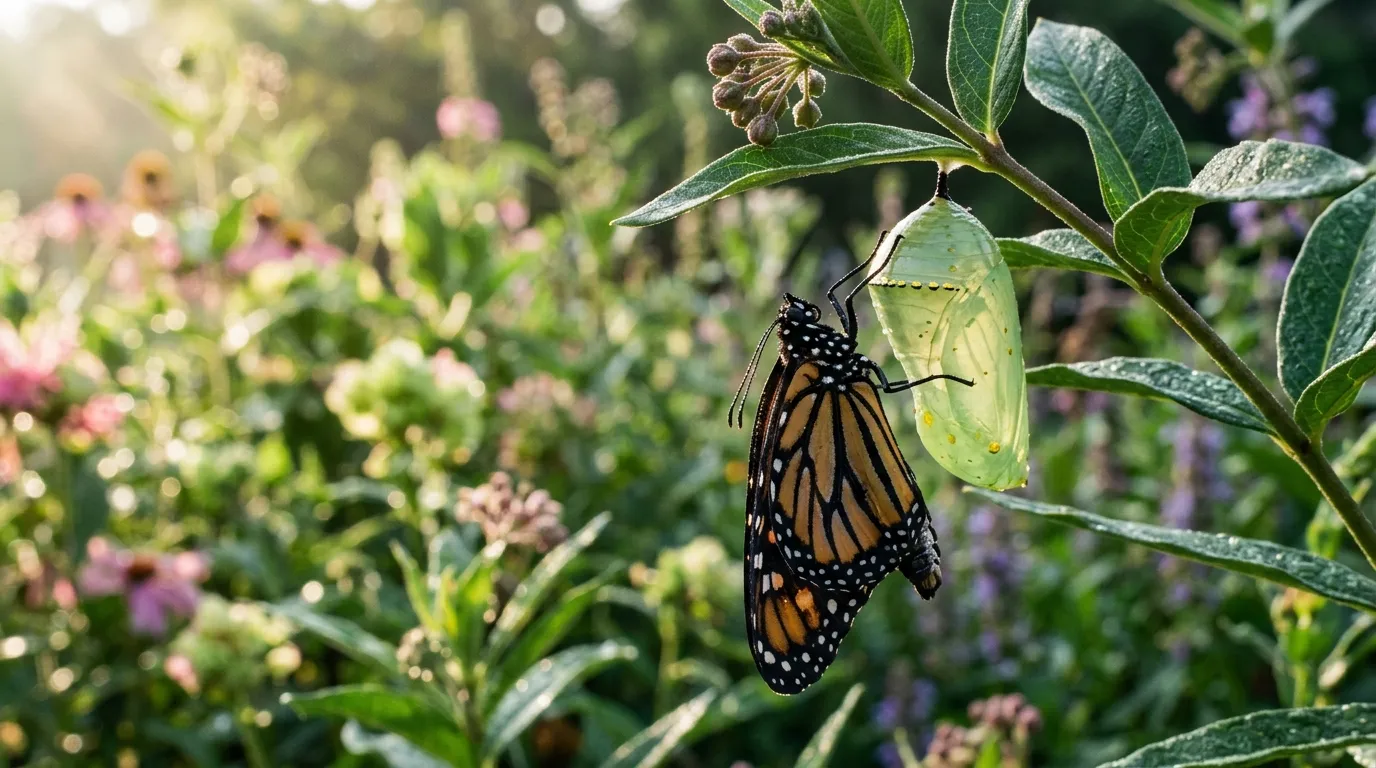
Transformation and Rebirth
This is the big one. The butterfly’s life cycle – egg, caterpillar, chrysalis, winged adult – maps so neatly onto human experiences of change that it barely needs explaining. You go through something difficult, you feel like you’re falling apart, and then you come out the other side as a different version of yourself. The parallel writes itself.
What makes the butterfly version of this story so powerful is that the transformation isn’t cosmetic. Inside the chrysalis, the caterpillar’s body genuinely breaks down into a biological soup. Clusters of cells called imaginal discs use that raw material to build an entirely new body plan. It’s not a renovation – it’s demolition followed by new construction. People going through major life transitions – divorce, career changes, recovery from illness or addiction – often latch onto butterfly imagery because it validates the messiness of their process.
Christianity adopted butterfly symbolism early, reading the chrysalis as a tomb and the emerged butterfly as resurrection. The connection appears in early Christian art and funerary carvings across Europe. In Chinese culture, butterfly meaning ties closely to conjugal bliss and the idea of two spirits joined, but the transformation angle appears there too, particularly in Taoist philosophy where change is considered the only constant.
What Do Butterflies Mean in Beliefs About the Afterlife
The connection between butterflies and the human spirit runs deep across multiple civilizations, and it’s not a modern invention. The ancient Greeks used the same word – psyche – for both “butterfly” and “spirit.” The mythological figure Psyche, a mortal woman who married the god Eros, was depicted with butterfly wings. That linguistic overlap wasn’t accidental. The Greeks watched butterflies emerge from what looked like a dead husk and drew the obvious conclusion: this is what happens to us.
In Mexico, the Dia de los Muertos (Day of the Dead) coincides with the annual arrival of monarch butterflies at their overwintering sites in the mountains of Michoacan. The Mazahua and Purepecha peoples have long believed that monarchs carry the spirits of the dead returning to visit their families. When millions of monarchs descend on the oyamel fir forests each November, locals see them as ancestors coming home. The timing is almost eerie – the butterflies arrive within days of when the celebrations begin.
Irish folklore holds that white butterflies carry the spirits of the dead, and killing one was considered extremely bad luck. In parts of the Philippines, a black butterfly entering a house is believed to be the spirit of a recently deceased family member. The Japanese associate butterflies with the spirits of both the living and the dead – seeing a butterfly in your home can mean a visit from someone you’ve lost, but it can also represent your own spirit seeking change.
This spirit-butterfly connection appears so consistently across unrelated cultures that it suggests something more than coincidence. A creature that appears to die and return to life in a more beautiful form is going to trigger that association in any society that thinks about what happens after death. For more on the broader sayings and expressions that grew from these beliefs, there’s a long history of butterfly-related phrases in everyday language.
Hope, Resilience, and Freedom
Butterflies as a symbol of hope make practical sense when you think about their lifecycle. A caterpillar entering the chrysalis stage is, from the outside, giving up everything it knows. It can’t eat, can’t move, can’t respond to its environment. If you didn’t know what was happening inside, you’d assume it was dying. The fact that this apparent ending is actually a beginning is the whole point of the metaphor.
People dealing with grief, illness, or major setbacks frequently report that butterfly sightings feel like reassurance – a visual reminder that dark periods can precede something good. This isn’t just anecdotal. Butterfly imagery shows up in clinical settings too. Grief counselors and therapists use butterfly metaphors with clients. The Butterfly Project, for instance, encourages people struggling with self-harm to draw butterflies on their skin as a coping mechanism.
Freedom is the other half of this equation. A butterfly answering to nothing, riding air currents, going wherever it wants – that image carries real emotional weight for people who feel trapped. There’s a reason butterfly tattoos are among the most popular designs worldwide. They represent a person who has been through something constraining and come out free on the other side. The military and veteran communities use butterfly imagery in PTSD recovery programs for exactly this reason.
There’s also a love dimension. In many Asian traditions, two butterflies flying together represent romantic love and partnership. The Chinese folktale of Liang Shanbo and Zhu Yingtai – sometimes called the Chinese Romeo and Juliet – ends with the doomed lovers transforming into a pair of butterflies, free to be together in death when society wouldn’t let them be together in life.
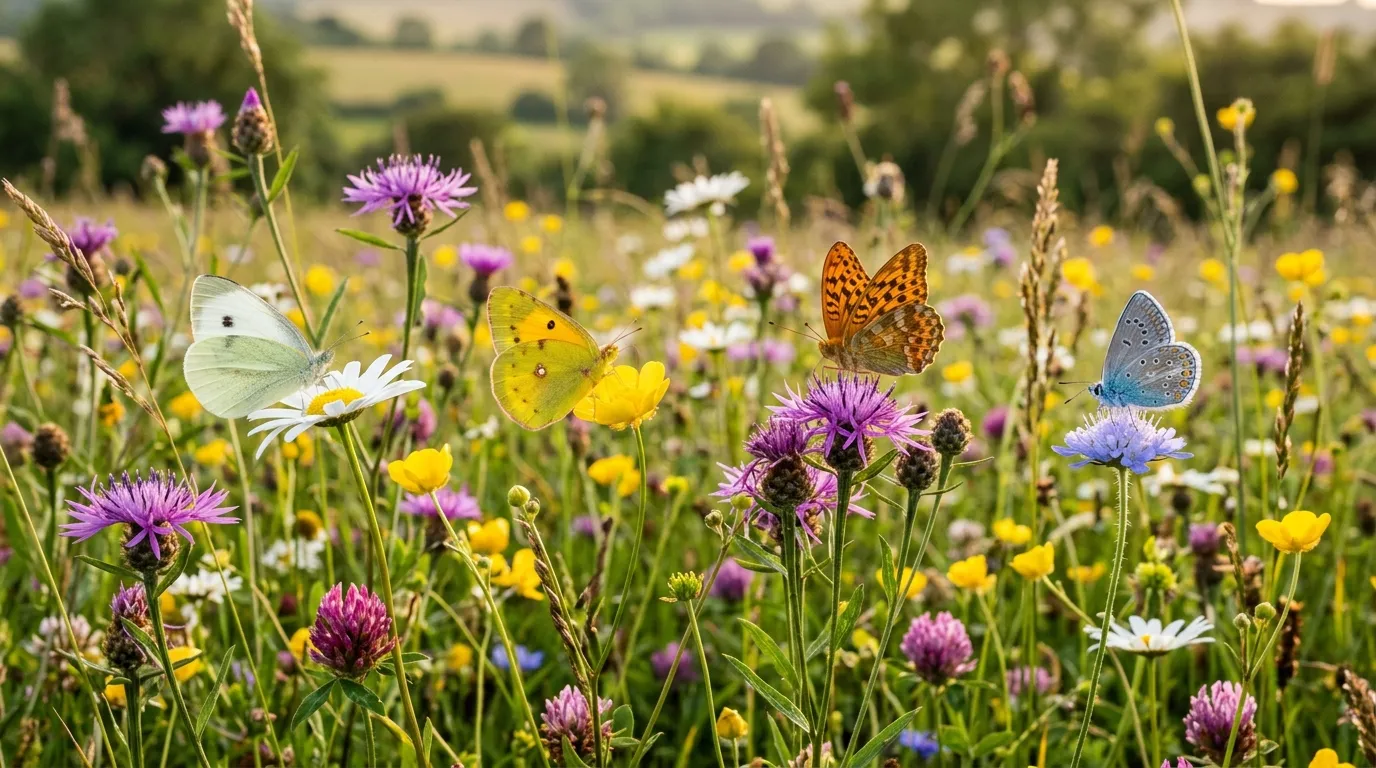
What Different Butterfly Colors Mean
Color plays a significant role in how people interpret butterfly encounters. While some of this is culturally specific, certain color associations are widespread enough to be worth knowing.
White butterflies carry meanings of purity, innocence, and spiritual presence. In many Western traditions, a white butterfly is associated with angels or the recently departed. Seeing one near a funeral or memorial is commonly interpreted as confirmation that the deceased is at peace. In some Native American traditions, white butterflies carry wishes to the Great Spirit. The cabbage white, one of the most common backyard butterflies in North America, often gets this symbolic treatment which is funny given that it’s technically an agricultural pest.
Black butterflies get a more complex reading. They’re tied to mystery, the unknown, and transition. In the Philippines and parts of Central America, a black butterfly in the home signals a death in the family or a major life change. But “transition” doesn’t have to mean something negative – it can also represent the shadow work of confronting difficult truths about yourself before moving forward. Swallowtail butterflies, many of which feature black as a dominant wing color, carry their own layered symbolic traditions.
Yellow butterflies are almost universally positive. They represent joy, creativity, optimism, and new beginnings. In many parts of the American South, a yellow butterfly entering your yard means good news is on the way. Sailors historically considered yellow butterflies near a ship to be a sign of a successful voyage. Cloudless sulphur butterflies, with their bright lemon-yellow wings, are the species most commonly linked to these meanings in North America.
Blue butterflies represent calm, communication, honesty, and emotional healing. They’re rarer in the wild than white or yellow species, which adds to their perceived significance – spotting one feels like an event. The blue morpho of Central and South America, with its iridescent wings, has become a global symbol of beauty and wonder. In Japan, blue butterflies represent good luck and marital harmony.
Orange butterflies – monarchs being the most recognizable – carry meanings of passion, energy, confidence, and courage. Seeing an orange butterfly is often interpreted as encouragement to pursue a goal aggressively or to trust your instincts. Given the monarch’s extraordinary migration spanning thousands of miles, the association with endurance and determination makes intuitive sense. You can read more about the range of common butterfly species and how their appearances tie into these color-based interpretations.
When a Butterfly Lands on You
A butterfly landing on a person is one of those experiences that feels significant even if you’re not particularly spiritual. There’s something about a wild animal voluntarily choosing to rest on your body that short-circuits the rational brain for a moment.
From a biological standpoint, butterflies land on people for mundane reasons. They’re attracted to the salt in sweat, the moisture on skin, or sometimes bright clothing colors they mistake for flowers. Some species – particularly red admirals, painted ladies, and hackberry emperors – are known for being unusually comfortable around humans and will land on people regularly in parks and gardens.
From a symbolic standpoint, the interpretations vary by culture but share common threads. Many people read a butterfly landing on them as a sign from a deceased loved one. The logic is straightforward: if butterflies represent spirits of the dead, then a butterfly singling you out is a spirit reaching out to you specifically. Grief support forums are full of stories from people who had a butterfly land on them at a funeral, at a grave site, or on the anniversary of a death, and found genuine comfort in it.
Others interpret a butterfly landing as a sign that personal transformation is in progress or about to begin. If you’ve been thinking about making a change – starting something new, leaving something old behind – a butterfly alighting on your shoulder can feel like a nudge from the universe. Whether you attribute that to spiritual forces, confirmation bias, or just a pleasant coincidence is a personal call.
The color of the butterfly that lands on you matters in these interpretations. A white butterfly landing is typically read as a comforting spiritual presence. A black one suggests you’re being asked to face something you’ve been avoiding. A yellow one means good fortune is near. These readings aren’t gospel, but they’re consistent enough across traditions that they’ve become a kind of informal shared vocabulary.
What Butterflies Mean After a Death
Butterflies appearing shortly after someone dies is one of the most commonly reported spiritual experiences across cultures. According to research from the National Institutes of Health on after-death communication, a significant percentage of bereaved people report sensing the presence of the deceased through signs in nature, with butterflies being among the most frequently cited.
In practical terms, this often looks like a butterfly showing up at a funeral, a memorial service, or during a private moment of grief in a way that feels too specific to be random. A butterfly of the deceased person’s favorite color. One that lingers unusually long. One that appears in winter or indoors, where butterflies don’t normally go. The details vary, but the emotional impact on the grieving person is strikingly consistent.
Whether these encounters represent genuine spiritual communication or are a function of heightened awareness during grief – where you’re primed to notice things you’d normally overlook – is a question that falls outside the scope of entomology. What’s clear is that the butterfly-spirit connection provides real comfort to millions of people. Memorial gardens often include butterfly-attracting plants recommended by the North American Butterfly Association specifically so that visiting butterflies can serve as living memorials.
Many families have adopted butterfly releases at funerals and memorial services. Live butterflies, typically painted ladies, are released as a symbolic gesture of the spirit’s departure. The Smithsonian Institution’s butterfly resources note that butterflies have served as funeral symbols across numerous cultures for thousands of years, from ancient Mycenaean gold ornaments shaped like butterflies found in graves to modern memorial jewelry featuring preserved butterfly wings.
Frequently Asked Questions
What does it mean when you keep seeing butterflies?
Repeatedly seeing butterflies is commonly interpreted as a sign that you’re in a period of personal growth or that a major change is approaching. From a practical standpoint, seasonal factors play a role – butterfly populations peak during summer months, so increased sightings between June and September often just reflect natural population cycles. But if you’re noticing them more than usual, some traditions say it means you’re becoming more attuned to spiritual messages.
Do butterflies represent loved ones who have passed?
Many cultures and spiritual traditions believe so. The ancient Greek, Mexican, Irish, Japanese, and Filipino traditions all connect butterflies to the spirits of the dead in one way or another. Whether a butterfly sighting after a death represents an actual visit from a loved one is a matter of personal belief, but the consistency of this interpretation across unrelated cultures is striking.
What does a butterfly tattoo symbolize?
Butterfly tattoos most commonly represent personal transformation, freedom from a difficult past, and resilience. They’re popular among survivors of domestic abuse, people in recovery from addiction, and anyone who has gone through a defining life change. The specific design and color carry additional meaning – a monarch tattoo might emphasize endurance and long journeys, while a blue morpho could represent beauty emerging from hardship.
Is it good luck when a butterfly flies around you?
Most cultural traditions say yes. In Chinese, Native American, and many European folk traditions, a butterfly circling or following you is a positive omen. The specific type of luck depends on the butterfly’s color – yellow means financial good fortune in some traditions, while white suggests spiritual protection. A butterfly that circles you repeatedly may also simply be investigating your scent or the colors you’re wearing.
What do butterflies mean in dreams?
Dream interpretation varies widely by tradition, but butterflies in dreams generally represent transformation, vulnerability, or the desire for freedom. A butterfly flying freely in a dream is often read as a sign that the dreamer is ready for change. A trapped or injured butterfly may reflect anxiety about being stuck. The Chinese philosopher Zhuangzi’s famous butterfly dream – where he couldn’t tell if he was a man dreaming he was a butterfly or a butterfly dreaming he was a man – remains one of philosophy’s most enduring thought experiments about the nature of reality.
Why are butterflies associated with the Day of the Dead?
The monarch butterfly migration to central Mexico coincides almost exactly with Dia de los Muertos celebrations in late October and early November. Indigenous Mazahua and Purepecha peoples believed the arriving monarchs were the spirits of the dead returning to visit their families. Millions of monarchs descending on the mountaintop forests during the same week that families set up altars and visit cemeteries made the connection feel undeniable. This belief predates European contact and remains a living tradition in the region today.


