




Where Do Butterflies Go in Winter?
Where do butterflies go in winter? The short answer is that most of them are still around – just not in a form you’d recognize. While monarchs get the headlines for flying thousands of miles south, the majority of North American butterfly species stay put and ride out the cold as eggs, caterpillars, chrysalises, or hibernating adults tucked into tree bark crevices and leaf litter. Each species has its own strategy for surviving months of freezing temperatures, and some of these survival tricks are genuinely strange.
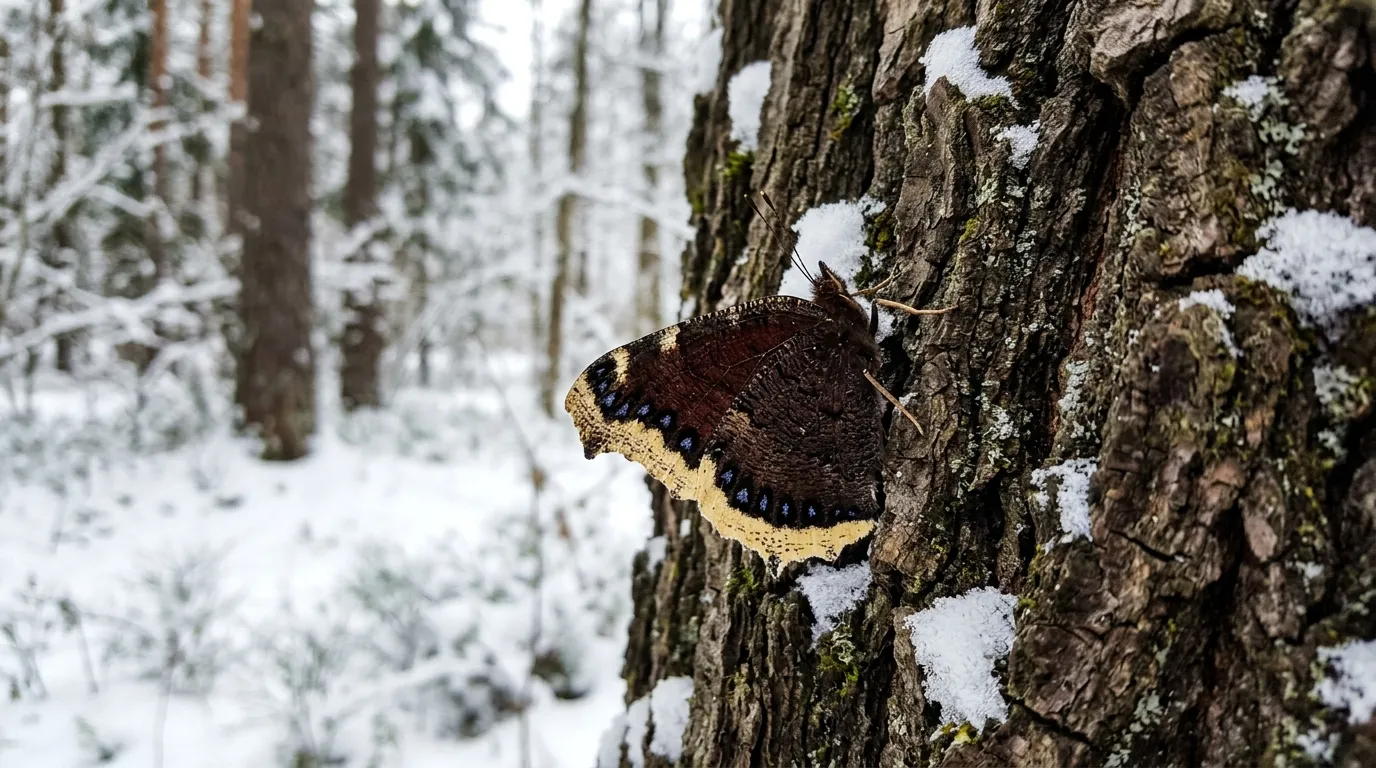
I’ve found mourning cloak butterflies in mid-January wedged into gaps behind loose bark on old oak trees, wings folded tight, completely motionless. They looked dead. They weren’t. The first warm day in March, the same bark crevices were empty and those butterflies were flying around looking for tree sap before any flowers had bloomed. That’s the thing about butterfly winter survival – it’s happening all around us, just out of sight.
Key Takeaways
- Only a handful of North American butterfly species migrate to avoid winter. Monarchs fly to central Mexico or coastal California, and painted ladies move southward in large numbers. The vast majority of species overwinter locally in one of four life stages.
- Mourning cloaks, commas, and question marks hibernate as adults, tucking into tree cavities, woodpiles, and unheated buildings where temperatures stay above lethal lows. They can appear on warm winter days months before other butterflies emerge.
- Many swallowtails and sulphurs overwinter as chrysalises, while hairstreaks and some blues survive as eggs on twigs, and several fritillary species spend winter as tiny first-instar caterpillars hidden in leaf litter.
- Butterflies and caterpillars that overwinter in freezing climates produce glycerol and other cryoprotectant compounds that lower the freezing point of their body fluids, preventing ice crystal formation inside their cells.
Migration: The Strategy Everyone Knows About
Monarch butterflies are the most famous winter migrants, and for good reason. Eastern monarchs fly up to 3,000 miles from southern Canada and the northern United States to a small cluster of oyamel fir forests in the mountains of Michoacan, Mexico. They arrive in late October and early November, pack onto tree branches by the millions, and stay there until late February or March. The USDA Forest Service estimates that a single overwintering colony can contain over 10 million individuals on just a few acres of forest.
Western monarchs take a shorter trip to groves of eucalyptus, Monterey pine, and Monterey cypress trees along the central California coast. Sites like Pismo Beach and Pacific Grove have hosted overwintering clusters for as long as anyone has been counting. These western populations have declined sharply since the 1980s, though counts in recent years have shown some recovery.
The migration routes and timing of monarchs follow a multigenerational relay. The butterflies that fly south in autumn are a special long-lived generation – they can survive eight or nine months instead of the usual two to six weeks. They don’t reproduce until spring, when they begin the northward journey. It takes three or four generations of shorter-lived butterflies to complete the full return trip north.
Painted ladies also migrate, though their movements are less predictable and less studied than monarchs. In big population years, massive flights of painted ladies move northward from the deserts of northern Mexico and the American Southwest in spring, sometimes producing clouds of butterflies visible on weather radar. They breed across the northern states and southern Canada in summer, and their offspring head south again in fall. Unlike monarchs, painted ladies don’t concentrate at specific overwintering sites – they spread out across the southern tier of states and into Mexico.
Cloudless sulphurs and long-tailed skippers make seasonal movements southward in autumn too, though whether these qualify as true migration or one-way dispersal flights is still debated among researchers. The butterflies that fly south in fall rarely if ever return north as individuals. Instead, their descendants recolonize northern territory the following summer.
Hibernating as Adults
Several butterfly species spend winter as fully formed adults in a dormant state called diapause. This is probably the closest thing in the butterfly world to what bears do, though the mechanisms are completely different. The butterfly finds a sheltered spot, slows its metabolism to near zero, and waits for spring.
Mourning cloaks are the textbook example. They’re one of the longest-lived butterflies in North America, with adults that can survive 10 to 11 months. Adults that emerge in June and July feed heavily through summer and early fall, building fat reserves. As temperatures drop in October and November, they seek out hibernation spots – called hibernacula – in tree cavities, behind loose bark, inside woodpiles, in the gaps between stacked firewood, and sometimes in unheated sheds, garages, and barns.
Commas and question marks use the same strategy. Their jagged wing edges and brown-gray undersides are almost certainly an adaptation for winter survival – when they press flat against tree bark with wings closed, they look exactly like a dead leaf or a piece of bark. This camouflage protects them from birds and other predators during the months when they can’t fly or escape. If you’ve ever wondered how butterflies sleep and rest, winter diapause is the extreme version of their normal roosting behavior.
Milbert’s tortoiseshells and red admirals also overwinter as adults in some regions, though red admirals are more likely to survive winter in mild climates and recolonize northern areas from the south each spring. In the southern United States, you can sometimes see red admirals flying on warm days in January and February.
The lifespan of these overwintering adults is dramatically longer than summer-generation butterflies of the same species. A mourning cloak that lives 11 months outlasts most butterfly species’ entire life cycles by six or seven months. That extended lifespan is driven by reproductive diapause – the butterflies’ reproductive systems shut down in late summer, and they don’t invest energy in mating or egg production until the following spring.
Overwintering as a Chrysalis
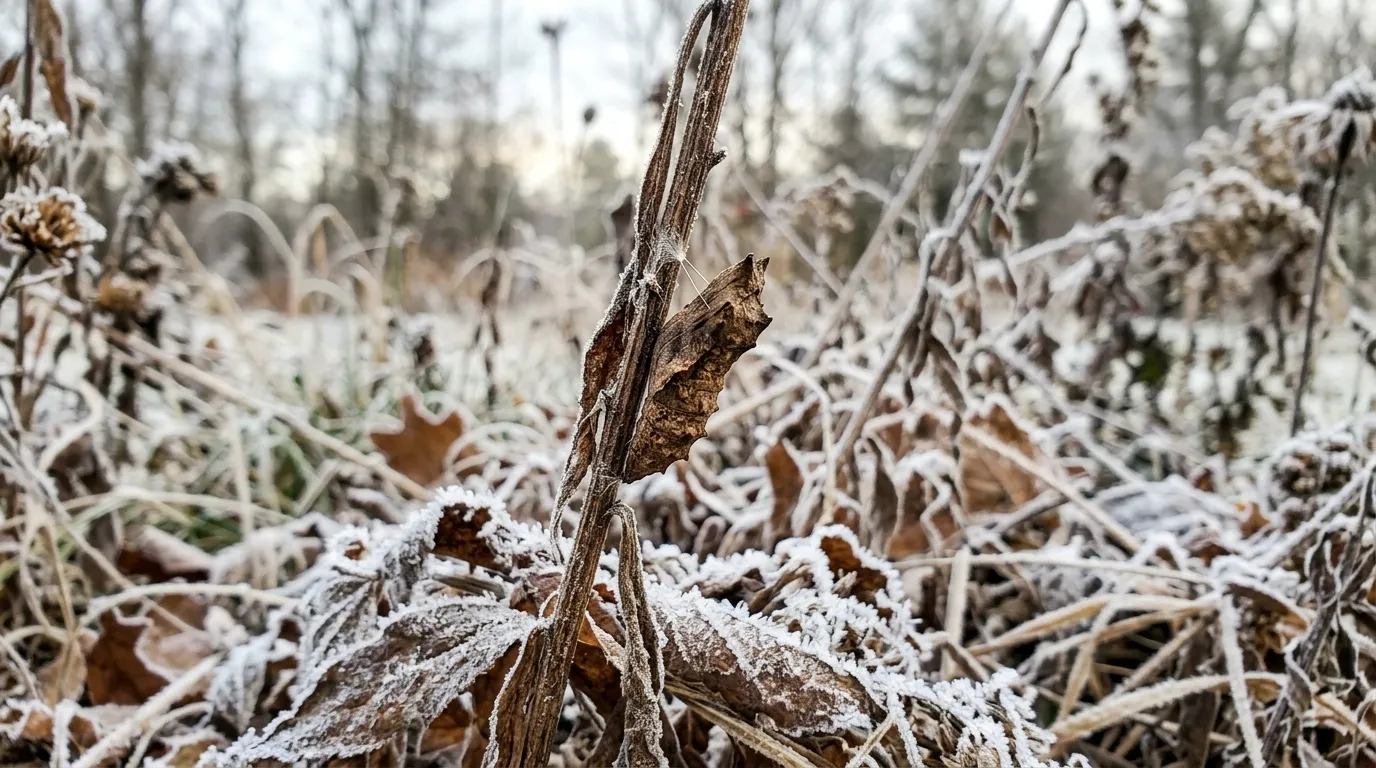
A large number of butterfly species spend winter in the pupal stage, hanging from branches, stems, fences, or building walls inside a hardened chrysalis. The chrysalis shell provides some insulation and protection from desiccation, and the developing butterfly inside can pause its development for months until spring temperatures trigger it to finish transforming and emerge as an adult.
Swallowtails are the most familiar group that overwinters this way. Black swallowtails, tiger swallowtails, spicebush swallowtails, and giant swallowtails all form chrysalises in late summer or early fall that remain dormant through winter. The chrysalis is typically attached to a plant stem, fence post, or building wall with a silk girdle – a thread of silk wrapped around the midsection that holds it upright against the surface.
Winter chrysalises look different from summer ones. Summer swallowtail chrysalises tend to be green, matching the living vegetation around them. Fall chrysalises destined for winter dormancy are usually brown or gray, blending in with dead plant stems and bare branches. This seasonal color variation is triggered by day length – shorter days in late summer signal the caterpillar to produce a brown chrysalis instead of a green one.
Cabbage whites and orange sulphurs also overwinter as chrysalises. If you’ve got a vegetable garden, there’s a decent chance a cabbage white chrysalis is spending the winter attached to a fence post or the underside of a garden structure within 30 feet of where last year’s broccoli grew. Sulphur chrysalises tend to form on or near their host plants – clovers, alfalfa, and other legumes.
Overwintering as Eggs or Caterpillars
Some butterflies skip the dramatic overwintering strategies entirely and survive winter in their earliest life stages. Eggs and tiny caterpillars are remarkably cold-hardy, and their small size lets them tuck into tight spaces that larger organisms can’t reach.
Banded hairstreaks and coral hairstreaks lay their eggs on twigs in late summer. The eggs sit there all winter – through snow, ice, and sub-zero temperatures – and don’t hatch until spring when the host tree leafs out. The egg’s tough outer shell, called the chorion, protects the developing embryo from desiccation and physical damage, and the embryo inside has its own chemical defenses against freezing.
Several fritillary species take a different approach. Great spangled fritillaries and Aphrodite fritillaries lay eggs near violets in late summer. The eggs hatch in fall, and the tiny first-instar caterpillars crawl into leaf litter near the base of violet plants without ever feeding. They spend the entire winter as unfed newborn caterpillars, then start eating violet leaves as soon as the plants put out new growth in spring. It sounds precarious, but the strategy has obviously worked – these are common, widespread butterflies across eastern North America.
Baltimore checkerspots overwinter as partially grown caterpillars inside communal silk webs on their host plant, turtlehead. The caterpillars spin dense webs in late summer, feed together until cold weather sets in, then go dormant inside the silk shelter. The web provides some insulation and protection from predators, though many caterpillars still die over winter from fungal infections, parasitoids, and flooding.
Antifreeze Compounds: The Chemistry of Surviving Cold
The biggest threat to any insect in winter isn’t the cold itself – it’s ice. When ice crystals form inside cells, they puncture cell membranes and destroy tissue. Butterflies that overwinter in freezing climates have evolved chemical solutions to this problem, and the most common one is glycerol.
Glycerol is a sugar alcohol that acts as a natural antifreeze. As temperatures drop in fall, overwintering butterflies, caterpillars, and chrysalises ramp up glycerol production in their body fluids. The glycerol lowers the freezing point of their hemolymph (insect blood) so that their internal fluids remain liquid at temperatures that would otherwise turn them to ice. Some species can supercool their body fluids to minus 20 degrees Fahrenheit or lower without any ice forming.
Research from the Smithsonian Entomology Department and several university labs has shown that glycerol concentrations in overwintering insects can reach 20 percent or more of total body fluid volume. That’s a massive biochemical investment, and it takes weeks of preparation in the fall to build up those levels. This is one reason why sudden early freezes can be devastating to butterfly populations – if the cold arrives before they’ve finished producing glycerol, they don’t have enough protection.
Glycerol isn’t the only cryoprotectant butterflies use. Some species also produce sorbitol, trehalose, and antifreeze proteins that bind to microscopic ice crystals and prevent them from growing large enough to cause cell damage. The woolly bear caterpillar – technically a moth larva, but it gets mentioned in every conversation about insect cold tolerance – can survive being frozen solid, with ice forming between its cells but not inside them. Its combination of glycerol, sorbitol, and other compounds allows it to thaw and resume activity in spring as if nothing happened.
Temperature fluctuations during winter are actually more dangerous than steady cold. A warm spell in January can cause a hibernating butterfly to burn through its fat reserves and reduce its glycerol levels, leaving it more vulnerable when the next cold snap hits. This is one of the concerns around weather impacts on butterflies as winter temperatures become less stable in many regions.
Where to Find Butterflies in Winter
If you want to look for overwintering butterflies in your area, the trick is knowing what form to look for and where each type hides.
Hibernating adults are the hardest to find because they’re actively trying not to be found. Check tree cavities, especially in large oaks, maples, and sycamores with loose or peeling bark. Woodpiles, firewood stacks, unheated sheds, and the undersides of porch roofs are also common hibernation spots. If you find one, leave it alone. Handling a hibernating butterfly warms it up and forces it to burn irreplaceable fat reserves.
Chrysalises are easier to spot once you develop a search image. Look on fence posts, building foundations, the undersides of window ledges, and the stems of dead herbaceous plants left standing over winter. Swallowtail chrysalises attached to garden structures are probably the most commonly encountered. They’re about an inch long, brown or gray, and shaped like a slightly flattened cylinder with a pointed top.
Hairstreak eggs on twigs are tiny – about the size of a pinhead – but visible with a hand lens. They’re usually laid on the youngest twigs of their host trees, often near leaf bud scars. Look on oaks, hickories, and wild cherry trees. The eggs are disc-shaped, sometimes with a patterned surface that helps them blend in with bark texture.
Caterpillars in leaf litter are nearly impossible to find intentionally. They’re tiny, usually less than a quarter inch long, and buried under layers of dead leaves. You’re more likely to stumble across them while raking or turning over garden mulch. If you find small caterpillars in leaf litter in winter, the best thing to do is put the leaves back and leave them undisturbed.
Regional Differences in Overwintering
Where you live changes which overwintering strategies you’ll encounter, because winter severity determines which approaches are viable.
In the northern United States and southern Canada, where winter temperatures regularly drop below zero Fahrenheit, the species that survive locally are committed cold-weather specialists. Mourning cloaks, commas, and question marks hibernate as adults with high glycerol concentrations. Swallowtails overwinter as chrysalises engineered for months of sub-freezing exposure. Species that can’t tolerate deep cold either migrate south or simply don’t live in these regions year-round.
The mid-Atlantic and upper South have milder winters that allow a wider range of strategies. Red admirals and buckeyes can sometimes overwinter as adults in sheltered spots, though in colder years they may not survive locally and instead recolonize from the south in spring. The line between “resident that overwinters” and “annual recolonizer” is blurry for several species in this zone and shifts from year to year depending on winter severity.
In the Deep South, Florida, and the Gulf Coast, winter is mild enough that many butterfly species remain active year-round. Gulf fritillaries, zebra longwings, and cloudless sulphurs fly in every month of the year in southern Florida. They don’t need overwintering strategies because there’s no real winter to survive. They may slow down during cooler spells, but they continue feeding and breeding whenever temperatures are above 55 to 60 degrees.
The Desert Southwest has its own pattern. Winter there is less about cold than about the absence of host plants and nectar sources during the dry season. Some desert species go dormant as pupae during the driest months, waiting for monsoon rains to trigger host plant growth before emerging. This is technically aestivation (summer dormancy) or dry-season dormancy rather than winter dormancy, but the biological mechanism is similar.
How to Help Butterflies Survive Winter
You can make your yard more hospitable for overwintering butterflies with a few changes that cost nothing and take minimal effort.
Leave the leaves. Leaf litter is where fritillary caterpillars, chrysalises, and many other overwintering insects spend the cold months. Raking and bagging every leaf in fall removes their winter shelter. If you need a tidy lawn, rake leaves off the grass but pile them under shrubs, along fence lines, or in garden beds where they can serve as insulation for overwintering insects.
Don’t cut back dead plant stems until spring. Chrysalises attached to plant stems get tossed in the yard waste when we cut everything down to the ground in October. Leaving dead stems standing through winter preserves overwintering sites for swallowtails, sulphurs, and other species that pupate on plant stalks. Cut them back in late April or May after butterflies have emerged.
Keep brush piles and woodpiles. These are prime hibernation sites for mourning cloaks, commas, and question marks. A stack of firewood or a pile of branches in a back corner of the yard provides exactly the kind of sheltered, stable microclimate that hibernating adults need. If you burn firewood through winter, pull from one end of the stack and leave the other end undisturbed.
Skip fall pesticide applications in garden beds. Dormant insects in leaf litter, soil, and on plant stems are exposed to whatever you spray or spread in fall and winter. Systemic insecticides applied to soil can persist for months and will be taken up by plants in spring, potentially harming caterpillars that feed on new growth.
Frequently Asked Questions
Do all butterflies migrate south for winter?
No. Only a small number of North American species migrate. Monarchs and painted ladies are the best-known migrants. The vast majority of butterflies overwinter locally as eggs, caterpillars, chrysalises, or hibernating adults. Many people assume all butterflies leave because the visible flying adults disappear in fall, but the next generation is typically hidden nearby in a dormant life stage.
Can butterflies freeze to death?
Yes, if conditions exceed their cold tolerance. Overwintering butterflies produce glycerol and other antifreeze compounds that protect them down to certain temperatures, but every species has a lethal lower limit. A mourning cloak can survive brief exposures to minus 20 or minus 30 Fahrenheit, but a prolonged cold snap below its tolerance threshold will kill it. Sudden freezes before insects have finished building up their cryoprotectant levels are particularly deadly.
Why do I sometimes see butterflies flying in winter?
Those are almost certainly species that hibernate as adults – most likely mourning cloaks, commas, or question marks. A warm spell in January or February (temperatures above 50 to 55 degrees Fahrenheit) can rouse them from dormancy temporarily. They fly around looking for tree sap or other sugar sources, then return to their hibernation spots when temperatures drop again. In the southern states, some species like red admirals and buckeyes remain active all winter in mild years.
Should I bring a butterfly inside if I find one in winter?
No. A hibernating butterfly found in a garage, shed, or on a house wall is exactly where it needs to be. Bringing it into a heated house wakes it up, burns through its fat reserves, and leaves it with no food source and no way to get back outside safely. If you find a butterfly in an exposed spot where it might get crushed or disturbed, you can gently move it to a sheltered, unheated location like the inside of a garden shed, but don’t bring it into warm indoor temperatures.
What happens to monarch butterflies that don’t migrate?
They die. Monarchs cannot survive freezing temperatures and don’t produce the glycerol antifreeze that cold-hardy species rely on. Any monarch that fails to migrate south by late fall in northern regions will be killed by the first hard freeze. This is why the Xerces Society and other conservation groups focus heavily on protecting overwintering habitat in Mexico and California – those sites are not optional for monarch survival, they are the only places where the species can make it through winter.
Do butterflies overwinter in the same spot every year?
It depends on the species. Monarch overwintering colonies return to the same groves in Mexico and California year after year, even though the individual butterflies have never been there before – they’re navigating by inherited instinct. Hibernating adults like mourning cloaks may reuse favorable sites if they survive to a second winter, but most don’t live long enough for that. Chrysalises and eggs obviously stay wherever they were laid, so the location depends on where the mother chose to oviposit.


