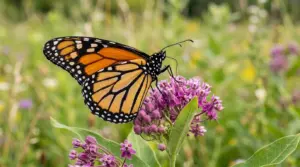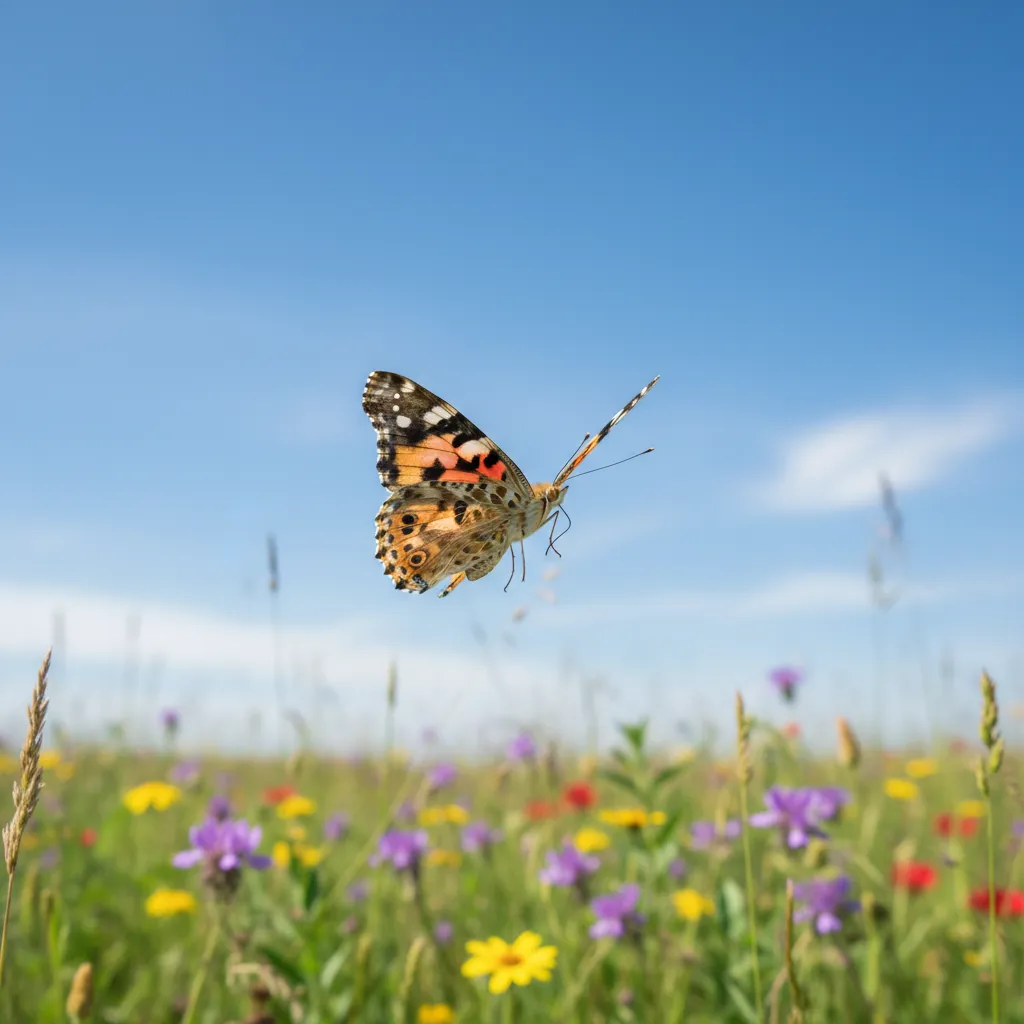



A butterfly looks simple from a distance. Colorful wings, a thin body, maybe a long tongue curling toward a flower. But the closer you look, the more engineering you find. Every part of a butterfly’s body is shaped by millions of years of selection pressure, and the solutions that evolved are genuinely strange and interesting once you understand what they’re doing.
This article walks through butterfly anatomy piece by piece, starting with the eyes and working through the body. Whether you’re brushing up on the basics or going deeper into insect biology, there’s a lot to cover.
Key Takeaways
- Butterfly eyes are compound structures made of thousands of individual lenses, giving them a wide field of view and the ability to detect ultraviolet light.
- The proboscis is a coiled feeding tube that butterflies extend to drink nectar, and it stays coiled at rest under the head.
- All butterflies have six legs, though some species hold their front pair tucked up against the body and appear to have only four.
- Wings are covered in thousands of tiny chitin scales that create color through pigment, structural light interference, or both.
Compound Eyes: How Butterflies See
Butterfly eyes are compound eyes, meaning they’re made up of many individual units called ommatidia. A single butterfly eye can contain anywhere from a few hundred to over a thousand of these units, each one functioning as a small, independent lens pointing in a slightly different direction.
The result is not a high-resolution image the way a vertebrate eye produces one. It’s more like a mosaic. Each ommatidium contributes a single point of light and color information, and the brain assembles these inputs into a wide-angle picture of the environment. The overall resolution is low compared to human vision, but the field of view is much wider, often close to 360 degrees. That matters a lot when your main survival strategy involves detecting a bird swooping in from the side.
Butterflies also see into the ultraviolet spectrum, which humans cannot detect without instruments. Many flowers have UV patterns that are invisible to us but highly visible to butterflies, acting as guides toward nectar. Wing patterns in many species include UV-reflective markings used in mate recognition for the same reason. What looks like a plain white wing to a human observer may carry detailed signals that butterflies read instantly.
Butterfly eyes are also sensitive to polarized light and can detect rapid flicker at rates that would appear as steady light to human vision. This makes butterflies better at tracking fast-moving targets and detecting movement against complex backgrounds. There’s a full breakdown of how this works in this article on butterfly vision, including how their color perception compares to other animals.
One thing compound eyes don’t do well is focus on nearby objects. Butterflies are farsighted in the sense that they’re built to detect and track things across open space rather than examine fine detail up close. Their visual system is optimized for survival and reproduction, not precision work.
The Proboscis
The proboscis is the feeding structure that extends from the butterfly’s head. It’s a long, flexible tube that the butterfly uses to drink nectar, water, and other liquid food sources. When not in use, it coils tightly under the head like a watch spring, kept out of the way during flight and at rest.
It’s not actually a single tube. The proboscis forms when two separate structures called galeae zip together during the butterfly’s emergence from the chrysalis. Each galea has a channel running along its inner surface, and when they lock together they form a sealed central tube that liquid can move through. Newly emerged butterflies sometimes have difficulty getting these two pieces to connect properly, and you can occasionally observe one curling uncooperatively to one side.
Nectar moves up the proboscis through a combination of capillary action and suction generated by a muscular pump in the head called the cibarial pump. The butterfly doesn’t just passively absorb liquid; it actively draws it up. Some species have proboscises long enough to reach deep into tubular flowers that other insects can’t access, giving them access to nectar sources that aren’t available to competitors.
Not every butterfly feeds only on nectar. Some species drink from mud puddles to absorb minerals and salts, a behavior called puddling. Others feed on rotting fruit, sap, animal dung, or even carrion when they need amino acids or sodium that nectar alone doesn’t provide. The proboscis is flexible enough to handle all of these. Research on butterfly feeding behavior is covered by sources like Britannica’s butterfly profile, which includes information on dietary variation across families.
Antennae: Smell and Balance
Butterfly antennae are sensory tools that handle two main jobs: detecting chemical signals (smell) and helping the butterfly maintain orientation and balance in flight. They’re typically long, thin, and end in a distinct club-shaped tip, which is one of the main visual differences between butterflies and moths.
The surface of each antenna is covered in sensory receptors called sensilla. Different types of sensilla respond to different things. Some detect airborne chemical compounds, including the pheromones that butterflies use to locate mates. Others respond to touch, temperature, or humidity. The antennae essentially give the butterfly a detailed chemical map of its surroundings that its eyes can’t provide.
The role of antennae in flight stability is less obvious but equally important. Butterflies use input from their antennae to stay oriented during flight, particularly in wind. Experiments where researchers have modified or removed butterfly antennae have shown that affected individuals have significantly impaired flight control, even when their wings are intact. The antennae function somewhat like a gyroscope, feeding constant information about body position and airspeed to the nervous system.
Antennae also carry receptors that detect carbon dioxide gradients, which helps butterflies locate flowering plants. Flowers produce CO2 as part of their metabolism, and the concentration varies around the plant in ways that a butterfly’s antennae can read from close range.
Wings and Scales
Butterflies have four wings, divided into two forewings and two hindwings. In flight, the fore and hindwings on each side often work together, with the hindwing tucking slightly under the forewing to act as a coordinated surface. This coupling isn’t as tight as in bees, which have a hook-and-groove mechanism, but the aerodynamic interaction between the two pairs still shapes how the butterfly moves through the air.
The wings themselves are made of chitin, the same material as the rest of the exoskeleton. The structure is essentially two thin membranes fused together with a network of hollow veins running through them. The veins carry hemolymph, air through tracheal tubes, and nerve signals. They also determine the shape and rigidity of the wing.
Both surfaces of the wing are covered in overlapping scales, also made of chitin. These scales are flat and roughly the size of a human hair in width. They’re the source of almost all the color and pattern you see on a butterfly. Some scales contain pigment molecules that absorb and reflect specific wavelengths of light. Others have microscopic surface structures that produce structural color through light interference, which is why some wings appear iridescent or shift color depending on the angle. The Blue Morpho is the most well-known example, where the brilliant blue comes entirely from nanostructures with no blue pigment involved at all.
Wing patterns serve multiple purposes: camouflage when resting, warning signals to predators, mimicry of toxic species, and species recognition during mating. Many species also have UV-reflective patterns on the wing surface that are invisible to humans but clearly visible to other butterflies. The full mechanics of how wing shape relates to flight style, gliding versus rapid maneuvering, are covered in detail in this piece on how butterflies fly.
Legs and Feet
All butterflies have six legs, making them true insects. The legs attach to the thorax in pairs, with two legs per thoracic segment. Each leg is made up of several distinct segments: the coxa (connecting to the thorax), trochanter, femur, tibia, and tarsus. The tarsus is the foot segment, and it’s where a lot of interesting sensory biology happens.
Butterfly feet carry chemoreceptors that allow the butterfly to taste what it’s standing on. Females use this to assess host plant suitability before laying eggs. When a female lands on a leaf, she drums her feet rapidly against the surface to release plant chemicals that her tarsal receptors can identify. If the chemical signature matches the right host plant for her species, she’ll lay eggs. If it doesn’t, she moves on. The detail on how this works and why it matters is covered in this article on how butterflies taste with their feet.
Some butterfly families, particularly the brush-footed butterflies in the family Nymphalidae, have highly reduced front legs that appear almost vestigial. These species look like they only have four legs because the front pair is folded up against the body and is too short and underdeveloped to be used for walking. They’re not gone, just reduced in size and function. The remaining four legs carry the full load of walking, gripping, and tasting.
The tarsal claws at the tip of each foot allow butterflies to grip surfaces, including smooth flower petals and vertical plant stems, without sliding off. Some species also have adhesive pads near the claws that increase grip on slick surfaces.
The Thorax and Abdomen
The butterfly body is divided into three main regions: head, thorax, and abdomen. The head carries the eyes, antennae, and proboscis. The thorax is the middle section, and it’s built around flight. The abdomen at the rear handles digestion, reproduction, and breathing.
The thorax is packed with flight muscle. In butterflies and most other flying insects, the thoracic muscles are the most energy-intensive tissue in the body. Two sets of muscles do most of the work: longitudinal muscles that run front to back and compress the thorax to raise the wings, and dorsoventral muscles that pull the thorax walls inward to lower the wings. These muscles don’t attach directly to the wing bases in butterflies the way they do in some other insects. Instead they deform the thorax itself, and the wings move as a consequence of that deformation.
The abdomen contains the digestive tract, the reproductive organs, and the spiracles, which are the small openings through which butterflies breathe. Butterflies don’t have lungs. Air moves in and out of the body through these spiracles and travels through a network of tubes called tracheae directly to the tissues that need oxygen. There’s no blood-based oxygen transport the way vertebrates use.
The abdomen also stores fat reserves and houses the organs involved in egg production in females and sperm transfer in males. In some species, the abdomen carries scent-producing glands used in courtship. Monarch butterflies, for instance, have scent patches called androconia on their hindwings that release pheromones during mating displays. The full breakdown of monarch body structure, including how each part functions through the life cycle, is covered in this monarch body structure guide.
The exoskeleton surrounding all of this is chitin, hardened and sometimes waxy to reduce water loss. Butterflies are vulnerable to desiccation because of their large surface area relative to body volume, and the cuticle layer helps slow that down. In hot, dry conditions, a butterfly’s survival is partly a function of how well its exoskeleton holds water in.
The University of Kentucky’s entomology resources offer a solid reference on insect body structure and anatomy for anyone who wants a deeper look at how butterfly anatomy fits into the broader context of insect biology.
Frequently Asked Questions
How many eyes does a butterfly have?
Butterflies have two compound eyes, one on each side of the head. Each compound eye is made of hundreds to thousands of individual units called ommatidia, each with its own lens. In addition to the compound eyes, many butterfly species also have simple eyes called ocelli, though these are smaller and less prominent than the compound eyes.
Can butterflies see color?
Yes, and their color vision extends beyond the human range. Butterflies can detect ultraviolet light in addition to the visible spectrum that humans see. This UV sensitivity plays a role in finding flowers with UV nectar guides and in recognizing potential mates through UV patterns on the wings that are invisible to the human eye.
What does a butterfly use its proboscis for?
The proboscis is primarily used for drinking. Nectar is the main food source, but butterflies also use the proboscis to drink from puddles, rotting fruit, tree sap, and occasionally animal fluids. The proboscis stays coiled under the head when not in use and extends when the butterfly is feeding. Liquid moves up through the tube via capillary action and suction from a pump inside the head.
How many legs do butterflies have?
All butterflies have six legs, as do all insects. However, in butterflies belonging to the family Nymphalidae, which includes monarchs, painted ladies, and many common garden species, the front pair of legs is greatly reduced and folded against the body. These butterflies appear to have only four legs when observed casually, but the front pair is still present and carries taste receptors used in host plant identification.
What are butterfly wings made of?
Butterfly wings are made of chitin, the same material as the rest of the exoskeleton. The wing structure consists of two thin chitin membranes fused together and supported by hollow veins. Both surfaces are covered in overlapping chitin scales that produce the wing’s colors and patterns. These scales are roughly the size of a human hair in width and can be rubbed off, leaving a powdery residue on your fingers.
Do butterflies breathe through their body?
Yes. Butterflies breathe through small openings in the exoskeleton called spiracles, which are located along the sides of the thorax and abdomen. Air moves through these openings into a network of internal tubes called tracheae, which deliver oxygen directly to the tissues. Butterflies have no lungs and no blood-based oxygen transport system. The spiracles can open and close to regulate airflow and limit water loss.