
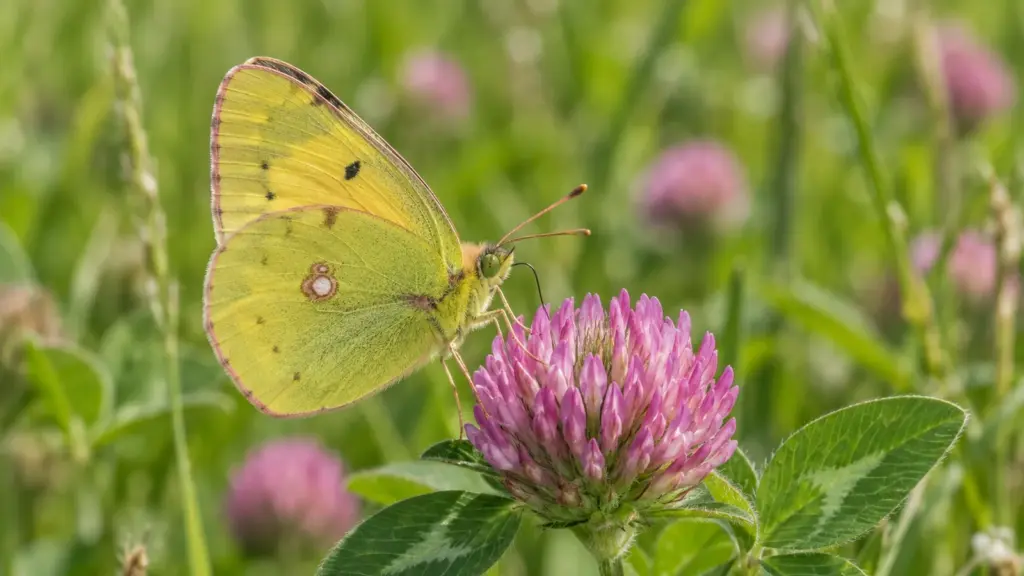

Sulphur butterflies are the yellow and orange butterflies you see zipping low over clover fields and roadsides. The common ones in North America are the orange sulphur, the clouded sulphur and the larger cloudless sulphur, and their caterpillars feed on plants in the pea family.
They also hide a secret in plain sight. Male sulphurs flash ultraviolet patterns people can’t see, and females use those patterns to pick mates.
Key Takeaways
- The orange sulphur, clouded sulphur and cloudless sulphur are the sulphur butterflies most people see in North America.
- Their caterpillars eat plants in the pea family, such as clover, alfalfa and senna.
- The orange and clouded sulphur are so closely related that their caterpillars and chrysalises look identical.
- Female sulphurs recognize the right mate by ultraviolet reflection on the males’ wings, which human eyes can’t detect.
How to Identify Sulphur Butterflies
Sulphurs belong to the whites and sulphurs family, Pieridae. Most rest with their wings closed, so you’ll usually see the yellow or greenish underside with a small silver spot ringed in pink or red on the hindwing.
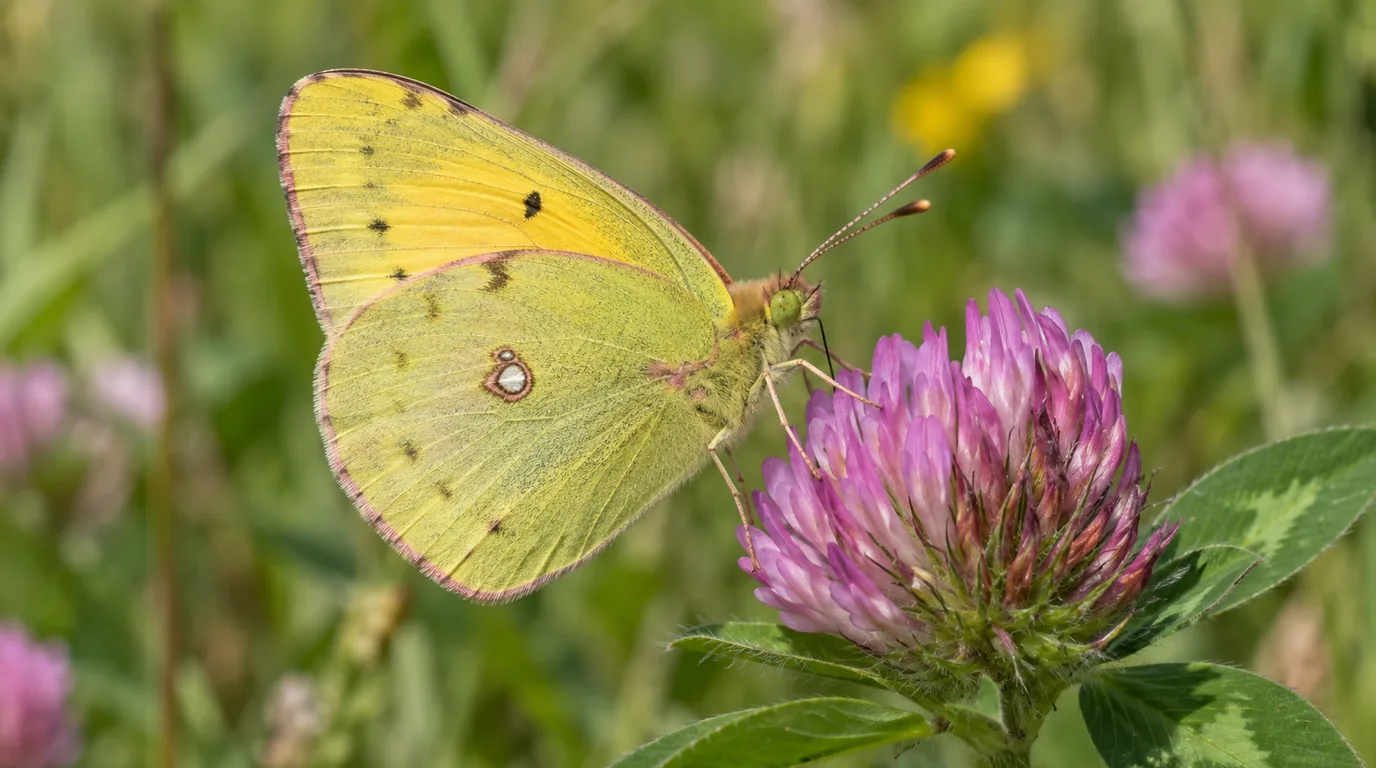
Size and color narrow it down. These are the three species most people meet.
- The orange sulphur shows orange above with black borders and spans about 1.5 to 2.5 inches.
- The clouded sulphur is clear yellow above with black borders and spans about 1.25 to 2 inches.
- The cloudless sulphur is larger and bright lemon yellow, spanning about 2.2 to 3.1 inches, with few markings.
- Female orange and clouded sulphurs can also come in a pale, almost white form, which adds to the confusion.
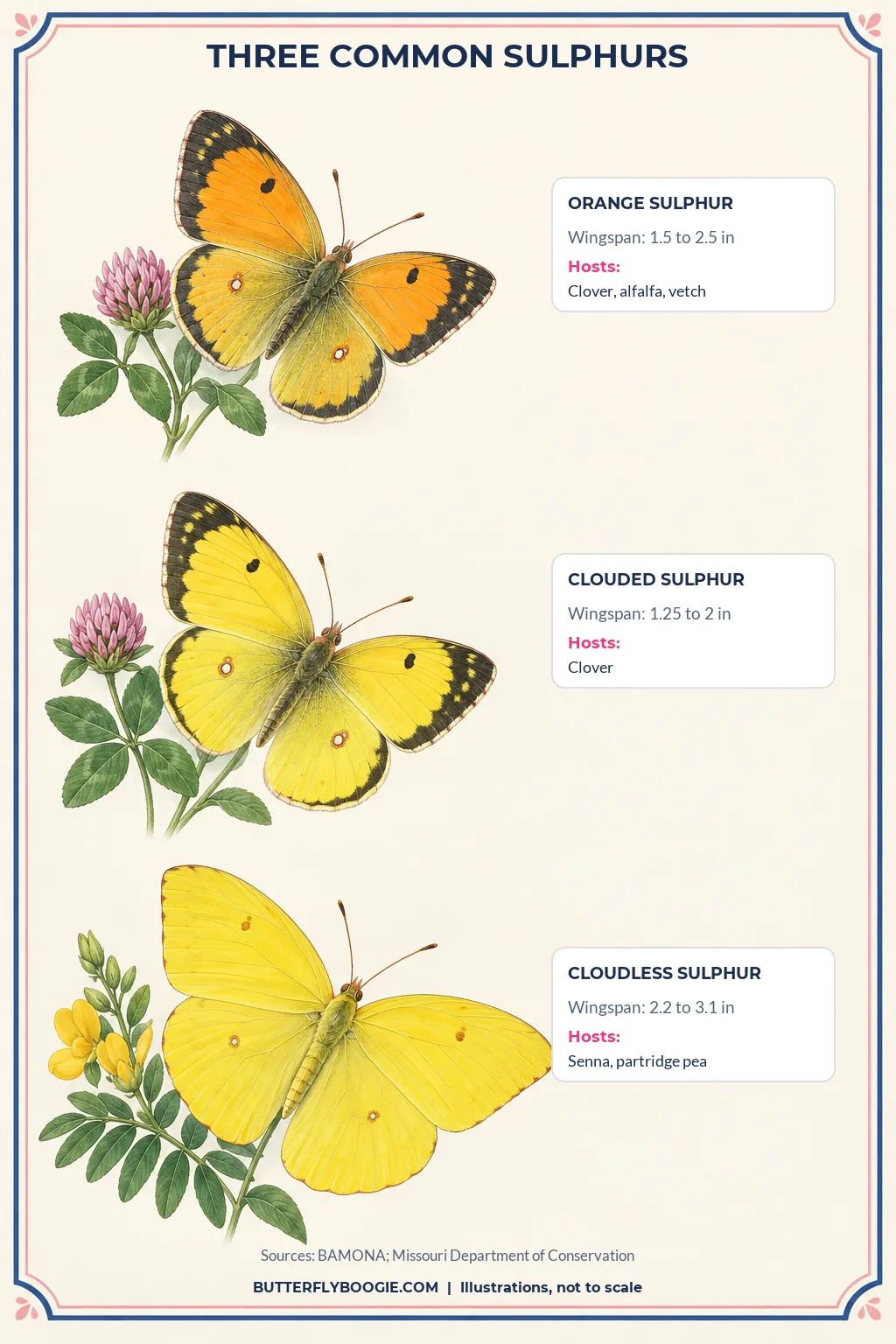
The Missouri Department of Conservation notes that the orange and clouded sulphur are so closely related that their eggs, caterpillars and chrysalises look identical, and their behavior is the same. Only the adults’ wing color reliably separates them.
Orange Sulphur
The orange sulphur was once called the alfalfa butterfly, and alfalfa was its main caterpillar food. Clovers and vetches now probably serve as its primary host plants, according to the Missouri Department of Conservation.
It’s one of the most widespread butterflies in North America. Look for it over farm fields, lawns and roadsides from spring until hard frost.
Clouded Sulphur
The clouded sulphur is the classic yellow butterfly of clover fields. Its caterpillars feed on leafy members of the pea family, especially clovers.
Where orange and clouded sulphurs fly together, they sometimes hybridize. Their close relationship is part of why UV signals matter so much to them.
Cloudless Sulphur
The cloudless sulphur is the big, bright yellow butterfly that powers across gardens in the South. Its species name, sennae, comes from Senna, the genus of many of its host plants.
Its caterpillars eat pea family plants such as partridge pea, sensitive pea and wild senna. In late summer and fall, many cloudless sulphurs move south and can turn up far north of their usual range.
The Hidden Ultraviolet Signals
Sulphur butterflies see ultraviolet light, and their wings use it. In a classic 1978 study in Behavioral Ecology and Sociobiology, Robert Silberglied and Orley Taylor showed that female orange and clouded sulphurs use the difference in UV reflection between the two species to recognize the right mate.
The human-visible color difference didn’t matter to the females. Males of the orange sulphur reflect ultraviolet light, and that reflection also discourages other males from approaching.
Males find females partly by color too. They will court paper dummies of the right shade, and they are drawn to the UV-absorbing hindwings of females.
A 2005 study found that pigments called pterins amplify the iridescent ultraviolet signal in male orange sulphurs. Our guide to how butterflies see explains the vision behind it.
How to Attract Sulphur Butterflies
Plant their caterpillar foods and give adults open, sunny space. Sulphurs are fast, low fliers that favor fields and lawns over shady gardens.
- Let clover grow in part of the lawn for orange and clouded sulphurs.
- Plant partridge pea or native sennas for cloudless sulphurs in warmer regions.
- Add nectar flowers such as asters, zinnias and lantana in full sun.
- Keep a damp, sunny patch of soil, where sulphurs often gather to sip minerals.
For more host plant ideas, see our caterpillar host plant guide.
FAQ
What is a sulphur butterfly?
A yellow or orange butterfly in the family Pieridae, related to the cabbage white.
The orange, clouded and cloudless sulphurs are the most common in North America.
What do sulphur caterpillars eat?
Plants in the pea family. Orange and clouded sulphurs eat clover and alfalfa, and cloudless sulphurs eat senna and partridge pea.
How do you tell an orange sulphur from a clouded sulphur?
Look at the upperside when the butterfly opens its wings. The orange sulphur is orange, and the clouded sulphur is clear yellow.
Can sulphur butterflies see ultraviolet light?
Yes. Female orange and clouded sulphurs use ultraviolet reflection on male wings to recognize their own species.