

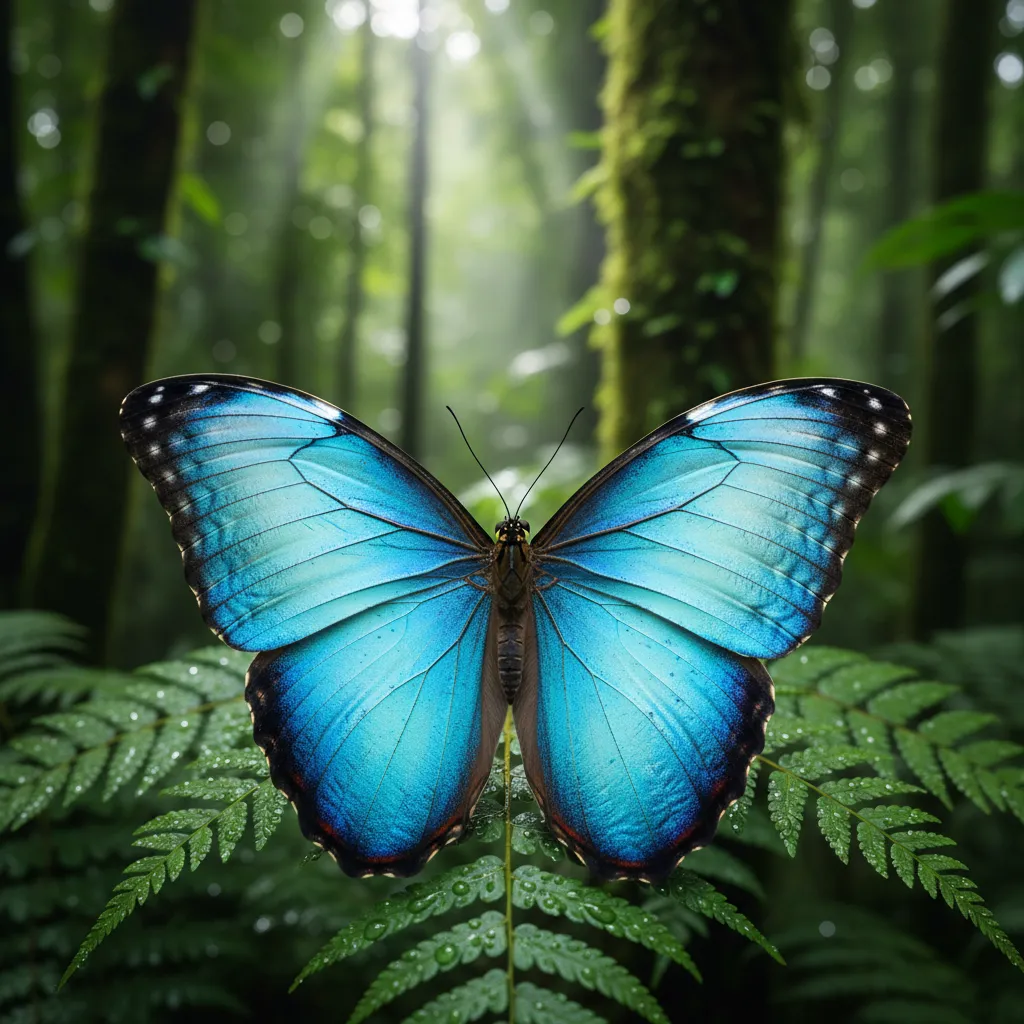
If you’ve ever seen a blue morpho butterfly in a museum display or a nature documentary, you already know how striking they are. That electric, iridescent blue seems almost too intense to be real. And in a way, it isn’t real — at least not in the way most colors work.
The blue morpho is one of the most recognizable butterflies on the planet, and there’s a lot going on beneath those wings that makes this insect genuinely fascinating to learn about.
This article covers everything from how their color works to where they live, what they eat, and whether you should be worried about their future. Let’s get into it.
Key Takeaways
- The blue morpho’s wings are not actually pigmented blue — microscopic structures on the wing scales refract light to produce that color.
- Blue morphos are found throughout Central and South American rainforests, where they spend most of their time in the forest understory and canopy.
- Adult blue morphos don’t eat solid food — they feed on liquids from rotting fruit, tree sap, and decomposing matter.
- While not currently classified as endangered, habitat loss from deforestation is the biggest threat to their long-term survival.
Why Blue Morphos Look Blue (And Why That’s Unusual)
Most colors in nature come from pigment — a chemical that absorbs certain wavelengths of light and reflects others. The blue you see on a blue morpho butterfly works completely differently. Their wings contain no blue pigment at all.
Instead, the scales on a blue morpho’s wings are covered in microscopic ridges arranged in a lattice-like structure. When light hits these ridges, it gets split and reflected at specific angles. The nanostructures are spaced at intervals that cause the blue wavelengths of light to amplify while other wavelengths cancel out.
The result is an intense, shimmering blue that shifts slightly as you change your viewing angle — a phenomenon called structural color.
This is the same basic principle behind the iridescence you see on soap bubbles, oil slicks, and certain bird feathers like a peacock’s tail. But the morpho does it with a level of precision that engineers and materials scientists have been studying for years. Researchers at institutions like Harvard and MIT have looked at morpho wing structures as inspiration for everything from anti-counterfeiting technology to sensors that can detect chemical vapors.
One practical consequence of this structural color: when a blue morpho closes its wings, the blue disappears almost entirely. The underside of their wings is brown with eyespot patterns — so a resting morpho looks completely different from one in flight. This dramatic switch between visible and camouflaged is thought to confuse predators.
You can read more about the specifics of butterfly anatomy, including how their wings and sensory structures are built, if you want to go deeper on how these insects are put together.
Size and Appearance
Blue morphos are large butterflies. Their wingspan typically ranges from 5 to 8 inches (12 to 20 cm), which puts them among the biggest butterflies in the world. The species Morpho didius, sometimes called the giant blue morpho, sits at the larger end of that range.
When one of these opens its wings in flight, it’s hard to miss.
The genus Morpho includes around 29 accepted species and many more subspecies. Not all of them are blue — some morphos are white, pale green, or brown — but the blue species are by far the most well-known. Within those blue species, the intensity and shade of blue varies.
Some have a deep, saturated cobalt color while others lean toward a lighter sky blue with more white at the wing margins.
There’s also a consistent difference between males and females. Males tend to be more intensely blue, and the iridescence is more pronounced. Females are often duller, with brownish coloring and more visible eyespots on both wing surfaces.
This difference is thought to be related to mate selection — males use that blue flash as a signal during courtship.
The body of a blue morpho is covered in fine hair-like scales and is typically dark brown or black, which contrasts sharply with the wings in flight.
Where Blue Morphos Live
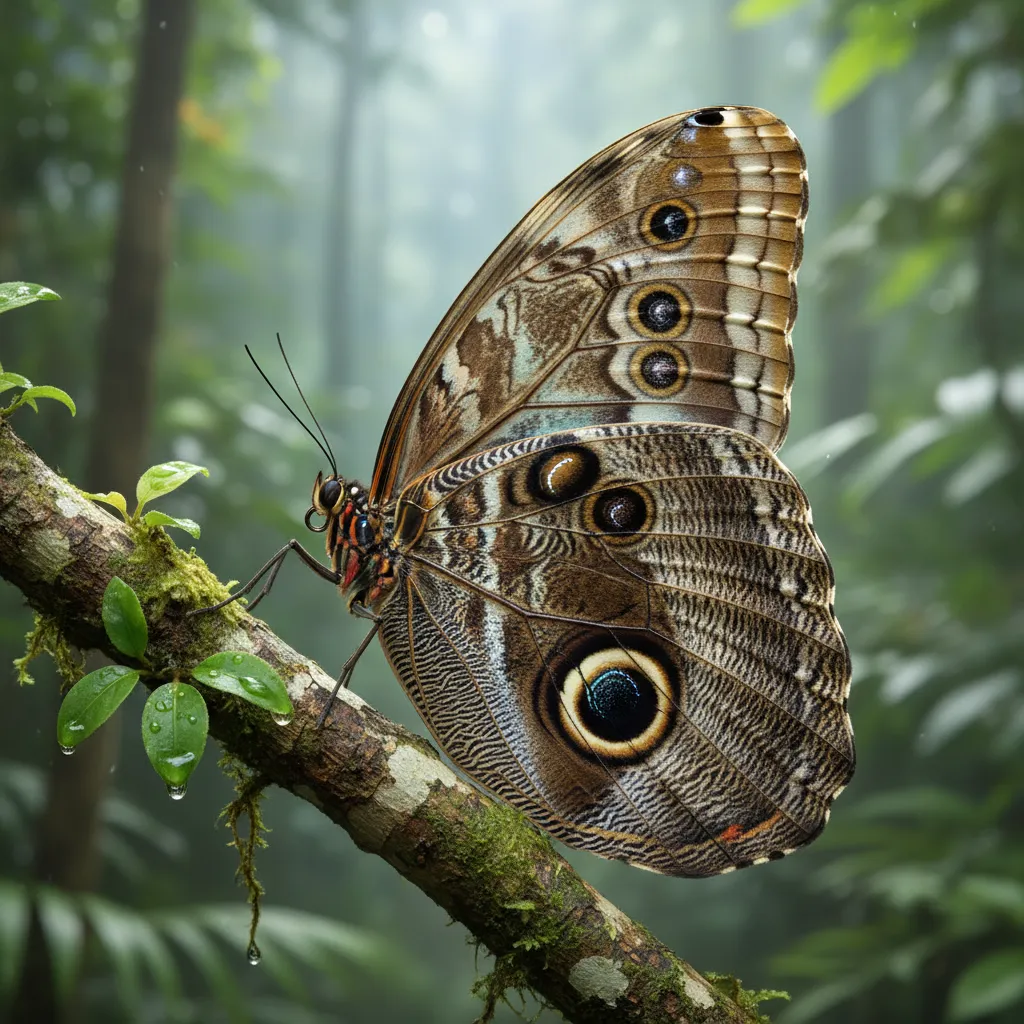
Blue morpho butterflies are native to the tropical rainforests of Central and South America. Their range stretches from Mexico down through Central America and across most of South America, with the highest concentrations in countries like Brazil, Colombia, Peru, Venezuela, and Ecuador. The Amazon basin is particularly good habitat for them.
Within the rainforest, blue morphos spend a lot of their time in the forest understory and along rivers and forest edges, where sunlight breaks through the canopy. They tend to fly low, staying within a few feet of the ground as they travel through the forest. Males are more likely to be seen in open sunny patches, while females often stay higher in the canopy.
They prefer humid, warm environments. Blue morphos are not cold-tolerant — they’re tied to the tropical climate of their range, which means their distribution doesn’t extend into the temperate zones north or south of the tropics.
If you’re traveling in South America and hoping to see one, look for them in areas with intact forest cover near water. They’re most active during the warmer parts of the day. The flight is distinctive — a slow, floating glide with periodic wingbeats that causes the blue to flash on and off.
That pulsing effect makes them surprisingly visible even in dense forest.
Blue Morpho Diet and Behavior
Adult blue morphos can’t eat the way most animals do. Their mouthparts have evolved into a proboscis — a flexible tube they use to drink liquids. They don’t consume solid food at all.
Most of their nutrition comes from rotting fruit. They’re attracted to the fermented juices of overripe and decomposing fruits on the forest floor, which they sip through their proboscis. They also feed on tree sap, animal fluids, and wet decomposing plant material.
Some accounts describe them getting slightly intoxicated from the alcohol in fermented fruit, which affects their flight patterns temporarily.
They locate food partly through smell, using chemoreceptors on their antennae and legs. The legs can detect chemical compounds on contact, so landing on something that smells edible is often enough to trigger feeding behavior.
As caterpillars, blue morphos are far less picky. They feed on plants in the legume family, including species in the genera Erythroxylum and Mucuna. Interestingly, some of these host plants contain alkaloids that the caterpillars store in their bodies, making them mildly toxic to predators.
This chemical defense is one reason why poisonous butterflies are more common in tropical forests where the host plant chemistry tends to be more complex.
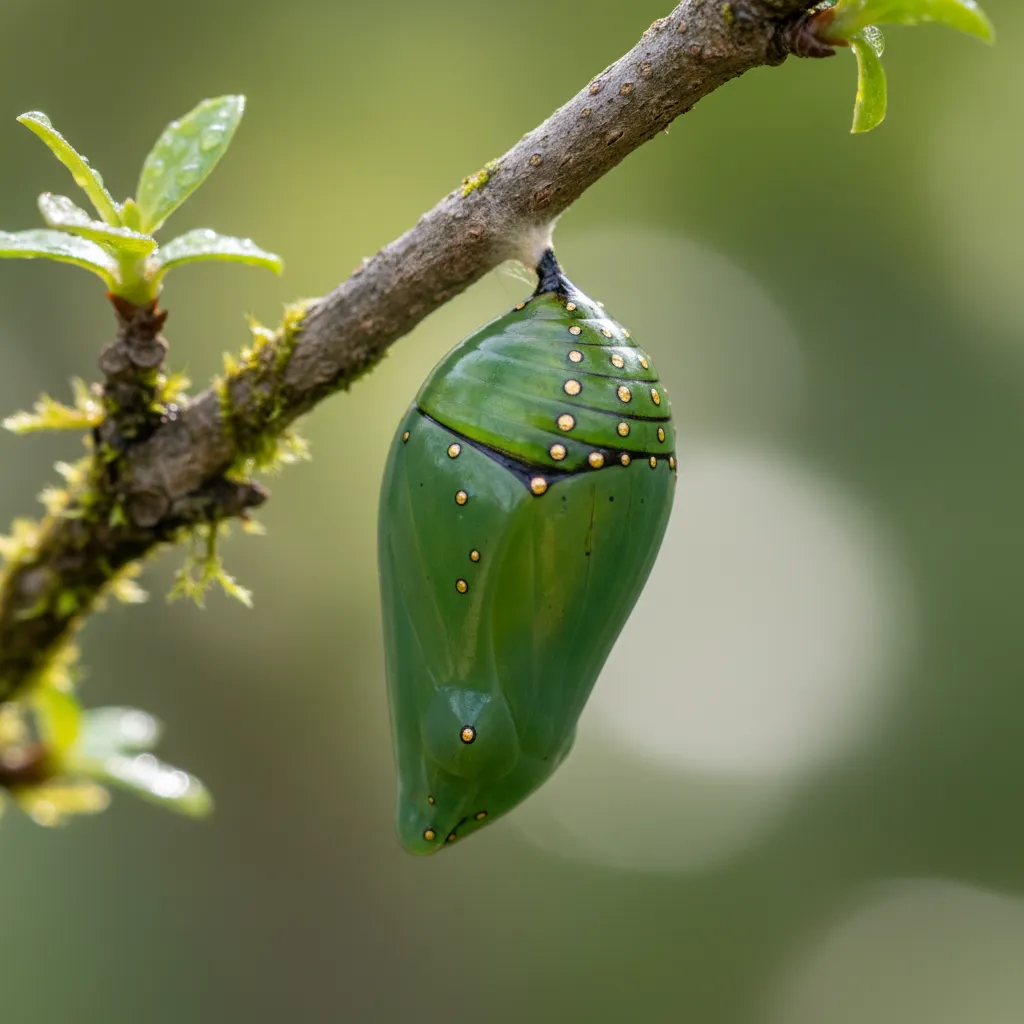
Blue morphos go through complete metamorphosis: egg, caterpillar (larva), chrysalis (pupa), and adult. The caterpillars are striking in their own right — they’re reddish-brown with bright patches of lime green or yellow, and they have urticating hairs that irritate skin. The chrysalis stage lasts around two weeks before the adult emerges.
Adult blue morphos typically live for about two to three weeks in the wild. They spend most of that time feeding, finding mates, and for females, locating suitable plants to lay eggs on.
Predators include birds, insects like wasps and flies (some species of tachinid fly parasitize morpho pupae), and various forest reptiles and amphibians. The eyespots on the underside of the wings are a passive defense — when the wings are closed, those spots create the impression of a larger animal’s eyes, which can startle or deter would-be attackers. You can find more detailed facts about this species in our article on blue morpho butterfly facts.
Are Blue Morphos Endangered?
The blue morpho is not currently listed as endangered on the IUCN Red List, and the species as a whole is still relatively widespread across its range. But that doesn’t mean there’s nothing to be concerned about.
Deforestation is the main threat. The Amazon and other Central and South American rainforests have been losing coverage at significant rates due to agriculture, cattle ranching, logging, and infrastructure development. Blue morphos are rainforest specialists — they need intact forest to complete their life cycle.
Fragmented or degraded habitat reduces the availability of host plants for caterpillars and disrupts the microclimate these butterflies depend on.
There’s also a history of collection pressure. Blue morphos have been commercially collected for decades, used in jewelry, decorative art, and butterfly displays. While commercial collection is now regulated in many countries, illegal collection still occurs.
The trade has declined significantly compared to its peak in the 20th century, but it hasn’t disappeared entirely.
Climate change adds another layer of uncertainty. Shifts in temperature and rainfall patterns in tropical regions could affect the timing of morpho life cycles, the distribution of host plants, and the overall suitability of current habitat. The long-term picture is harder to predict, but scientists monitoring tropical insect populations broadly have noted concerning declines in many species across Central and South America.
Some individual species within the Morpho genus may be more at risk than others, particularly those with more limited geographic ranges. If you’re interested in butterflies that face more immediate threats, our piece on rare butterflies covers several species that are in more precarious situations.
Conservation efforts in their native range include protected area management in countries like Brazil, Costa Rica, and Peru, as well as butterfly farming programs that provide economic incentives for local communities to raise rather than collect wild specimens. Several butterfly farms in Costa Rica and Ecuador have been producing blue morphos for the live butterfly exhibit trade for years, which helps reduce pressure on wild populations.
FAQ
Can you keep a blue morpho butterfly as a pet?
It’s technically possible to house blue morphos in a large, humid enclosure with the right host plants and temperature conditions, but it’s genuinely difficult and not practical for most people. They require tropical conditions, specific legume host plants for the caterpillars, and fresh rotting fruit for adults. Some butterfly exhibits and zoological institutions maintain them successfully.
For private individuals, they’re better appreciated in the wild or in a professional exhibit setting.
Why do blue morpho wings look different from different angles?
This is the structural color effect in action. The microscopic ridges on the wing scales are arranged so that light reflected at certain angles amplifies the blue wavelength. As your viewing angle changes, the interference pattern shifts, which causes the color to appear to change in intensity and hue.
This is why blue morphos appear to flash as they fly — each wingbeat changes the angle at which light hits the scales.
Are blue morpho butterflies poisonous?
Blue morpho caterpillars can accumulate alkaloids from their host plants, which makes them distasteful or mildly toxic to some predators. Adults retain some of these compounds. However, they’re not considered dangerously toxic to humans — handling one won’t hurt you.
The wing scales can irritate eyes if transferred by touching your face after handling a butterfly, so washing your hands afterward is a good idea.
How long do blue morpho butterflies live?
The adult butterfly stage lasts roughly two to three weeks. The full life cycle from egg to adult takes considerably longer — several months in total, depending on temperature and food availability. Most of that time is spent as a caterpillar, with the egg and chrysalis stages each lasting one to two weeks under typical tropical conditions.
Where is the best place to see blue morpho butterflies?
In the wild, the best places are tropical rainforest areas in Costa Rica, Ecuador, Peru, Brazil, and Colombia. Look near rivers and forest edges during warmer parts of the day. For a guaranteed sighting, butterfly houses and tropical conservatories at botanical gardens and zoos around the world often have live blue morphos on display.
Places like the Butterfly Conservatory at the American Museum of Natural History in New York and the Butterfly Pavilion in Colorado regularly feature them. The Natural History Museum in London has also featured morpho butterflies in exhibits. These indoor exhibits let you observe their flight pattern and color up close in a way that’s very hard to replicate in the wild.