




Butterfly Diets: How Much Do Butterflies Eat a Day?
How much do butterflies eat? Most adult butterflies consume roughly their own body weight in nectar over the course of a single day. For a butterfly weighing about half a gram, that translates to around 0.5 grams of liquid nectar – a quantity that looks tiny in human terms but represents a serious caloric commitment relative to body size. It’s comparable to a 150-pound person drinking 150 pounds of juice between sunrise and sunset.
That number shifts based on species, activity level, temperature, and reproductive status. A butterfly sitting still on a cool morning burns far fewer calories than one flying continuously across an open meadow in July heat. And species preparing for migration operate on a completely different metabolic program than those living out a short, sedentary adult life in a backyard garden.
Key Takeaways
- Most butterflies drink roughly their own body weight in nectar per day, though actual intake varies with species, temperature, and activity level.
- Flight is the biggest energy expense – a butterfly in active flight burns calories 10 to 100 times faster than one resting with wings folded.
- Monarch butterflies preparing for fall migration shift their diet strategy entirely, converting excess nectar sugars into stored fat reserves called lipids.
- During food scarcity, butterflies reduce flight, enter temporary torpor, or switch to alternative food sources like rotting fruit, tree sap, and mud puddles.
What Do Butterflies Actually Consume?
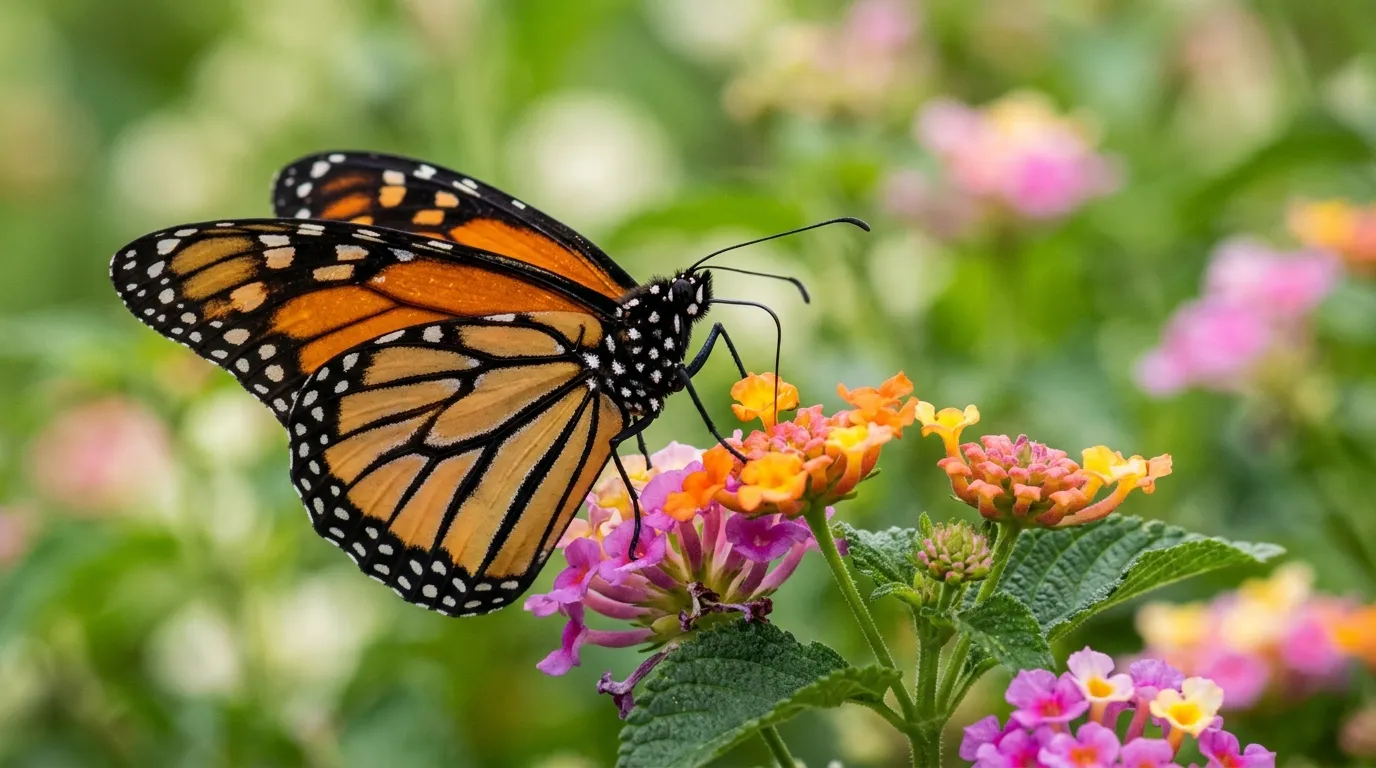
Adult butterflies are liquid feeders. They don’t chew or bite anything. Their mouthpart is a long, coiled tube called a proboscis that works like a drinking straw, and they use it to siphon fluids from various sources. Flower nectar makes up the bulk of what butterflies eat and drink, but it’s not the only thing on the menu.
Nectar is mostly water with dissolved sugars – primarily sucrose, glucose, and fructose. Sugar concentrations in flower nectar typically range from 15% to 75%, with most butterfly-pollinated flowers sitting around 20% to 40%. That sugar content matters because it directly determines how much usable energy a butterfly gets per feeding stop.
Beyond nectar, many species regularly feed on rotting fruit, tree sap, animal dung, and mineral-rich puddles. Male butterflies in particular gather at mud puddles to take in sodium and amino acids – nutrients that nectar alone doesn’t provide in sufficient quantities. These “puddling” sessions can last 30 minutes or longer, with the butterfly pumping fluid through its system and excreting excess water out the back end while retaining the dissolved minerals.
How Much Nectar Does a Butterfly Drink Per Day?
The commonly cited figure is about one body weight per day in nectar, but let’s put some real numbers on that. A painted lady butterfly weighs around 0.3 grams. Research on captive Lepidoptera feeding behavior shows these butterflies consuming between 0.2 and 0.5 mL of sugar solution per day when provided unlimited access. Since nectar is less dense than water by only a small margin, that’s roughly in the range of the butterfly’s own mass.
Larger species eat proportionally more. A monarch butterfly weighing 0.5 grams may drink 0.4 to 0.7 mL of nectar on a warm, active day. A giant swallowtail at around 0.6 grams can consume even more. The relationship isn’t perfectly linear – larger butterflies have slightly lower mass-specific metabolic rates, so they don’t need to consume quite as much per gram of body weight as smaller species do.
Temperature plays a big role too. Butterflies are ectothermic, meaning their body temperature tracks the environment. On a 90-degree afternoon, their metabolic rate runs much higher than on a 65-degree morning. A butterfly in peak summer heat might feed twice as often as the same individual on a mild spring day. This is one reason butterfly feeding frequency varies so much from one observation to the next.
The Energy Budget of a Flying Butterfly
Flight is where most of a butterfly’s daily calorie budget goes. A resting butterfly burns energy slowly – just enough to keep its basic systems running. But the moment it takes off, energy demand spikes dramatically. Studies using respirometry on tethered and free-flying butterflies have measured metabolic rates during flight at 10 to 100 times the resting rate, depending on species and flight style.
That’s a wide range, and it comes down to how each species flies. Butterflies that use a “flap-and-glide” pattern – like monarchs and swallowtails – conserve energy by alternating between powered wingbeats and passive gliding. Species that fly with constant rapid wingbeats, like skippers, burn through their fuel much faster. A skipper may need to feed more frequently in a single afternoon than a monarch does in an entire day.
Wind matters too. A butterfly flying into a headwind works harder than one riding a tailwind. On gusty days, I’ve noticed butterflies in my garden tend to stay lower, fly shorter distances between flowers, and spend more time perched. That’s energy-saving behavior. They’re not just hiding from the wind – they’re rationing fuel.
How Flight Style Affects Feeding Needs
Broad-winged species like monarchs and gulf fritillaries have a lower cost of flight per unit time because their large wing surface area generates lift more efficiently. They can glide for stretches, which cuts the number of calorie-burning wingbeats per minute. These species can sometimes get away with feeding less frequently.
Small, fast-flying species like hairstreaks and some blues beat their wings almost continuously. Their flight is energetically expensive relative to body mass, and they typically need to visit flowers more often. If you watch a group of hairstreaks working a patch of flowers, you’ll notice they rarely sit still for long – they bounce between blooms quickly, topping off their sugar reserves in short bursts.
Diet and Migration: How Monarchs Fuel a 3,000-Mile Trip
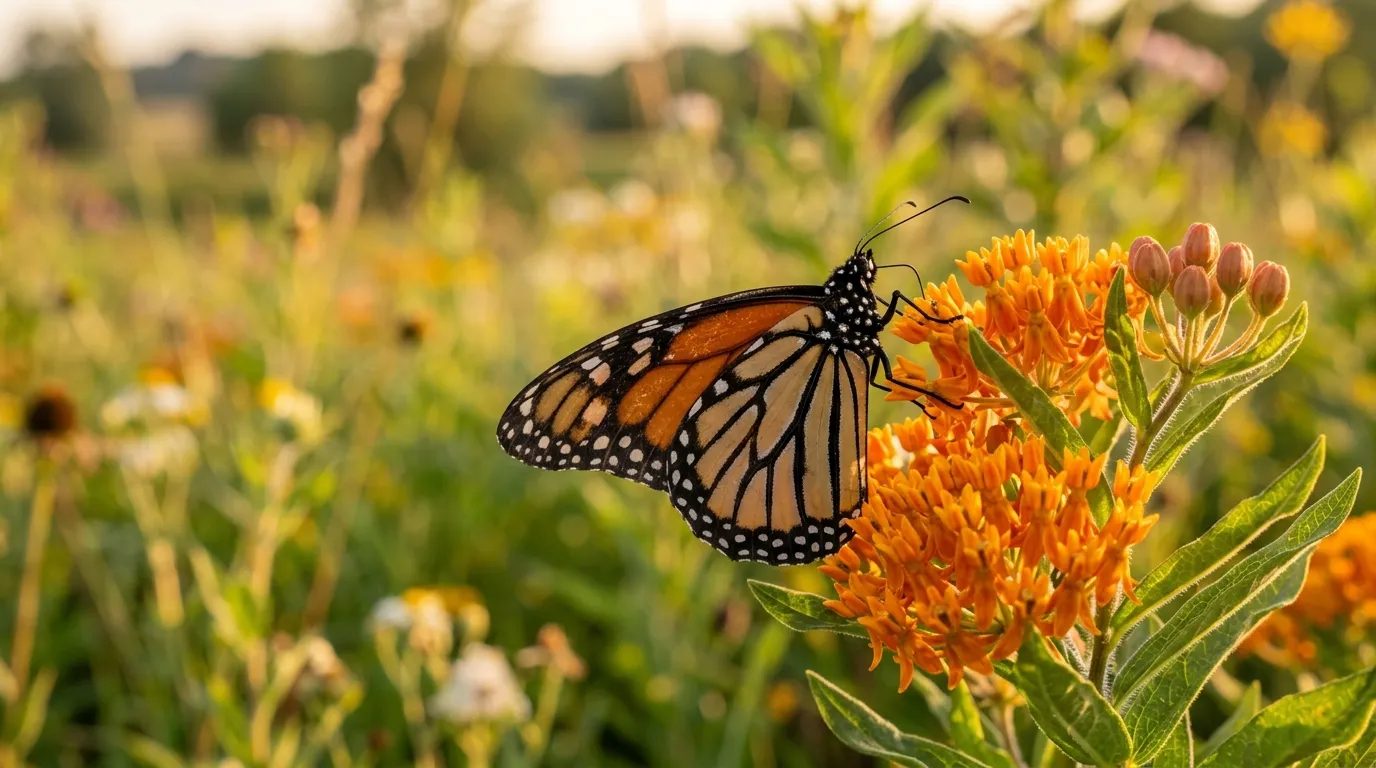
The relationship between diet and migration is clearest in monarch butterflies. The fall migratory generation – sometimes called the “super generation” because it lives up to eight months instead of the typical two to six weeks – fundamentally changes how it handles food.
During the weeks before and during southward migration, monarchs go into a state of reproductive dormancy (diapause) and redirect all incoming calories toward fat storage. The sugars from nectar get converted into triglycerides and stored as lipids in the abdomen. A monarch preparing for migration can increase its body mass by 50% or more through this lipid loading, according to research from the Monarch Joint Venture.
These fat reserves are the fuel that powers the journey from southern Canada and the northern United States down to the oyamel fir forests of central Mexico – a trip of up to 3,000 miles. Monarchs feed aggressively on goldenrod, asters, and other late-season wildflowers along the route. Stopover sites with dense wildflower patches are not optional rest stops. They’re refueling stations, and monarchs that fail to build adequate lipid reserves before reaching the Mexican overwintering sites often don’t survive the winter.
Research published in the journal Oecologia has shown that monarchs arriving in Mexico with higher lipid content have significantly better overwintering survival rates. The margin between a butterfly that makes it to spring and one that doesn’t can come down to a few milligrams of stored fat – the equivalent of a few extra flower visits on a September afternoon in Kansas.
What Happens When Butterflies Can’t Find Food?
Food scarcity is a real and regular challenge for wild butterflies. Drought dries up nectar sources. Mowing removes wildflower patches. Agricultural herbicides eliminate the weedy flowers that many species depend on. When food runs short, butterflies have a few strategies, none of them great.
The first response is to reduce activity. A butterfly that can’t find food will spend more time perched and less time flying. This conserves energy but also limits the ability to search for new food sources or mates. It’s a trade-off between starving while sitting still and starving while burning fuel looking for flowers that might not exist.
Some species enter a brief torpor during cool nights or extended overcast periods, dropping their metabolic rate as low as it can go. This is different from hibernation or diapause – it’s a short-term shutdown that can last hours, not weeks. The butterfly sits motionless, conserves energy, and resumes activity when conditions improve.
Switching food sources helps too. Butterflies that normally prefer flower nectar will turn to rotting fruit, tree sap, or even other liquid sources when nectar is unavailable. Some species are better at this flexibility than others. Red admirals, question marks, and mourning cloaks regularly feed on sap and fruit even when flowers are plentiful. Specialists like some hairstreaks have a harder time adapting when their preferred nectar flowers disappear.
Species Differences in Daily Food Intake
Not all butterflies eat at the same rate, and some barely eat at all. Luna moths and other silk moths, for instance, have no functional mouthparts as adults. They emerge, mate, lay eggs, and die within about a week – running entirely on energy stored during the caterpillar stage. While these are moths rather than butterflies, the example shows how dramatically feeding strategy can vary across Lepidoptera.
Among true butterflies, longwings (Heliconius species) stand out as unusual feeders. They collect pollen on their proboscis and dissolve it with saliva to extract amino acids – a behavior unique in the butterfly world. This pollen feeding gives them access to protein and allows them to live far longer than most butterflies, sometimes six months or more. Their daily nutritional intake includes both nectar sugars and pollen-derived protein, which changes their energy budget completely compared to nectar-only species.
At the other end, small blues and coppers may visit only a handful of flowers per day. Their tiny body size means their absolute caloric needs are low, even if their mass-specific metabolic rate is high. A western pygmy blue weighing 0.05 grams needs far less total nectar than a monarch – its higher metabolic rate per gram doesn’t change the fact that there’s just less body to fuel.
How Caterpillar Feeding Compares to Adult Feeding
It’s worth noting that caterpillars eat on an entirely different scale than adults. A caterpillar’s job is to grow, and it does that by eating almost continuously. A monarch caterpillar can consume an entire milkweed leaf in under four hours, and over the roughly two-week larval period, it increases its body mass by a factor of about 2,000. That’s like a seven-pound baby growing to 14,000 pounds in two weeks.
The adult butterfly will never come close to that intake rate. Adults don’t grow. They allocate incoming calories toward flight, reproduction, and basic metabolic maintenance. Some of the fat and protein stored during the caterpillar stage carries over into adulthood, particularly in species with short adult lifespans. The energy a painted lady adult uses for its first few flights after emerging from the chrysalis came from leaves eaten weeks earlier as a caterpillar.
Supporting Butterfly Diets in Your Garden
If you want to make sure the butterflies in your yard have enough to eat, think about continuous bloom coverage. A garden that flowers heavily in June but goes bare by August leaves a critical feeding gap right when many second-brood butterflies are on the wing. Planting for sequential bloom – spring crocuses and asters followed by summer coneflowers and milkweed followed by fall goldenrod and sedum – keeps nectar available across the full flight season.
Flower shape matters for accessibility. Butterflies do best with open, flat-topped, or clustered flowers where they can land and probe easily. Deep tubular flowers designed for hummingbirds or long-tongued bees are harder for most butterflies to use, though swallowtails with their longer proboscises handle them better than smaller species. The U.S. Forest Service pollinator guide lists specific native plants organized by region and bloom time.
Leaving some overripe fruit out in a shallow dish can supplement nectar sources, especially in late summer and fall. Banana slices, watermelon, and soft peaches work well. You’ll attract brush-footed butterflies like red admirals, painted ladies, and hackberry emperors – species that naturally seek out fermenting fruit. Replace the fruit every couple of days to prevent mold buildup.
Frequently Asked Questions
How much do butterflies eat in a single feeding session?
A single feeding session typically lasts 30 seconds to several minutes, during which a butterfly may consume 10 to 50 microliters of nectar. The exact amount depends on flower volume, sugar concentration, and how hungry the butterfly is. Most species visit anywhere from a dozen to several dozen flowers per day across multiple feeding bouts.
Can butterflies survive without eating for a day?
Yes, most healthy butterflies can survive a day or two without feeding, especially if temperatures are cool and they remain inactive. They burn through stored glycogen first, then begin drawing on fat reserves if any are available. Extended fasting beyond a few days significantly shortens lifespan and reduces reproductive output.
Do butterflies drink water separately from nectar?
Butterflies get most of their water from nectar, which is about 60% to 80% water depending on the flower. They don’t typically drink plain water the way birds do, but they do visit mud puddles and damp soil. Puddling behavior is mainly about extracting dissolved minerals rather than hydration, though they take in water during the process.
Why do some butterflies eat rotting fruit instead of flowers?
Rotting fruit offers concentrated sugars that are easy to access without probing into a flower. Fermented fruit also contains small amounts of alcohol and amino acids that fresh nectar lacks. Species in the brush-footed family (Nymphalidae) – including red admirals, mourning cloaks, and question marks – are particularly drawn to fruit. These species often have shorter proboscises that make feeding from deep flowers harder anyway.
How does cold weather affect butterfly feeding?
Butterflies cannot fly or feed when their body temperature drops below about 55 to 60 degrees Fahrenheit. On cool mornings, they bask in the sun with wings spread to warm up before attempting flight. During extended cold snaps, they sit motionless and burn through stored energy slowly. This is one reason late-season butterflies are often seen basking for long periods on sun-warmed surfaces before making short flights to the nearest flower.
Do bigger butterflies eat more than smaller ones?
In absolute terms, yes. A giant swallowtail consumes more total nectar per day than a tiny spring azure. Relative to body weight, though, smaller butterflies often have higher mass-specific metabolic rates, meaning they need proportionally more food per gram of body weight. The difference is that a large butterfly’s bigger crop (stomach) allows it to take in more nectar per flower visit, so it may actually spend less total time feeding than a smaller species that needs to refuel more often.


