




Butterfly habitats span nearly every continent and climate zone on the planet. From steamy tropical rainforests to dry desert washes, these insects have adapted to an impressive range of conditions. Whether you’re planning a trip to see monarchs in Mexico or trying to figure out why painted ladies keep showing up in your backyard, understanding where butterflies live – and what they need to survive – gives you a much deeper appreciation for how these insects fit into the world around us.
Key Takeaways
- Tropical rainforests support the highest butterfly diversity on Earth, with some regions home to over 1,200 species within a single national park.
- A functional butterfly habitat requires four things: host plants for caterpillars, nectar sources for adults, shelter from wind and predators, and the right microclimate conditions.
- Temperate meadows, alpine slopes, desert edges, and even urban gardens all serve as butterfly habitats when the right plants and conditions are present.
- Some of the most famous butterfly hotspots in the world – like the monarch sanctuaries in central Mexico – attract hundreds of thousands of visitors each year and are protected as UNESCO heritage sites.
Tropical Rainforests: Where Butterfly Diversity Peaks
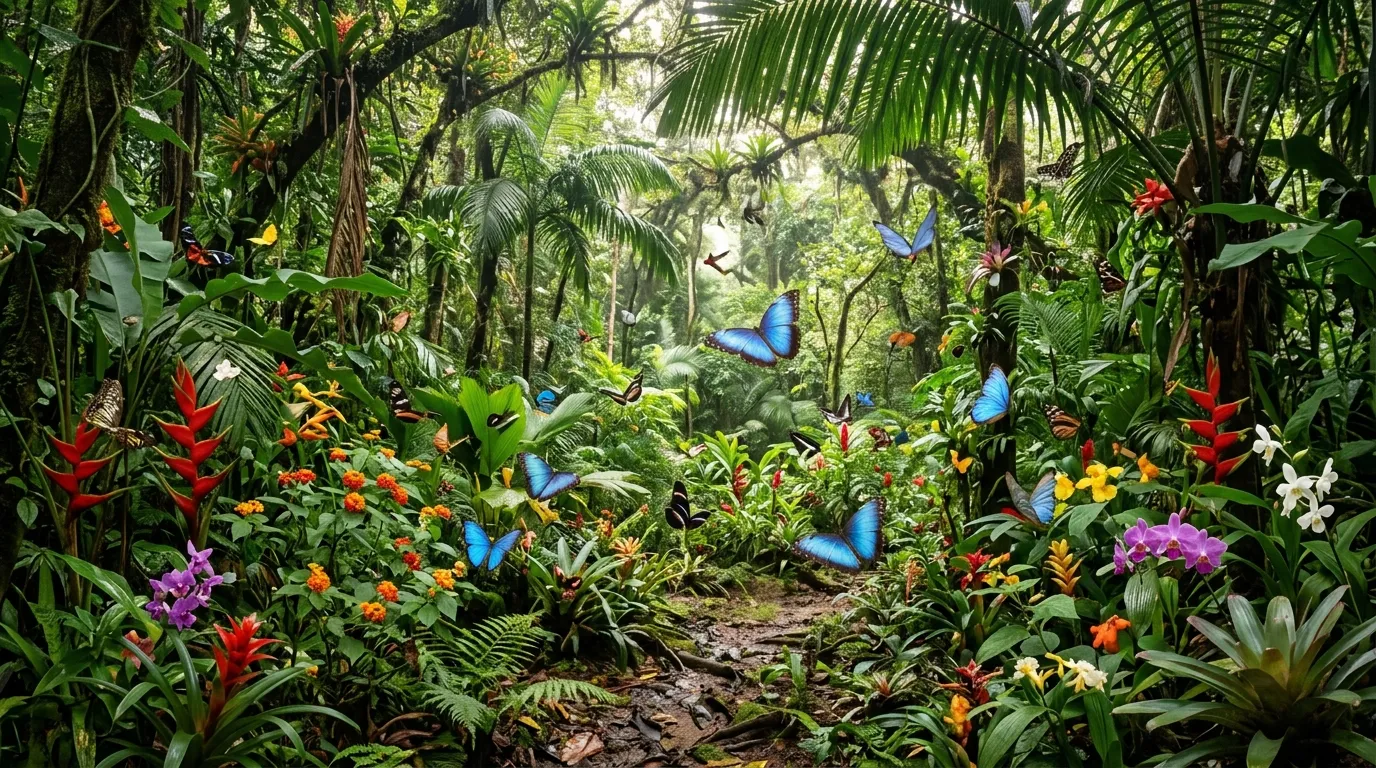
If you want to see the most butterfly species in one place, head to the tropics. Tropical rainforests hold the title for butterfly diversity by a wide margin. The Amazon Basin alone is home to roughly 7,000 butterfly species – more than North America and Europe combined.
Why so many? Year-round warmth, consistent rainfall, and an almost endless variety of plant species create ideal conditions. Butterflies are cold-blooded, so they thrive where temperatures stay stable and warm. The sheer number of plant species means caterpillars have access to hundreds of different host plants, which drives speciation over time.
Ecuador’s Yasuni National Park is a prime example. Researchers have documented over 1,200 butterfly species within its boundaries, according to field surveys published by the World Wildlife Fund’s Amazon research program. That’s a staggering number for a single protected area. If you’re interested in how these different species are classified, our guide to common butterfly species covers many of the families you’d encounter in these regions.
Tropical butterflies also occupy distinct vertical layers of the forest. Some species stick to the canopy, feeding on tree flowers and rotting fruit 30 meters above the ground. Others live near the forest floor, where they feed on fallen fruit, fungi, and mineral-rich mud puddles. This layering lets dozens of species coexist in the same patch of forest without competing directly for resources.
Temperate Meadows, Alpine Slopes, and Other Habitats
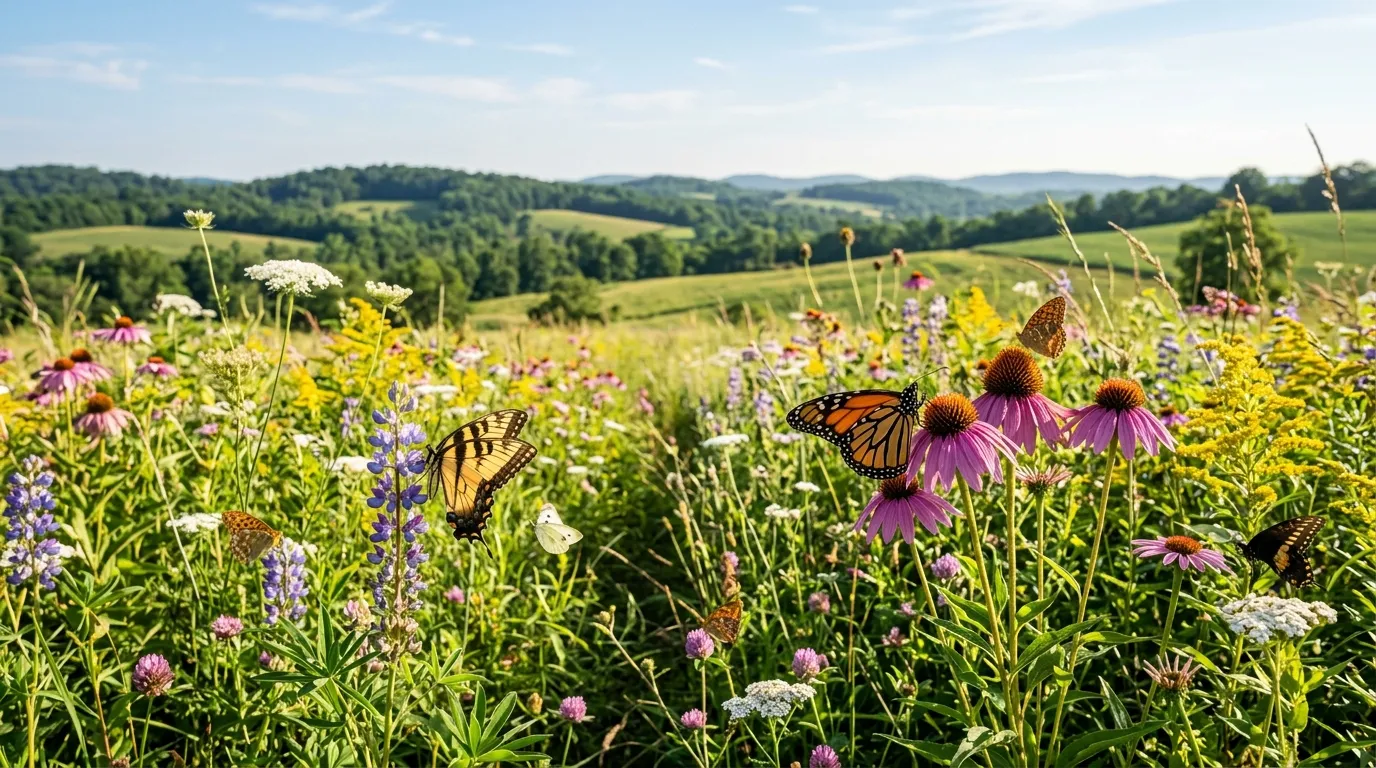
Butterflies don’t just live in rainforests. Temperate grasslands and wildflower meadows across North America, Europe, and Asia support their own butterfly communities. These habitats look nothing like the tropics, but they work for species adapted to seasonal cycles.
In a North American prairie, you’ll find species like the regal fritillary, the common buckeye, and various skippers that depend on native grasses and wildflowers. The key ingredient is an open landscape with plenty of sun exposure and a mix of flowering plants that bloom in sequence from spring through fall. When a meadow offers continuous nectar availability across the growing season, it can sustain a surprisingly rich butterfly population.
Alpine habitats push the boundaries of where butterflies can survive. In the Rocky Mountains, the Rockslide Arctic butterfly lives above the treeline at elevations over 3,000 meters. These high-altitude species have adapted to short summers, intense UV radiation, and freezing nights. They often have darker wing coloration that absorbs heat more efficiently – a practical solution for staying warm enough to fly when air temperatures barely crack 10 degrees Celsius.
Desert habitats might seem unlikely for butterflies, but several species have figured it out. The desert orangetip and the Mormon metalmark both live in arid regions of the American Southwest. They time their life cycles to brief rainy seasons when their host plants sprout, reproduce, and die back within a few weeks. It’s a narrow window, but it works.
Mangrove forests and coastal habitats support their own specialist species too. The mangrove skipper, found in southern Florida and the Caribbean, feeds on red mangrove leaves as a caterpillar and rarely strays from the coastline. These niche habitats remind us that butterfly habitats aren’t limited to the obvious meadow-and-garden image most people picture.
What Makes a Good Butterfly Habitat
Whether it’s a tropical forest or your backyard, every functional butterfly habitat has four things in common: host plants, nectar sources, shelter, and the right microclimate.
Host plants come first. Female butterflies lay their eggs on specific plants that their caterpillars can eat. Monarchs need milkweed. Black swallowtails need plants in the carrot family – parsley, dill, fennel. If the host plant isn’t there, the butterfly species won’t be there either, no matter how many flowers you have blooming.
Nectar sources fuel adult butterflies. A mix of flower types that bloom at different times keeps butterflies fed throughout the season. Single-petal flowers tend to work better than double-petaled cultivars because butterflies can actually reach the nectar. If you’re looking for specific plant recommendations, our butterfly bush guide covers one of the most popular options in detail.
Shelter matters more than people realize. Butterflies need windbreaks – hedgerows, stone walls, fence lines, or dense shrub borders – where they can rest without getting buffeted around. They also need protection from rain. A garden that’s completely open and exposed will attract fewer butterflies than one with some structural complexity.
Microclimate ties everything together. Butterflies prefer warm, sunny spots with some humidity. South-facing slopes, sheltered clearings, and areas near water all create microclimates that butterflies seek out. According to habitat research from the National Wildlife Federation, even small changes in sun exposure and wind protection can make a significant difference in which species show up and how long they stay.
Famous Butterfly Hotspots Around the World
A handful of places on Earth have become famous specifically because of their butterfly populations. The most well-known is probably the Monarch Butterfly Biosphere Reserve in the mountains of Michoacan, Mexico. Every winter, millions of monarch butterflies that migrated thousands of kilometers from the United States and Canada cluster together on oyamel fir trees at elevations around 3,000 meters. The sight of entire trees bending under the weight of orange and black wings is one of the most photographed natural events on the planet.
UNESCO designated the reserve a World Heritage Site in 2008, and it draws over 150,000 visitors annually during peak season from late November through March. The butterflies pick these specific mountain forests because the cool temperatures slow their metabolism enough to survive the winter without eating, while staying just above freezing.
In Southeast Asia, Malaysia’s Cameron Highlands Butterfly Farm and the Penang Butterfly Farm showcase hundreds of tropical species in enclosed habitats designed to mimic their natural forest environments. These parks serve both as tourist attractions and as breeding programs for threatened species.
The United Kingdom takes a different approach. Butterfly Conservation, one of the largest insect conservation organizations in Europe, manages over 30 nature reserves specifically for butterflies and moths. Their work at sites like Prestbury Hill in the Cotswolds has brought species like the Duke of Burgundy back from the edge of local extinction through targeted habitat management.
Closer to home, Pacific Grove in California calls itself “Butterfly Town, USA” for the monarch clusters that form in its eucalyptus groves each fall. And the National Park Service manages several sites along the monarch’s western migration route, providing protected stopover habitat.
Urban Gardens as Butterfly Habitats
You don’t need to live near a national park to support butterflies. Urban and suburban gardens can function as legitimate butterfly habitats, and in some fragmented landscapes, they serve as critical stepping stones between larger natural areas.
The keys are the same ones that apply anywhere: plant host plants for caterpillars and nectar plants for adults. A patch of milkweed in a Chicago backyard can produce monarchs just as successfully as a rural meadow. Container gardens on apartment balconies have been documented supporting painted ladies and cabbage whites in cities where you’d never expect to see butterflies.
One thing city gardeners often overlook is the caterpillar side of the equation. People plant zinnias and lantana for nectar, then wonder why they only see occasional adult visitors passing through. If you add host plants and let caterpillars munch through them – accepting that those plants will look chewed up for a few weeks – you’ll start seeing butterflies that actually live and breed in your garden rather than just stopping by.
Reducing pesticide use is equally important. Butterflies are insects, and broad-spectrum insecticides don’t distinguish between pests and pollinators. A butterfly-friendly garden is, by definition, one that tolerates some insect damage. The tradeoff is worth it. Butterflies contribute to pollination in your garden while giving you something genuinely enjoyable to watch on a summer afternoon.
Frequently Asked Questions
What is the best habitat for butterflies?
The best habitat for any butterfly species is one that provides its specific host plants, reliable nectar sources, shelter from wind and predators, and a warm sunny microclimate. In terms of overall diversity, tropical rainforests support the most species globally. For individual species, the “best” habitat is wherever their particular host plant grows and conditions match their needs.
Where do most butterflies live in the world?
The highest concentration of butterfly species is in the tropics, particularly in Central and South America, Southeast Asia, and Central Africa. The Amazon Basin alone has around 7,000 species. Temperate regions have fewer species overall but still support diverse communities. Every continent except Antarctica has native butterfly populations.
Can I create a butterfly habitat in my backyard?
Yes, and it doesn’t require a large space. Plant a mix of native flowering plants for nectar, add host plants appropriate for your local butterfly species (milkweed for monarchs, violets for fritillaries, parsley family plants for swallowtails), provide a sunny sheltered area, and avoid pesticides. Even a 10-by-10-foot garden bed can support breeding butterfly populations if planted correctly.
Do butterflies live in deserts?
Several butterfly species have adapted to desert environments. They typically time their life cycles to coincide with brief rainy periods when host plants sprout. Desert species include the desert orangetip, the Mormon metalmark, and the painted lady, which can survive in arid conditions when seasonal wildflowers bloom. Desert butterfly populations tend to be cyclical, booming in wet years and nearly disappearing in drought years.
Why are butterfly habitats disappearing?
The biggest threats to butterfly habitats are agricultural expansion, urban development, pesticide use, and climate change. When meadows get plowed or paved, the host plants and nectar sources disappear. Herbicide use in farming regions has dramatically reduced milkweed populations across the American Midwest, which directly contributed to the monarch butterfly’s decline over the past two decades.
What time of year are butterfly habitats most active?
In temperate regions, butterfly activity peaks from late spring through early fall, with the highest diversity and numbers in midsummer when the most flower species are blooming. In tropical habitats, butterflies are active year-round, though some species have seasonal peaks tied to rainfall patterns. Winter activity in temperate zones is limited to a handful of species like the mourning cloak that overwinter as adults.


