

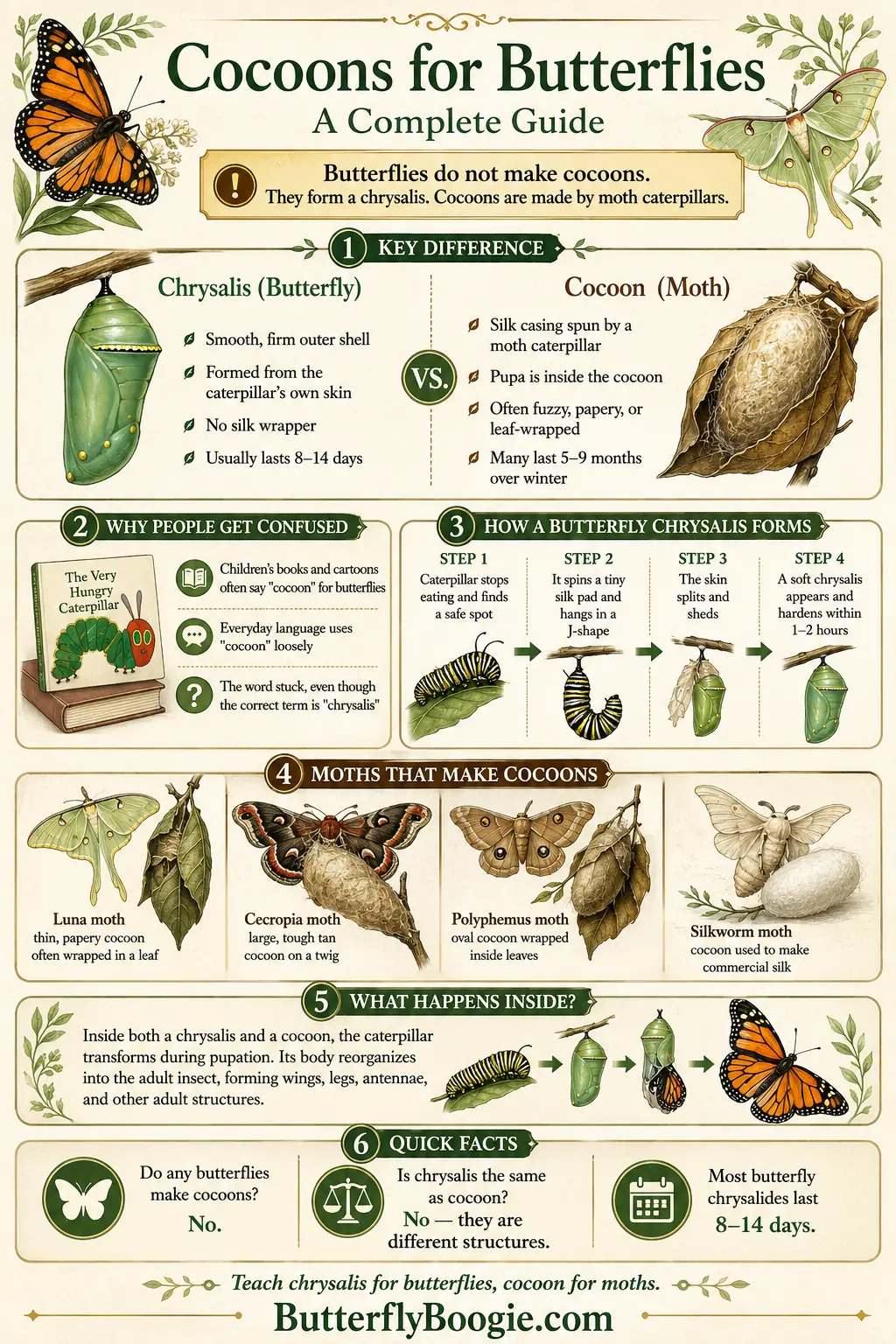
Searching for “cocoons for butterflies” is one of the most common butterfly mix-ups on the internet, and the confusion makes perfect sense. Most of us grew up with picture books and cartoons that called the pupal stage a cocoon, so the word sticks. Here is the straightforward correction though, butterflies do not make cocoons. They form a chrysalis, which is a hardened outer shell that appears after the caterpillar sheds its final skin.
Cocoons are a moth thing. If you are raising caterpillars, gardening for pollinators, or helping a child with a school project, this short guide clears up the difference without making anyone feel silly for using the wrong word.
Key Takeaways
- Butterflies form a chrysalis, not a cocoon, and the two structures are built in completely different ways.
- Cocoons are silk casings spun by moth caterpillars before they pupate inside.
- Popular children’s books, including The Very Hungry Caterpillar, use “cocoon” for a butterfly, which is where most of the mix-up starts.
- Butterfly chrysalides typically last 8 to 14 days, while many cocoon-forming moths stay wrapped up for 5 months or longer over winter.
Butterflies Do Not Make Cocoons
Every butterfly in the superfamily Papilionoidea, which covers monarchs, swallowtails, painted ladies, and every other species people commonly raise, skips the cocoon step entirely. There is no silk casing, no spinning stage, no fuzzy brown wrapper.
When the caterpillar is ready to pupate, it simply sheds its final larval skin and the chrysalis is already there, hardening within minutes. If you have ever heard someone say “butterfly cocoon,” they almost certainly meant chrysalis.
Cocoon vs Chrysalis: The Visual Difference
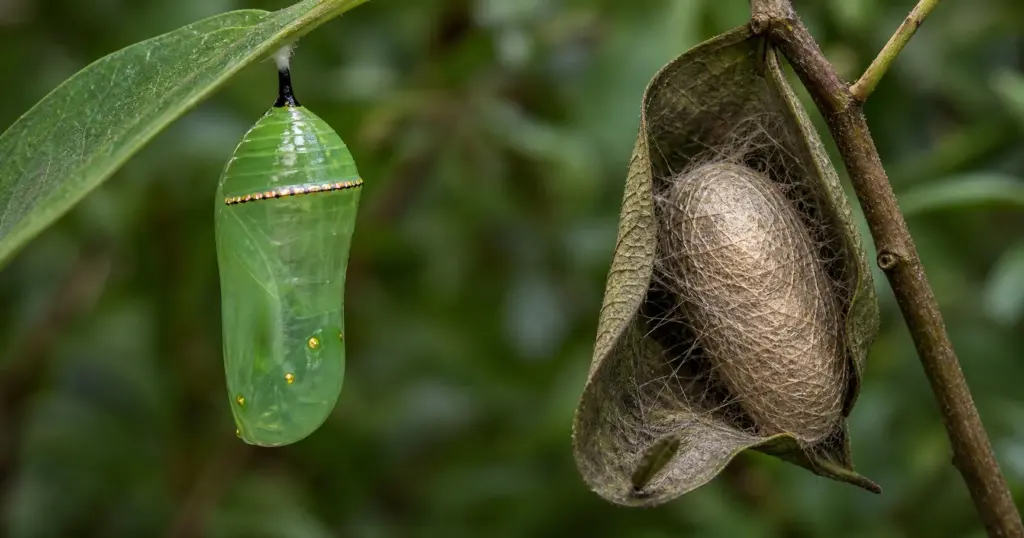
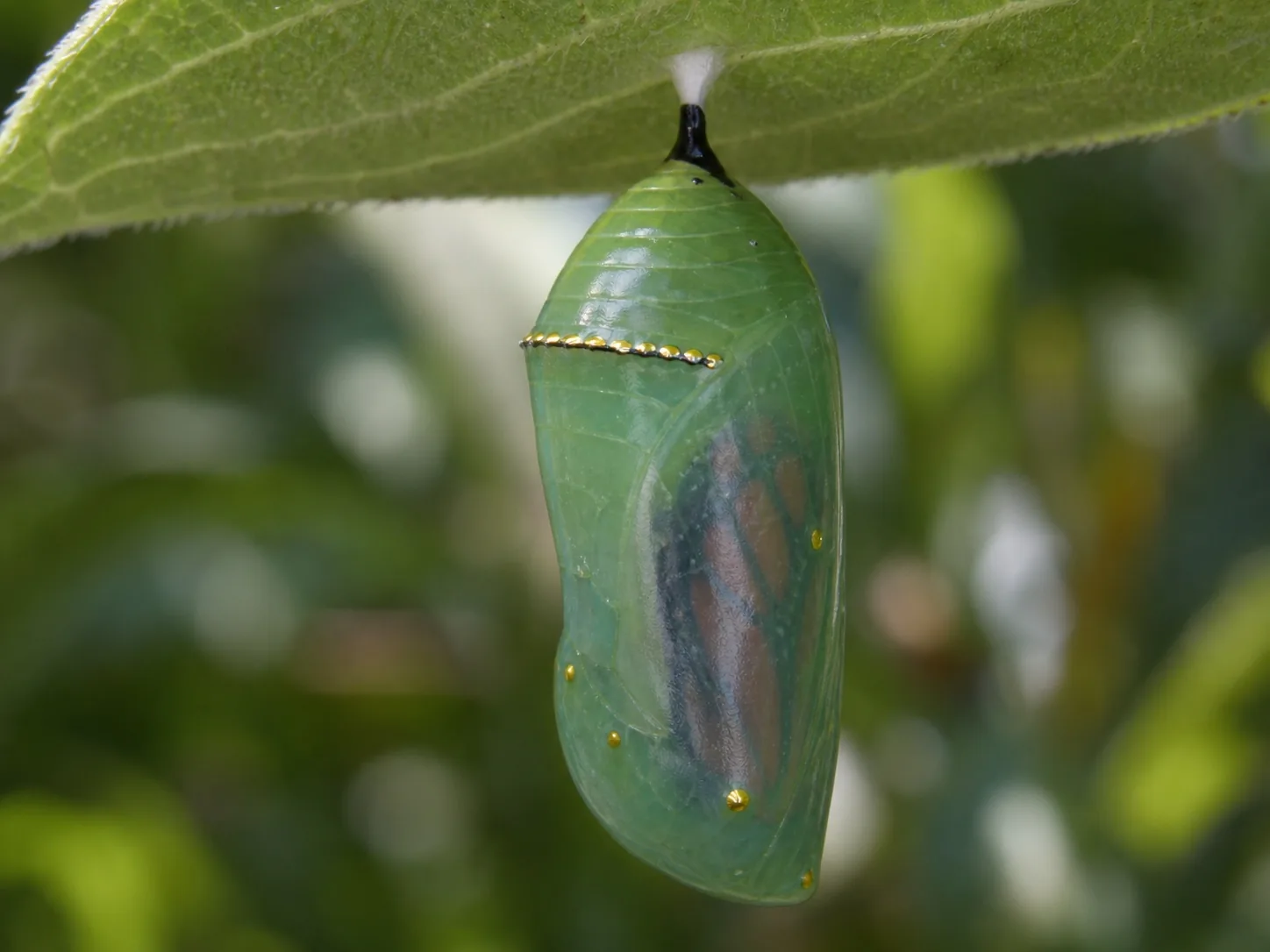
A chrysalis looks smooth, firm, and often shiny, sometimes with gold flecks in the case of monarchs. It hangs from a silk button the caterpillar attached to a leaf, branch, or cage lid before its final molt.
A cocoon looks fuzzy, papery, or leaf wrapped. You can see visible silk strands on the outside, and the actual moth pupa is tucked inside the casing rather than being the casing itself. Our deeper breakdown of this comparison lives in the butterfly cocoon vs chrysalis difference guide.
Why the Confusion Is So Common
The biggest culprit is probably Eric Carle’s The Very Hungry Caterpillar, which tells kids the caterpillar built a small house called a cocoon around himself and then became a butterfly. Carle himself acknowledged the scientific slip in interviews, but generations of readers learned it that way.
Casual everyday language reinforces it. “Cocoon” has become shorthand for any kind of wrapping up, so it slips into butterfly descriptions even when the speaker knows better. Teachers, parents, and even plenty of nature documentaries fall into the same habit.
How a Butterfly’s Chrysalis Actually Forms
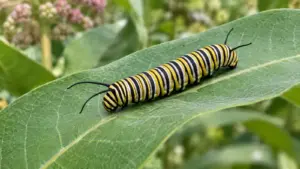
A mature caterpillar stops eating, finds a safe anchor point, and spins a tiny pad of silk. It grabs that pad with its rear prolegs and hangs upside down in a “J” shape for roughly 12 to 24 hours.
Then the caterpillar’s skin splits along the back and wriggles off, revealing a soft green or jade structure underneath that hardens into the chrysalis within an hour or two. That hardened shell is formed from the caterpillar’s own cuticle, the same material its skin was made of. You can follow the full developmental timeline in our monarch caterpillar growth stages walkthrough.
Moths That Make Cocoons
Cocoon builders are almost all moths, and some of North America’s most photogenic species belong to this group. The Smithsonian’s National Museum of Natural History highlights giant silk moths as the classic example, since their cocoons can be several inches long.
Four moth species people most often recognize:
- Luna moth, which spins a thin, papery cocoon often wrapped inside a fallen leaf.
- Cecropia moth, which builds a large, tough, tan cocoon usually attached lengthwise to a twig.
- Polyphemus moth, which forms an oval cocoon wrapped inside leaves that sometimes fall with the tree.
- Silkworm moth (Bombyx mori), the domesticated species whose cocoons are unwound into commercial silk.
These cocoons often sit through an entire winter, with the adult moth emerging the following spring. If you want a broader comparison of the two insect groups, our moth vs butterfly differences explainer covers wings, antennae, and behavior as well.
What Happens Inside
Inside both a chrysalis and a cocoon, the same general transformation is taking place. The caterpillar’s body breaks down into a nutrient rich soup of cells, and clusters of specialized cells called imaginal discs rebuild that material into wings, legs, antennae, and reproductive organs.
This rebuilding is called pupation, and it is one of the most dramatic rebuilds in the animal kingdom. According to research summarized by the USDA Forest Service, the pupal stage for most temperate butterflies runs 8 to 14 days, while many cocoon-forming giant silk moths remain in diapause for 5 to 9 months before emerging.
When the transformation finishes, the adult insect splits its casing, pumps fluid into its crumpled wings, and waits several hours for them to harden before its first flight. The chrysalis or cocoon is left behind as an empty shell.
FAQ
Do any butterflies make cocoons?
No, not one species of true butterfly spins a cocoon.
Every butterfly in the Papilionoidea superfamily forms a chrysalis directly from its own body after shedding its final larval skin.
Is a chrysalis just a fancy word for cocoon?
They are genuinely different structures, not synonyms.
A chrysalis is a hardened outer casing made from the caterpillar’s own cuticle, while a cocoon is a silk wrapper spun around the outside of a moth pupa before pupation begins.
How long does a butterfly stay in its chrysalis?
For most common species, including monarchs, painted ladies, and swallowtails, it is usually 8 to 14 days.
Some species can overwinter as a chrysalis in colder climates, stretching the stage to several months until spring warmth triggers emergence.
If my book says “butterfly cocoon,” is it wrong?
Scientifically, yes, but it is an extremely common wording in children’s books and older nature writing.
Using “chrysalis” when talking about butterflies and saving “cocoon” for moths is the accurate habit to teach, and most modern field guides have switched to that language.