




Do butterflies eat honey? It’s a question I get asked a lot, and the short answer is yes, they can drink diluted honey. But should you feed it to them? That’s where things get complicated. Raw honey can contain bacterial spores and pathogens that pose real risks to butterflies, and most entomologists recommend against it. Plain sugar water is a safer, cheaper, and equally effective alternative. Let me walk you through the full picture of butterflies and honey, what they naturally eat, and the best way to feed them at home.
Key Takeaways
- Butterflies can physically drink diluted honey through their proboscis, but raw honey may carry bacteria like Nosema and other spores that can sicken or kill them.
- In the wild, butterflies feed primarily on flower nectar, which has a different sugar composition and is naturally sterile compared to honey.
- A simple 10:1 water-to-sugar solution is the safest homemade butterfly food and closely mimics the sugar concentration of natural nectar.
- If you choose to offer honey anyway, always dilute it heavily (at least 1 part honey to 9 parts water) and replace the solution daily to prevent bacterial growth.
What Butterflies Naturally Eat and Drink
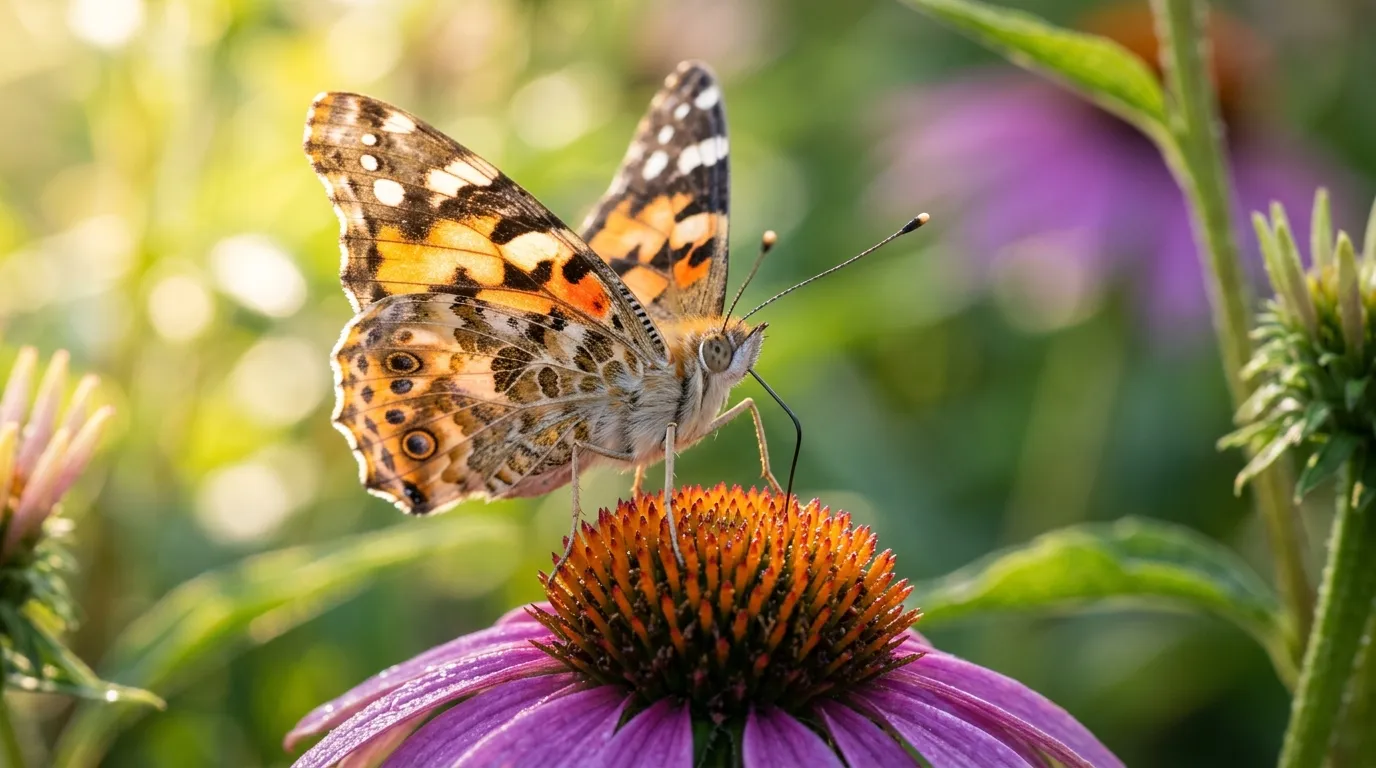
Before we get into honey specifically, it helps to understand what butterflies eat and drink under normal conditions. Adult butterflies are liquid feeders. They use a coiled, straw-like mouthpart called a proboscis to sip up fluids, and they cannot chew solid food.
Flower nectar is their primary food source. It provides the sugars they need for flight energy along with small amounts of amino acids, minerals, and vitamins. Nectar typically contains 20-25% sugar, mostly sucrose, glucose, and fructose dissolved in water.
Many species also feed on rotting fruit, tree sap, and mineral-rich moisture from mud puddles. Male butterflies in particular seek out sodium and amino acids from damp soil through a behavior called puddling. Some will even land on sweaty skin or animal dung to get those minerals. For a deeper look at their liquid diet, our guide on what butterflies drink covers it all.
The key point is that butterflies evolved to drink thin, watery liquids. Anything too thick or sticky can clog their proboscis and cause physical harm. This is an important detail when we start talking about honey.
Honey vs. Nectar: Why They’re Not the Same
People tend to think of honey as natural nectar in a jar, and it’s easy to see why. Bees make honey from flower nectar, after all. But the end product is chemically and biologically different from the nectar butterflies drink in the wild.
Flower nectar is a dilute sugar solution, typically 15-25% sugar content. Honey is a concentrated sugar solution at roughly 80% sugar. Bees process nectar by adding enzymes and evaporating most of the water content, which transforms it into a dense, shelf-stable food. That concentration alone makes raw honey too thick for a butterfly’s proboscis to handle efficiently.
The bigger concern is microbiology. According to the Centers for Disease Control and Prevention, raw honey can contain spores of Clostridium botulinum and other microorganisms. While these may be harmless to humans with mature immune systems, insects are a different story. Honey can also harbor Nosema spores, a microsporidian parasite that infects the gut lining of various insects. Studies from the Journal of Economic Entomology have shown that pathogen transmission through shared food sources is a legitimate concern in insect populations.
There’s also the issue of fermentation. Diluted honey ferments quickly at room temperature, creating an environment where harmful bacteria and yeasts thrive. A butterfly feeding station with old honey water can become a petri dish in warm weather.
Can You Feed Butterflies Honey Safely?
If you still want to try honey, there are ways to reduce the risk. The most important step is dilution. Mix no more than 1 part honey to 9 parts warm water, stirring until fully dissolved. This brings the sugar concentration closer to natural nectar levels and makes it thin enough for a butterfly to drink without struggling.
Use the solution the same day you make it. Honey water left sitting out becomes a breeding ground for bacteria within hours, especially in summer heat. Wash and refill your feeding dish daily. If you notice any cloudiness or off smell, dump it immediately.
Pasteurized honey carries fewer pathogen risks than raw or unprocessed honey, so if you go this route, choose a commercially pasteurized variety. Avoid flavored honeys, honeys with added ingredients, or any product that isn’t pure honey. We’ve put together an easy butterfly food with honey recipe if you want specific ratios and instructions.
That said, I personally don’t use honey in my butterfly feeders anymore. After reading enough research on pathogen transfer risks, I switched to plain sugar water years ago. The butterflies didn’t seem to notice the difference.
Why Sugar Water Is the Better Choice
Plain white granulated sugar dissolved in water is what most butterfly conservatories, rescue organizations, and entomologists recommend. It’s sterile when freshly mixed, it mimics nectar’s sugar concentration, and it costs almost nothing.
The standard recipe is simple. Mix 1 part white sugar with 9 parts water. Stir until the sugar dissolves completely. That’s it. No boiling necessary, though warming the water helps the sugar dissolve faster. For more detailed feeding recipes including fruit-based options, check out our butterfly food recipe guide.
A few things to avoid in your sugar water. Never use brown sugar, powdered sugar, or raw sugar. These contain molasses, cornstarch, or other additives that aren’t appropriate for butterfly feeding. Artificial sweeteners provide zero calories and will starve a butterfly that fills up on them. Red food coloring is unnecessary and potentially harmful.
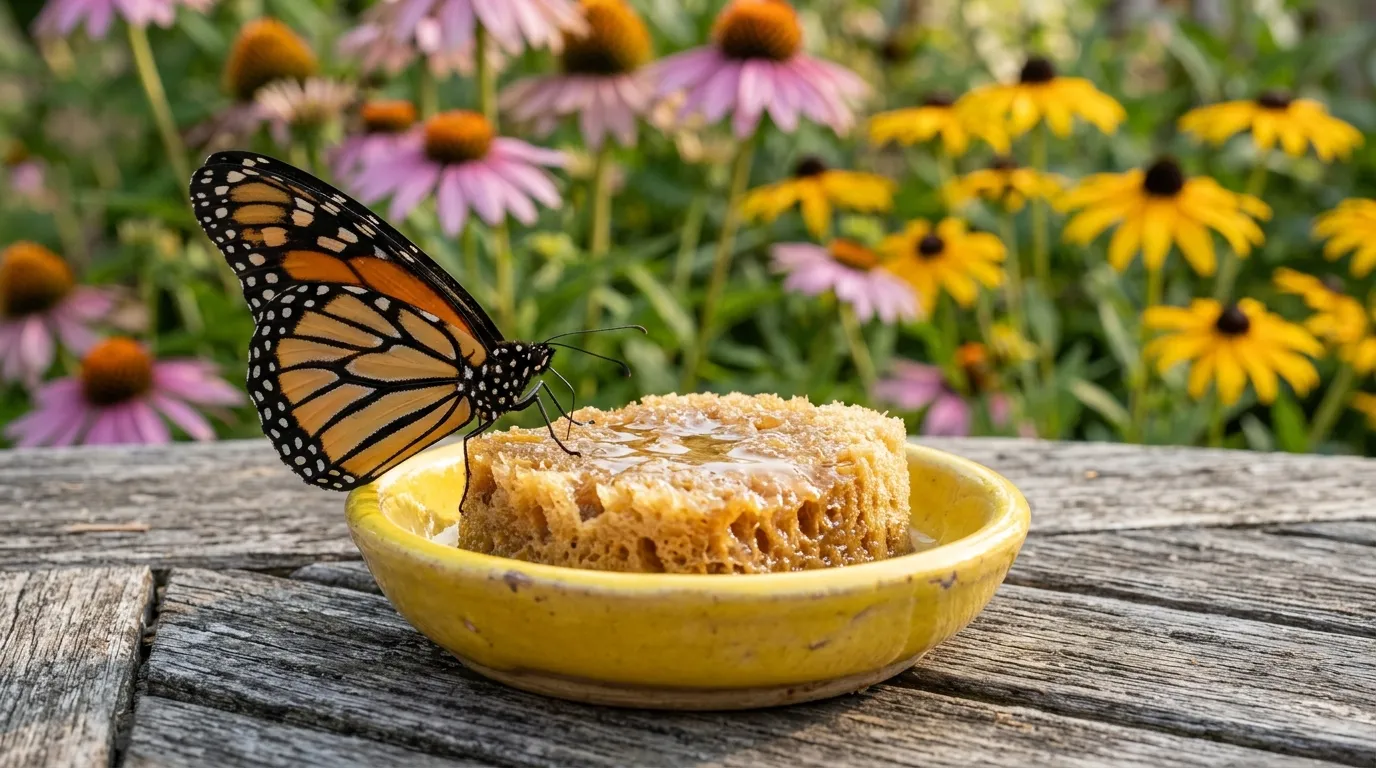
To serve the sugar water, soak a clean kitchen sponge or cotton ball in the solution and set it on a brightly colored plate, preferably yellow, orange, or pink. Place it in a sunny spot in your garden, ideally near flowering plants. The butterflies will find it. Replace the sponge and solution every day or two to keep it fresh.
Tips for Feeding Butterflies at Home
Whether you use sugar water, diluted honey, or fruit, there are some best practices that apply across the board. Location matters more than most people realize. Place your feeding station in a spot that gets morning sun but has some afternoon shade. Butterflies need warmth to fly and feed, but direct midday sun will cause liquids to evaporate or spoil faster.
Keep feeders off the ground if you can. A raised platform or hanging dish reduces the risk of ants taking over. If ants are a persistent problem, set the dish legs in small cups of water to create a moat they can’t cross.
Overripe fruit works as a feeding option too. Bananas, mangoes, oranges, and watermelon are all popular with fruit-feeding species like red admirals, mourning cloaks, and question marks. Cut the fruit open to expose the flesh and replace it every two days before mold sets in.
The single best way to feed butterflies is still to grow nectar-rich plants. No artificial feeder can match the nutrition and safety of real flowers. If you’re gardening for monarchs specifically, our article on the best nectar sources for monarch butterflies covers which plants give them the most fuel for migration and egg-laying. Native wildflowers like milkweed, coneflower, bee balm, and Joe Pye weed are all top performers.
Frequently Asked Questions
Is honey toxic to butterflies?
Honey itself isn’t directly toxic, but it can carry harmful pathogens. Raw honey may contain Nosema spores and Clostridium botulinum that can infect butterflies. The risk increases when diluted honey sits out and ferments, promoting bacterial growth. So while a butterfly won’t drop dead from a sip of honey, repeated exposure to contaminated honey water can cause illness and death over time.
What is the best homemade food for butterflies?
A 10:1 solution of water to white granulated sugar is the gold standard. It closely matches the sugar concentration of natural flower nectar, it’s free of pathogens when freshly made, and butterflies accept it readily. Serve it on a soaked sponge or cotton pad placed on a colorful dish. Replace the solution daily in warm weather to prevent spoilage.
Can I use maple syrup or agave nectar instead of honey?
Neither is recommended. Maple syrup contains minerals and compounds from tree sap processing that may not agree with butterfly digestion. Agave nectar has a different sugar profile (very high in fructose) and can be even thicker than honey. Both carry similar spoilage risks when diluted. Stick with plain white sugar water for the safest option.
How often should I change butterfly feeder solution?
Change sugar water or honey water every 24 hours during hot weather (above 80°F/27°C). In cooler conditions, every 48 hours is acceptable. If the liquid looks cloudy, smells sour, or has visible mold, replace it immediately regardless of when you last changed it. Clean the dish or sponge with hot water each time you refill.
Do butterflies prefer honey water or sugar water?
In my experience and based on observations from butterfly keepers, butterflies show no strong preference between the two when both are diluted to similar concentrations. They respond primarily to sugar concentration and the color of the feeding station, not the specific sugar source. Since sugar water is safer and simpler, there’s no practical reason to use honey.
Will feeding butterflies honey attract bees or wasps?
Yes, any sugar solution left outdoors will attract bees, wasps, and ants along with butterflies. Honey is especially attractive to honeybees since they recognize it as their own food source. To minimize competition, place your butterfly feeder away from known bee activity areas and consider using a shallow dish with a sponge rather than an open liquid surface, which gives butterflies access while making it harder for bees to feed.


