




Do butterflies poop? Yes, they absolutely do. It might not look like what you’d expect from a mammal, but butterflies produce waste just like every other living animal. Their excrement is mostly liquid since their diet is entirely liquid too – nectar, fruit juice, sap, and mineral-rich puddle water all pass through a functional digestive system. The waste they expel varies depending on their life stage, and the stuff that comes out right after they leave the chrysalis is a whole different substance than what they release during regular feeding.
Key Takeaways
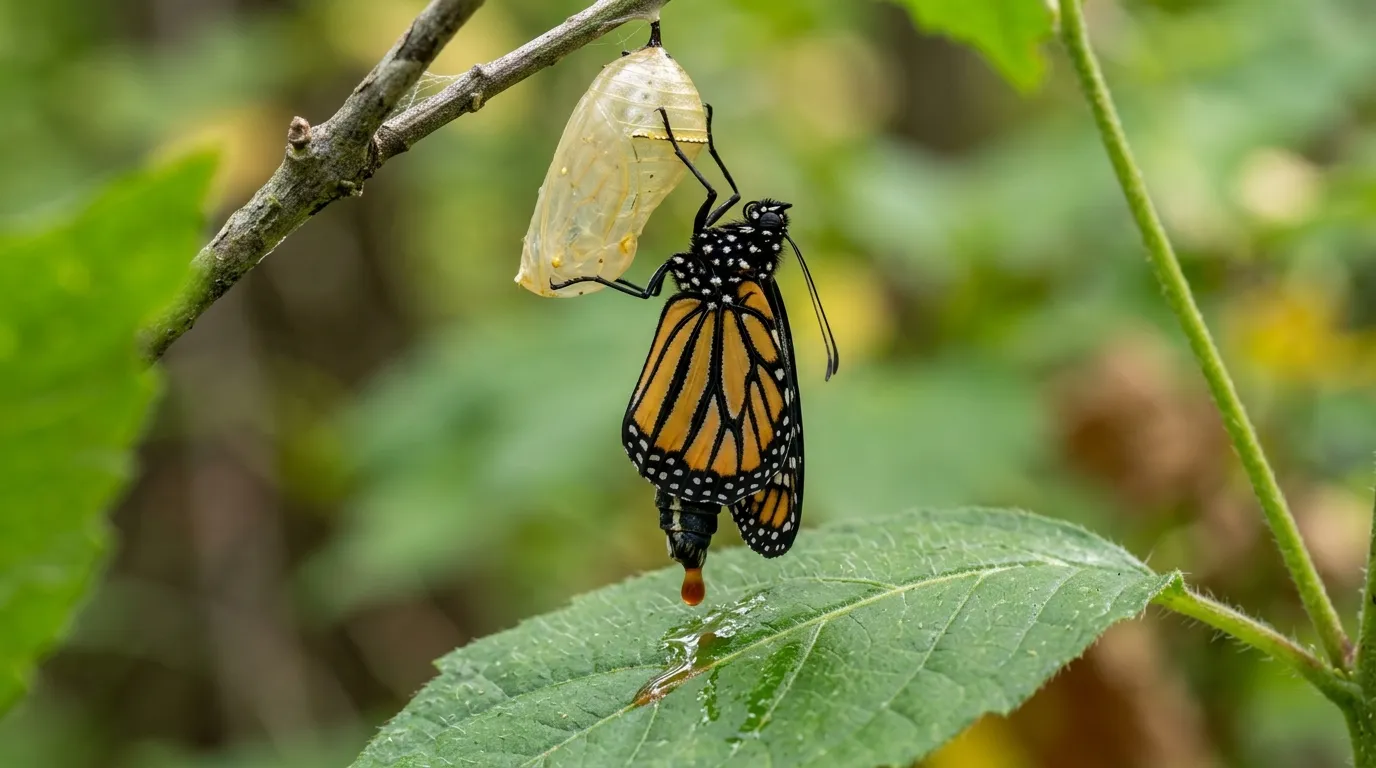
- Adult butterflies excrete liquid waste after digesting nectar and other fluids, and they also release a reddish substance called meconium immediately after emerging from the chrysalis.
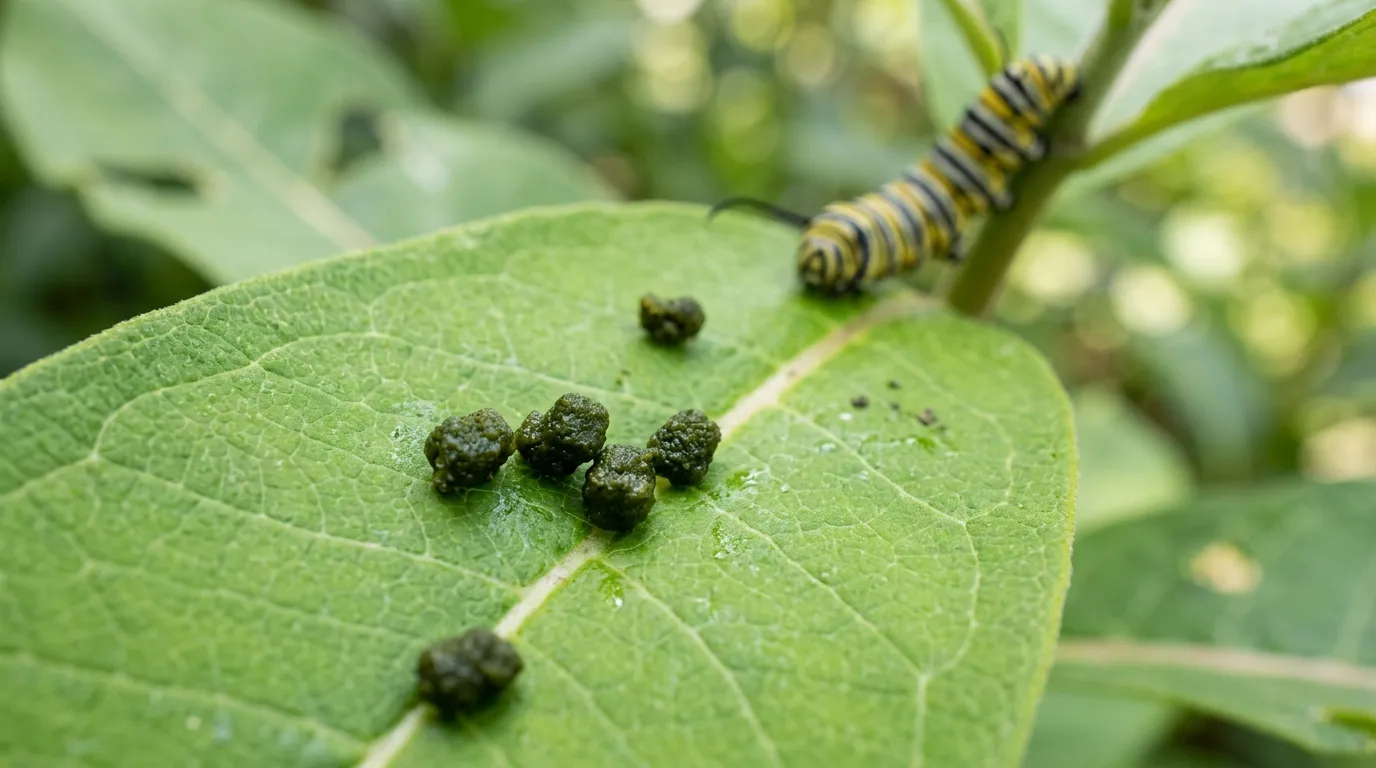
- Caterpillars produce solid droppings called frass, which are small dark pellets made from digested leaf material – completely different from adult butterfly waste.
- Meconium is not blood – it’s concentrated metabolic waste stored up during the pupal stage when the caterpillar’s body was being rebuilt into a butterfly.
- Butterfly waste actually benefits ecosystems by returning nutrients to the soil and contributing to the nitrogen cycle in gardens and wild habitats.
How a Butterfly’s Digestive System Works
A butterfly’s digestive tract is built for processing liquids. They feed using a proboscis, a long tube-like mouthpart that works like a drinking straw. When they’re not eating, it stays coiled up beneath their head. When they find a food source, they unfurl it and sip. You can read more about what butterflies drink to get a full picture of their liquid diet.
Once liquid enters the proboscis, it travels to the foregut and then into the midgut, where nutrient absorption takes place. Sugars, amino acids, and minerals get pulled into the body for energy and cellular functions. Whatever the butterfly can’t use moves into the hindgut.
The hindgut is where water reabsorption occurs. The butterfly’s body pulls back as much moisture as it can before the remaining waste exits through the anus. Because their food is already liquid, the whole process is much faster than digestion in animals that eat solid food. A butterfly can process a meal of nectar in just a few hours.
There’s no separate urinary system in butterflies. Their version of kidneys, called Malpighian tubules, filter metabolic waste from the blood (hemolymph) and dump it into the hindgut. According to researchers at the University of Kentucky Department of Entomology, this combined system means insect excretion handles both solid and liquid waste through a single exit point. So when a butterfly poops, it’s doing the equivalent of peeing and pooping at the same time.
What Does Butterfly Poop Look Like?
Adult butterfly waste is mostly liquid. It comes out as small droplets or a fine spray, usually clear to slightly yellowish or greenish depending on what the butterfly has been eating. If a butterfly has been nectaring on red or purple flowers, the waste might carry a faint tint from those pigments.
You’ve probably been hit by butterfly waste without even knowing it. If you’ve ever held a butterfly or stood near a butterfly bush during peak feeding time, those tiny wet spots on your hand or shirt were likely butterfly excrement. It dries almost instantly and leaves little to no visible mark.
The consistency is watery because a butterfly’s entire diet is liquid. There’s no solid food going in, so there’s minimal solid material coming out. The waste is primarily water, uric acid (their equivalent of urea), undigested sugars, and trace minerals. It’s nothing like mammal feces in volume, odor, or appearance.
Meconium: That Red Liquid After the Chrysalis
If you’ve ever raised butterflies or watched one emerge from its chrysalis, you’ve probably noticed a reddish or brownish liquid that the newly emerged adult expels shortly after coming out. This substance is called meconium, and it often alarms people who think the butterfly is bleeding.
It’s not blood. Meconium is concentrated metabolic waste that accumulated during the pupal stage. While the caterpillar’s body was being broken down and reorganized inside the chrysalis, waste products built up with no way to exit. The transformation from caterpillar to adult is an intense process, and the byproducts have to go somewhere.
The red color comes from pigments, particularly those derived from the breakdown of larval tissues and the reorganization of cells during pupation. A study published in the Biological Bulletin noted that meconium contains concentrated uric acid, pigment compounds, and other metabolic byproducts. The butterfly typically expels it within the first 30 minutes to a few hours after emerging.
Meconium release is a one-time event. After that initial purge, the butterfly switches to producing the normal clear liquid waste associated with its nectar-based diet. If you’re raising butterflies indoors, expect a few splashes of reddish fluid on whatever surface they’re hanging from after emergence. It can stain fabric, so plan accordingly.
Caterpillar Frass vs. Adult Butterfly Waste
Caterpillar poop and adult butterfly poop are completely different substances. Caterpillars eat solid food – mostly leaves – and produce solid waste called frass. Frass looks like tiny dark pellets or cylinders, usually black or dark green, and it’s composed of chewed-up, partially digested plant material.
If you’ve ever grown parsley, dill, or milkweed and noticed little black dots scattered on the leaves or on the ground below, that was caterpillar frass. A single caterpillar can produce a surprising amount of it. Some species eat so aggressively that the sound of frass pellets hitting leaves below can actually be heard in quiet conditions.
Frass production stops entirely once the caterpillar enters the pupal stage. The caterpillar typically purges its gut right before forming the chrysalis, emptying out any remaining food. During the entire pupal period, no waste is produced externally – it all builds up as meconium inside.
Gardeners sometimes use caterpillar frass as a mild fertilizer. It contains nitrogen, phosphorus, and potassium along with beneficial soil microbes. Some organic gardening companies even sell it commercially as a plant amendment. So caterpillar poop isn’t just waste – it’s actually a useful garden input.
Do Butterflies Poop While Flying?
Yes, butterflies can and do excrete waste during flight. They don’t need to land to relieve themselves. Since the waste is liquid and the volume is tiny, it simply drops away as a fine mist or small droplet while the butterfly continues on its way.
This is actually a practical adaptation. Carrying excess liquid adds weight, which costs energy during flight. Butterflies benefit from dumping waste quickly and frequently rather than storing it. According to the Smithsonian Institution’s butterfly research pages, lightweight body management is one of several adaptations that make butterfly flight efficient despite their relatively large wing-to-body ratio.
Monarch butterflies during their long migratory flights are continuously feeding and excreting along the way. Every nectar stop results in some waste output shortly after, either during a rest period or on the wing. The same pattern holds for any species that covers significant distances during daily foraging.
Butterfly Waste and Its Role in the Ecosystem
Butterfly excrement isn’t just a biological curiosity. It plays a small but real role in nutrient cycling. Both caterpillar frass and adult butterfly waste return nitrogen and other minerals to the soil. In areas with large caterpillar populations, frass deposits can measurably increase soil nitrogen levels beneath host plants.
Frass also supports microbial communities in the soil. The bacteria and fungi that break down frass contribute to healthy soil structure and can even help suppress certain plant pathogens. This is part of the larger web of interactions that makes caterpillars and butterflies important beyond their pollination role.
Adult butterfly waste, while far less voluminous than caterpillar frass, still contributes trace nutrients wherever butterflies feed. In a well-planted butterfly garden, the constant input and output of nutrients creates a small but functioning nutrient loop – flowers feed butterflies, butterflies return a fraction of those nutrients to the soil, and the cycle continues.
Frequently Asked Questions
Is the red liquid from a butterfly blood?
No. The red or brownish liquid you see when a butterfly first emerges from its chrysalis is meconium, which is stored metabolic waste from the pupal stage. Butterfly blood (hemolymph) is actually greenish or yellowish, not red. Meconium gets its color from pigment compounds and concentrated uric acid that built up while the body was being restructured inside the chrysalis.
How often do butterflies poop?
Butterflies excrete waste frequently throughout the day, typically within a few hours of each feeding. Since they may visit dozens or even hundreds of flowers per day, they’re processing and eliminating waste almost continuously during active hours. The individual volume per excretion is extremely small, so it’s not something you’d easily observe unless a butterfly is resting on your hand or clothing.
Does butterfly poop smell?
Adult butterfly waste has virtually no detectable odor to humans. The quantities are too small and the composition is too dilute to produce any noticeable smell. Caterpillar frass can have a mild, slightly earthy or plant-like scent when fresh, but it’s not unpleasant. Meconium is also practically odorless to the human nose, despite its alarming appearance.
Can butterfly poop stain clothes?
Regular adult butterfly waste usually won’t leave a visible stain. Meconium is a different story. The reddish pigmented liquid can stain light-colored fabrics, walls, or surfaces if not cleaned up quickly. If you’re raising butterflies indoors, it’s a good idea to place paper towels or newspaper beneath the emergence area. Any meconium stains on fabric can typically be removed with cold water and gentle soap if treated promptly.
Do caterpillars poop more than butterflies?
By volume, absolutely. Caterpillars are eating machines whose primary job is to consume enough food to fuel their entire transformation. A caterpillar eats solid plant matter constantly and produces frass pellets throughout the day. Some large caterpillars, like those of the luna moth or tobacco hornworm, can produce visible piles of frass beneath their host plant in a single day. Adult butterflies produce far less waste because their liquid diet is more efficiently absorbed.
Is butterfly poop harmful to humans?
No. Butterfly waste poses no health risk to people. It contains no known pathogens, toxins, or parasites that affect humans. You can safely handle butterflies without worrying about their excrement. Caterpillar frass is equally harmless and is even sold commercially as an organic garden fertilizer. The only concern would be potential staining from meconium on sensitive fabrics or surfaces.


