




Larval Host Plants for Butterflies: What to Grow
Larval host plants for butterflies are the single most overlooked part of butterfly gardening. Most people fill their yards with nectar flowers and wonder why butterflies never stay long. The answer is simple: adult butterflies drink nectar, but their caterpillars eat leaves, and not just any leaves. Each butterfly species depends on a narrow set of host plants that its larvae can actually digest. No host plants, no caterpillars. No caterpillars, no next generation of butterflies. If you want butterflies to breed in your yard rather than just pass through, host plants are the foundation.
Key Takeaways
- Most butterfly species are host plant specialists, meaning their caterpillars can only feed on one plant family or even one genus – planting the wrong species won’t help them at all.
- The most common butterfly-host plant pairings in North America include monarchs on milkweed, black swallowtails on the parsley family, mourning cloaks on willows, and red admirals on nettles.
- Native host plants outperform non-native alternatives because local butterfly populations have co-evolved with them for thousands of years and their larvae process the leaf chemistry more efficiently.
- A well-planned host plant garden combines species that feed caterpillars of 6-8 butterfly species common to your region, planted alongside nectar sources for adults.
Why Host Plant Specificity Matters
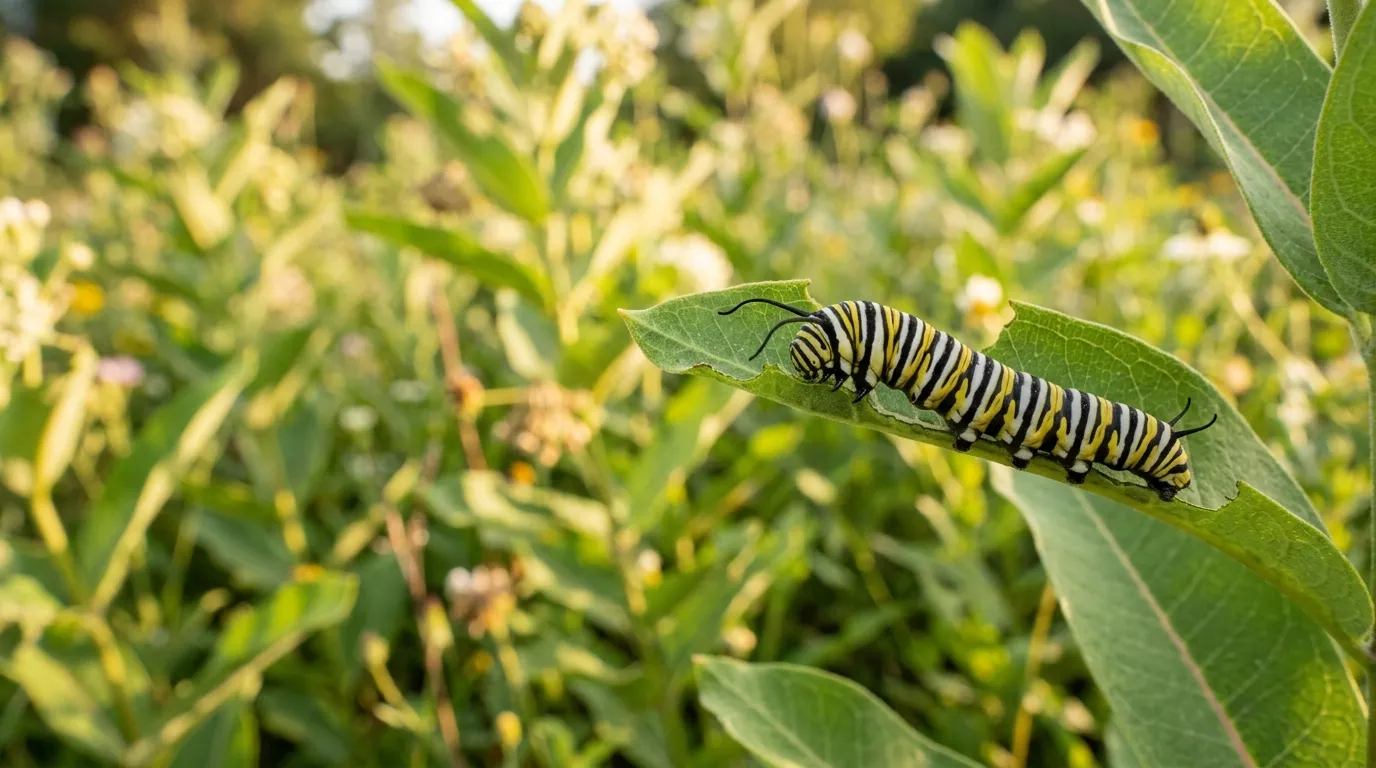
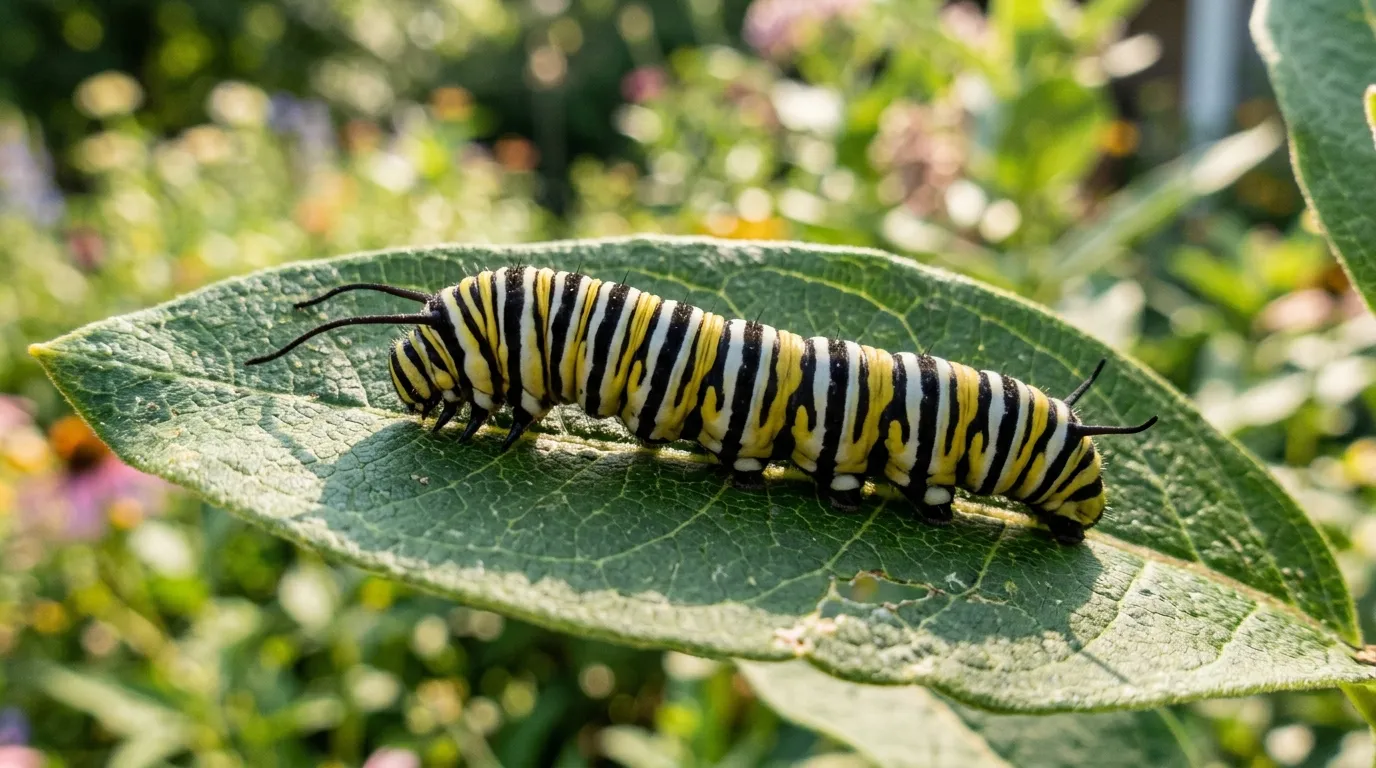
Butterfly larvae didn’t evolve to eat everything. Over millions of years, each species adapted to process the specific chemical compounds in a small group of plants. Monarch caterpillars feed on milkweed partly because they can tolerate cardenolides, the toxic cardiac glycosides in milkweed sap that would kill most other insects. Those same toxins make the caterpillars and adult butterflies poisonous to birds. The relationship between butterfly and host plant runs deep – it shapes the insect’s defense strategy, its body chemistry, and even where it can live.
Some species are extreme specialists. The spicebush swallowtail feeds almost exclusively on spicebush and sassafras. Move those plants out of a landscape and the butterfly disappears with them. Other species are a bit more flexible. The painted lady caterpillar can eat thistles, hollyhocks, mallow, and several other plants across multiple families. But even painted ladies have limits – they won’t touch grasses, oaks, or conifers.
This specificity is why a yard full of petunias and marigolds fails as butterfly habitat. Those plants feed zero caterpillar species in North America. They’re ornamental dead ends. A scraggly patch of common milkweed does more for butterflies than an acre of hybrid flowers ever will.
Major Larval Host Plants for Butterflies by Species
Here are the most important butterfly-host plant pairings across North America. If you’re building a butterfly garden from scratch, these are the relationships to prioritize.
Milkweeds (Asclepias) for Monarchs. This is the pairing everyone knows. Monarch caterpillars feed only on milkweed species. Common milkweed (Asclepias syriaca) covers the eastern US, while showy milkweed (A. speciosa) dominates the west. Swamp milkweed (A. incarnata) works well in wet soils. Butterfly weed (A. tuberosa) tolerates dry, rocky ground. Plant at least two milkweed species to extend the feeding window across the season. Monarchs have declined by roughly 80% since the 1990s, and milkweed loss from agricultural herbicide use is a primary driver, according to US Fish and Wildlife Service research.
Parsley family (Apiaceae) for swallowtails. Black swallowtail caterpillars eat dill, fennel, parsley, Queen Anne’s lace, golden alexanders, and rue. Eastern giant swallowtails use plants in the citrus family (Rutaceae) instead, including prickly ash and hop tree. If you grow an herb garden, you’ve probably already hosted black swallowtail caterpillars without realizing it. Let some of your dill and parsley bolt rather than harvesting every stem – the caterpillars need mature foliage.
Willows and poplars (Salicaceae) for mourning cloaks. Mourning cloak caterpillars feed communally on willows, cottonwoods, elms, and hackberries. They prefer the tender new growth at branch tips and can occasionally defoliate small branches. Weeping willows, pussy willows, and native black willows all work. If you have any willow species on your property, check the branch tips in late spring for clusters of black, spiny caterpillars feeding together in a tight group.
Nettles (Urticaceae) for red admirals and question marks. Stinging nettles and wood nettles are the primary hosts for red admiral, question mark, and eastern comma caterpillars. I know – nobody wants stinging nettles in their garden. But you can plant a patch along a back fence or in a wild corner. The caterpillars fold the leaves around themselves for shelter while they feed, creating telltale leaf rolls you can spot from a distance. Red admirals and question marks are among the most striking brushfoot butterflies, and they’ll only breed where nettles grow.
Clover and legumes (Fabaceae) for sulphurs and blues. Clouded sulphurs and orange sulphurs lay eggs on white clover, alfalfa, and other legumes. Many blue butterflies use wild lupines, vetches, and other legume species. If your lawn has patches of white clover, you’re already growing sulphur host plants. Stop treating clover as a weed and you’ll have sulphur butterflies nectaring and breeding in your lawn all summer.
Violets (Viola) for fritillaries. Nearly every fritillary species in North America depends on violets as a larval host. Great spangled fritillaries, meadow fritillaries, and variegated fritillaries all need violets. Common blue violets grow in shade, meadow violets in sun, and there are dozens of native species across the continent. Fritillary caterpillars hatch in late summer, eat a single bite, then hibernate through winter and resume feeding on violet foliage in spring.
How to Plan a Host Plant Garden
Building a host plant garden is different from building a nectar garden. With nectar plants, you’re optimizing for bloom time and flower density. With host plants, you’re optimizing for the right leaf chemistry in the right place at the right time.
Start by identifying which butterfly species are already present in your area. Your state’s natural heritage program or a resource like Butterflies and Moths of North America (BAMONA) can give you a local species checklist. Once you know which butterflies fly near you, look up their host plants and cross-reference with what grows well in your soil and climate zone.
Group host plants by sun requirements. Milkweeds and clover want full sun. Violets and nettles tolerate shade. Willows need moisture. Parsley family plants do well in average garden conditions. This means your host plant garden will probably be distributed across your property rather than concentrated in one bed – and that’s fine. Butterflies explore entire landscapes when searching for egg-laying sites.
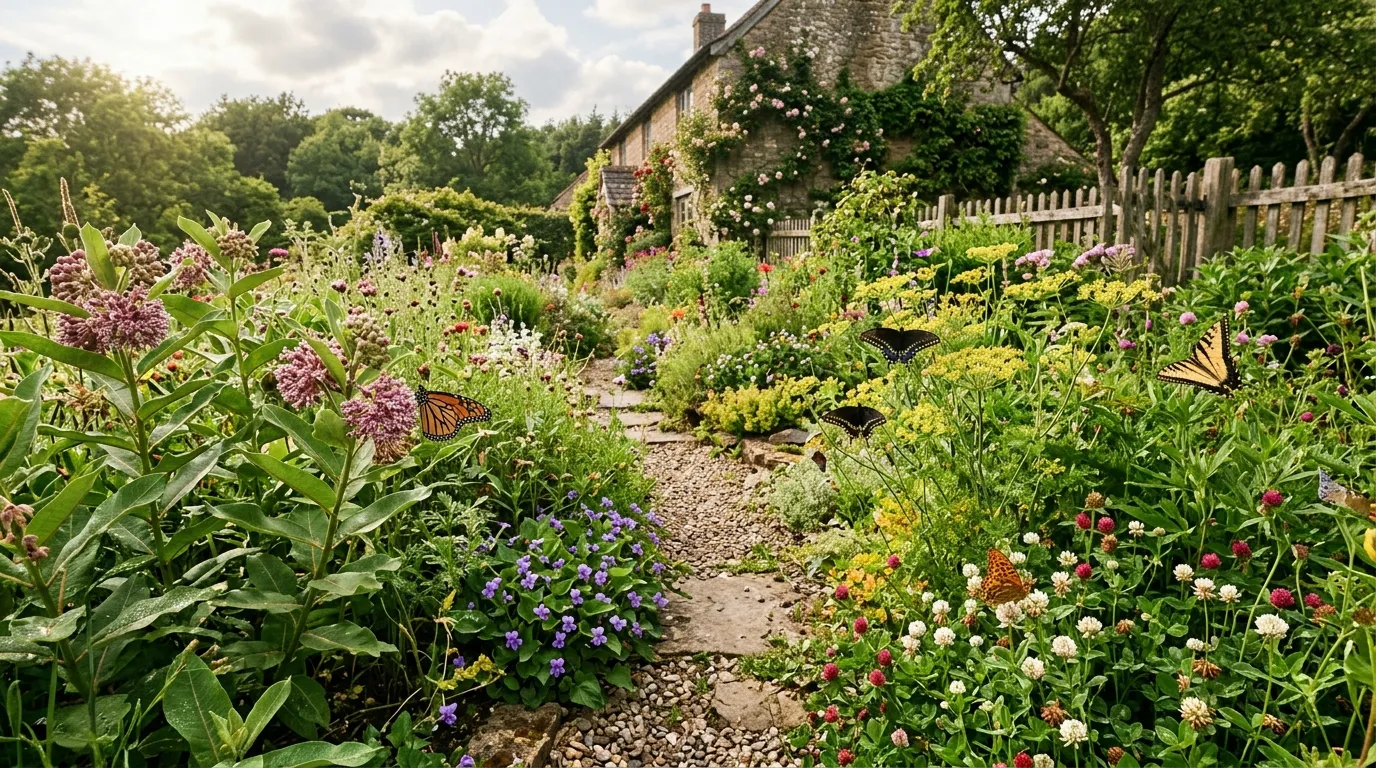
Plant host species in clusters, not singles. A lone milkweed stem might attract a monarch to lay one or two eggs, but a patch of 8-10 stems gives the caterpillars enough food to actually reach pupation. Swallowtail caterpillars can strip a single parsley plant bare in days, so plant 4-6 parsley or dill plants if you want some for yourself and some for the caterpillars.
Accept that host plants will get eaten. That’s the whole point. Chewed leaves mean the garden is working. If you can’t handle seeing holes in your plants, dedicate a back area or side yard to host plants and keep the manicured display garden separate. Some gardeners use a “sacrifice row” approach – planting extra dill or parsley specifically for caterpillars.
Combine host plants with nectar plants for a complete habitat. While a butterfly bush can serve as a powerful nectar magnet for adults, it feeds zero caterpillars. Pair it with nearby host plants so butterflies that visit for nectar can also lay eggs within the same yard.
Native vs. Non-Native Host Plants
Native plants are almost always the better choice for larval host plants, and the science behind this isn’t complicated. Local butterfly populations evolved alongside local plant species. Their digestive enzymes, feeding behaviors, and egg-laying preferences are calibrated to the chemical profiles of native plants. A monarch caterpillar does fine on any North American milkweed species because those are the plants its lineage adapted to over millions of years.
Non-native plants sometimes work as host substitutes, but performance is often worse. Tropical milkweed (Asclepias curassavica) is a common example. Monarchs will lay eggs on it and caterpillars will eat it, but in warm climates where it doesn’t die back in winter, it can harbor the parasite Ophryocystis elektroscirrha (OE) at higher rates than native milkweeds. The Monarch Joint Venture recommends using native milkweed species and cutting tropical milkweed to the ground in fall if you grow it in zones 9-11.
Some non-native plants act as ecological traps. Female butterflies may detect the right chemical signals and lay eggs on a non-native relative of their host plant, but the larvae fail to develop properly on that species. Caterpillars on the wrong plant grow slowly, suffer higher mortality, and produce smaller adults with reduced reproductive success. This is why swapping in a nursery cultivar of a native species isn’t always harmless – some cultivated varieties have altered leaf chemistry that reduces caterpillar survival rates.
The best approach is to source straight species (not cultivars) of native host plants from local native plant nurseries. Plants grown from regionally collected seed are adapted to your specific climate and soil, and they carry the chemical signatures that local butterfly populations recognize.
Regional Host Plant Recommendations
Host plant gardens look different depending on where you live. Here are starting points for four broad regions.
Northeast and Mid-Atlantic. Common milkweed, swamp milkweed, golden alexanders, spicebush, wild black cherry, violets, stinging nettle, and New Jersey tea. This region supports strong populations of monarchs, black swallowtails, spicebush swallowtails, fritillaries, and red admirals.
Southeast. Butterfly weed, swamp milkweed, passionvine (for Gulf fritillaries), pipevine (for pipevine swallowtails), fennel, pawpaw (for zebra swallowtails), and native senna species (for cloudless sulphurs). The longer growing season means you can support more generations per year.
Midwest and Great Plains. Common milkweed, prairie milkweed, leadplant (for dogface sulphurs), wild lupine (for Karner blues where they still survive), violets, willows along waterways, and various native legumes. Prairie restoration projects that include host plants see measurable increases in butterfly diversity within two to four years.
West Coast and Mountain West. Showy milkweed, narrow-leaf milkweed, California pipevine, native buckwheats (for blues and hairstreaks), willows, lupines, and native plantains (for checkerspots). Western gardeners should pay special attention to local ecotypes, since butterfly populations in western mountain valleys can be genetically distinct from coastal populations of the same species.
Frequently Asked Questions
What is the difference between a host plant and a nectar plant?
A host plant is what caterpillars eat. A nectar plant is what adult butterflies drink from. They serve completely different life stages. Some plants do double duty – milkweed produces both leaves for monarch caterpillars and flowers that many adult butterfly species drink from. But most host plants are valued for their foliage, not their flowers, while most nectar plants are grown for blooms. A complete butterfly garden needs both.
Can I use non-native plants as butterfly host plants?
In some cases, yes, but native plants are almost always the better option. A few non-native plants like garden parsley and dill work well for black swallowtails because they belong to the same plant family (Apiaceae) as native hosts like golden alexanders. But non-native milkweeds like tropical milkweed can cause problems in warm climates by harboring parasites. When possible, choose straight species of native host plants sourced from your region.
How many host plants should I grow?
Aim for host plants that cover 4-6 butterfly species common in your area. That might mean as few as 6-8 plant species total, since some plants host multiple butterfly species and some butterflies use plants from across a whole family. Plant each species in groups of at least 4-6 individuals to provide enough food for caterpillars to complete their development.
Will caterpillars destroy my garden?
Caterpillars eat leaves, and host plants will show chewing damage. But most host plants recover. Milkweed regrows from the roots even after heavy defoliation. Parsley and dill are annuals you can replant. Willows and spicebush are woody plants that shrug off caterpillar feeding without any lasting harm. If the cosmetic damage bothers you, plant host species in a less visible part of your yard and keep ornamental beds separate.
Do I need to avoid pesticides near host plants?
Absolutely. Any insecticide applied to or near host plants can kill caterpillars. This includes broad-spectrum products like carbaryl and permethrin, as well as organic options like Bt (Bacillus thuringiensis), which specifically targets caterpillars. Systemic insecticides like neonicotinoids are absorbed into plant tissues and poison caterpillars from the inside. If you’re growing host plants for butterflies, maintain a pesticide-free buffer zone around them.
When is the best time to plant host plants?
Spring and fall are both good planting windows for perennial host plants like milkweed, violets, and spicebush. Annual hosts like dill and parsley go in after your last frost date. The key is having foliage available when female butterflies are actively laying eggs, which varies by species and region. In most of the US, having host plants established by mid-May catches the first generation of caterpillars for common species.
Where can I buy native host plants?
Look for native plant nurseries in your state rather than big box garden centers. Many state native plant societies maintain lists of approved nurseries that sell regionally sourced stock. Organizations like the Xerces Society and your local cooperative extension office can point you to suppliers. Avoid “wildflower” seed mixes from hardware stores, which often contain non-native or non-local genotypes that may not serve local butterfly populations well.


