


The pipevine swallowtail diet is built on one of the most extreme feeding strategies in the butterfly world. As caterpillars, they eat only plants in the genus Aristolochia – commonly called pipevines or Dutchman’s pipes – and nothing else will do. Those plants are loaded with aristolochic acids, toxic compounds that would make most insects sick or dead. But pipevine swallowtail caterpillars absorb those toxins and carry them straight through pupation into adulthood, making every life stage from late-instar larva to egg-laying adult taste awful to birds. The adults switch to a completely different fuel source, drinking nectar from a rotating cast of flowers that varies by region and season. Understanding what these butterflies eat at each stage tells you a lot about where they live, why they look the way they do, and how to bring them into your garden.
Key Takeaways
- Pipevine swallowtail caterpillars feed exclusively on Aristolochia (pipevine) species, and the aristolochic acids in these plants make the larvae and adults toxic to predators.
- Adult pipevine swallowtails drink nectar from thistles, phlox, azaleas, bergamot, and many other flowers, but they never eat solid food – their coiled proboscis is designed only for liquids.
- Males engage in puddling behavior, gathering on mud, damp sand, or animal dung to absorb sodium and amino acids they transfer to females during mating.
- Planting native Aristolochia species alongside nectar-rich flowers is the most reliable way to support every life stage of this butterfly in your yard.
What Pipevine Swallowtail Caterpillars Eat
Pipevine swallowtail caterpillars are strict specialists. They feed on plants in the genus Aristolochia and refuse everything else. In eastern North America, the primary larval host plant is Aristolochia serpentaria (Virginia snakeroot) and Aristolochia macrophylla (Dutchman’s pipe). In the West, Aristolochia californica (California pipevine) fills that role. Several tropical Aristolochia species support populations in Texas and the Southwest.
The caterpillars are not subtle eaters. Early instars stick together in groups and skeletonize leaves from the underside. By the fourth and fifth instars, they’re solitary and chew through entire leaves, often stripping small plants bare. I’ve watched a group of early-instar larvae reduce a two-foot Virginia snakeroot to stems in under a week. If you’re growing pipevines for these butterflies, plant more than you think you need.
The feeding preference is absolute. Researchers at the Xerces Society have documented that female pipevine swallowtails will not lay eggs on non-Aristolochia plants, and caterpillars placed on alternate food sources will starve rather than eat them. This specificity is directly tied to chemistry – the caterpillars have evolved gut enzymes that detoxify aristolochic acids, turning a plant that’s poisonous to most animals into both food and a chemical defense system.
The Toxicity Connection Between Diet and Defense
Aristolochia plants produce aristolochic acids as their own defense against herbivores. These compounds cause kidney damage in mammals and are toxic to most insects. Pipevine swallowtail caterpillars have turned this defense on its head. They sequester the acids in their bodies rather than breaking them down, and the compounds persist through every subsequent life stage.
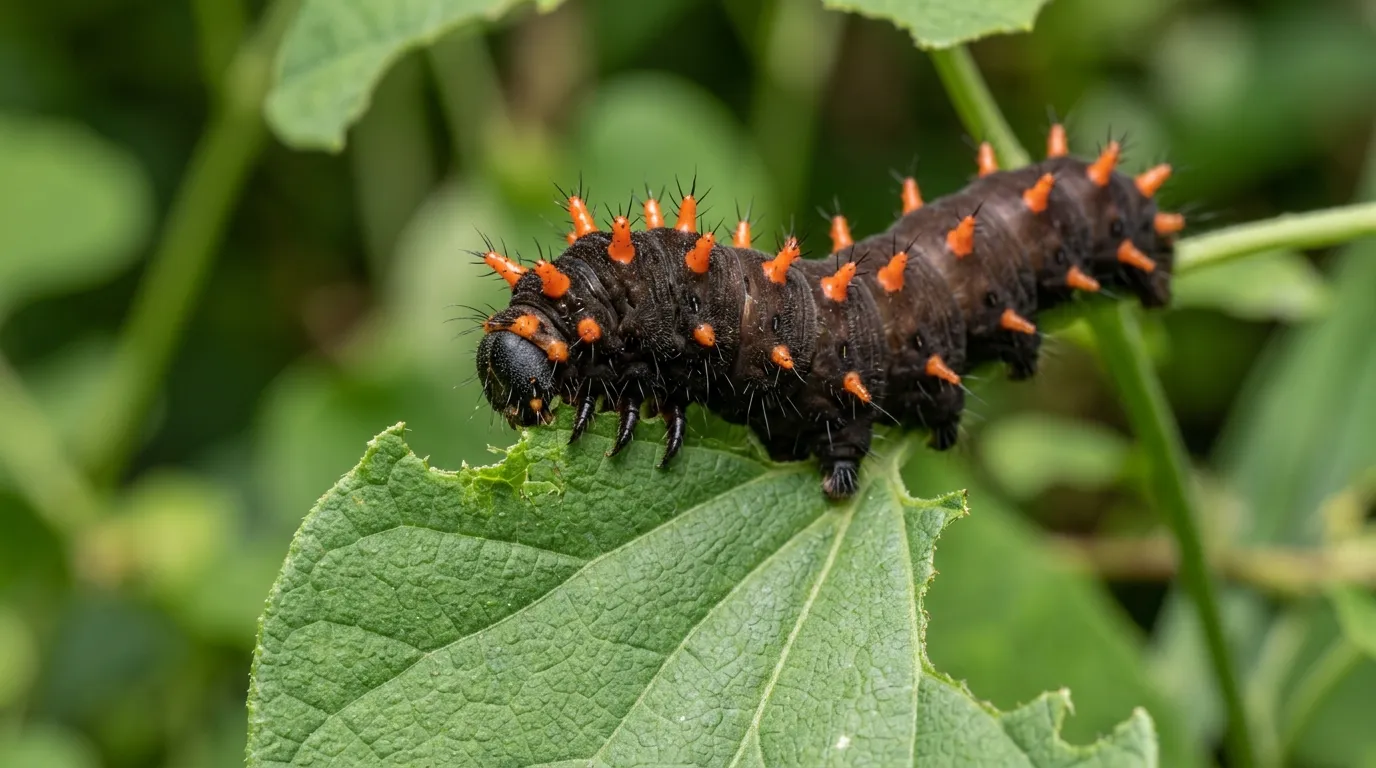
Late-instar caterpillars are conspicuously colored – dark brown to black bodies with bright orange or red fleshy tubercles. That coloring is aposematic, a warning signal that says “I taste terrible and I’ll make you sick.” Birds that grab a pipevine swallowtail caterpillar get a mouthful of aristolochic acid and generally don’t come back for seconds. Research published through the Smithsonian Department of Entomology has confirmed that naive birds quickly learn to avoid the combination of dark body and orange spines after a single unpleasant experience.
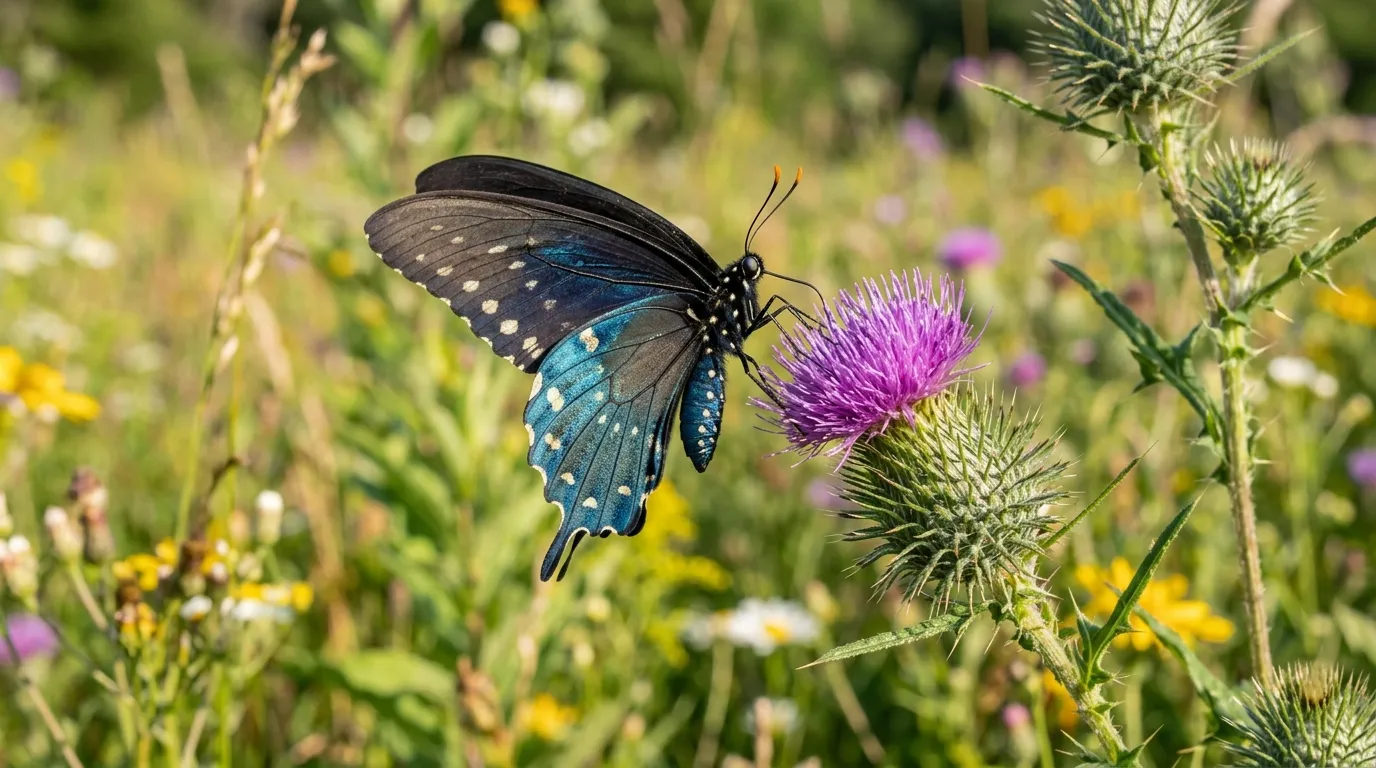
Adult pipevine swallowtails retain enough toxin from their larval diet to remain unpalatable. The iridescent blue-black coloring on their hindwings and the orange spots on their undersides serve as adult warning signals. This toxicity is so effective that several other non-toxic butterfly species – the spicebush swallowtail, red-spotted purple, dark female tiger swallowtails, and female Diana fritillaries – have evolved to mimic the pipevine swallowtail’s appearance. The whole mimicry complex depends on the caterpillar’s Aristolochia diet. No pipevines, no toxins. No toxins, no reason for mimics to copy the look.
Females even pass aristolochic acids into their eggs, giving the next generation chemical protection before they’ve taken a single bite. That’s how tightly the diet and defense are connected – the mother’s larval food source protects her offspring from the moment of laying. You can learn more about the overall pipevine swallowtail’s geographic range and how Aristolochia distribution shapes where these butterflies live.
What Adult Pipevine Swallowtails Drink
Once a pipevine swallowtail pupates and emerges as an adult, its diet changes completely. Adults have no chewing mouthparts. Their coiled proboscis works like a drinking straw, and they use it almost exclusively to sip flower nectar. The transition from leaf-eating caterpillar to nectar-sipping adult is total – they share no food sources between life stages.
Pipevine swallowtails are active, strong-flying butterflies that visit a wide range of flowering plants. Their nectar preferences include thistles, phlox, bergamot (bee balm), azaleas, lilac, butterfly bush, ironweed, milkweed, Joe-Pye weed, and various mints. They tend to prefer flowers that are tubular or clustered, which makes sense given the length of their proboscis. Deep-throated flowers that exclude smaller pollinators work well for large swallowtails.
Color preference leans toward pink, purple, and red-orange blooms. I’ve seen them bypass a patch of white clover to work a stand of wild bergamot six feet away, and they’ll spend extended time on thistles while ignoring nearby asters. That said, they’re generalists when it comes to nectar – if a flower produces enough sugar solution to be worth the effort, pipevine swallowtails will try it. Their approach to nectar sources parallels the broader patterns of what butterflies drink across species.
Unlike some butterfly species that feed on rotting fruit, tree sap, or carrion, pipevine swallowtails rarely visit anything other than flowers for nutrition. The one notable exception is puddling, which I’ll cover below.
Puddling Behavior in Male Pipevine Swallowtails
Male pipevine swallowtails regularly engage in puddling – landing on wet mud, damp sand, shallow puddles, or animal dung and extracting dissolved minerals with their proboscis. You’ve probably seen groups of swallowtails clustered at the edge of a dirt road puddle after a rain. That’s puddling.
The target nutrients are sodium and amino acids, which are scarce in a nectar-only diet. Males need these minerals for spermatophore production. During mating, the male transfers a nutrient package to the female that includes sodium and amino acids he accumulated through puddling. The female uses these nutrients to boost egg viability. So the male’s mud-drinking habit directly benefits the next generation’s survival.
Puddling is almost exclusively a male behavior. Females occasionally puddle, but studies from University of Kentucky Entomology and other programs have found it’s far less frequent. Males are also more likely to puddle in groups. I’ve counted a dozen pipevine swallowtails on a single muddy patch alongside tiger swallowtails and eastern tailed-blues. They’ll puddle for 10 to 20 minutes at a stretch, pumping fluid through their digestive system to extract dissolved minerals before expelling the excess water.
Planting a Pipevine Swallowtail Diet Garden
If you want pipevine swallowtails breeding in your garden, you need two things: host plants for caterpillars and nectar plants for adults. Missing either one means you might get visitors but not residents.
For the host plant side, choose Aristolochia species native to your region. In the eastern U.S., Aristolochia macrophylla (Dutchman’s pipe) is a vigorous woody vine that can cover an arbor or trellis. It’s a large plant – the heart-shaped leaves can be eight inches across. Aristolochia serpentaria (Virginia snakeroot) is a smaller ground-level option for shady woodland gardens. In California, Aristolochia californica is the only game in town, and it goes summer-dormant, so don’t panic when it drops its leaves in July.
One word of caution: avoid non-native Aristolochia species, particularly the tropical Aristolochia elegans (calico flower). Female pipevine swallowtails will lay eggs on it, but the leaf chemistry is wrong. Caterpillars feeding on A. elegans show higher mortality rates because the specific aristolochic acid profile differs from native species. It’s an ecological trap – the plant attracts egg-laying females but kills the larvae. Stick with regionally native species.
For adult nectar, plant a succession of blooms that covers the entire flight season from April through October in most of the pipevine swallowtail range. Here’s a practical rotation by bloom period:
- Spring (April – May): azaleas, lilac, phlox, columbine
- Early summer (June – July): bergamot, butterfly milkweed, purple coneflower, mountain mint
- Late summer (August – September): thistles, ironweed, Joe-Pye weed, blazing star
- Fall (September – October): goldenrod, New England aster, late-blooming sedums
Add a puddling station for the males – a shallow dish filled with damp sand mixed with a pinch of sea salt, placed in a sunny spot. Refill it when the sand dries out. This simple setup replicates the muddy stream banks where males naturally puddle, and it can keep them in your garden longer. The chrysalis stage happens right in the garden too, with caterpillars pupating on nearby stems, fences, or the sides of buildings.
Frequently Asked Questions
Can pipevine swallowtail caterpillars eat anything besides Aristolochia?
No. They are obligate specialists on Aristolochia and will not feed on any other plant genus. Caterpillars placed on alternate plants in lab settings refuse to eat and die. The female butterfly identifies Aristolochia through chemical receptors on her front feet and will only deposit eggs on plants that match the correct chemical signature. This is one of the strictest host plant relationships among North American butterflies.
Do pipevine swallowtails eat milkweed?
Adults will drink nectar from milkweed flowers, especially butterfly milkweed (Asclepias tuberosa), which is a good nectar source for many swallowtail species. But the caterpillars do not eat milkweed leaves. That’s monarch territory. The two species overlap in many gardens but use completely different host plants.
How much Aristolochia does one caterpillar eat?
A single caterpillar from hatching through pupation consumes roughly 10 to 15 medium-sized Aristolochia leaves. A brood of 6 to 8 caterpillars can defoliate a small plant in about two weeks. The plant usually regrows if it’s well-established, but first-year or small Aristolochia plants may be killed by heavy caterpillar feeding. Planting at least two or three host plants spreads the damage.
Are pipevine swallowtails poisonous to humans?
They’re not dangerous to handle. The aristolochic acids sequestered in their bodies are present in concentrations that deter bird predators but pose no risk to humans through casual contact. You can safely handle caterpillars and adults. The toxicity is a taste-based defense system – a bird biting a pipevine swallowtail gets a bitter, nauseating mouthful. A person picking one up does not.
Why do I see pipevine swallowtails on my flowers but no caterpillars?
You’re getting nectar visitors without breeding residents. The adults are strong fliers and will travel considerable distances from their host plant colonies to reach good nectar sources. If there’s no Aristolochia on your property or nearby, the butterflies are commuting in for food but laying eggs somewhere else. Adding host plants will close the gap and encourage them to complete their life cycle in your garden.
What’s the best Aristolochia species for a small garden?
Aristolochia serpentaria (Virginia snakeroot) stays under two feet tall and works well in shady, woodland-style gardens. It’s native to the eastern U.S. and fits into small spaces. For West Coast gardens, Aristolochia californica is a manageable vine that stays relatively compact compared to the massive Dutchman’s pipe. In either case, plant at least two specimens so the caterpillars don’t completely destroy your only host plant.