


Western Giant Swallowtail Caterpillar | ID and Care
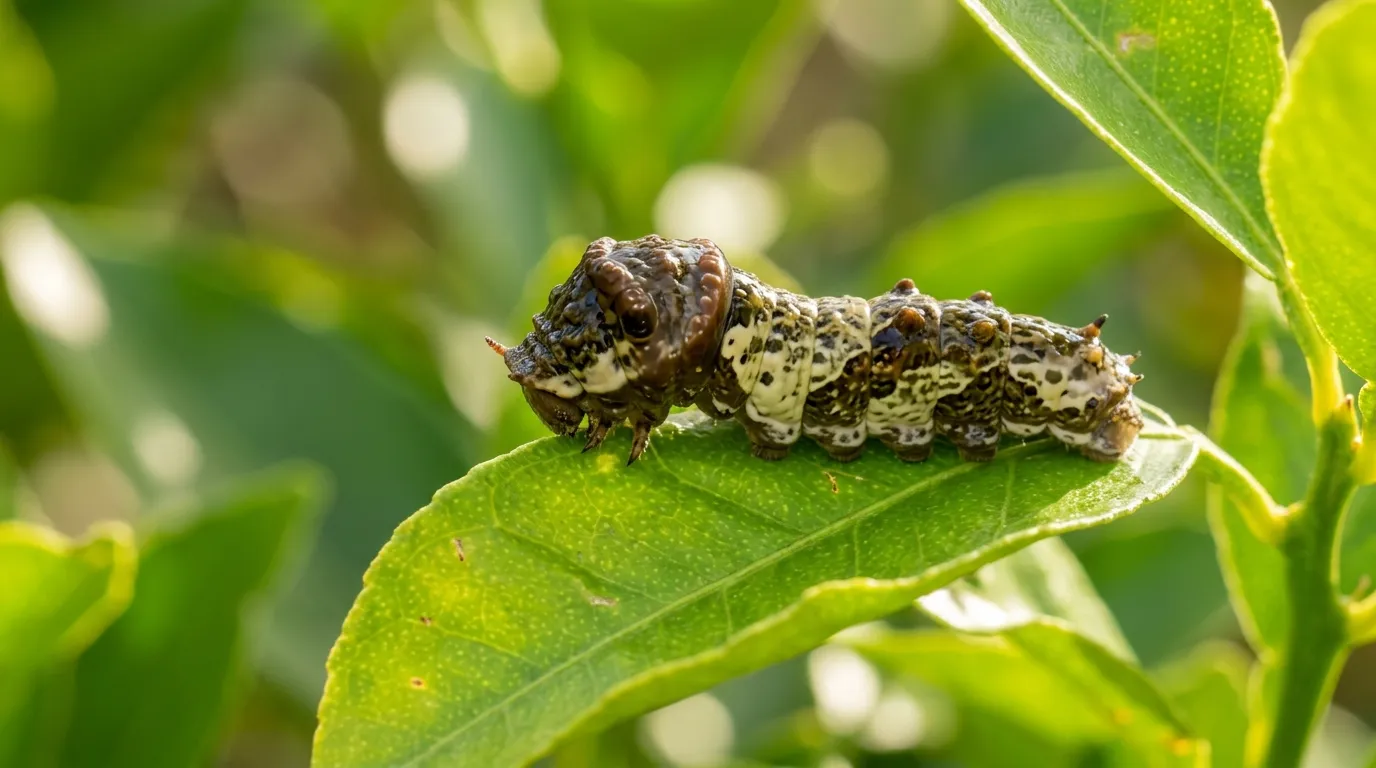
The western giant swallowtail caterpillar (Papilio rumiko) is one of North America’s best camouflage artists, spending most of its larval life looking exactly like a bird dropping on a citrus leaf. If you garden anywhere in the southwestern US or Mexico and grow citrus or related plants, you’ve probably seen one without realizing it. I’ve walked past them dozens of times before my eyes finally learned the pattern. These caterpillars feed exclusively on plants in the Rutaceae family and go through five instars before pupating into one of the largest butterflies on the continent.
Key Takeaways
- Western giant swallowtail caterpillars use bird-dropping mimicry in their early instars, switching to a green-and-brown pattern with eyespots in the final instar.
- Their host plants are all members of the Rutaceae (citrus) family, including cultivated citrus, hop tree, and Casimiroa species native to Mexico.
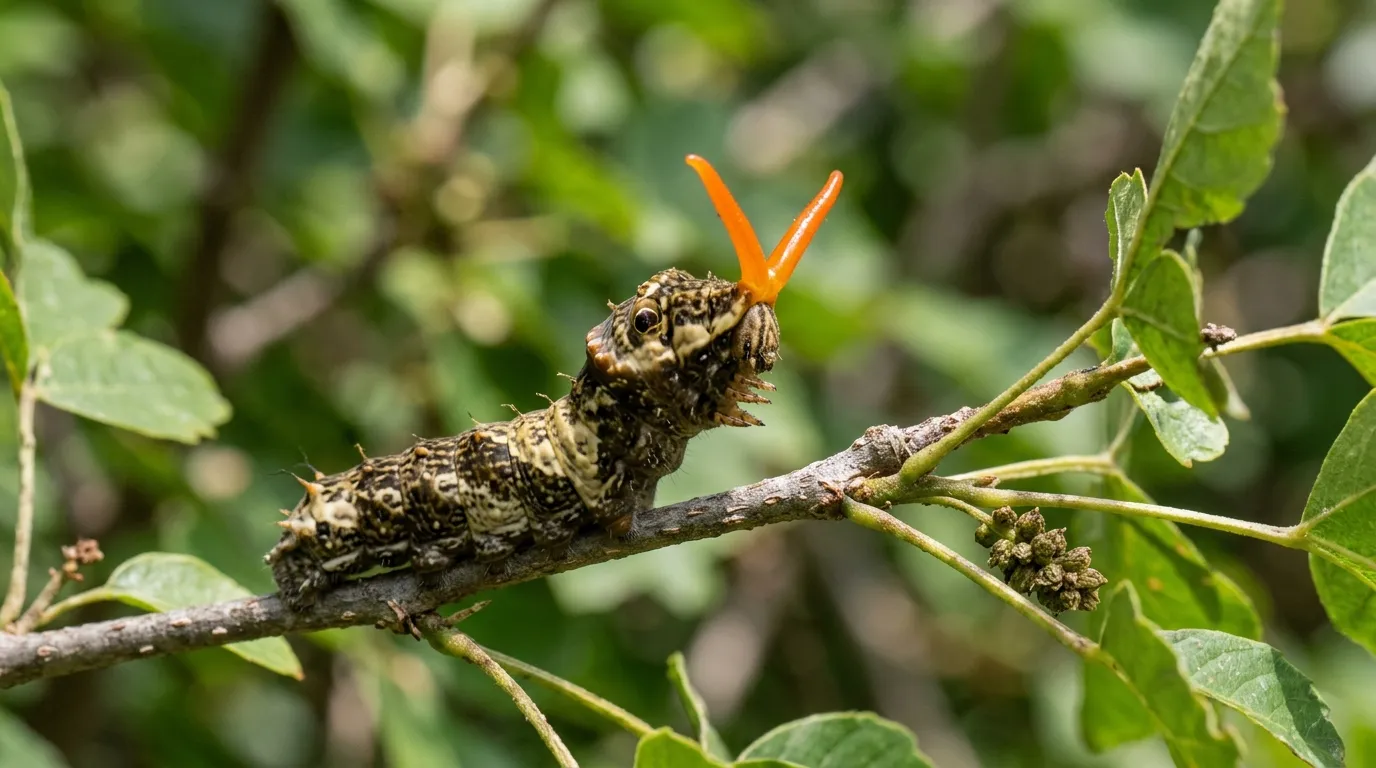
- When threatened, they deploy a forked, orange organ called an osmeterium from behind the head that releases foul-smelling chemicals to repel predators.
- Telling them apart from eastern giant swallowtail caterpillars (P. cresphontes) comes down to geography and subtle color tone differences rather than any single reliable field mark.
What the Western Giant Swallowtail Caterpillar Looks Like
In the first four instars, the western giant swallowtail caterpillar is a dead ringer for a fresh bird dropping. The body is mottled brown, cream, and olive-white, with an irregular, glossy texture that catches light the same way wet excrement does. It’s a strategy that works because most birds won’t investigate something that looks like their own waste.
By the fifth and final instar, the caterpillar changes its game. It grows to about 4.5 to 5.5 centimeters long and develops a darker brown body with a lighter saddle patch across the middle. Some individuals show faint blue spots near the rear segments. The head capsule is brown with a pale stripe, and there’s a pair of false eyespots on the thorax that give the caterpillar a mildly snake-like appearance when viewed head-on.
The shift between the bird-dropping phase and the final instar look is dramatic. I’ve had visitors to my garden in Tucson swear the early and late stage larvae were completely different species. If you’ve raised spicebush swallowtail caterpillars, you’ll notice a similar theme – many swallowtail larvae use mimicry in early instars and then pivot to a different defensive strategy once they get too large for the illusion to work.
Larval Stages from Egg to Chrysalis
Females lay single, round eggs on the upper surface of young host plant leaves. The eggs are pale yellow-green when first deposited and darken slightly before hatching in about four to nine days depending on temperature. Warmer conditions in the desert Southwest push development faster.
The first instar caterpillar is tiny – barely 3 millimeters – and almost entirely dark brown with a white saddle band. It already shows the bird-dropping look from day one. Each molt brings a larger version of the same disguise, with the cream and olive mottling becoming more defined through the second, third, and fourth instars.
At the fifth instar, the caterpillar feeds heavily for about a week before entering a pre-pupal wandering phase. It leaves the host plant and searches for a sheltered spot to form its chrysalis. The chrysalis itself is brown or greenish-brown, shaped like a stubby twig, and attached by a silk girdle to a branch or other structure. Pupal duration ranges from about 10 to 14 days in summer broods, but overwintering chrysalises in cooler parts of the range can sit dormant for several months.
The Osmeterium Defense Explained
All swallowtail caterpillars in the family Papilionidae share one signature weapon: the osmeterium. This forked, fleshy organ sits tucked behind the head in a groove on the prothoracic segment. When the caterpillar feels threatened – by a curious ant, a parasitoid wasp, or your finger – it everts the osmeterium outward in a flash of bright orange or reddish-orange.
The organ releases a cocktail of terpene-based chemicals, primarily isobutyric acid and 2-methylbutyric acid. To human noses, the smell is sharp and unpleasant, somewhere between rancid butter and overripe cheese. To a small predator like an ant or spider, it’s overwhelming enough to cause a full retreat. If you’ve handled eastern tiger swallowtail caterpillars, you’ve probably experienced this firsthand – the smell lingers on your skin for a while.
The osmeterium is most effective in the earlier instars when predators pose the greatest threat relative to the caterpillar’s size. By the time a fifth instar larva is nearly the size of your thumb, its sheer bulk and the eyespot bluff do more of the defensive work. According to research published in the Annals of the Entomological Society of America, osmeterium secretion chemistry varies across Papilio species, suggesting that different swallowtail caterpillars have fine-tuned their chemical blends against their local predator communities.
Host Plants for Western Giant Swallowtail Caterpillars
Every plant the western giant swallowtail caterpillar uses belongs to the family Rutaceae – the citrus and rue family. In residential landscapes across Arizona, southern California, and Texas, cultivated citrus trees are the main targets. Lemon, orange, grapefruit, kumquat, and lime trees all get used. Home gardeners sometimes call these caterpillars “orange dogs” for their habit of defoliating young citrus seedlings.
In wilder habitats, the caterpillars rely on native Rutaceae. Hop tree (Ptelea trifoliata) is a key native host across parts of the range. In Mexico and further south, white sapote (Casimiroa edulis) and various Zanthoxylum species (prickly ash) serve as primary food sources. The caterpillars also use Esenbeckia and Pilocarpus species where those are available.
If you want to attract these caterpillars to your garden without sacrificing your citrus harvest, planting a hop tree or common rue (Ruta graveolens) as a dedicated host works well. I keep two hop trees specifically for swallowtails and let them eat as much as they want. The trees recover quickly. For more about pairing butterflies with the right plants, the spicebush swallowtail host plants guide covers similar principles that apply across the swallowtail family.
Western vs. Eastern Giant Swallowtail Caterpillar
Until 2014, everyone lumped these caterpillars under one species. When Shiraiwa and Grishin split Papilio rumiko from Papilio cresphontes, it raised an obvious question for caterpillar watchers: can you tell the larvae apart?
The honest answer is that it’s extremely difficult. Both species produce caterpillars with the same bird-dropping mimicry, the same general size, the same osmeterium behavior, and the same host plant preferences where their ranges overlap. No single visual feature will let you confidently separate them in the field.
That said, there are tendencies. Western giant swallowtail caterpillars in the final instar often show slightly warmer brown tones and less contrast in the saddle patch compared to the crisper black-and-white patterning more typical of eastern larvae. The blue spotting near the rear end may also be less pronounced in western populations. But individual variation within each species is wide enough that these are guidelines, not rules.
Your best identification tool is geography. If you’re in Arizona, southern California, Baja, or mainland Mexico west of the Sierra Madre, your caterpillar is almost certainly P. rumiko. If you’re in Florida, the Carolinas, or the Midwest, it’s P. cresphontes. The gray area is central Texas and parts of the southern Great Plains where the two species overlap and iNaturalist observation data shows both being reported.
Frequently Asked Questions
Are western giant swallowtail caterpillars harmful to citrus trees?
They can defoliate young or small citrus trees if enough eggs are laid on the same plant. Mature, established citrus trees handle the feeding without any lasting damage – they put out new growth quickly. If you’re worried about a small seedling, just move the caterpillars by hand to another host plant rather than spraying.
How long does it take a western giant swallowtail caterpillar to grow?
From egg hatch to pupation typically takes about three to four weeks in warm summer conditions. Desert heat can speed things up to closer to 18 days. Cooler spring temperatures push the timeline out to five weeks or more. The egg stage adds another four to nine days before the caterpillar even begins feeding.
What does the osmeterium smell like?
The scent is often compared to rancid butter or strong aged cheese. It’s produced by a blend of organic acids, mainly isobutyric acid. The smell isn’t dangerous to humans – just unpleasant. It fades from your skin within about 30 minutes of contact.
Can I raise western giant swallowtail caterpillars indoors?
Yes, and they’re one of the easier swallowtail species to rear. Provide fresh cuttings of any Rutaceae host plant in a jar of water, keep the container in indirect light at room temperature, and clean out frass daily. A mesh enclosure works better than a sealed container since the caterpillars need airflow. Expect to replace food cuttings every two to three days as final instar larvae eat a lot.
Why does the caterpillar look like bird droppings?
Bird-dropping mimicry is a form of protective camouflage called masquerade. Predators – especially insect-eating birds and wasps – learn to ignore objects that look like waste. By evolving coloring and even a glossy texture that matches fresh droppings, the caterpillar avoids being recognized as food. This strategy is most effective in the smaller, earlier instars when the size is believable. A 5-centimeter caterpillar is too big to pass for a dropping, which is why the final instar switches to different defenses.
Where can I see western giant swallowtail caterpillars in the wild?
Check any citrus tree in a residential garden in southern Arizona, the lower Rio Grande Valley of Texas, or southern California between April and October. Public botanical gardens in Phoenix and Tucson regularly have them on their citrus plantings. In wilder settings, look along desert washes and riparian areas where hop tree or prickly ash grows. According to the North American Butterfly Association, organized butterfly counts in the Southwest regularly log this species.