

Walk through any garden, meadow, or park on a warm summer day and you’re likely to see at least a few butterflies drifting by. But unless you’ve spent time learning to tell one species from another, they can all start to blur together into a vague category of “pretty winged things.” That’s a shame, because once you know what to look for, identifying butterflies gets addictive fast.
North America is home to around 750 butterfly species, which sounds overwhelming until you realize that a handful of common types account for most of what you’ll encounter in everyday life. This guide covers 15 species spread across five major butterfly families, with enough detail to actually tell them apart in the field. For a broader look at butterfly diversity worldwide, the butterfly species overview is a good place to start.
Key Takeaways
- North America’s butterflies fall into five main families: Nymphalidae (brush-foots), Papilionidae (swallowtails), Pieridae (whites and sulphurs), Lycaenidae (blues and hairstreaks), and Hesperiidae (skippers).
- Wing shape, color pattern, size, and flight style are all useful clues when identifying a butterfly in the field. You don’t need to catch them to figure out what they are.
- Many common species have look-alikes, so paying attention to details like hindwing tails, spots, and the underside of the wings makes a real difference.
- Habitat matters as much as appearance. Knowing where a butterfly is likely to live narrows down the possibilities before you even raise your binoculars.
Brush-Footed Butterflies (Nymphalidae)
Nymphalidae is the largest butterfly family in the world, and it’s well represented in North America. The name “brush-footed” refers to a quirk these butterflies share: their front legs are small and covered in brush-like hairs, making them look like they only have four legs when they’re perched. If a butterfly lands nearby and seems to be standing on four legs instead of six, there’s a good chance it’s a nymphalid.
1. Monarch (Danaus plexippus)
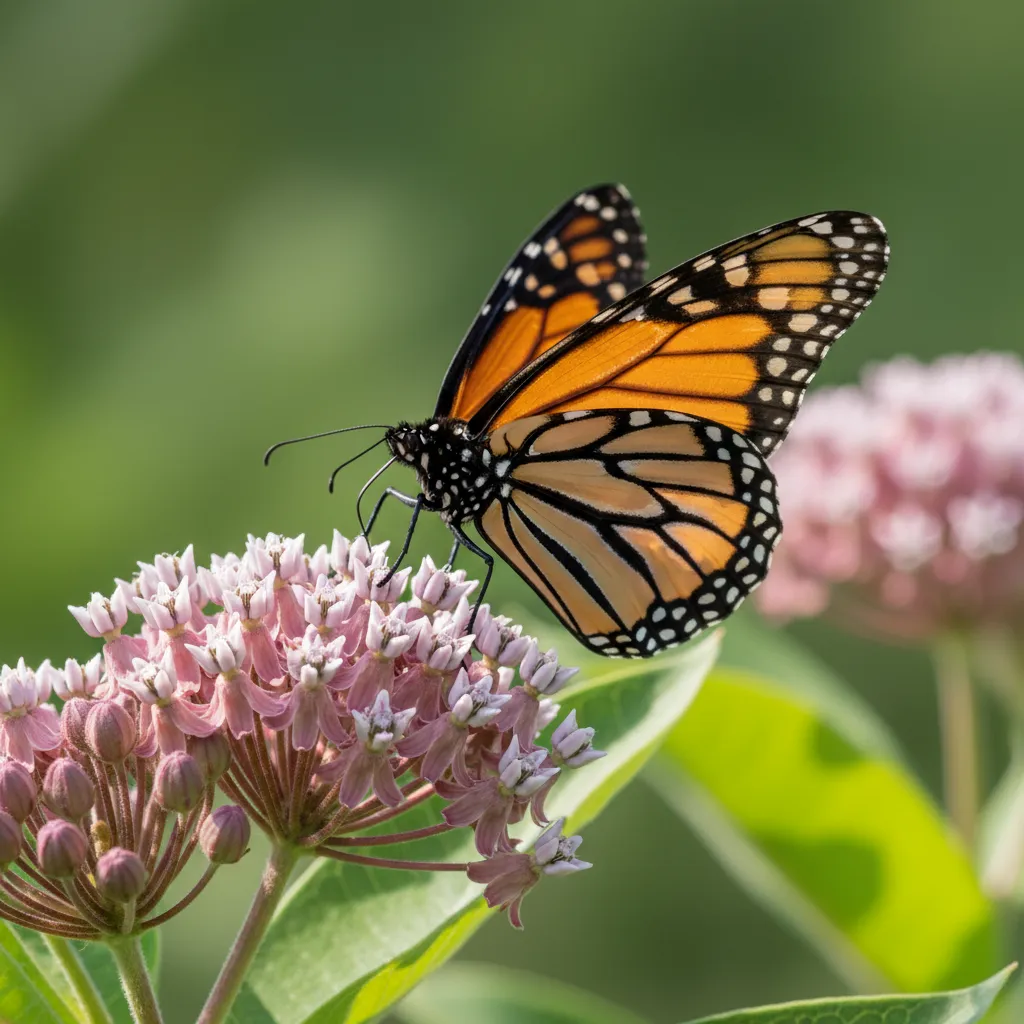
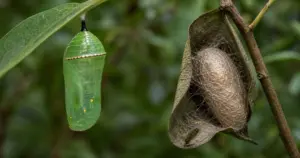
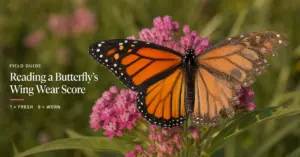
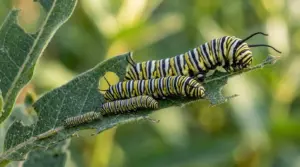
The monarch butterfly is probably the most recognized butterfly in North America, and for good reason. Its deep orange wings crossed with black veins and edged with white-spotted black borders are hard to mistake. Wingspans run from about 3.5 to 4 inches. Monarchs are famous for their annual migration to overwintering sites in central Mexico, covering thousands of miles in a single generation. Their caterpillars feed exclusively on milkweed, which makes them mildly toxic to predators.
The one species you might confuse with a monarch is the viceroy, which is slightly smaller and has a black line crossing the hindwings. The similarity is a classic case of mimicry at work.
2. Painted Lady (Vanessa cardui)
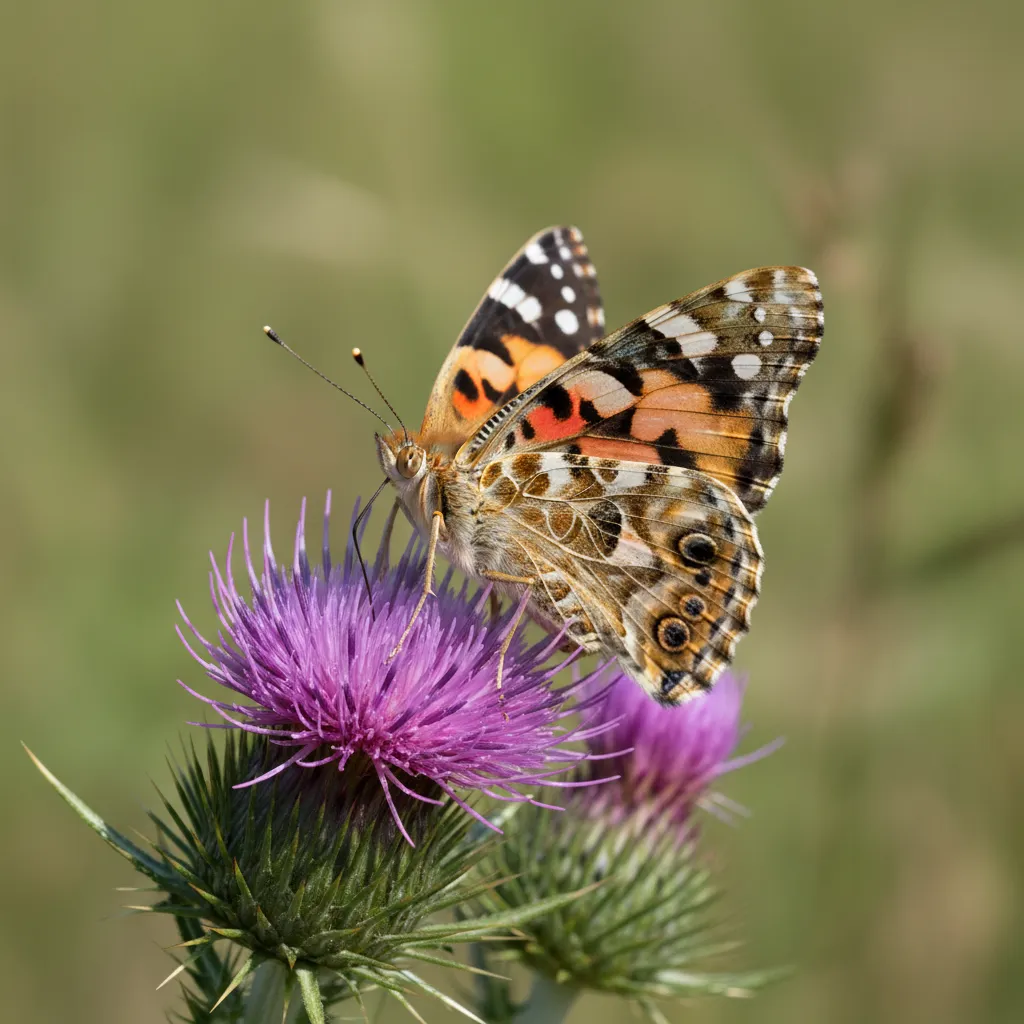
The painted lady might be the most widely distributed butterfly on the planet. It’s found on every continent except Antarctica and Australia, and in North America it shows up almost everywhere. The wings are a salmon-orange color with black and white patterning on the forewings and a row of small blue spots along the hindwing margin. Up close, the underside is a complex mosaic of browns, grays, and white — much more intricate than the topside.
Painted ladies are strong fliers and migrate in some years in enormous numbers. They’re often seen nectaring on thistles, asters, and cosmos.
3. Red Admiral (Vanessa atalanta)
Red admirals are easy to spot once you know the pattern: dark brown to black wings with a diagonal red-orange bar across the forewing and a red-orange band along the hindwing margin. The forewing tips have white spots. They’re medium-sized butterflies, with wingspans around 1.75 to 3 inches.
Unlike many butterflies, red admirals are fairly territorial. Males will return to the same sunny perch again and again to defend it and intercept passing females. They’re also one of the later-flying species and can sometimes be spotted on warm days well into autumn.
Swallowtails (Papilionidae)
Swallowtails are among the largest butterflies in North America, and most species have the distinctive tail-like extensions on their hindwings that give the family its name. They’re generally strong fliers and are often seen nectaring at flowers in gardens and along roadsides. The family includes some truly impressive insects.
4. Eastern Tiger Swallowtail (Papilio glaucus)
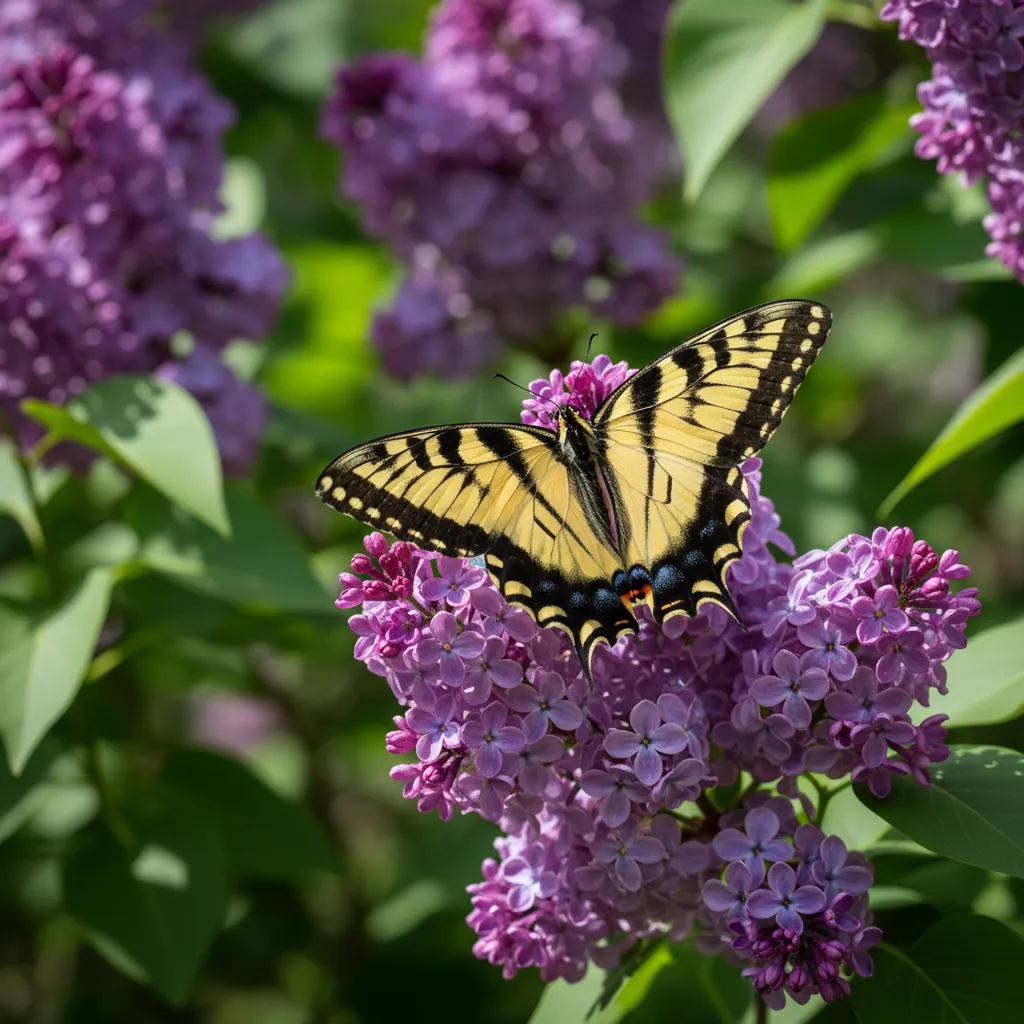
The tiger swallowtail is one of the most familiar large butterflies in the eastern United States. Males are yellow with black tiger stripes and blue and orange markings near the hindwing tails. Females come in two forms: the standard yellow-and-black version, and a dark form that mimics the pipevine swallowtail. Wingspan ranges from 3 to 5.5 inches, making this one of the bigger species you’re likely to see.
Tiger swallowtails are regularly found in gardens, parks, and woodland edges. They’re attracted to tall garden flowers like phlox and ironweed, and you’ll often see them “puddling” at wet sand or mud to take up minerals.
5. Black Swallowtail (Papilio polyxenes)
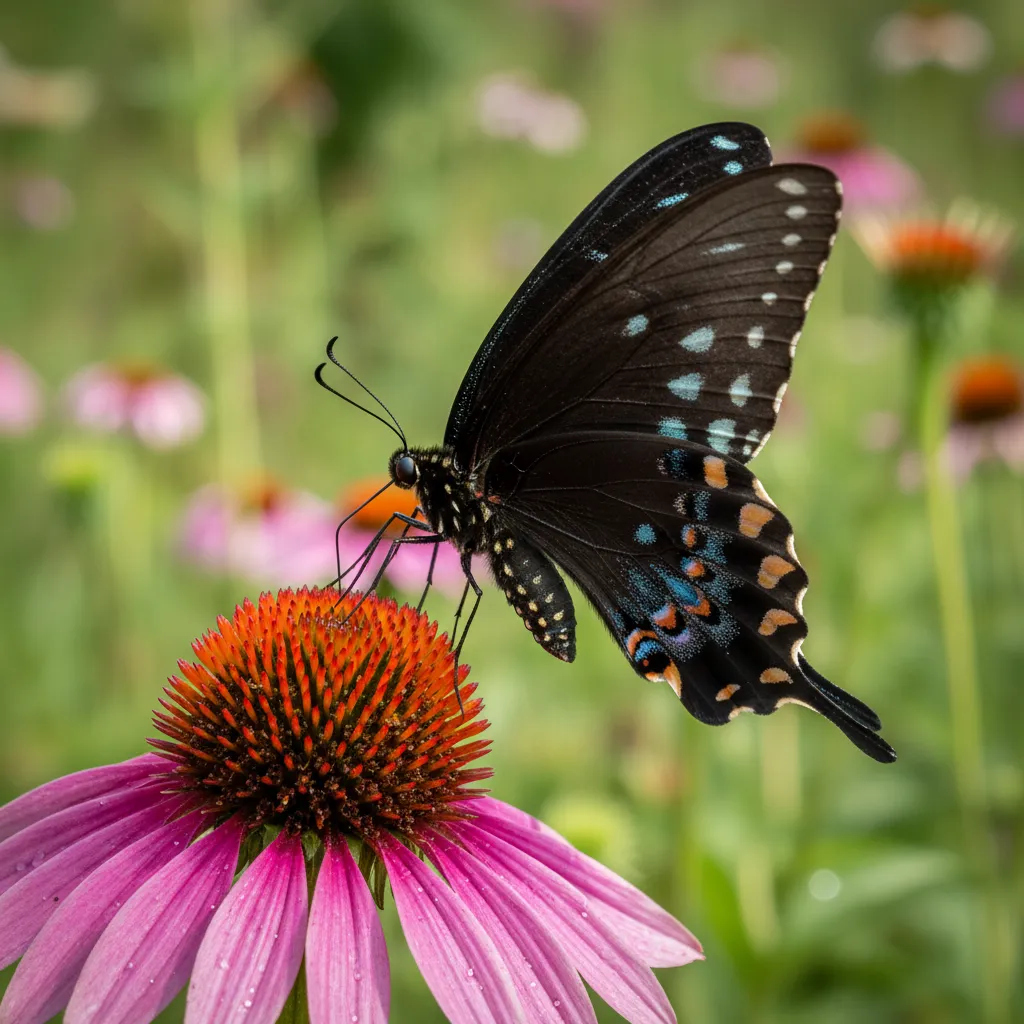
The black swallowtail is a common species across most of North America east of the Rockies, with the male being black with two rows of yellow spots and a small iridescent blue patch on the hindwing. Females look similar but have more blue and less yellow. The wingspan runs roughly 2.7 to 3.5 inches.
The caterpillars feed on plants in the carrot family, including dill, parsley, fennel, and Queen Anne’s lace. This makes the black swallowtail a regular visitor to herb gardens, where you might find the striped green-and-black caterpillars munching on your dill before you spot the adult.
6. Giant Swallowtail (Papilio cresphontes)
The giant swallowtail earns its name: it’s the largest butterfly in North America, with a wingspan that can reach 6.9 inches. The uppersides are dark brown to black with diagonal bands of yellow spots crossing both wings, and the hindwings have yellow centers in the tails. The underside is mostly pale yellow, which makes the butterfly look entirely different depending on which angle you see it from.
Giant swallowtails are found in the eastern U.S. and parts of the west, often near citrus groves and hop trees. The caterpillars are sometimes called “orange dogs” because of their pest status in citrus orchards.
Whites and Sulphurs (Pieridae)
The Pieridae family includes butterflies that are mostly white, yellow, or orange. They tend to be medium-sized and are among the most commonly seen butterflies in open areas, roadsides, and gardens. Several species in this family are migratory.
7. Cabbage White (Pieris rapae)
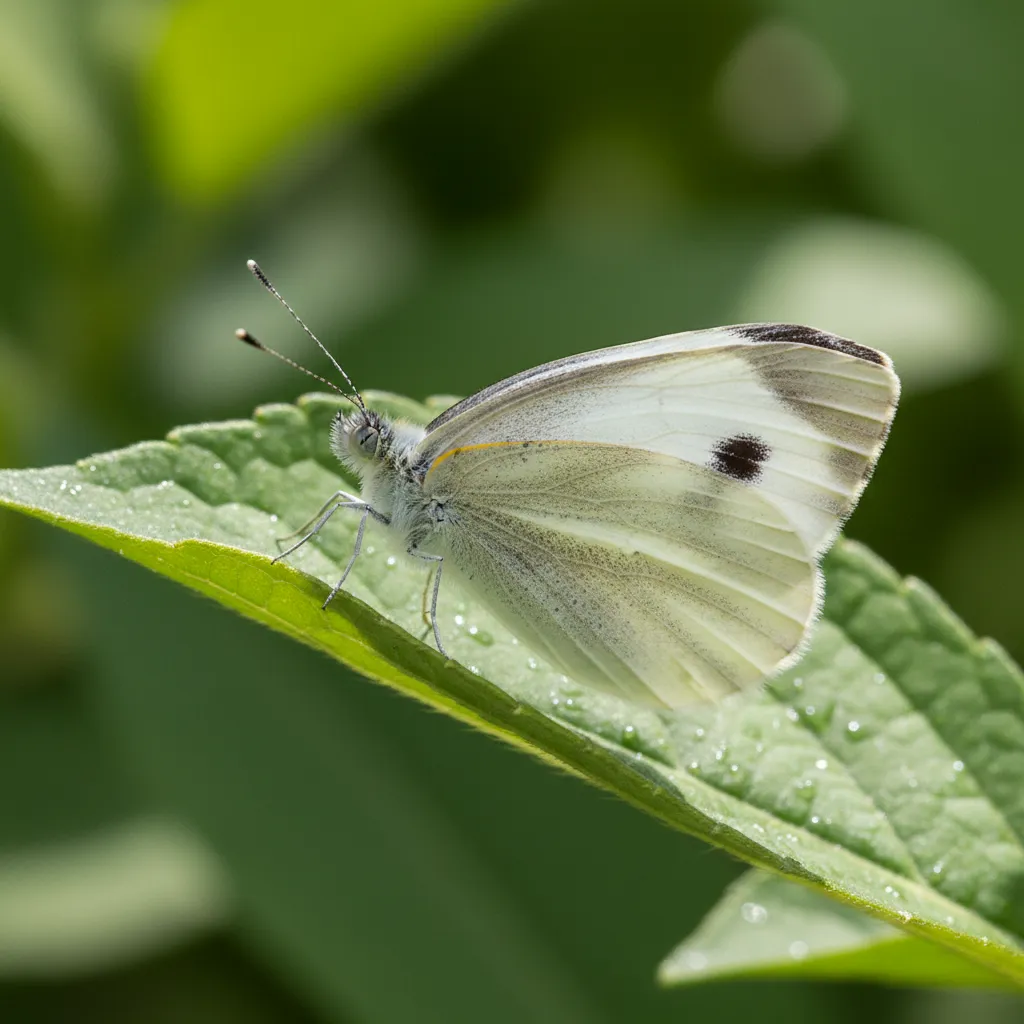
The cabbage white is one of the most abundant butterflies in North America, though it’s actually native to Europe and was introduced in Quebec in the 1860s. It spread rapidly across the continent. The wings are white with one or two small black spots on the forewings (males have one, females have two) and slightly greenish-tinged hindwings when seen from below.
You’ll find cabbage whites in gardens, farms, vacant lots, and parks. Their caterpillars feed on plants in the cabbage family, which makes them a minor agricultural pest. Despite that reputation, the adults are pleasant garden visitors that nectar on a wide range of flowers.
8. Cloudless Sulphur (Phoebis sennae)
Cloudless sulphurs are large, bright yellow butterflies with a wingspan of 2.2 to 3.1 inches. Males are a clean lemon yellow with no markings on the upperside, while females are yellow or white with a row of dark spots along the forewing margin. In flight, they look like flying pieces of sunshine.
These butterflies are common in the southern United States and migrate northward in summer. In fall, large numbers can be seen moving south along the Atlantic coast. They’re strongly attracted to red and orange tubular flowers like trumpet vine and coral honeysuckle.
9. Orange Sulphur (Colias eurytheme)
The orange sulphur, also called the alfalfa butterfly, is one of the most common yellow butterflies across North America. Its upperwings are yellow-orange with black borders and a central orange spot. Females sometimes appear in a white form that lacks the orange coloring entirely. The underside has a double silver spot ringed in pink on the hindwing, which is the clearest field mark when the butterfly is perched with wings closed.
Orange sulphurs are found in open areas and are particularly abundant in agricultural fields, where their caterpillars feed on alfalfa and clover.
Blues and Hairstreaks (Lycaenidae)
Lycaenidae is the second-largest butterfly family, containing the blues, hairstreaks, coppers, and elfins. Most species in this family are small, rarely exceeding 2 inches in wingspan. Many have elaborate markings on the underside of their wings that are far more interesting than the relatively plain upper surface. A number of lycaenid caterpillars have mutualistic relationships with ants.
10. Spring Azure (Celastrina ladon)
Spring azures are small, delicate butterflies with pale blue upper wings that are among the first butterflies to emerge in spring across the eastern United States. Males are a cleaner blue; females are blue with black margins. The underside is pale gray or white with small dark spots. Wingspan runs about 0.75 to 1.25 inches.
They’re found in woodland edges, gardens, and open woodlands. The caterpillars feed on the flowers of dogwood, blueberry, viburnum, and other shrubs. What looks like a single widespread species is actually a complex of closely related forms that specialists are still working out.
11. Gray Hairstreak (Strymon melinus)
The gray hairstreak is the most widespread hairstreak in North America and one of the most generalist of all butterfly species — the caterpillars feed on an enormous range of host plants, including beans, clovers, mallow, and oak. Adults are gray above with a small orange and blue eyespot near the base of the hindwing tail. The underside is a clean gray with a postmedian white line edged in black and orange.
Hairstreaks have a habit of rubbing their hindwings together when perched, which draws a predator’s attention to the fake “head” near the tail and away from the real head. It works often enough that it apparently pays to keep doing it.
12. Eastern Tailed-Blue (Cupido comyntas)
Tiny and easily overlooked, eastern tailed-blues have wingspans of only 0.75 to 1 inch. Males are blue on top; females are mostly gray-brown. Both sexes have a pair of short tails on the hindwings and small orange spots near the tails, which are visible from above and below. The underside is pale gray with black dots.
Eastern tailed-blues are found in open, disturbed areas — roadsides, meadows, and fields — where their caterpillar host plants, primarily clovers and vetches, grow. They’re one of the more reliably encountered small blues in the eastern and central United States.
Skippers (Hesperiidae)
Skippers are often treated as the odd cousins of the butterfly world. They sit somewhere between butterflies and moths in their body plan: stocky bodies, large heads, and hooked antennae tips. Their flight is rapid and darting, which is where the “skipper” name comes from. There are more skipper species in North America than any other butterfly family, and many are notoriously difficult to tell apart.
13. Silver-Spotted Skipper (Epargyreus clarus)
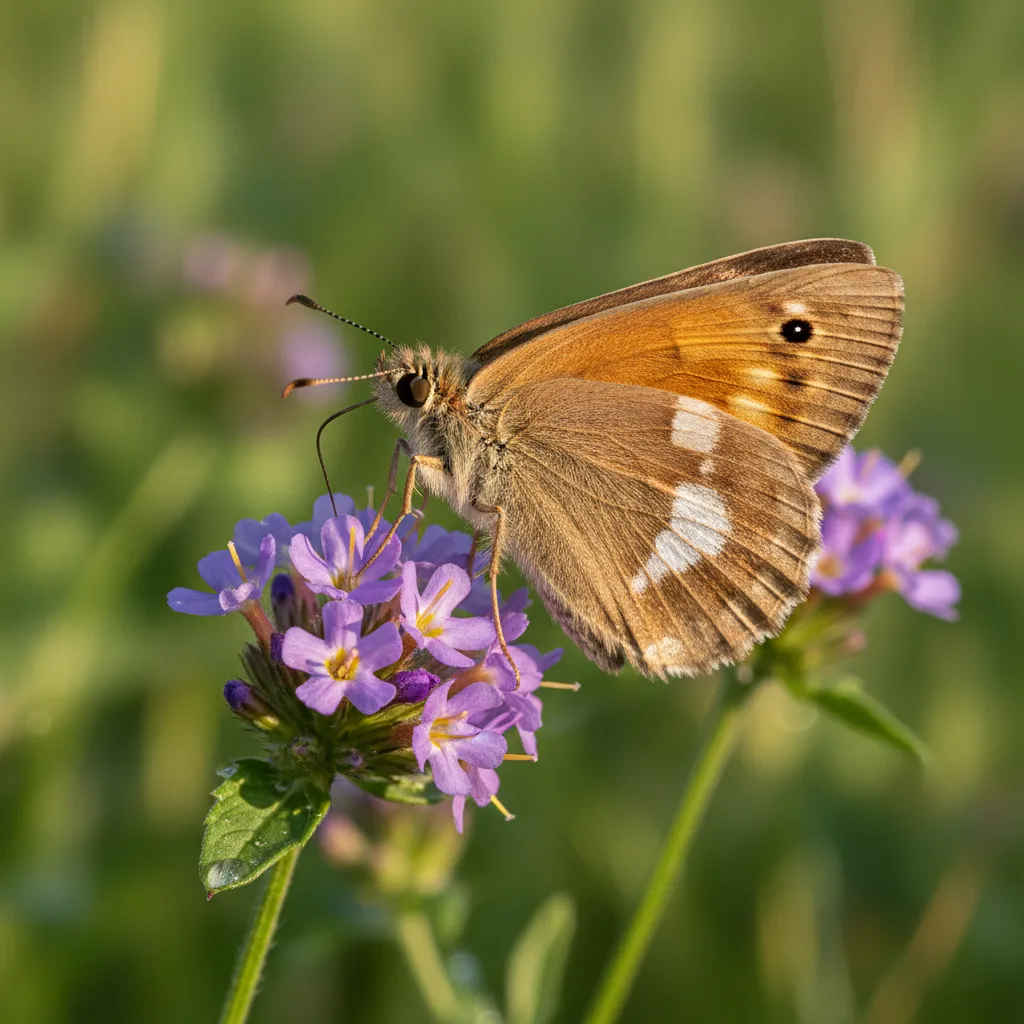
The silver-spotted skipper is the most recognized skipper in North America, partly because it’s large for a skipper (wingspan up to 2.5 inches) and partly because it has a distinctive field mark: a large silver-white patch on the underside of the hindwing. The upperside is dark brown with a band of gold-orange spots on the forewing.
Silver-spotted skippers are found in open woodlands, gardens, parks, and roadsides. Adults nectar at a wide variety of flowers but show a preference for pink and purple blooms. The caterpillars feed on various legumes, including black locust and wisteria, and live in folded leaf shelters.
14. Sachem (Atalopedes campestris)
The sachem is a grass skipper that’s become increasingly common across North America, especially in suburban lawns and disturbed areas. Males have a distinctive black stigma (a patch of scent scales) on the tawny-orange forewing. Females are more heavily patterned with pale spots on a brown-and-orange background. Wingspan runs about 1 to 1.5 inches.
Grass skippers like the sachem perch with the hindwings held flat and the forewings angled upward, giving them a characteristic “jet plane” posture. The caterpillars feed on grasses, which is why lawn-dwelling populations have done well as turf grass has spread.
15. Fiery Skipper (Hylephila phileus)
Fiery skippers are named for the bright orange-yellow coloring of the males, which have jagged black borders along the wing margins. Females are darker, brown with paler yellow-orange spots. Both sexes have very short antennae relative to other skippers. Wingspan is around 1 to 1.4 inches.
Fiery skippers are common in open sunny areas, lawns, and gardens across the southern two-thirds of the United States. They’re attracted to low-growing flowers like clover and verbena, and like the sachem, they’ve adapted well to suburban landscapes.
How to Identify Butterflies in the Field
You don’t need specialized equipment to get started with butterfly identification. A field guide and a bit of patience will take you a long way. That said, a few habits make the process much easier.
Start with size and shape. Butterflies range from less than an inch to nearly seven inches across. Before you try to match colors or patterns, get a sense of whether what you’re looking at is large, medium, or small, and whether the wings are broad or narrow, rounded or angular. Does it have tails on the hindwings?
Pay attention to flight style. Monarchs glide frequently between wingbeats. Swallowtails flutter with a slower, floating quality. Skippers zip between flowers in short, fast bursts. Blues and hairstreaks tend to stay low and flutter near their host plants. Flight behavior is often enough to narrow a butterfly down to its family before you see the markings clearly.
Look at both sides. The upper and lower surfaces of butterfly wings are often completely different in color and pattern. Many species that are dull brown from above have intricate, colorful undersides. When a butterfly lands and closes its wings, that’s your chance to see the underside markings, which are sometimes the most reliable identification feature.
Note the habitat. Some butterflies are closely tied to specific environments. If you’re in a forest interior, you’re not going to find cloudless sulphurs. If you’re in a prairie, you’re unlikely to encounter wood nymphs. Knowing the habitat where a species is typically found rules out a lot of possibilities before you start looking at field marks.
The North American Butterfly Association maintains a checklist and identification resources that are worth bookmarking if you’re getting serious about butterfly watching. The NABA website includes regional species lists that tell you what to expect in your area at different times of year. For photographic identification help, Butterflies and Moths of North America has an extensive database with range maps and photos for every species on the continent.
If you want to go deeper into the world’s rarest and most extraordinary species, the Queen Alexandra’s birdwing and the blue morpho are two species that put the North American species in global context.
- Kaufman Field Guide to Butterflies of North America
Most beginner-friendly visual guide. Start here. - Peterson Field Guide to Eastern Butterflies
For East Coast and Midwest observers, the gold standard. - Compact 8×42 birding binoculars (work great for butterflies)
Butterflies move fast. Binoculars beat a phone camera every time. - Audubon Field Guide to North American Insects and Spiders
Broader catch-all for when ‘butterfly?’ turns out to be something else.
Affiliate links. We earn a small commission on qualifying purchases at no extra cost to you.
Frequently Asked Questions
What is the most common butterfly in North America?
The cabbage white is likely the most frequently encountered butterfly across the continent, largely because it’s not native and has adapted extremely well to disturbed, human-modified landscapes. The painted lady is also a strong contender in years when migration numbers are high. In gardens specifically, the black swallowtail and various sulphur species are often among the most regular visitors.
How do you tell a butterfly from a moth?
The most reliable difference is the antennae: butterflies have club-shaped antennae with a distinct thickened tip, while moths typically have feathery or filiform (thread-like) antennae without a club. Butterflies also tend to fold their wings upright over their bodies when resting, while most moths hold them flat or tent-like. Butterflies are generally active during the day, but this isn’t a hard rule since some moths fly during daylight hours.
What do butterflies eat?
Adult butterflies primarily feed on nectar from flowers, using a long, coiled feeding tube called a proboscis to reach it. Many species also take nutrients from rotting fruit, tree sap, animal dung, and wet soil or mud — a behavior called puddling. Caterpillars have entirely different diets and typically feed on specific host plants, which vary by species. Some caterpillars eat only one or two plant species; others, like the gray hairstreak, are far less picky.
Are any of these butterfly species endangered?
Among the 15 species covered here, none are currently listed as federally endangered in the United States, though the monarch butterfly was listed as threatened under the Endangered Species Act in late 2024 after its population declined by more than 80 percent over the past few decades. Many other butterfly species not covered in this guide are at serious risk, and habitat loss from development and agricultural intensification is the primary driver.
What plants attract the most butterflies to a garden?
Milkweed is the most important plant for monarchs, as it’s the only thing their caterpillars can eat. For a broad range of species, native wildflowers like coneflowers, Joe-Pye weed, goldenrod, asters, and black-eyed Susans are among the best choices. Adding host plants for caterpillars — not just nectar plants for adults — makes a much bigger difference to local populations. Parsley and dill bring in black swallowtails; spicebush attracts spicebush swallowtails; native oaks support dozens of species at the caterpillar stage.