
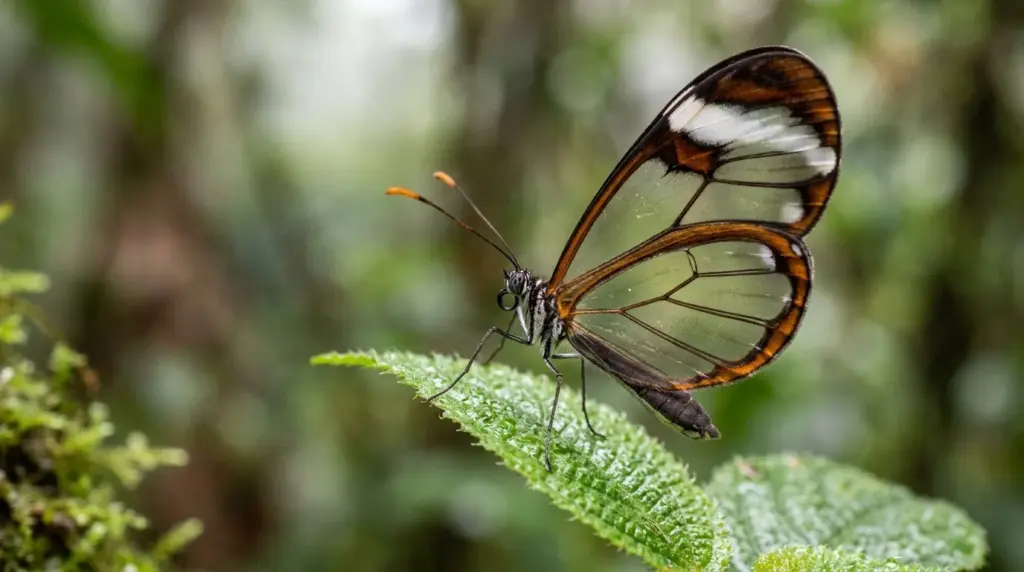

The glasswing butterfly (Greta oto) has wings you can see straight through, with clear panels framed by thin brown borders. Two research teams have worked out how it pulls off the trick, and the answer comes down to sparse hair-like scales and a bumpy coat of wax.
This small tropical butterfly lives from Mexico through Central America into northern South America. Here is how its wings work, what it eats and why birds leave it alone.
Key Takeaways
- The clear parts of a glasswing’s wing carry thin, bristle-like scales spaced far apart instead of the flat, overlapping scales most butterflies have.
- Random nanopillars coated in wax keep the wing from reflecting light, so it stays see-through from almost any angle.
- Caterpillars feed on Cestrum, a shrub in the nightshade family, and adult males collect plant alkaloids that make them distasteful.
- Glasswings live in humid forests from Mexico to northern South America, and strays occasionally turn up in Texas.
Why Glasswing Butterfly Wings Are Transparent
Most butterfly wings are covered in tiny overlapping scales that carry pigment or bend light into color. A glasswing keeps those scales only on its brown borders and a few white marks near the wingtips.
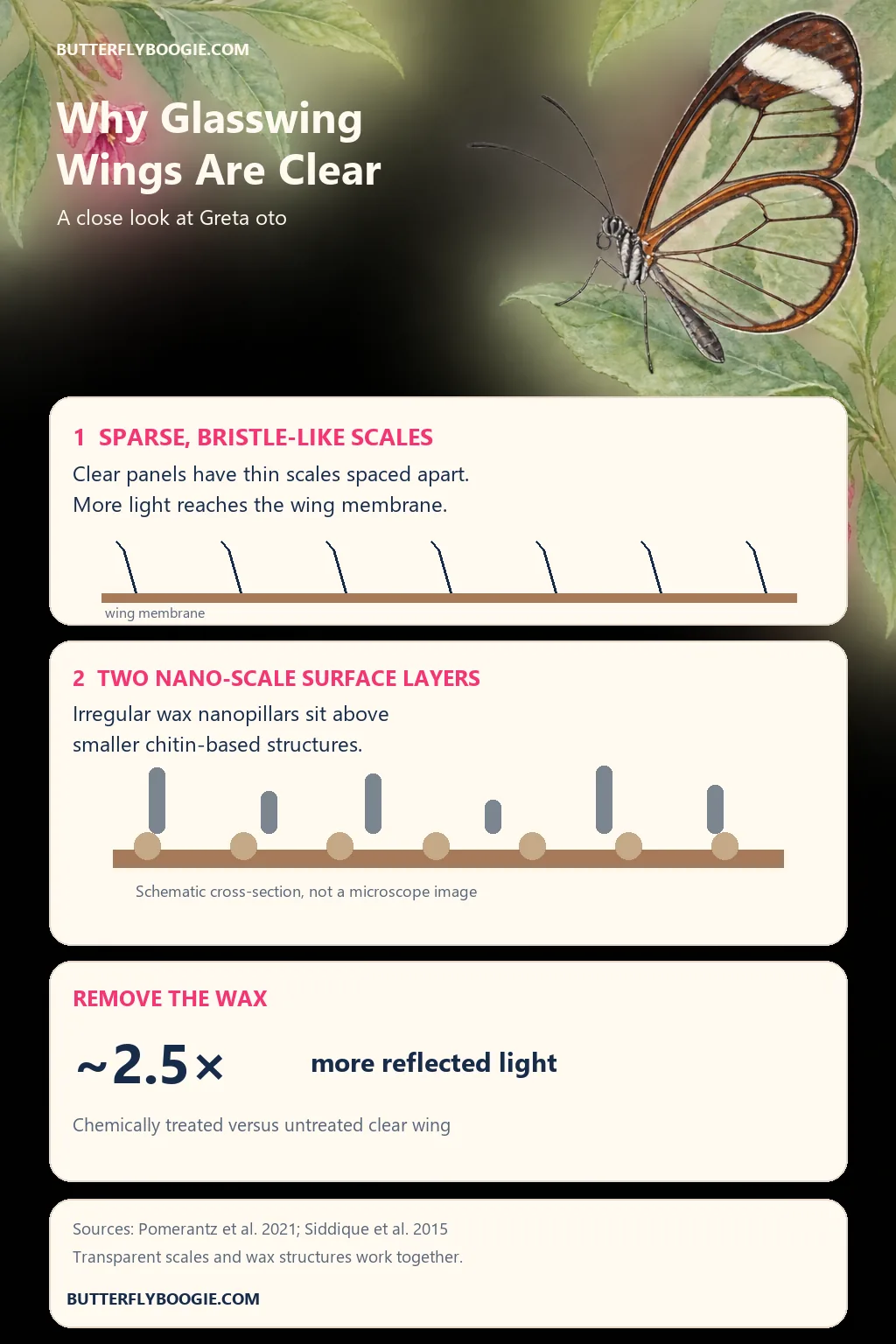
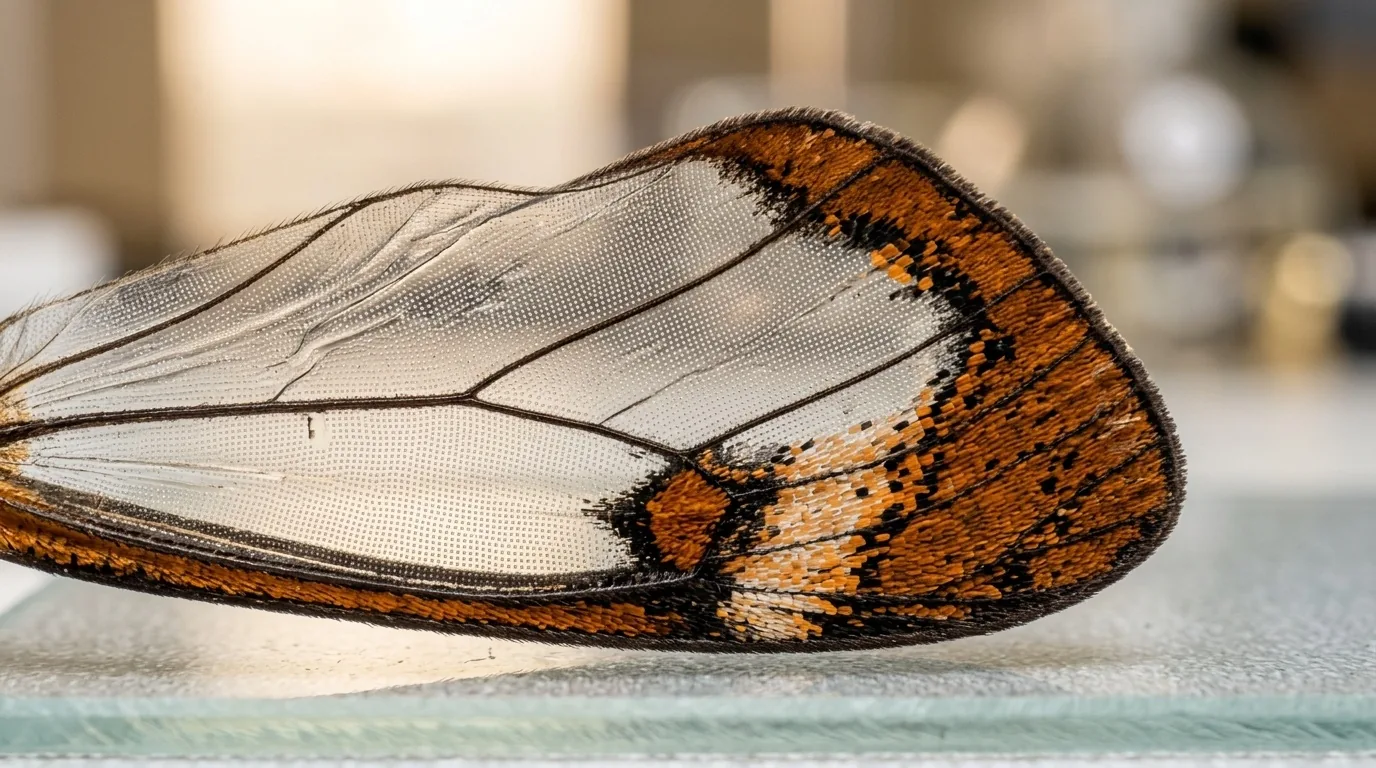
A 2021 study led by Aaron Pomerantz in the Journal of Experimental Biology looked at the clear panels under electron microscopes. The researchers found narrow, bristle-like scales spaced far apart there, while the dark borders were packed with flat, leaf-shaped scales.
Thin scales alone don’t make a window, since bare wing membrane still reflects light like a sheet of plastic. The same study found the clear areas coated in a bumpy layer of wax, and stripping that wax made the wing reflect about 2.5 times as much light.
Those bumps are nanopillars, tiny columns of irregular height and spacing. A 2015 paper in Nature Communications by Radwanul Hasan Siddique and colleagues showed that the randomness is what keeps reflection low across the whole visible spectrum and at wide viewing angles.
Engineers have taken notice, since anti-glare coatings for screens and lenses face the same problem. For a broader look at how scales, pigment and structure build a wing, see our guide to butterfly wing structure and patterns.
How to Identify a Glasswing
The clear forewings and hindwings are the giveaway, each outlined in dark brown with a reddish or orange tint along the edges. A band of white spots crosses the dark tip of each forewing.
The body is slim and dark, and the wingspan is small, roughly the size of a cabbage white. Several related clearwing butterflies share the look, so the white forewing band helps confirm Greta oto.
Where Glasswings Live
Glasswings range from Mexico through Central America and into northern South America, with sightings as far north as Texas. Humid forests, forest edges and shaded trails are the places to look.
They tend to fly low through dappled light, where the clear wings make them surprisingly hard to follow. Butterfly houses in North America and Europe often keep glasswings on display, which is how most people first see one.
What Glasswings Eat
Females lay their eggs on Cestrum, a genus of shrubs in the nightshade family, and the caterpillars feed on the leaves.
Adults drink flower nectar, and lantana is a well-known favorite in gardens and butterfly houses. Adult males add one more item to the menu, which turns out to be the key to their defense.

How Glasswings Defend Themselves
Male glasswings visit plants in the daisy family, such as Eupatorium, to collect pyrrolizidine alkaloids. These compounds make the butterflies taste bad to predators.
The males also use the alkaloids to make sex pheromones, and they gather in groups called leks to court females. That links chemical defense and mating in a single habit.
Transparency adds a second layer of protection. A bird tracking a glasswing through the understory sees flickering brown edges instead of a solid shape, which makes the butterfly harder to follow and catch.
Plenty of butterflies rely on toxins borrowed from plants. Monarchs build theirs from milkweed, as we cover in our guide to monarch butterfly colors, and our roundup of common butterfly species includes more of the glasswing’s relatives.
FAQ
Why are glasswing butterfly wings clear?
The clear panels have only sparse, bristle-like scales, and the membrane is covered in wax-coated nanopillars that keep it from reflecting light.
With little light bouncing off, the wing looks see-through from almost any angle.
Where do glasswing butterflies live?
From Mexico through Central America into northern South America, with occasional sightings in Texas.
They prefer humid forests and shaded forest edges.
Are glasswing butterflies poisonous?
They are distasteful to birds because adult males collect pyrrolizidine alkaloids from plants. They are not dangerous to people.
Can you see glasswing butterflies in the United States?
Wild sightings are rare and mostly limited to strays in Texas.
Many butterfly houses and conservatories keep glasswings, which is the easiest way to see one up close.