
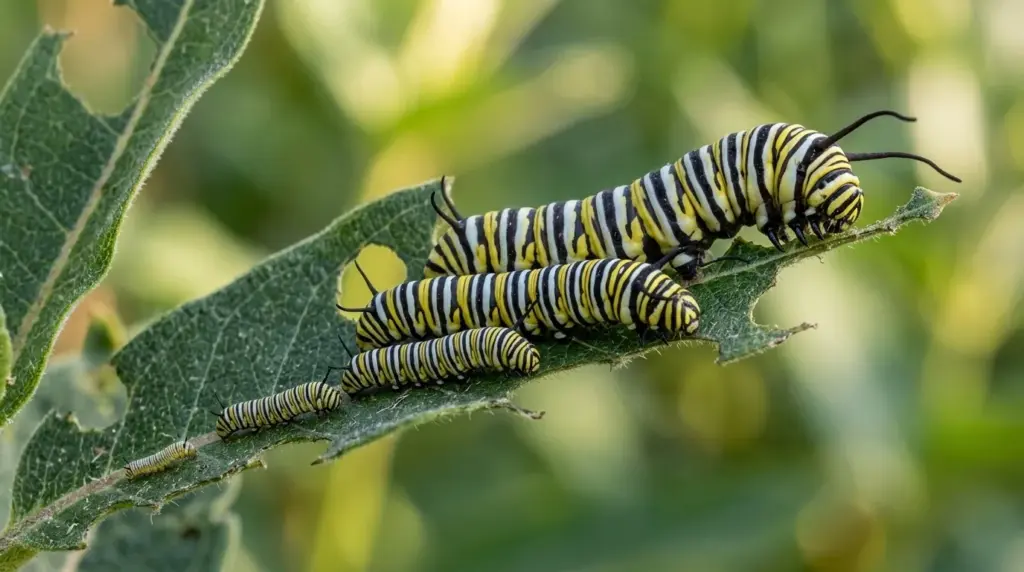

The wild monarch caterpillar survival rate is low. Monarch Joint Venture says fewer than 10% of laid eggs become adults, while the Monarch Larva Monitoring Project gives about 2 to 5% from hatching to adulthood. Protected rearing can raise observed survival, but published studies do not establish one universal captive egg-to-adult rate.
That gap is the whole story of monarch biology. It drives everything from milkweed planting strategy to the ongoing debate over home rearing.
Key Takeaways
- Fewer than 10% of wild monarch eggs make it to adulthood. Some studies place the figure closer to 2%.
- Protected rearing removes many predators and weather hazards, but results vary with starting stage, density, hygiene, disease, and study method.
- More than 90% of wild eggs and larvae are lost to predators, parasitoids, and disease before the chrysalis stage.
- The first two instars (L1 and L2) are the deadliest window. Tiny caterpillars on exposed milkweed leaves get picked off fast.
The Short Answer
Roughly 1 in 10 wild monarch eggs becomes a butterfly. A 2025 piece in the Wisconsin Farmer puts the figure at “one monarch per 10 eggs laid,” which matches the upper end of MJV’s published range.
Lower-end estimates from multiple field studies land at 2 to 5%. The difference depends on site, year, predator load, and weather during the larval weeks.
Published protected-rearing outcomes are not directly comparable with wild egg-to-adult studies because many experiments begin with larvae or collect late instars. Crowding, disease exposure, diet, and sanitation can also change the result.
Survival by Life Stage: Wild vs Captive
Wild monarch survival changes sharply with location, season, weather, host plant, and study method. Protected rearing removes many predators and weather hazards, but published research does not establish one universal captive percentage for every instar.
Use the infographic for the big picture, then compare named studies only when they use the same starting stage and endpoint.

| Stage | What research supports | Common wild losses | Protected rearing | Source |
|---|---|---|---|---|
| Egg + L1-L2 | The greatest mortality period. Survival varies widely among sites and years. | Lacewing and ladybird larvae, ants, spiders, weather, and milkweed latex. | Shelter removes many predators and weather hazards. Crowding and poor hygiene can raise disease risk. | MJV Geest et al. 2019 Scott et al. 2023 |
| L3-L5 | Older instars often survive better. No universal percentage applies across locations and seasons. | Predatory bugs, paper wasps, tachinid flies, and pathogens. | Parasitoids already inside a field-collected caterpillar can still kill it later. | MJV Nail et al. 2015 |
| Chrysalis | Broad wild survival is uncertain because chrysalises are difficult to find and follow. | Tachinid emergence, pupal parasitoid wasps, and pathogens. | Physical shelter helps, but infection acquired earlier can still prevent adulthood. | MJV Geest et al. 2019 |
| Eclosion | Severe OE can cause failed emergence, weak adults, or deformed wings. | OE and other disease, temperature extremes, and physical damage. | Sanitation and careful handling matter. Protected rearing cannot reverse an established infection. | MJV disease FAQ Project Monarch Health |
| How to compare | Match the starting stage, endpoint, location, year, and study method. | Missing larvae may be counted as deaths, while older larvae may leave milkweed plants. | Check whether later stages were field-monitored or completed indoors. | Geest et al. 2019 Grant et al. 2020 |
| Named benchmarks | Under 10% egg to adult; 2-5% hatch to adult; 5.7% and 12.8% egg to third instar at one Texas site; 1.4% mean egg to pupa in one Iowa model. | Different locations, years, and endpoints account for much of the spread. | The named sources do not establish one universal captive egg-to-adult rate. | MJV MLMP Scott et al. 2023 Grant et al. 2020 |
The cumulative number is what matters for population modeling. Even stage survival rates that look healthy on their own multiply down to under 10% across the full life cycle.
Why Wild Survival Is So Low
Monarch caterpillars are exposed. They sit on milkweed leaves in the open, often on plants growing in isolated roadside or backyard patches with active predator populations.
The MJV predation FAQ identifies three main loss categories across the larval weeks. Invertebrate predators take the largest share, parasitoids come second, and pathogens round out the top causes.
Weather compounds all three. Heavy rain knocks L1 and L2 caterpillars off leaves. Extreme heat accelerates plant wilt and pushes small larvae off their food source before they can relocate.
The timing of predator pressure matters too. Fire ant colonies peak in late spring and summer in Texas, which overlaps exactly with southbound monarch breeding windows there.
Predator Breakdown
Different predators hit different stages. Knowing which pest shows up when helps explain why L1 and L2 survival numbers are so brutal.
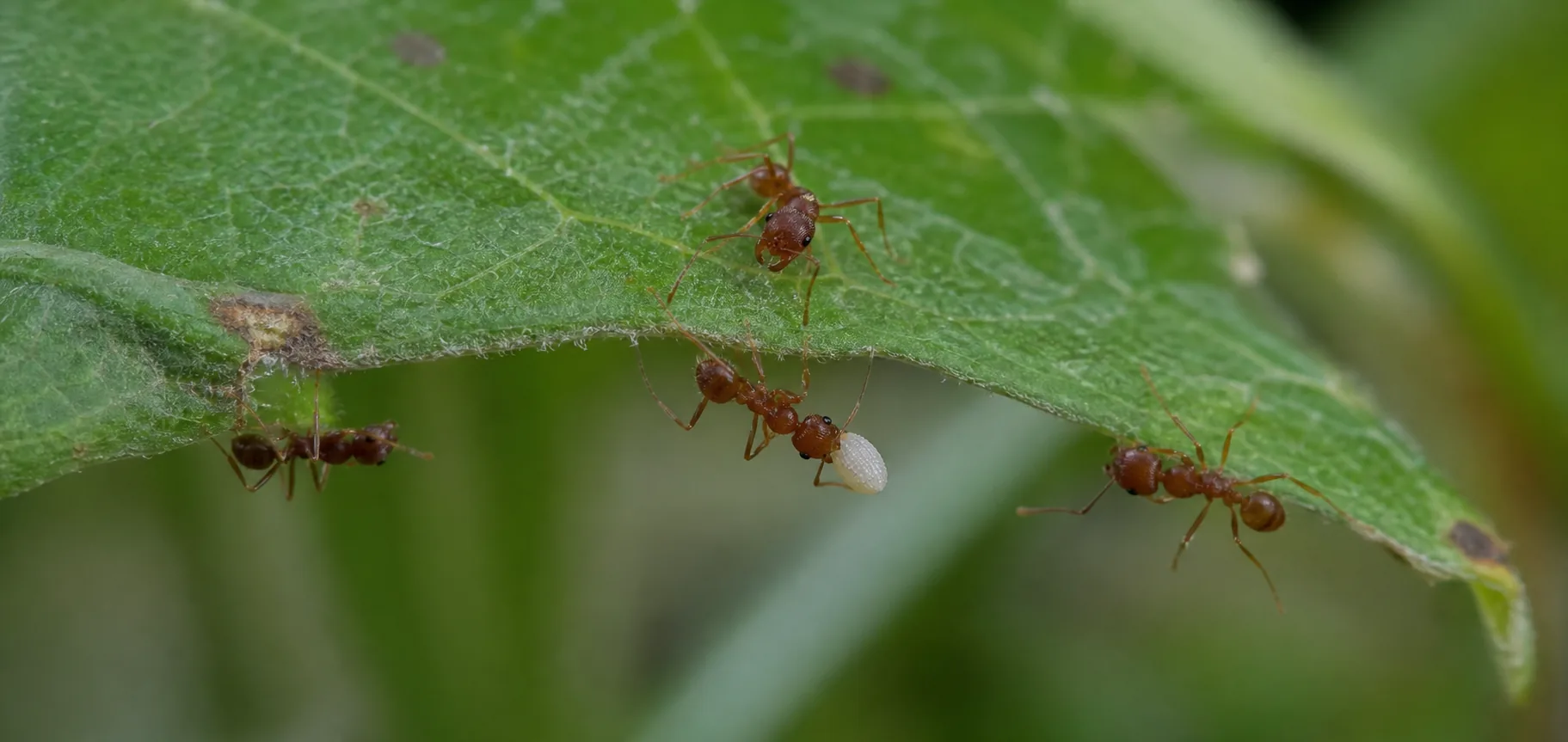
- Fire ants. In Texas and the southern Gulf region, imported red fire ants (Solenopsis invicta) are the single largest documented monarch egg and L1 predator. They strip eggs off leaves within hours of being laid.
- Spiders. Crab spiders and jumping spiders ambush L1 to L3 caterpillars on milkweed flowers and leaves. Small size makes L1 caterpillars especially vulnerable.
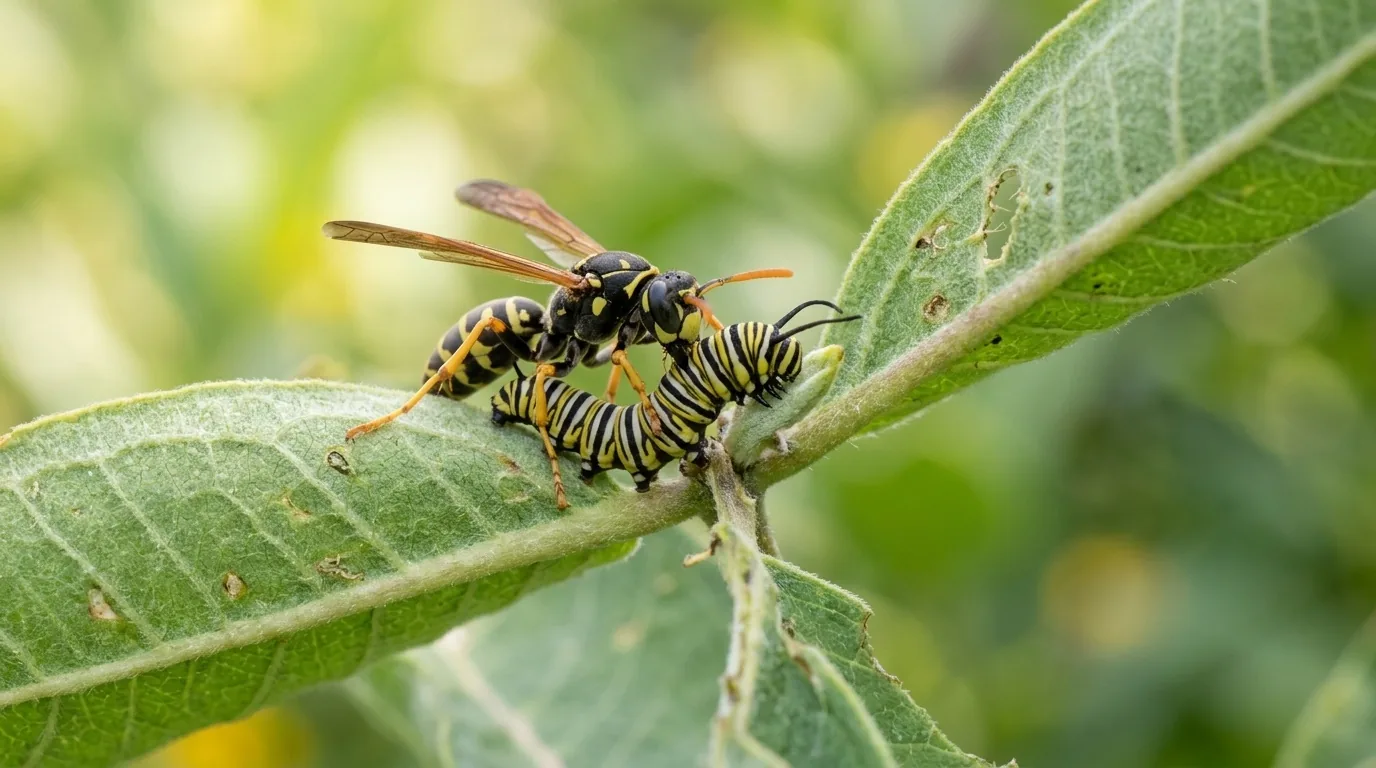
- Paper wasps and yellowjackets. These hunt L3 to L5 caterpillars, carrying chunks back to nests. Wasp pressure peaks in late summer, matching the fall migratory generation.
- Stink bugs and assassin bugs. Pentatomid and reduviid bugs pierce caterpillars with their stylet mouthparts. They take L3 through L5 stages most often.
Tachinid flies are technically parasitoids, not predators, but they operate on similar scales. Field parasitism rates of 10 to 40% are documented across multiple studies, and a Costa Rican rearing study of 883,000 caterpillars logged 10.5% total parasitism with Tachinidae accounting for 38% of that figure.
Overwintering California monarchs face a different threat. Researchers have documented wasps feeding on live butterfly abdomens at coastal roost sites, a loss channel that doesn’t affect caterpillars but does hit the migratory survivors.
How Captive Rearing Changes the Odds
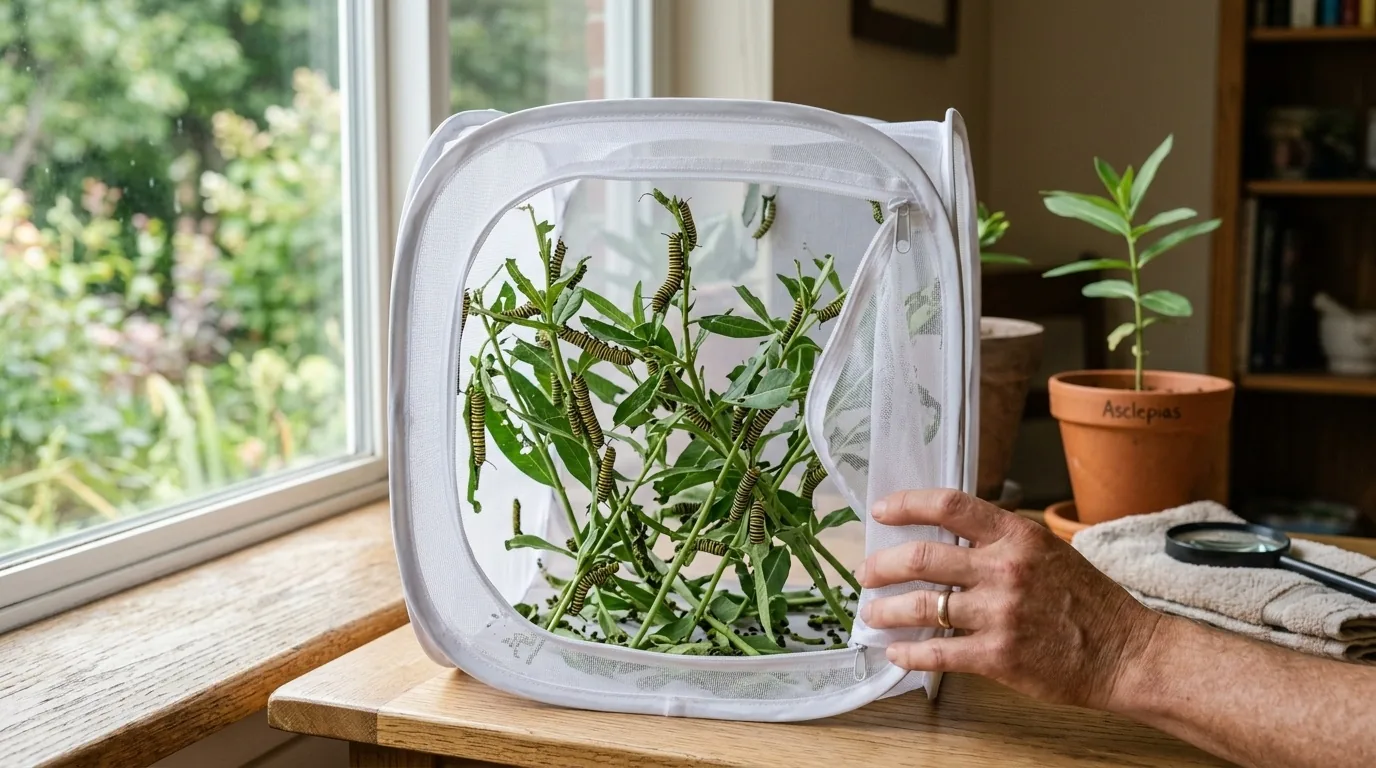
Move a monarch egg indoors and survival jumps dramatically. No ants, no wasps, no rain, no desiccated milkweed, no parasitoid flies finding the caterpillar.
Protected rearing often produces higher observed survival because an enclosure removes many wild hazards. A single egg-to-adult percentage was not found in the named sources, and results depend on the starting stage and protocol.
The ethics debate around captive rearing has gotten louder since 2019. Xerces Society and several university labs now recommend against large-scale captive rearing because it can amplify OE parasite loads, mask wild selection pressure, and disrupt the migratory cue in the fall super-generation.
Small-scale rearing (under 10 caterpillars per season) with strict hygiene remains broadly accepted as educational. Bleach-cleaning frass daily, using fresh milkweed from known sources, and releasing within 24 hours of eclosion are the commonly cited best practices.
Low wild survival helps explain why home rearing feels effective. Conservation value still depends on disease control, scale, and whether released butterflies are healthy enough to migrate and reproduce.
What This Means for Monarch Conservation
The low wild survival rate is not a defect. It’s baked into the species, and healthy monarch populations historically compensated with sheer egg volume (a single female can lay 300 to 500 eggs over her lifetime).
The problem is that the compensation math only works when there’s enough milkweed, enough nectar, and enough intact habitat along the migratory corridor. A 2025 Science paper by Edwards et al. documents a 22% overall drop in US butterfly abundance since 2000, and monarch-specific overwintering counts have fallen much further than that across the same period.
Milkweed quantity matters more than wild survival rates at this scale. Even with 90%+ egg loss, a monarch population with abundant milkweed and nectar corridors can rebound. You can read more on the broader trend in our coverage of butterfly population decline in 2025.
If you want to understand what you’re looking at when a wild caterpillar does make it through those stages, our breakdown of monarch caterpillar growth stages walks through each instar in detail. And the adult color patterns that emerge are covered in our guide to monarch butterfly colors.
Named Sources Summary
- Monarch Joint Venture summarizes wild egg-to-adult survival as under 10% and documents natural enemies.
- Monarch Larva Monitoring Project gives about 2 to 5% survival from hatching to adulthood.
- Scott et al. (2023) found 5.7% and 12.8% egg-to-third-instar survival at one Texas site in two different years.
- Grant et al. (2020) estimated 1.4% mean egg-to-pupa survival in one Iowa Bayesian field model.
FAQ
What percentage of monarch caterpillars survive in the wild?
Monarch Joint Venture says fewer than 10% of laid eggs reach adulthood. The Monarch Larva Monitoring Project gives about 2 to 5% from hatching to adulthood, and individual field studies vary by place and year.
The variation depends on site, predator density, and weather during the larval weeks. Texas sites with heavy fire ant pressure tend toward the 2 to 5% end.
Why is the captive survival rate so much higher?
Indoor rearing removes the four biggest wild kill sources: ants, parasitoid flies, weather exposure, and wandering-stage predation. A caterpillar in a clean mesh enclosure with fresh milkweed has almost no mortality pressure beyond disease.
Clean husbandry, fresh milkweed, and low caterpillar density can reduce preventable losses. Published research does not support one universal captive survival percentage across all starting stages and rearing methods.
Which stage is the most dangerous for a wild monarch caterpillar?
The L1 instar is the single deadliest stage, with wild survival often under 35%. Tiny newly hatched caterpillars can’t escape ants, spiders, or heavy rain, and they desiccate quickly on wilted leaves.
L2 is nearly as dangerous. Once a caterpillar reaches L3 or L4, its size and defensive toxins from milkweed start shifting the odds.
Does rearing monarchs at home actually help the population?
Small-scale home rearing (under 10 caterpillars per season) with strict hygiene can boost local numbers modestly. Large-scale or repeated rearing without disease screening can backfire by spreading OE parasites and weakening the migratory signal in fall monarchs.
The consensus position from Xerces and MJV is that habitat work (milkweed planting, pesticide reduction, nectar corridors) produces more durable population benefit than mass captive rearing.