
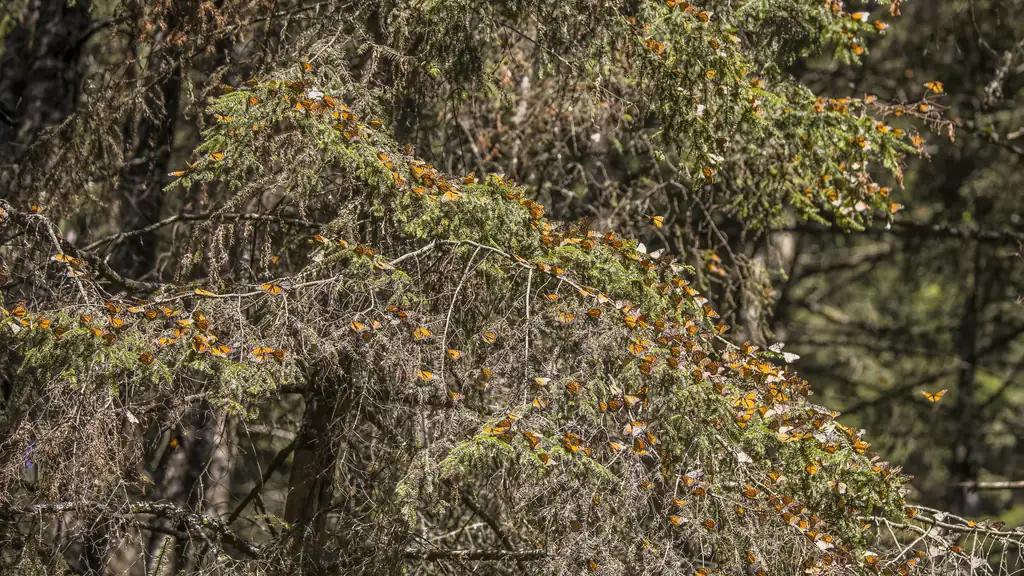

Every fall, eastern monarch butterflies fly 2,000 to 3,000 miles to a handful of mountaintops in central Mexico, according to the USDA Forest Service. They spend the winter packed onto oyamel fir trees at about 10,000 feet in the states of Michoacán and México.
Four of those colonies are open to visitors. This guide covers where they are, when to go and what the latest count says about this winter’s butterflies.
Featured photo from Piedra Herrada: Charles J. Sharp, CC BY-SA 4.0, cropped.
Key Takeaways
- Monarch butterflies in Mexico roost in oyamel fir forests at about 10,000 feet, inside the Monarch Butterfly Biosphere Reserve.
- El Rosario, Sierra Chincua, Cerro Pelón and Piedra Herrada are the sanctuaries most visitors can reach.
- Butterflies arrive in early November, settle into dense colonies by December and head north in March.
- The colonies covered 2.93 hectares in the 2025-26 winter, up 64% from the year before but about half of what researchers consider sustainable.
Where Monarch Butterflies Spend the Winter in Mexico
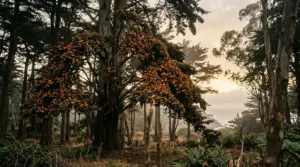
The colonies sit in the Monarch Butterfly Biosphere Reserve, a protected stretch of the Transvolcanic Belt that straddles the border of Michoacán and the State of México. Oyamel fir (Abies religiosa) forests there hold a cool, steady microclimate that lets monarchs rest through the winter without freezing.
The butterflies arrive in reproductive diapause, a hormonal pause that holds off mating until spring. They live on fat stored during the fall migration, which is why a cold, sheltered forest suits them better than a warm one.
Each colony can hold millions of butterflies on just a few acres of trees. The clusters shift slightly from year to year, so guides scout the exact spot before each season.
The Four Sanctuaries You Can Visit
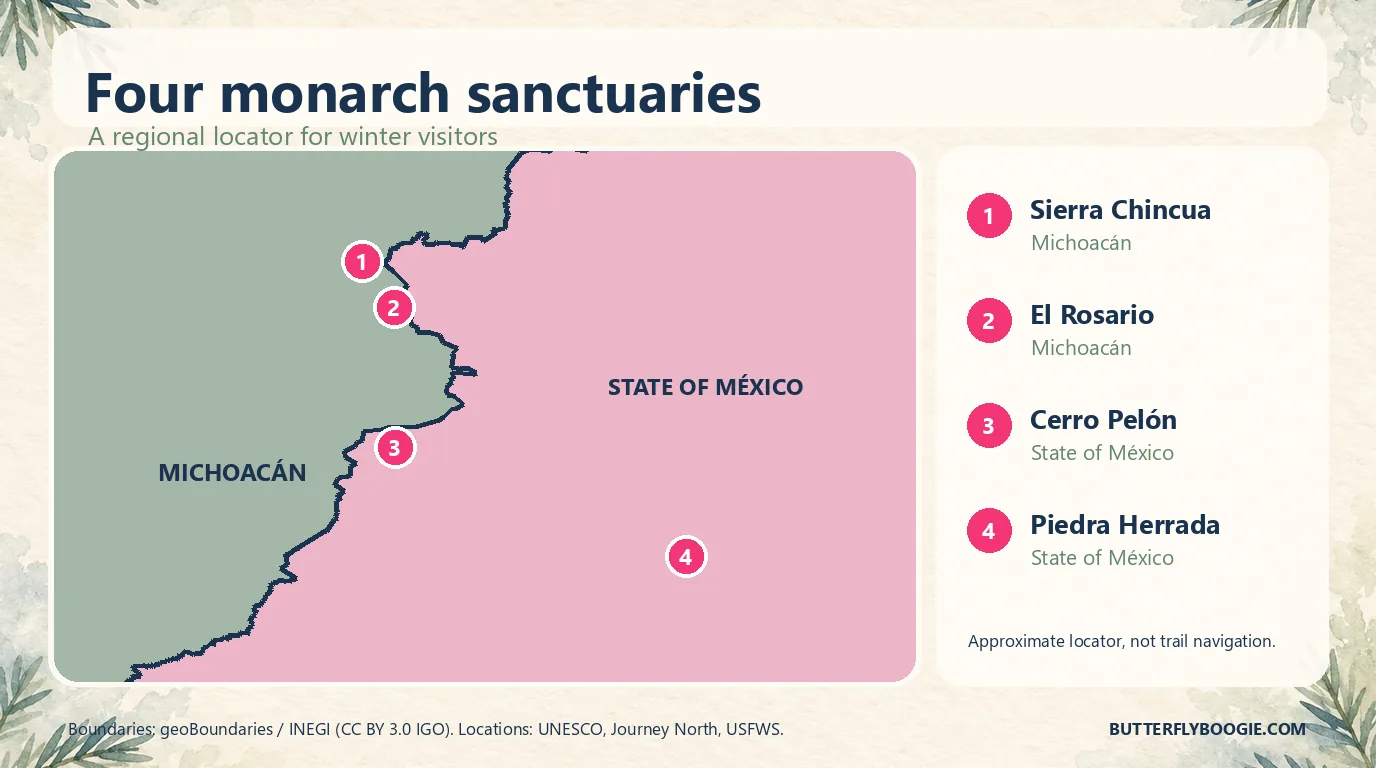
The Monarch Joint Venture lists four sanctuaries that most visitors use, two in each state. Each one requires a hike or horseback ride up steep mountain trails.
- El Rosario, on the eastern edge of Michoacán, is the largest and most visited sanctuary, with well-developed trails and facilities.
- Sierra Chincua, a short drive from the town of Angangueo in Michoacán, usually offers gentler trails.
- Cerro Pelón, in the State of México, is where the overwintering colonies were first found in 1975, and it has the steepest, least crowded climb.
- Piedra Herrada, near Valle de Bravo in the State of México, is the easiest to reach from Mexico City and gets busy on weekends.
When to Go
Monarchs start arriving in early November. By December they have gathered into their final, dense colonies, which is when the trees look furred in orange.
January and February bring the most activity. On sunny afternoons the clusters warm up and thousands of butterflies take off at once to drink from streams and open ground.
By March the butterflies leave for Texas and the southern states, where they lay eggs on milkweed. Our monarch migration season guide tracks the rest of the trip month by month.
Their arrival lines up with the Day of the Dead on November 1 and 2. In the mountain towns near the reserve, many families see the returning monarchs as a visit from the souls of loved ones.
How Many Monarchs Reach Mexico Each Winter
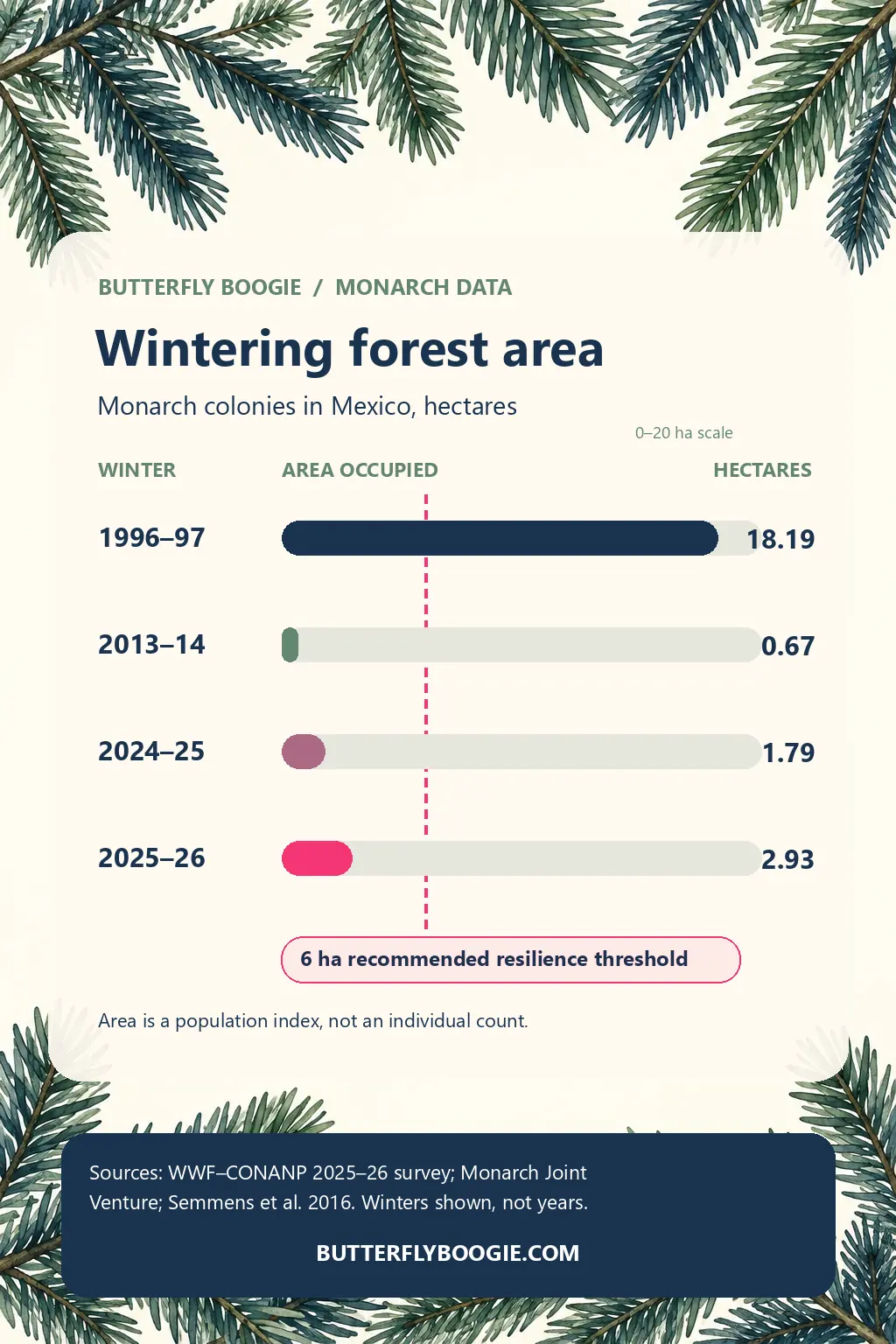
Researchers can’t count millions of butterflies one by one, so they measure the area of forest the colonies cover. The record was 18.19 hectares in the 1996-97 winter, and the low was 0.67 hectares in 2013-14, according to the Monarch Joint Venture.
| Winter | Forest area occupied | Note |
|---|---|---|
| 1996-97 | 18.19 hectares | Largest on record |
| 2013-14 | 0.67 hectares | Smallest on record |
| 2024-25 | 1.79 hectares | Prior winter |
| 2025-26 | 2.93 hectares | Nine colonies, up 64% |
The 2025-26 survey by WWF and Mexico’s protected areas agency found nine colonies. Researchers estimate that about 6 hectares of occupied forest are needed to support a stable eastern population, so this winter’s gain still leaves a wide gap.
The forest itself is under pressure too. The same report found 6.30 acres of forest degraded between February 2024 and February 2025, mostly from illegal logging, with fires and drought making up the rest.
Planning a Visit
Every colony sits high on a mountainside, so visiting takes moderate fitness and some tolerance for altitude. The Monarch Joint Venture suggests spending a few days in Mexico City first if altitude sickness is a concern.
- Hire a local guide at the sanctuary entrance or book an organized tour that handles transport.
- Rent a horse for the steepest stretches if the climb is too much, and walk the last section near the colony.
- Dress in layers, since mornings near freezing turn into warm, sunny afternoons.
- Stay quiet near the clusters, keep to the trail and never pick up butterflies from the ground.
Plan to reach the colony around midday. The butterflies stay clustered and still on cold mornings, and the best flight displays come after the sun warms the trees.
Monarchs West of the Rockies Go to California
Not every monarch heads to Mexico. Most monarchs that breed west of the Rocky Mountains spend the winter in coastal California groves of eucalyptus, pine and cypress, which we cover in our monarch butterfly grove guide.
Both populations face steep declines, and our look at butterfly population decline puts the numbers in context.
FAQ
When is the best time to see monarch butterflies in Mexico?
January and February, when the colonies are fully formed and the butterflies fly on warm, sunny afternoons.
The butterflies are present from early November through March.
Which monarch sanctuary in Mexico is best?
El Rosario is the largest and easiest to plan around, and Sierra Chincua usually has gentler trails.
Cerro Pelón rewards a harder hike with fewer crowds, and Piedra Herrada is the closest to Mexico City.
How high are the monarch colonies?
The roosts sit at about 10,000 feet, so expect thin air and a steep climb.
How far do monarchs fly to get to Mexico?
Between 2,000 and 3,000 miles, according to the USDA Forest Service, which is remarkable for a butterfly that weighs less than a gram.