
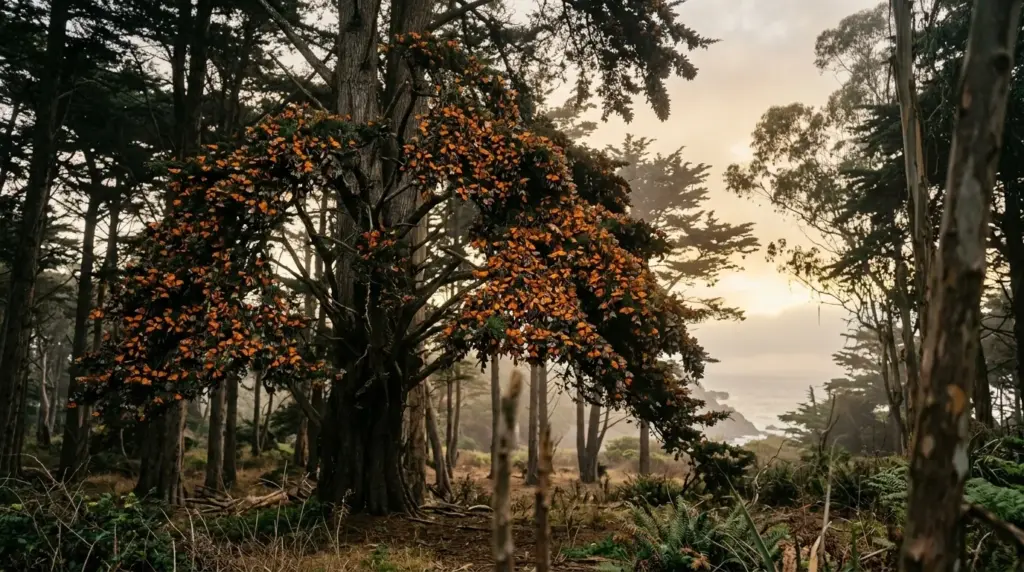

A monarch butterfly grove is a winter roost where thousands of western monarchs hang in dense clusters from the same few trees, year after year. California’s best-known groves sit along the coast, from Pismo State Beach to Pacific Grove, and the clusters build from October into winter.
If you plan to visit this season, expect far fewer butterflies than the postcards show. The Xerces Society’s 2025 Western Monarch Count tallied about 12,260 monarchs across 249 sites, the third-lowest total since the count began in 1997.
Key Takeaways
- Western monarchs overwinter in coastal California groves of eucalyptus, Monterey pine and Monterey cypress.
- Clusters usually form in October and November, peak around Thanksgiving through January, and break up by February.
- The 2025 Western Monarch Count found about 12,260 monarchs, up from 9,119 in 2024 but far below the millions of the 1980s.
- Stay on trails, keep your voice down and visit on warm late mornings, when the butterflies are most active.
What a Monarch Butterfly Grove Is
A grove is a stand of trees with the right microclimate: sheltered from wind, humid enough to keep butterflies from drying out, and cool enough to slow their metabolism. Monarchs return to the same groves each winter, and no butterfly in the cluster has ever made the trip before.
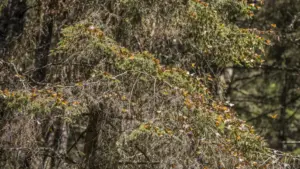
Inside a working grove, monarchs hang in chains from needles and leaves with their wings closed. From a distance, a heavy branch looks like a bundle of dead leaves, which is part of the protection.
The butterflies are in reproductive diapause during these months, living on stored fat instead of breeding. Small changes in a grove’s temperature or moisture can decide whether they survive to fly inland in spring.
Why Monarchs Cluster
A single monarch on a bare branch loses heat fast and dries out in dry air. Packed together on sheltered boughs, each butterfly gains a small buffer against cold and moisture loss.
Numbers also protect them from predators. Monarchs taste bad to most birds because of the milkweed toxins they carry, which our guide to monarch butterfly colors explains.
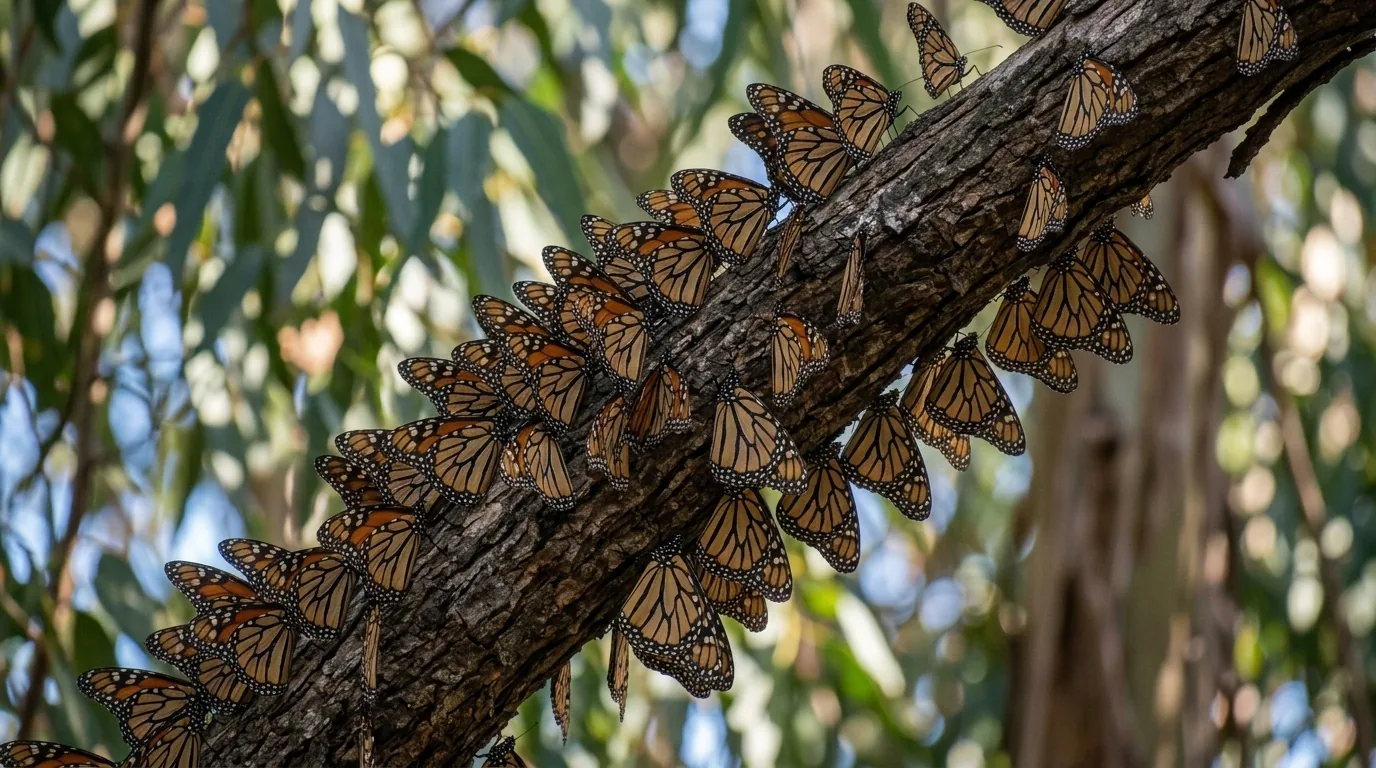
Wind is the real threat. A storm that tears through an exposed stand can knock monarchs to the cold, wet ground, which is why the best groves sit in protected hollows and behind dunes.
California Monarch Groves Worth Visiting
Western monarchs breed west of the Rocky Mountains and winter along a narrow strip of the California coast. Hundreds of sites have been documented, and a few of them are easy to visit.
- Pismo State Beach Monarch Butterfly Grove near San Luis Obispo is the most visited, with a eucalyptus stand set back from the dunes.
- The Monarch Grove Sanctuary in Pacific Grove protects a small grove in a residential neighborhood of the town that calls itself Butterfly Town, USA.
- Natural Bridges State Beach in Santa Cruz shelters a grove inside a preserve with a boardwalk that keeps visitors on the path.
- Ellwood Mesa in Goleta holds one of the larger Santa Barbara County sites, reached by trails through eucalyptus.
Most of these groves grew around eucalyptus planted in the late 1800s, with native Monterey pine and Monterey cypress mixed in where the climate allows. Numbers at each site swing widely from year to year, so check the latest counts before you drive.
How the Western Monarch Population Is Doing
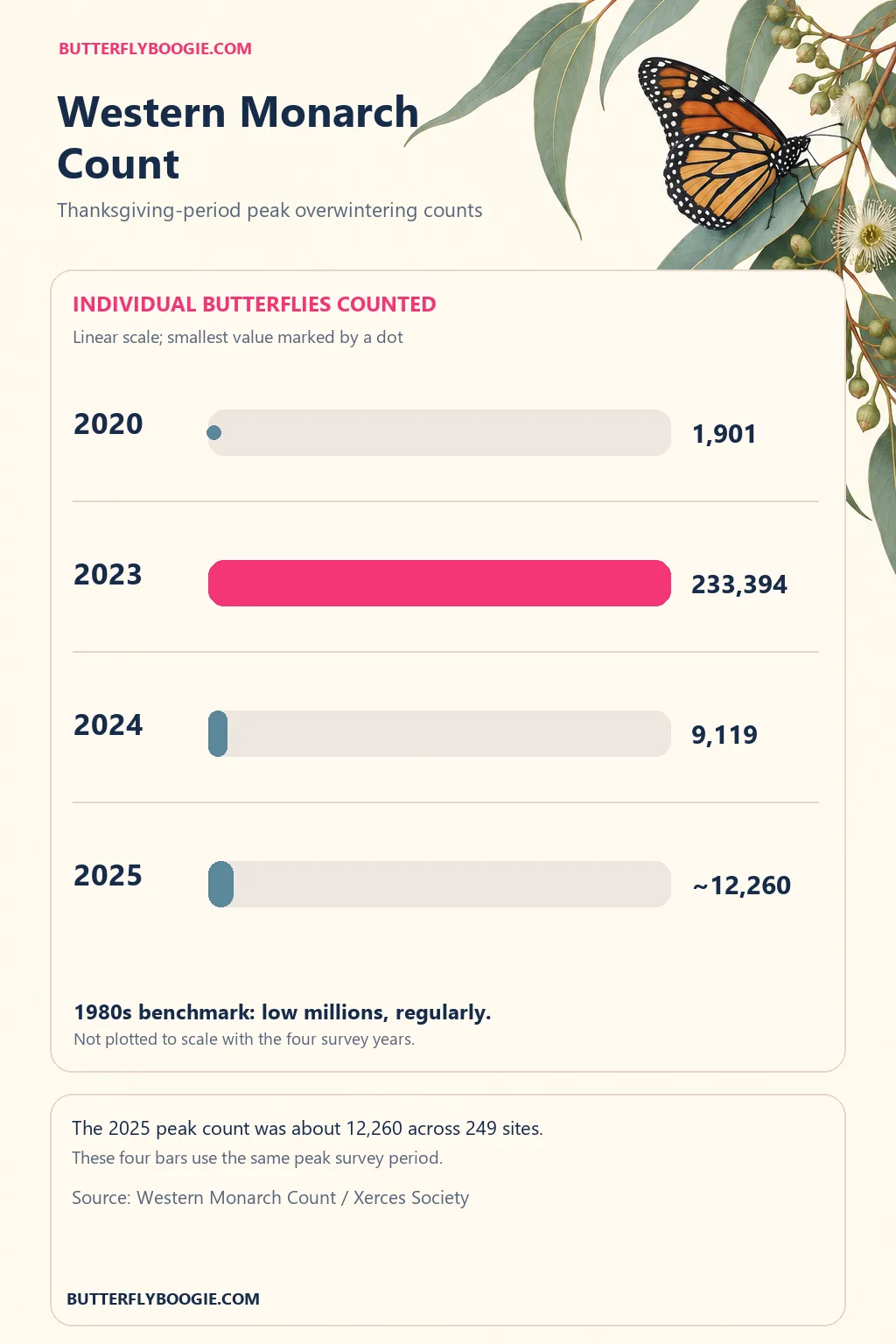
Western monarchs numbered in the low millions in the 1980s, according to the Western Monarch Count. The count bottomed out at 1,901 butterflies in 2020, then rebounded above 200,000 in each of the next three years, including 233,394 in 2023.
The rebound didn’t hold. The 2024 count fell to 9,119, and the 2025 count of about 12,260 was the third-lowest on record.
Federal protection is still pending. The U.S. Fish and Wildlife Service proposed listing the monarch as threatened in December 2024, and the Xerces Society reports that the final decision has since been delayed.
Monarchs aren’t the only butterflies in trouble. For the bigger picture, see our look at butterfly population decline.
Monarchs East of the Rockies Go to Mexico
Eastern monarchs skip California entirely and fly to oyamel fir forests in the mountains of central Mexico. The colonies there are measured by the area of forest they cover, and WWF and Mexico’s protected areas agency reported 2.93 hectares for the 2025-26 winter, up 64 percent from the year before.
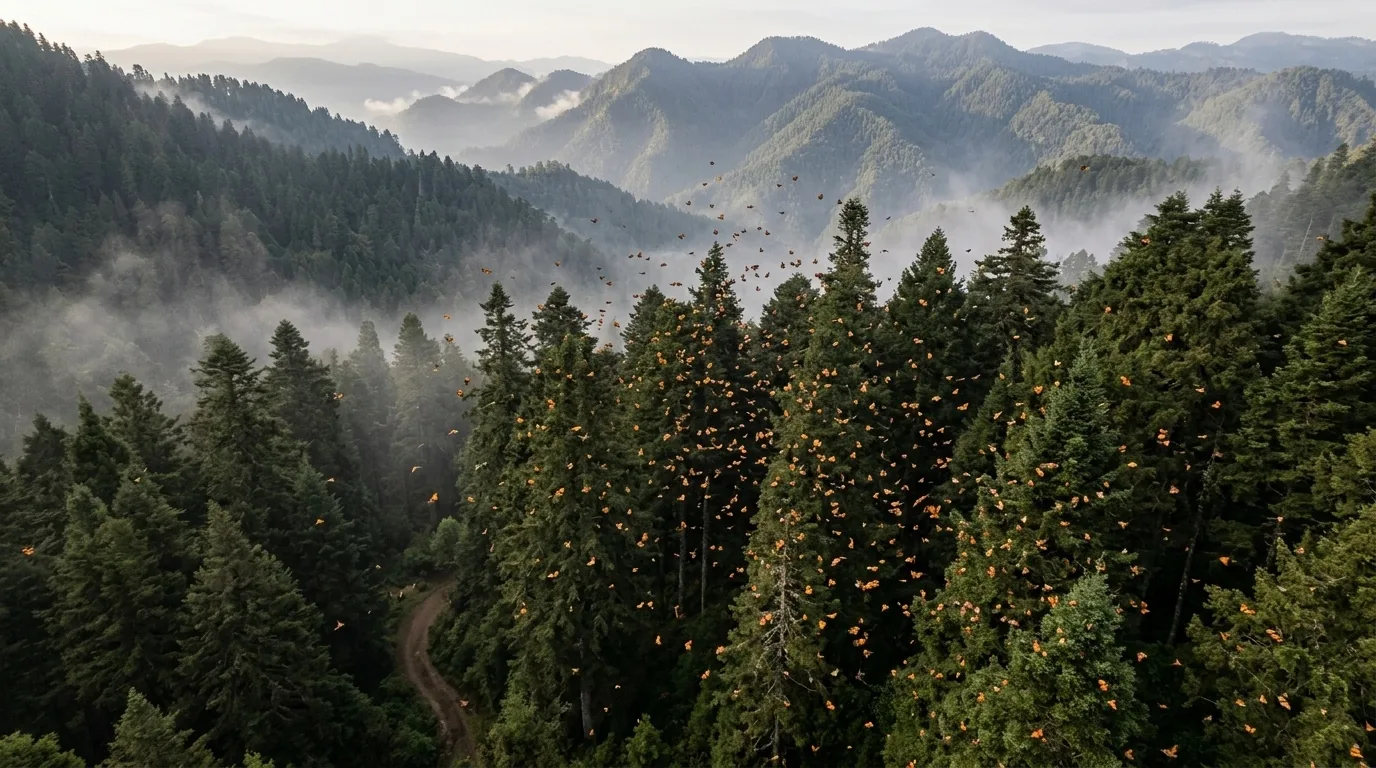
Both populations make the journey without a guide, since no monarch lives long enough to fly the route twice. Our guide to the monarch migration season covers the timing month by month.
When and How to Visit
Monarchs start arriving at California groves in October, and the clusters are usually thickest from Thanksgiving through January. Most butterflies leave by February or early March to breed inland.
Go on a sunny late morning. Cold monarchs stay packed and still, and the clusters open up and start flying once the air warms.
- Stay on marked trails and boardwalks, and never shake branches or touch the clusters.
- Keep your voice down and leave drones and pets at home.
- Bring binoculars, since many clusters hang 20 feet or more above the ground.
- Ask docents or park staff where the active clusters are that week.
FAQ
When is the best time to see monarchs at a California grove?
Late November through January usually offers the densest clusters.
Visit on a warm, sunny day between late morning and early afternoon, when the butterflies fly and bask.
Why are there so few monarchs in the groves now?
The western population has fallen roughly 99 percent since the 1980s, and the 2024 and 2025 counts were among the lowest on record.
Researchers point to lost breeding habitat, pesticides and climate-driven weather extremes as the main pressures.
Do the same monarchs return to the grove every year?
No. The butterflies that overwinter die during the following spring and summer, and their descendants find the same groves in fall without ever having seen them.
Is the monarch butterfly endangered?
Not yet under U.S. law. It was proposed as a threatened species in December 2024, and the final decision was still pending in 2026.