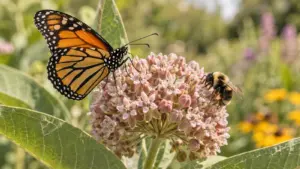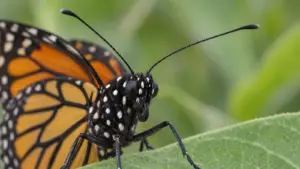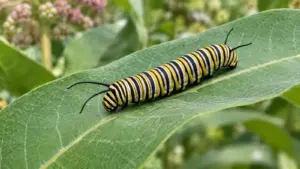

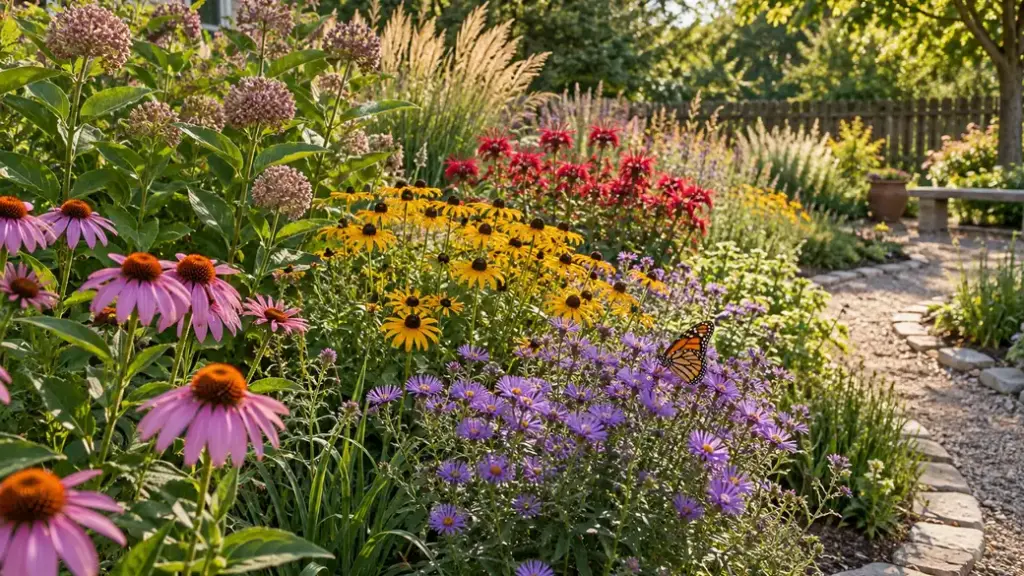

Good butterfly garden design plans start with four things: at least six hours of sun, caterpillar host plants, nectar flowers that bloom in sequence, and a sheltered spot out of the wind. Monarch Watch recommends at least 100 square feet with 10 or more milkweed plants for a monarch garden, but you can start much smaller.
Below are four plans, from a few pots on a balcony to a backyard meadow. Each one builds on the one before it, so you can grow into the bigger plans over time.
Key Takeaways
- Pick a spot with at least six hours of direct sun and some shelter from wind.
- Plant host plants for caterpillars, such as milkweed, dill and violets, alongside nectar flowers for adults.
- Monarch Watch recommends at least 10 milkweed plants of two or more native species in about 100 square feet.
- Plan blooms from spring through fall so butterflies find nectar all season, especially during fall migration.
What Every Butterfly Garden Needs
The Monarch Watch Waystation requirements make a useful checklist for any butterfly garden. They call for at least six hours of sun, milkweed, a mix of nectar plants that bloom one after another, and well-drained soil.
- Sun matters most, since butterflies need warmth to fly and most nectar plants flower best in full sun.
- Host plants feed caterpillars, and without them you only get passing adults.
- Nectar plants should bloom in sequence from spring to fall so there’s always food.
- Shelter from wind, a few flat rocks for basking and a damp patch of soil round out the space.
The flowers themselves matter too. The USDA Forest Service describes butterfly flowers as brightly colored, grouped in clusters with landing platforms, open during the day and rich in nectar.
Plan 1: Containers and Balconies
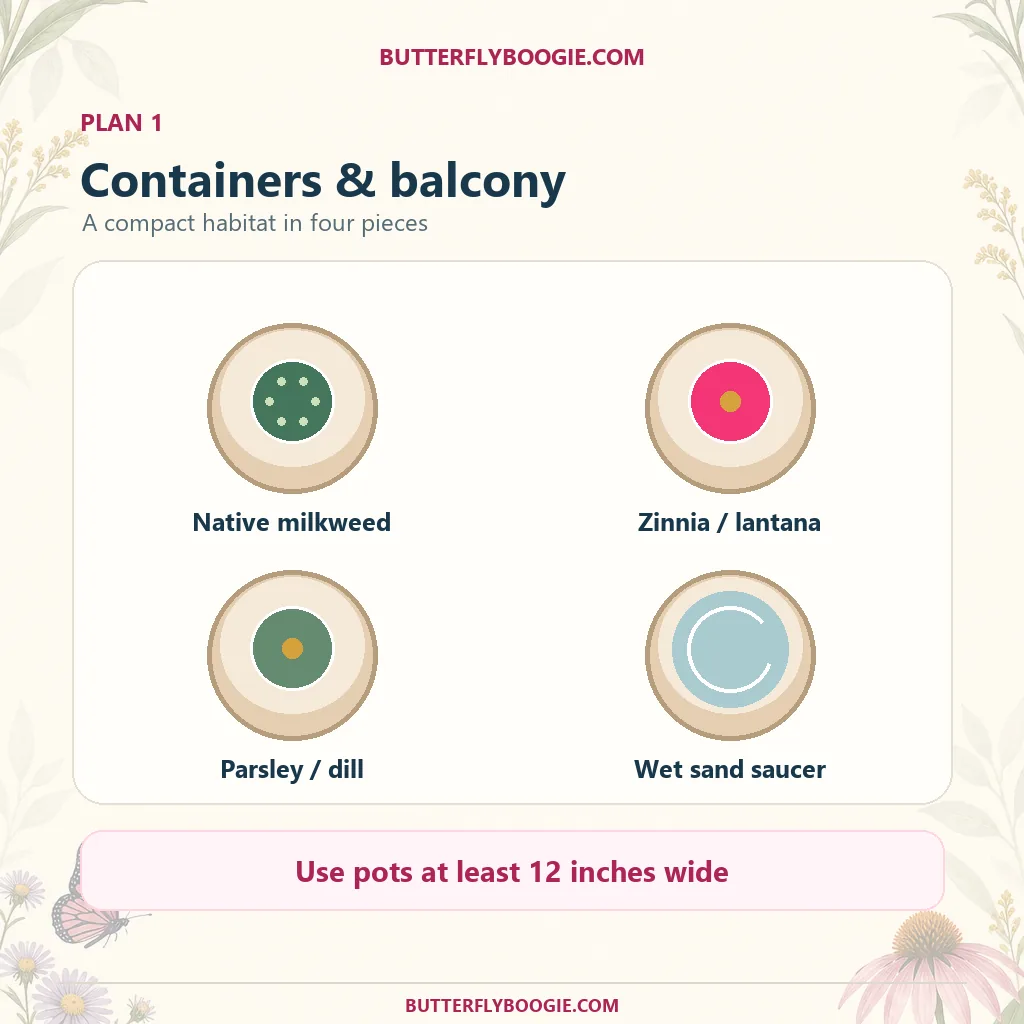
A few large pots in a sunny spot can feed butterflies and raise a caterpillar or two. Use containers at least 12 inches wide so the plants don’t dry out in summer heat.
- Plant butterfly weed or another compact native milkweed for monarchs.
- Add zinnias and lantana for long-lasting nectar.
- Grow parsley, dill or fennel, which black swallowtail caterpillars eat.
- Set a saucer of wet sand nearby for butterflies to sip minerals.
Expect caterpillars to strip the parsley and dill. Plant extra, since that damage means the garden is working.
Plan 2: A 100-Square-Foot Bed
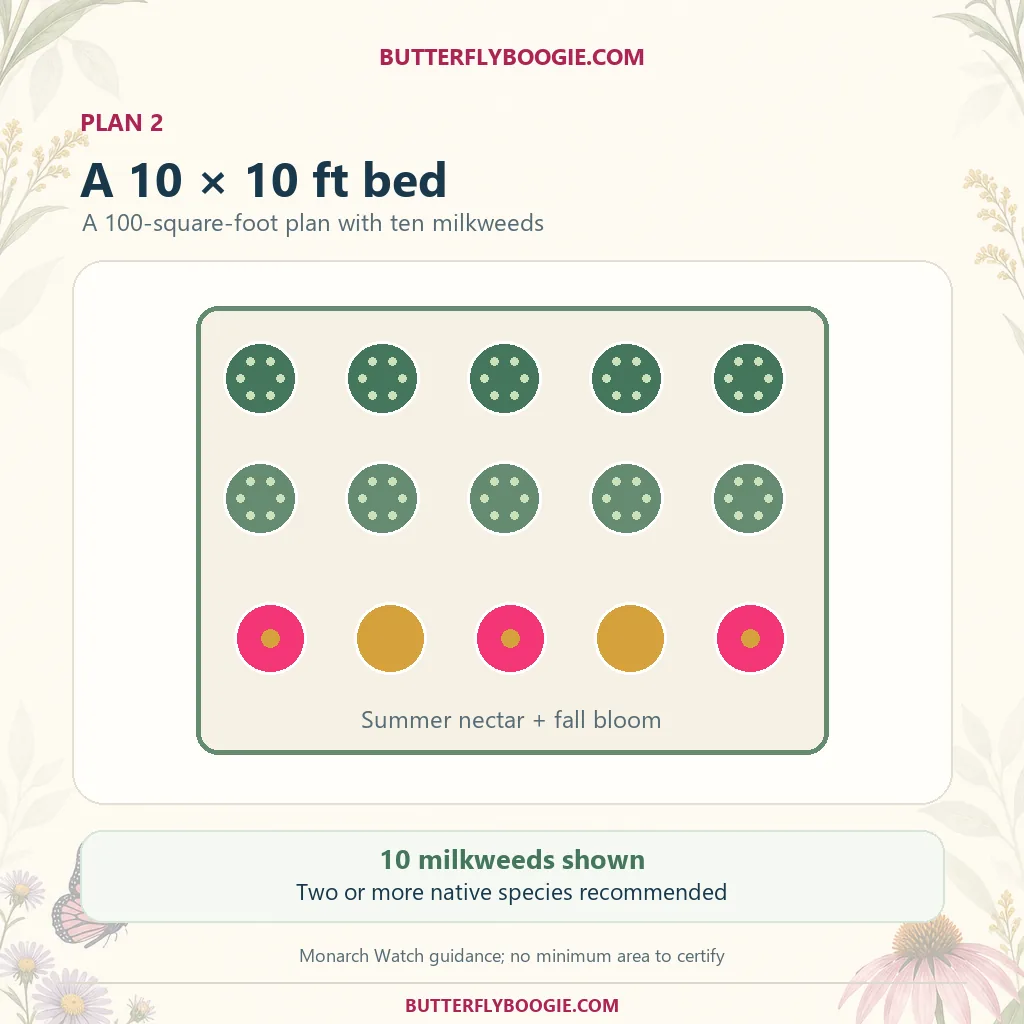
A 10-by-10-foot bed matches the size Monarch Watch says Monarch Waystations work best at, though there’s no minimum to certify. Plan on at least 10 milkweed plants, ideally two or more species native to your region, since they grow and flower at different times.
Fill the rest with nectar plants in drifts. A simple mix is coneflower, black-eyed Susan and bee balm for summer, with asters and goldenrod for fall.
Save Our Monarchs suggests about one milkweed plant per square foot. Monarch caterpillars move between plants as they feed, so a cluster works better than a single specimen, as our guide to how much milkweed a monarch caterpillar eats explains.
Plan 3: A Mixed Border of 200 to 500 Square Feet
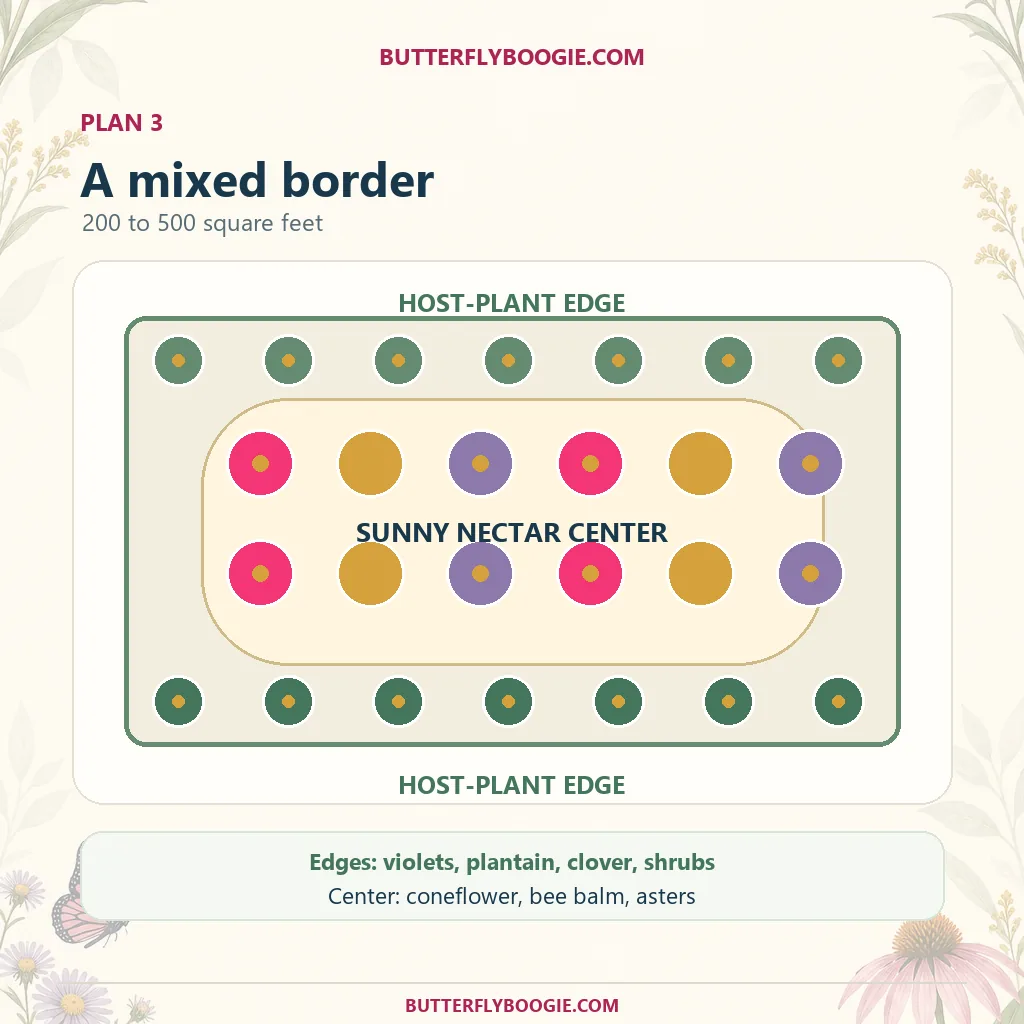
With more room, add host plants for more kinds of butterflies. Each one brings a different species to the garden.
- Violets feed fritillary caterpillars and do well under shrubs.
- Plantain and snapdragons host the common buckeye.
- Clover in a lawn edge feeds orange and clouded sulphur butterflies.
- Spicebush and pipevine attract spicebush and pipevine swallowtails where they’re native.
Keep nectar plants in the sunniest spots and let host plants fill the edges. Our caterpillar host plant guide covers many more pairings.
Plan 4: A Backyard Meadow
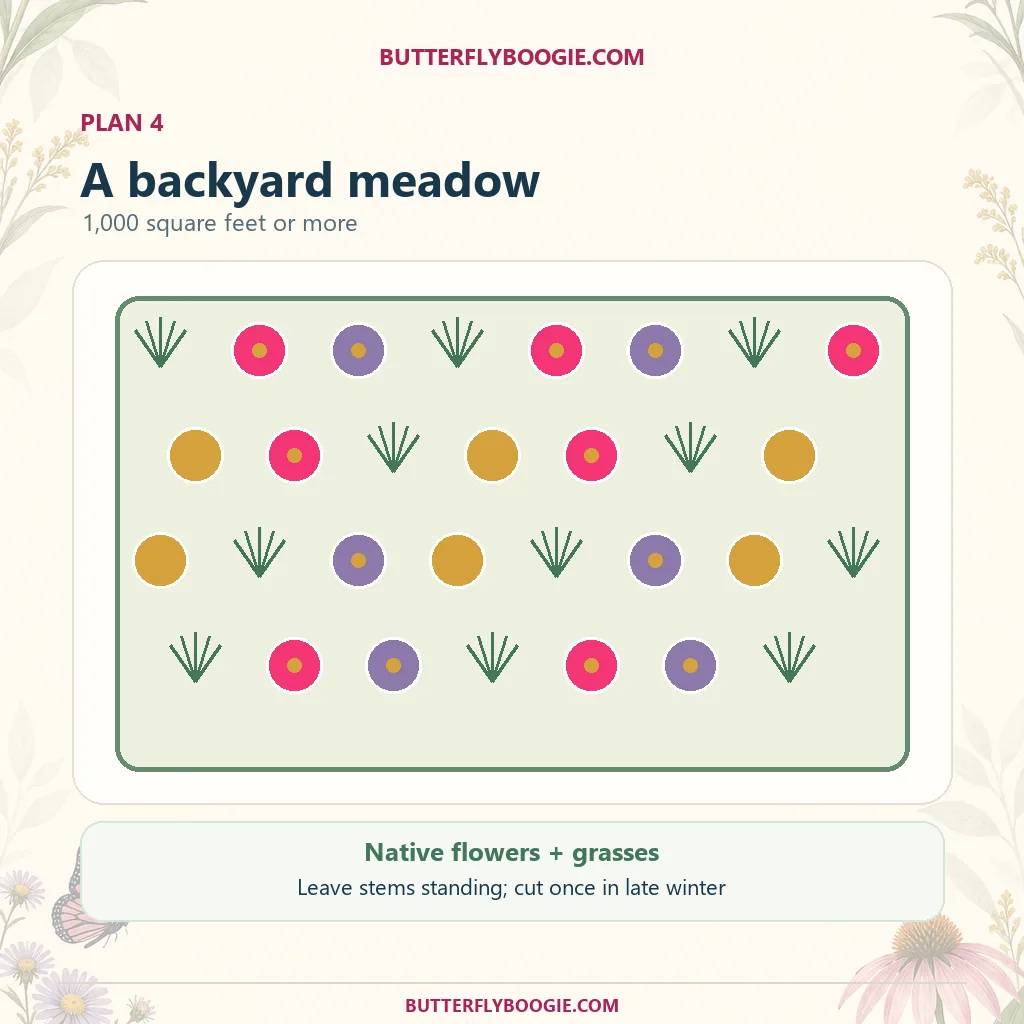
A thousand square feet or more lets you plant a small native meadow. Mix flowering perennials with native grasses, which give caterpillars and chrysalises places to hide.
Mow or cut the meadow once in late winter instead of in fall. Standing stems and leaf litter shelter overwintering caterpillars, chrysalises and other insects.
Plan Blooms for Every Season
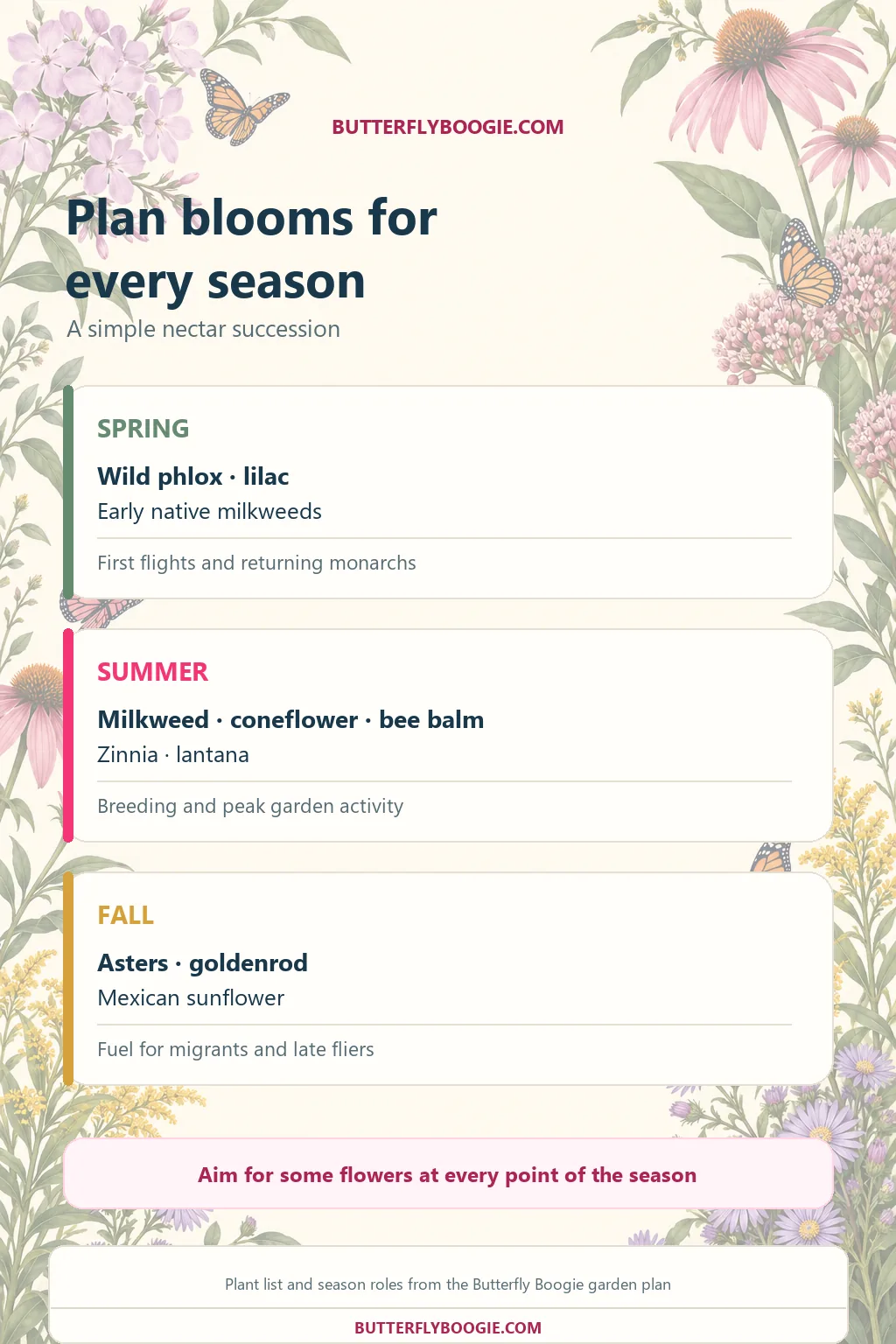
Butterflies need food from their first spring flights to fall migration. Aim for at least a few plants in bloom at every point in the season.
| Season | Nectar plants to try | Why it matters |
|---|---|---|
| Spring | Wild phlox, lilac, early native milkweeds | Feeds the first butterflies of the year and returning monarchs |
| Summer | Milkweed, coneflower, bee balm, zinnia, lantana | Supports breeding and the busiest months |
| Fall | Asters, goldenrod, Mexican sunflower | Fuels migrating monarchs and late-season butterflies |
Layout Tips That Make a Difference
Plant each flower in clumps of the same color instead of single plants scattered around. Butterflies learn which colors pay off, as we cover in our look at what colors attract butterflies.
Skip broad-spectrum insecticides, which kill caterpillars as easily as pests. Leave some leaves in fall, and let a few host plants look chewed up.
FAQ
How big should a butterfly garden be?
Monarch Watch recommends at least 100 square feet for a Monarch Waystation, but there’s no minimum to get started.
Even a few containers in full sun can attract butterflies.
How much sun does a butterfly garden need?
At least six hours of direct sun a day, according to Monarch Watch.
What should I plant first in a butterfly garden?
Start with a native milkweed and a few long-blooming nectar plants such as zinnias and coneflowers.
Add host plants for other butterflies as the garden grows.
How many milkweed plants do I need?
Monarch Watch recommends at least 10, ideally of two or more native species.