
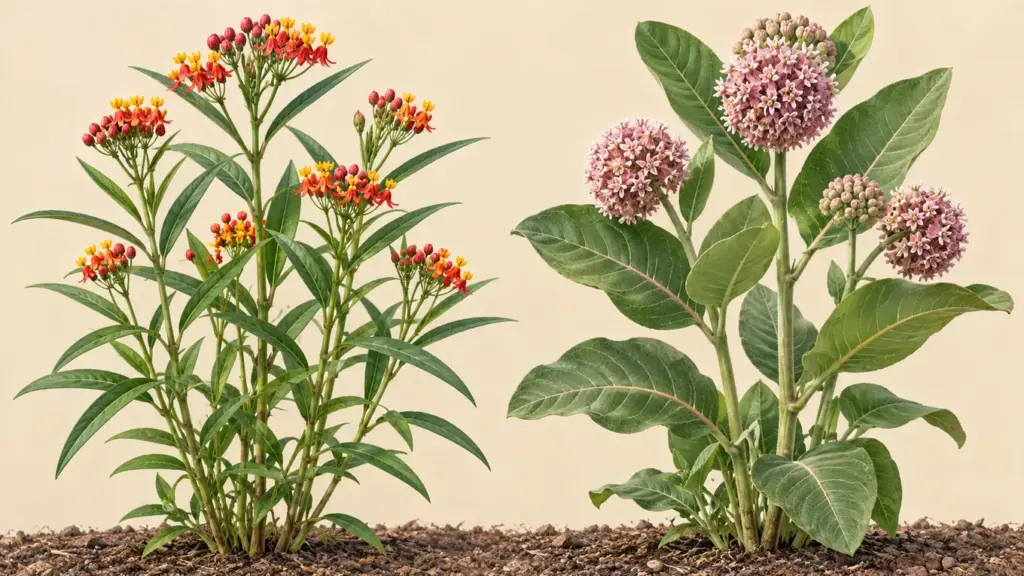

In the tropical vs native milkweed debate, the data points one way: plant native milkweed. If you already grow tropical milkweed (Asclepias curassavica) in the southern U.S. or California, cut it back in fall and winter so monarchs keep migrating.
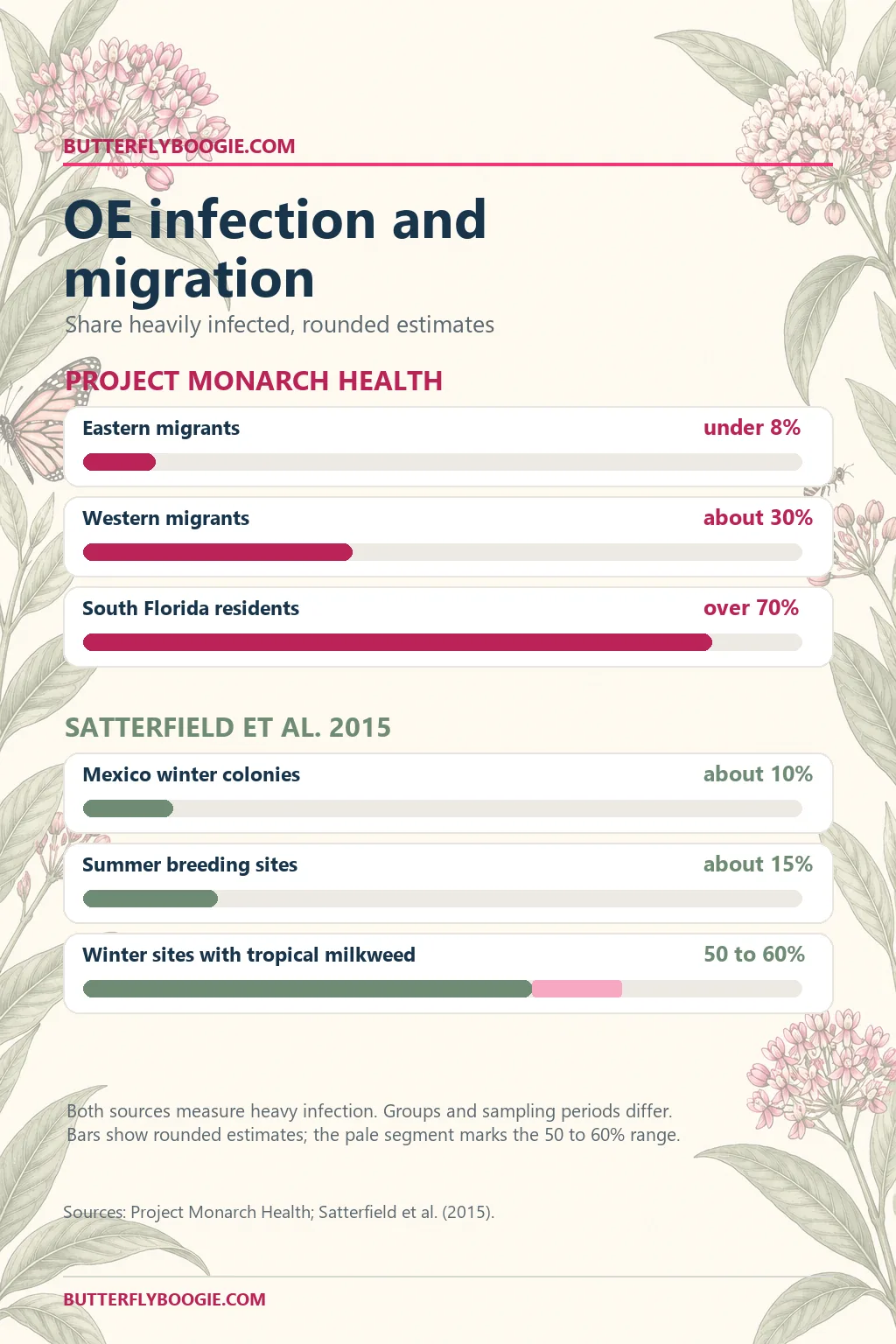
The reason is a parasite called OE. A 2015 study found that 50 to 60 percent of monarchs at winter breeding sites with tropical milkweed were heavily infected, compared with about 10 percent in the colonies in Mexico.
Key Takeaways
- Tropical milkweed stays green through mild winters, which lets some monarchs skip migration and keep breeding.
- Winter-breeding monarchs were 5 to 9 times more likely to carry the OE parasite than migrating monarchs in a study of nearly 6,000 butterflies.
- The Monarch Joint Venture recommends cutting tropical milkweed to about 6 inches in fall and winter and replacing it with native species over time.
- South Florida is the exception, since a non-migratory monarch population has lived there for a long time.
Why Tropical Milkweed Became a Problem
Native milkweeds in most of the country die back in fall, which leaves migrating monarchs nothing to lay eggs on. Tropical milkweed keeps its leaves and flowers through mild winters on the Gulf Coast and in California.
That year-round food lets some monarchs stop migrating and breed through the winter. Every new generation on the same plants picks up parasite spores left by the last one, and infection builds up fast.
The OE Data at a Glance
Ophryocystis elektroscirrha, or OE, is a single-celled parasite that lives only in monarchs and their close relatives. Infected females scatter dormant spores on their eggs and on the milkweed around them, and the caterpillars swallow the spores when they hatch, according to Project Monarch Health.
| Monarch population | Heavily infected with OE | Source |
|---|---|---|
| Eastern migrants | Less than 8% | Project Monarch Health |
| Western migrants | About 30% | Project Monarch Health |
| Mexican overwintering colonies | About 10% | Satterfield et al. 2015 |
| Summer breeding sites | About 15% | Satterfield et al. 2015 |
| Winter breeding sites with tropical milkweed | 50 to 60%, some sites 100% | Satterfield et al. 2015 |
| South Florida non-migratory residents | Over 70% | Project Monarch Health |
The 2015 study by Dara Satterfield, John Maerz and Sonia Altizer tested nearly 6,000 monarchs. It was published in Proceedings of the Royal Society B and found winter-breeding monarchs were 5 to 9 times more likely to be infected than migrants.
Migration works like a filter. Heavily infected monarchs rarely survive the flight to Mexico, so the migrating population stays healthier, and tropical milkweed takes that filter away.
What OE Does to a Monarch
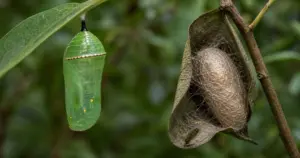
Project Monarch Health describes the damage plainly. Heavily infected butterflies can struggle out of the chrysalis with deformed, crumpled wings, and they tend to weigh less and have shorter forewings.
Infected monarchs also can’t fly as far or as long as healthy ones. Many die during the migration to Mexico because they don’t have the endurance, which is how migration clears the parasite out of the eastern population each year.
Other Findings Against Tropical Milkweed
The OE link isn’t the only concern. A research roundup on the Monarch Science blog collects studies showing that migrating females exposed to tropical milkweed began developing eggs when they should have been flying south.
The same roundup covers work linking tropical milkweed to paler wings and less elongated forewings, two traits tied to weaker long-distance flight. Our guide to monarch generations explains why wing shape and color matter so much for migrants.
There is one argument in tropical milkweed’s favor. Its strong toxins can lower parasite loads in infected caterpillars, but the roundup notes that those caterpillars still become infected adults that spread spores.
If You Already Grow Tropical Milkweed
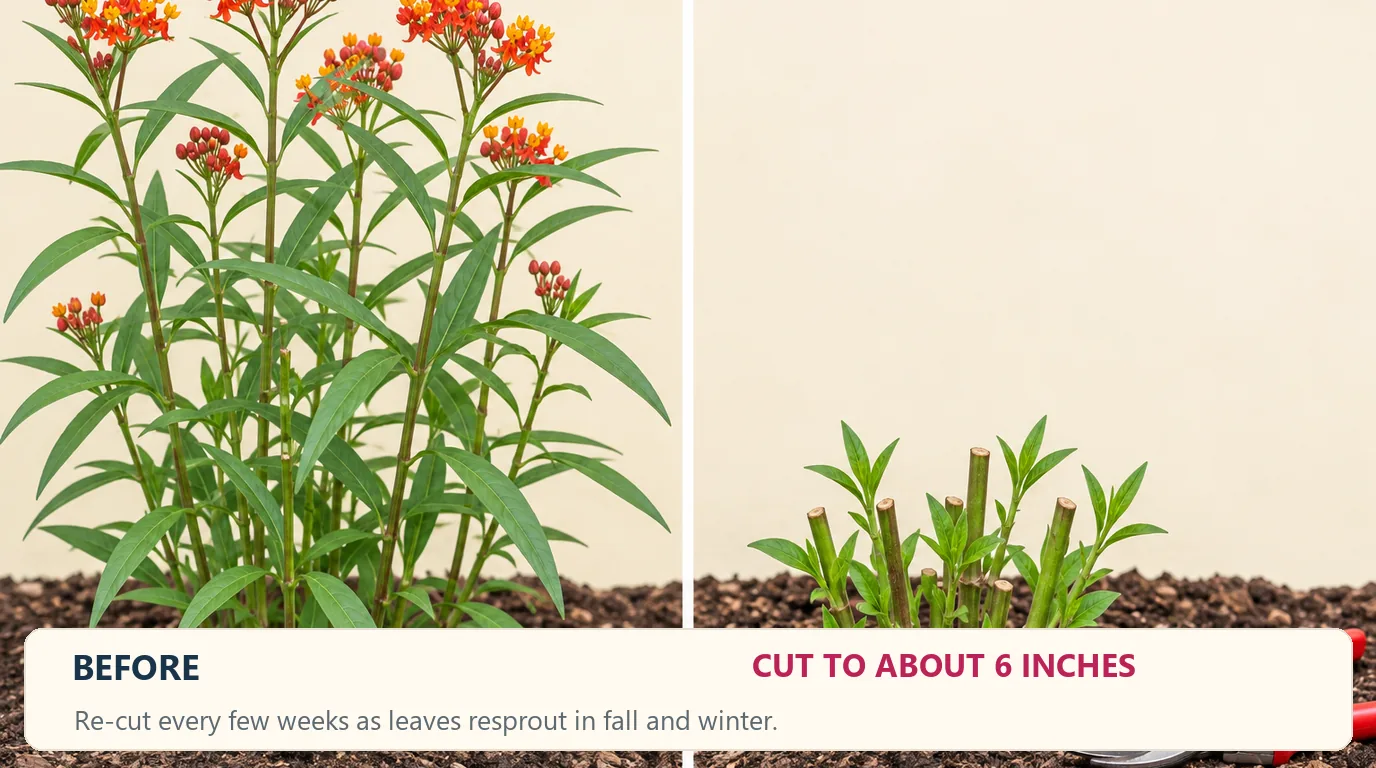
You don’t have to rip it out tomorrow. The Monarch Joint Venture recommends a simple routine for the southern U.S. and California.
- Cut the stalks back to about 6 inches in fall and winter, which discourages winter breeding and removes spores on the leaves.
- Cut again every few weeks as new leaves sprout.
- Replace tropical plants with native milkweeds as they become available.
- Skip this routine in South Florida south of Orlando, where a non-migratory population is long established.
Native Milkweeds to Plant Instead
The best choice is a milkweed native to your region, since local monarchs and local growing conditions line up. These species are widely grown and easy to find.
- Common milkweed (Asclepias syriaca) spreads across the eastern and central states, and our common milkweed growing guide covers planting.
- Swamp milkweed (Asclepias incarnata) handles wet, heavy soil and stays in tidy clumps.
- Butterfly weed (Asclepias tuberosa) likes dry, sunny spots, and our butterfly weed guide has the details.
- Showy milkweed (Asclepias speciosa) and narrowleaf milkweed (Asclepias fascicularis) suit much of the West, including California.
For why monarchs depend on these plants in the first place, see our look at monarchs and milkweed.
FAQ
Is tropical milkweed bad for monarchs?
Where it stays green all winter, yes. It encourages winter breeding, and winter-breeding monarchs carry far more OE than migrants.
Should I pull out my tropical milkweed?
Not necessarily. Cutting it back to about 6 inches every few weeks in fall and winter removes most of the risk while you add native milkweeds.
When should I cut back tropical milkweed?
In fall and winter in the southern U.S. and California, repeating the cut as it resprouts.
South Florida, with its long-established non-migratory monarchs, is the exception.
What is OE in monarch butterflies?
OE is a protozoan parasite that infects monarchs as caterpillars and weakens them as adults.
Heavily infected butterflies can emerge with crumpled wings and often can’t finish the migration.