




Butterfly Identification: A Guide to Winged Wonders
Butterfly identification gets easier once you stop looking at the whole animal and start focusing on specific parts. Wing shape, color pattern, body size, flight behavior, the plants nearby – each one narrows your options. By the time you’ve checked two or three of these clues together, you’ll often land on a family and sometimes a species without cracking open a field guide.
North America is home to roughly 750 butterfly species. That number sounds overwhelming, but in practice you’ll only encounter a fraction of them in any given area. A backyard in Ohio might produce 30 to 40 species across an entire summer. Once you learn the features that separate the major families, putting a name to most of those 30 becomes surprisingly straightforward.
Key Takeaways
- Wing shape, color pattern, body proportions, and flight style are the four physical features that do the most work in butterfly identification – learn to check them in that order and you’ll sort most species to family level within seconds.
- The five major butterfly families in North America (swallowtails, whites and sulphurs, brushfoots, blues and coppers, and skippers) each have a distinct body plan and gestalt that becomes recognizable with practice.
- Smartphone apps like iNaturalist and Seek by iNaturalist have made photo-based butterfly identification accessible to beginners, though they work best as a starting point rather than a final answer.
- Habitat and time of year matter as much as wing color – knowing which butterflies fly in your region during a specific month eliminates most lookalikes before you even study the wings.
What to Look at First
When a butterfly lands near you, resist the urge to immediately flip through mental images of species. Instead, work through a short checklist of physical features. This approach works better than random guessing because it builds a description you can match against any reference, whether that’s a book, a website, or your own memory.
Wing Shape and Size
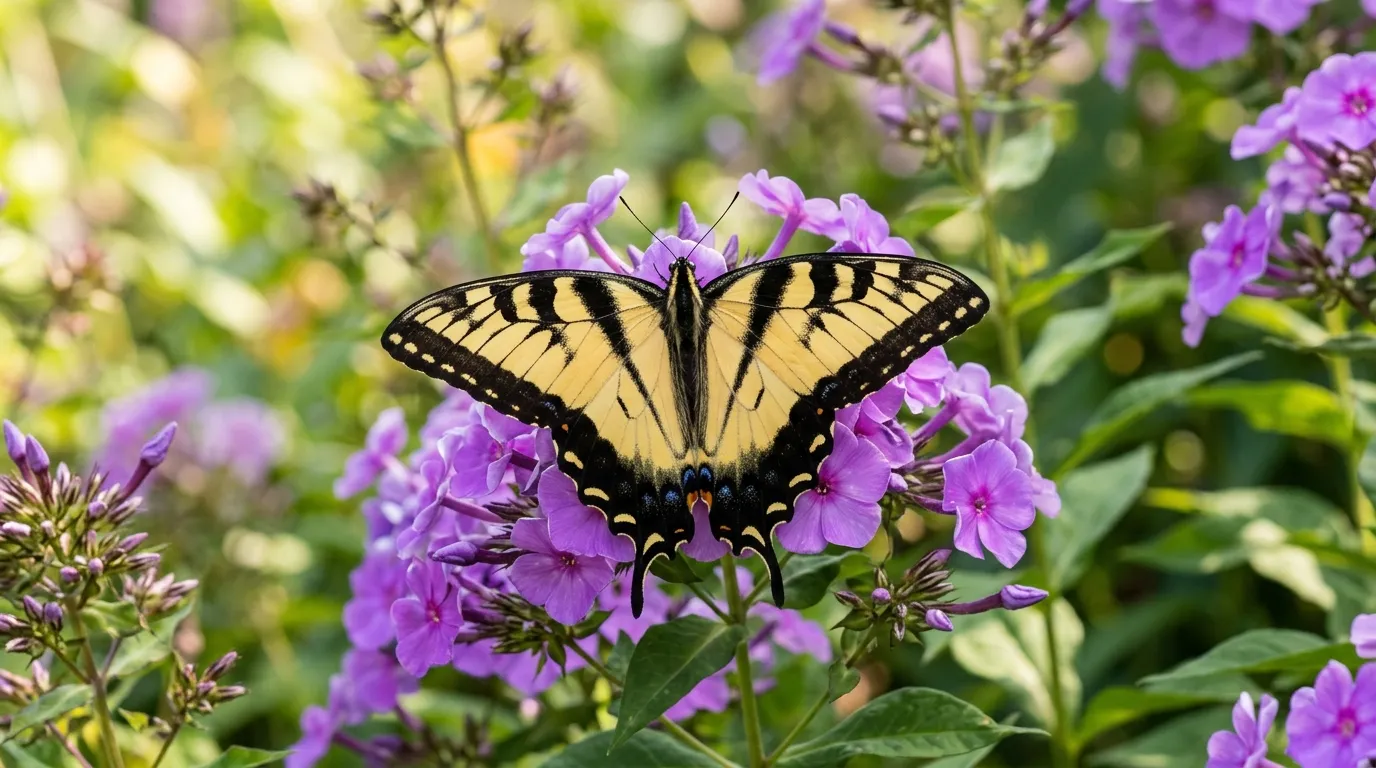
Wing shape alone can place a butterfly into its family. Swallowtails have long, triangular forewings and rounded hindwings, often with tail-like extensions. Whites and sulphurs carry rounded wings with gentle curves. Brushfoots vary widely, but their forewings tend to be somewhat angular at the tips. Blues and coppers are compact, with small rounded wings relative to their tiny bodies.
Size matters too. A butterfly with a four-inch wingspan sitting on your garden zinnia is almost certainly a swallowtail or a large brushfoot like a monarch. Something the size of a thumbnail flitting through the grass is likely a blue, a copper, or a small skipper. You can estimate wingspan against familiar objects – a quarter coin is about one inch across.
Color and Pattern
Color grabs your attention first, and it’s useful, but don’t stop there. The pattern of that color carries more information. A solid orange butterfly with black wing borders points you toward a fritillary or a monarch. An orange butterfly with detailed spots and fine lines across the hindwing suggests a checkerspot or a crescent. Two butterflies can share the same base color and look nothing alike once you compare the arrangement of spots, bands, and margins.
Always check the underside of the hindwing when you can. Many species look similar from above but have completely different undersides. Commas and question marks, for example, are nearly identical in flight but flip their wings closed to reveal either a silver comma or a silver question mark shape on dark brown – hence their names.
Flight Style
Watch how a butterfly moves before it lands. Monarchs glide on flat wings with slow, deep wingbeats. Cabbage whites bounce through the air in a wobbly, indirect path. Skippers dart in short explosive bursts. Swallowtails alternate between powerful flapping and brief glides. With practice, you can call out family names from 30 feet away based on flight style alone.
Habitat and Host Plants
Where you’re standing tells you a lot about what you’re looking at. A butterfly in a sunny meadow full of milkweed has a different species pool than one in a shaded forest trail or a coastal salt marsh. Many butterfly species have tight relationships with specific host plants – monarchs need milkweed, black swallowtails need plants in the carrot family, and many blues depend on legumes.
Noting the habitat narrows your list of candidates before you even study the wings. A large black swallowtail in a woodland setting is more likely a pipevine swallowtail than a black swallowtail, which prefers open fields and gardens. The Butterflies and Moths of North America project tracks verified sightings by county, so you can check which species have actually been recorded near your location.
Season and Geography
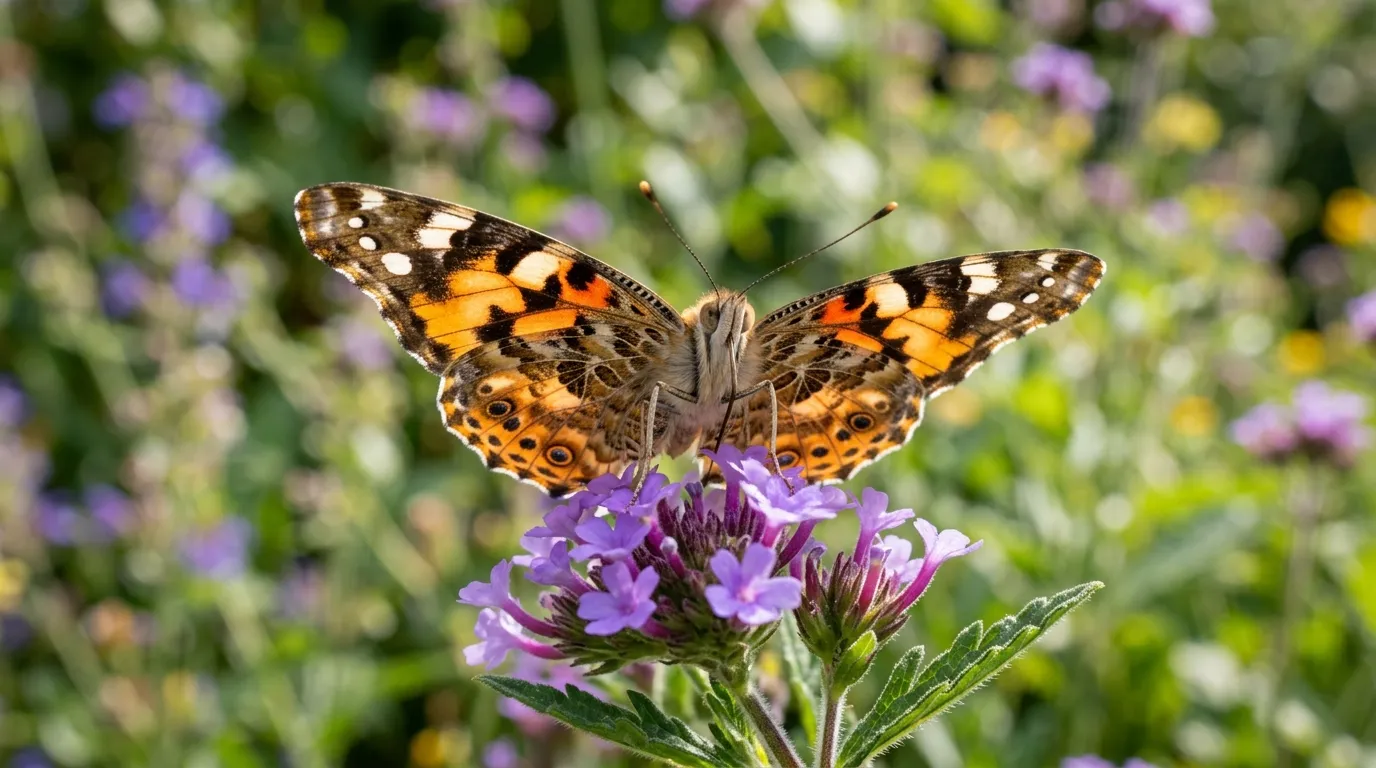
A lot of butterfly identification confusion comes from ignoring the calendar. Some species fly only in spring, others only in late summer. That orange brushfoot you photographed in April is probably a comma emerging from winter hibernation. The same-looking butterfly in August is more likely a painted lady or a pearl crescent.
Geography matters just as much. Many species have restricted ranges. The great purple hairstreak only occurs in areas with mistletoe-bearing trees. The Atala butterfly is limited to southern Florida. If a photo-based app suggests a species that doesn’t range within 500 miles of you, be skeptical.
The Major Butterfly Families
Every North American butterfly belongs to one of five main families within the superfamily Papilionoidea. Learning to recognize each family on sight is the single most useful skill in butterfly identification. Once you know which family you’re in, you’ve gone from 750 possibilities to maybe 30 or 40.
Swallowtails (Papilionidae)
These are the big, showy ones. Most North American swallowtails are large – three inches or more across – with hindwing tails that give the family its name, though not every species has them. The pipevine swallowtail and the polydamas swallowtail both lack tails. Colors run the spectrum from the yellow-and-black tiger swallowtails to the iridescent blue-green of the pipevine swallowtail.
About 30 swallowtail species occur in North America. Their caterpillars have a unique defense organ called an osmeterium – a forked, orange structure behind the head that pops out when the caterpillar is disturbed and releases a foul smell. No other butterfly family has this. If you find a plump green caterpillar on a citrus tree or a parsley plant that sticks out a smelly orange fork when you touch it, you’ve found a swallowtail larva.
Whites and Sulphurs (Pieridae)
This family includes the cabbage white – probably the most commonly seen butterfly in North American suburbs. Pierids are small to medium-sized with rounded wings, and they come in two basic color groups: whites (white or pale with black markings) and sulphurs (yellow, orange, or greenish). Their flight is typically fluttery and somewhat directionless, with a bouncing quality that stands out once you’ve noticed it.
Sulphurs can be tricky because many species look alike from above – pale yellow with black wing borders. The hindwing underside is where the differences hide. Cloudless sulphurs, orange sulphurs, and clouded sulphurs all occupy similar habitats but separate cleanly on underside pattern and the presence or absence of a small silver cell spot.
Brushfoots (Nymphalidae)
The largest butterfly family, brushfoots include monarchs, painted ladies, fritillaries, admirals, crescents, checkerspots, buckeyes, and dozens more. The family name comes from their reduced front legs, which are small, brush-like, and tucked against the body. They effectively walk on only four legs while other types of butterflies use all six.
Because Nymphalidae is so large and varied, no single description fits the whole family. Fritillaries are orange with silver-spotted undersides. Admirals are black with white bands or red patches. Wood-nymphs and satyrs are brown with eyespots. The one thing they share is those stubby front legs, which you can sometimes see through binoculars or a close photo.
Blues, Coppers, and Hairstreaks (Lycaenidae)
These are the small ones. Most lycaenids have wingspans under an inch and a half. Blues are – predictably – blue on the upper surface, though females of many species are brown or gray instead. Coppers flash metallic orange and brown. Hairstreaks are often dark above with fine lines and tiny tail-like projections on the hindwing. Many hairstreaks have a “false head” pattern on the hindwing – a combination of tails, eyespots, and color patches that mimics an antenna and head, directing predator strikes away from the real head.
Lycaenids are easy to overlook because they’re small and often fly low. But once you start looking at ground level near legumes, buckwheat, and oaks, you’ll find them everywhere. According to the North American Butterfly Association, lycaenids are among the most under-reported butterfly groups because casual observers tend to focus on larger, more colorful species.
Skippers (Hesperiidae)
Skippers sit in their own space between the other butterfly families and moths. They’re stocky-bodied with wide heads, hooked antennae tips, and proportionally small wings. Their flight is fast and erratic – short darting bursts that give the family its name. About 250 species occur in North America, making skippers the most species-rich family on the continent.
The three skipper subfamilies separate fairly easily. Spread-wing skippers rest with wings flat and tend to be dark with checkered or banded patterns. Grass skippers are small, orange-brown, and hold their wings in a distinctive “jet plane” position with forewings raised and hindwings flat. Giant skippers are large, fast, and mostly restricted to the Southwest. For a closer look at this group, see our skipper butterfly identification guide.
Field Guides vs. Apps
Twenty years ago, butterfly identification meant carrying a field guide in your back pocket. The Kaufman guide, the Peterson guide, and the Glassberg regional guides were the gold standard. They still work well, and the act of flipping through illustrated plates builds visual memory faster than scrolling a screen. A paper guide never runs out of battery, either.
Smartphone apps have changed the game for beginners, though. iNaturalist lets you photograph a butterfly, upload the image, and get an AI-generated identification suggestion within seconds. The community then confirms or corrects the ID. Seek by iNaturalist does the same thing in real-time through your phone’s camera, without requiring an upload. Both are free.
The apps aren’t perfect. They struggle with worn specimens, unusual angles, and species that require underside views. They can also be overconfident – suggesting a specific species when the photo really only supports a genus-level identification. Use them as a starting point, not a final word. The best approach for most people is to let the app make a suggestion, then check it against a range map and flight period to see if it’s plausible.
Printed field guides excel when you’re trying to compare multiple similar species side by side. Digital screens show one image at a time; a book lets you see six sulphurs on the same plate and train your eye on the differences. Many experienced butterfly watchers carry both – a phone for quick photo IDs and a regional guide for tricky groups.
Common Beginner Mistakes
The most frequent mistake is over-relying on color. A butterfly’s wing color fades with age and wear. A fresh monarch is rich orange; a three-week-old monarch that has been flying south looks washed out and pale. Worn cabbage whites can look almost translucent. If color is your only clue, you’ll misidentify faded specimens regularly.
Another common trap is trying to identify every butterfly to species level right away. Some groups are genuinely hard. Female blues, fresh duskywings, and look-alike crescents can stump experienced lepidopterists. There’s nothing wrong with calling something “a sulphur” or “a grass skipper” and moving on. Comfort with uncertainty is a skill that separates frustration from enjoyment in this hobby.
Ignoring the underside of the wings trips up a lot of beginners. The upper surface is what you see in flight, so it feels like the “real” look of the butterfly. But many species are designed to be identified from below – it’s the surface exposed when they land and close their wings. Crescents, checkerspots, and especially hairstreaks often require underside views for positive ID.
Finally, some beginners focus too much on rare species. That unusual-looking butterfly in your garden is far more likely to be a common species in unusual condition (worn, freshly emerged, or an uncommon color form) than a genuine rarity. Start by learning the 20 most common butterflies in your area so well that you recognize them instantly. After that, anything unfamiliar will stand out naturally.
How to Get Started
Pick a local park or garden with flowers and visit it once a week through the warm months. Bring your phone and photograph every butterfly you see. Don’t worry about naming them yet – just build a photo collection. After a few visits, you’ll notice you keep seeing the same species. Those are your common locals, and learning them first gives you a baseline against which everything else is measured.
Join a local butterfly count or field walk. The North American Butterfly Association runs annual Fourth of July butterfly counts in hundreds of locations across the US and Canada. Walking with experienced identifiers for a single morning will teach you more than weeks of solo study. You’ll pick up tricks they’ve developed over years – which angle to photograph from, which wing surface matters for each group, how to approach without flushing a perched butterfly.
Start a simple checklist. Even a notes app on your phone works. Record the date, location, species (or best guess), and what it was doing. Over a season, patterns emerge. You’ll notice that certain species appear only in May, others peak in August. Some show up only when the ironweed blooms. That seasonal awareness becomes one of your strongest identification tools going forward.
Frequently Asked Questions
What is the easiest butterfly to identify?
The monarch is probably the most recognizable butterfly in North America. Its large size, orange wings with black veins, and white-spotted black borders make it stand out from across a yard. The only species commonly confused with it is the viceroy, which is slightly smaller and carries a black line across the hindwing that monarchs lack. Once you know to check for that line, the two separate quickly.
Can you identify a butterfly from a photo?
Yes, and in many cases a clear photo is better than a live field observation because you can zoom in on small features. The most useful photo angle shows the hindwing underside with the butterfly’s wings closed. A second shot of the upper surface with wings open gives you both views. Apps like iNaturalist and Seek can process photos and offer species suggestions, though always cross-check with range and season information.
How many butterfly species live in the United States?
About 750 species have been recorded in the US, with the highest diversity in southern states like Texas, Arizona, and Florida where tropical species reach the northern edges of their ranges. A typical mid-latitude state might have 120 to 160 species on its full list, but only 40 to 60 of those will be common enough that a regular observer encounters them in a given year.
What is the difference between a butterfly and a moth?
Butterflies generally fly during the day, have clubbed antennae, and rest with their wings held upright over their backs. Moths are mostly nocturnal, have feathery or tapered antennae, and rest with wings folded flat. There are exceptions in every category – some moths fly by day, some butterflies have subtle antenna clubs – but these three features together correctly sort the vast majority of cases. For a full breakdown, see our guide to moth vs. butterfly differences.
Do I need binoculars for butterfly identification?
Close-focusing binoculars (ones that focus down to six feet or less) are helpful but not required. Many butterfly watchers now use their smartphone cameras instead, since phone cameras with digital zoom can capture enough detail for most identifications. If you do go the binocular route, look for models marketed to birders with close-focus capability. Standard birding binoculars that only focus to 15 or 20 feet won’t work well for butterflies.
When is the best time to look for butterflies?
Mid-morning to early afternoon on warm, sunny days with low wind. Butterflies are ectotherms and need external heat to fly. On cool or overcast mornings, many species bask with wings open to absorb sunlight and are easier to approach. Peak butterfly diversity across most of the US occurs from late June through August, though some spring specialists fly as early as March and fall migrants extend the season into October.


