


Butterfly Release Box | Types, Ethics and How to Use
A butterfly release box is a small container – usually cardboard, wood, or a folded paper envelope – designed to hold live adult butterflies in a chilled, resting state until the moment of release at a wedding, funeral, or school event. The two main styles are individual triangular envelopes that each hold a single butterfly, and larger mass release boxes that hold anywhere from a dozen to several hundred butterflies at once. Commercial breeders ship the insects overnight in refrigerated conditions, and the recipient keeps the box cool until the ceremony to prevent the butterflies from flying too early.
Release boxes sound charming on paper, but there’s a real debate in the butterfly world about whether this industry should exist at all. I’ve talked to wedding planners who swear by them, breeders who run them as a livelihood, and conservation biologists who would like to see the whole practice banned. My goal here is to walk you through how these boxes actually work, which species you’ll get if you order one, and then lay out the ethical and biological arguments so you can make an informed call.
Key Takeaways
- Butterfly release boxes come in two formats: individual triangular envelopes (one butterfly each, typical for wedding guest favors) and mass release boxes that dramatically open to release dozens or hundreds at once.
- The two species sold most commonly for commercial releases in the US are the painted lady (Vanessa cardui) and the monarch (Danaus plexippus), though monarch sales have been scaled back by federal rules.
- The North American Butterfly Association (NABA) formally opposes commercial butterfly releases because of disease spread, genetic pollution of wild populations, and interference with scientific migration data.
- If you do use a release box, keeping it cool (around 55 to 60 F), opening it in sunshine above 65 F, and avoiding windy or rainy weather gives the butterflies their best chance of surviving after release.
What a Butterfly Release Box Actually Is
At the most basic level, a release box is a lightproof holding container. Butterflies are cold-blooded, so when they’re kept at temperatures below about 60 F, their flight muscles can’t generate enough heat to take off. Breeders exploit this by shipping chilled insects overnight in insulated boxes with cold packs, and the wedding planner or event host keeps the shipment in a cooler or refrigerator until about 30 minutes before the release.
The butterflies themselves are usually newly emerged adults – one to three days old – that have been sorted by size and condition at the breeding facility. Females that have already mated are preferred for sales because some customers want the released butterflies to lay eggs in the local area (which, as we’ll get to, is exactly the problem biologists have with the practice).
Commercial release boxes sold in the US have to comply with USDA Animal and Plant Health Inspection Service permits. Breeders can only ship certain species across state lines, and those rules change every few years. Monarchs in particular have had their interstate shipping restricted since 2020 over concerns about Ophryocystis elektroscirrha (OE), a protozoan parasite that spreads readily in captive populations and devastates wild ones.
Individual Envelopes vs Mass Release Boxes
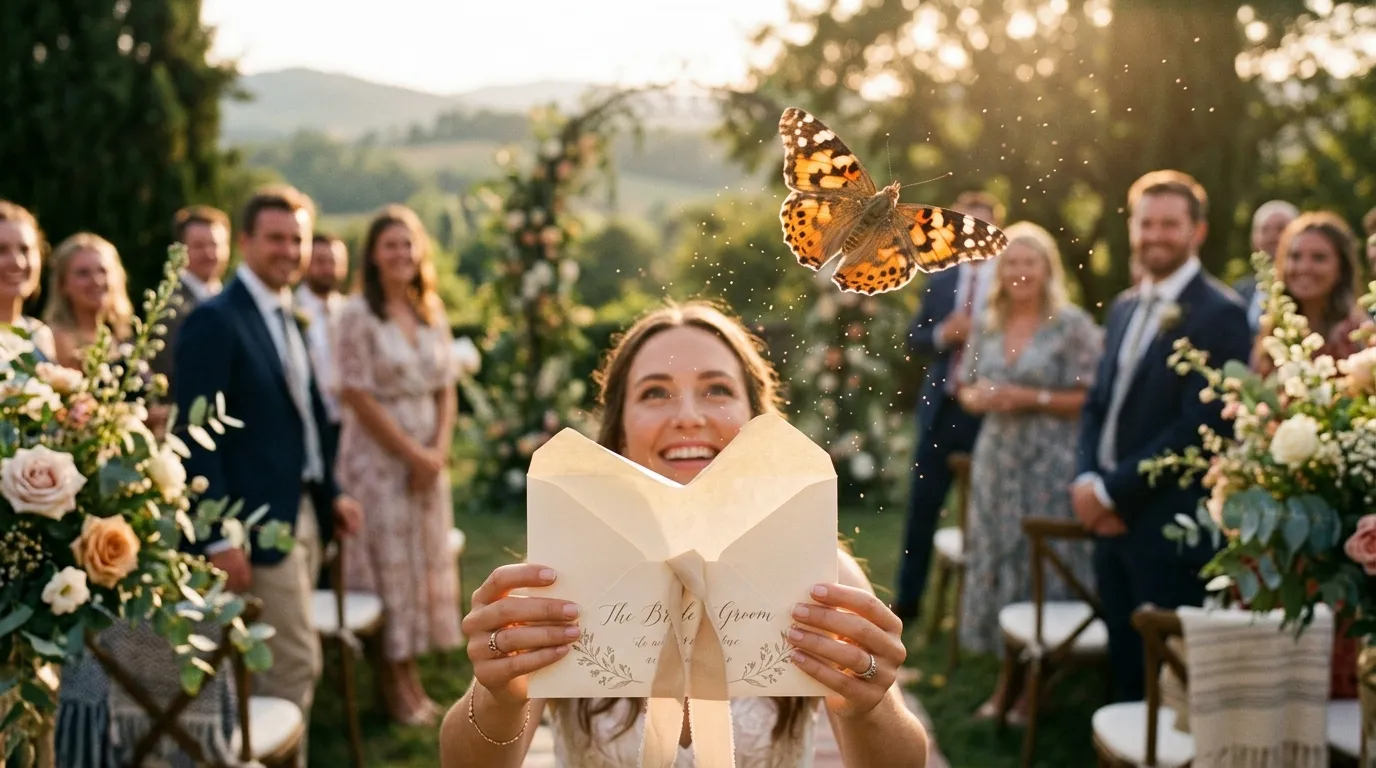
The style you pick depends on how dramatic you want the moment to be and how many guests you need to involve. Individual envelopes work well when you want each guest to participate – it’s common at weddings for the bride to walk down the aisle handing these out, then everyone opens theirs at once at the end of the ceremony. Mass release boxes are better when you want a single theatrical “wow” moment, like at a funeral or a corporate memorial event.
Individual Release Envelopes
The individual envelope is a triangular or pyramid-shaped piece of glassine or waxed paper, usually about three inches on a side, with decorative printing on the outside. Inside sits one live butterfly with its wings folded back. A flap at the top opens to let the insect crawl out. Guests typically hold the closed envelope in one hand during the ceremony so body heat slightly warms the butterfly, then open it on cue.
One practical issue: if a butterfly has been warmed too quickly inside a tightly gripped envelope, it may have already started fluttering before the release moment, which damages the wings. Breeders recommend holding the envelope loosely or resting it flat on an open palm.
Mass Release Boxes
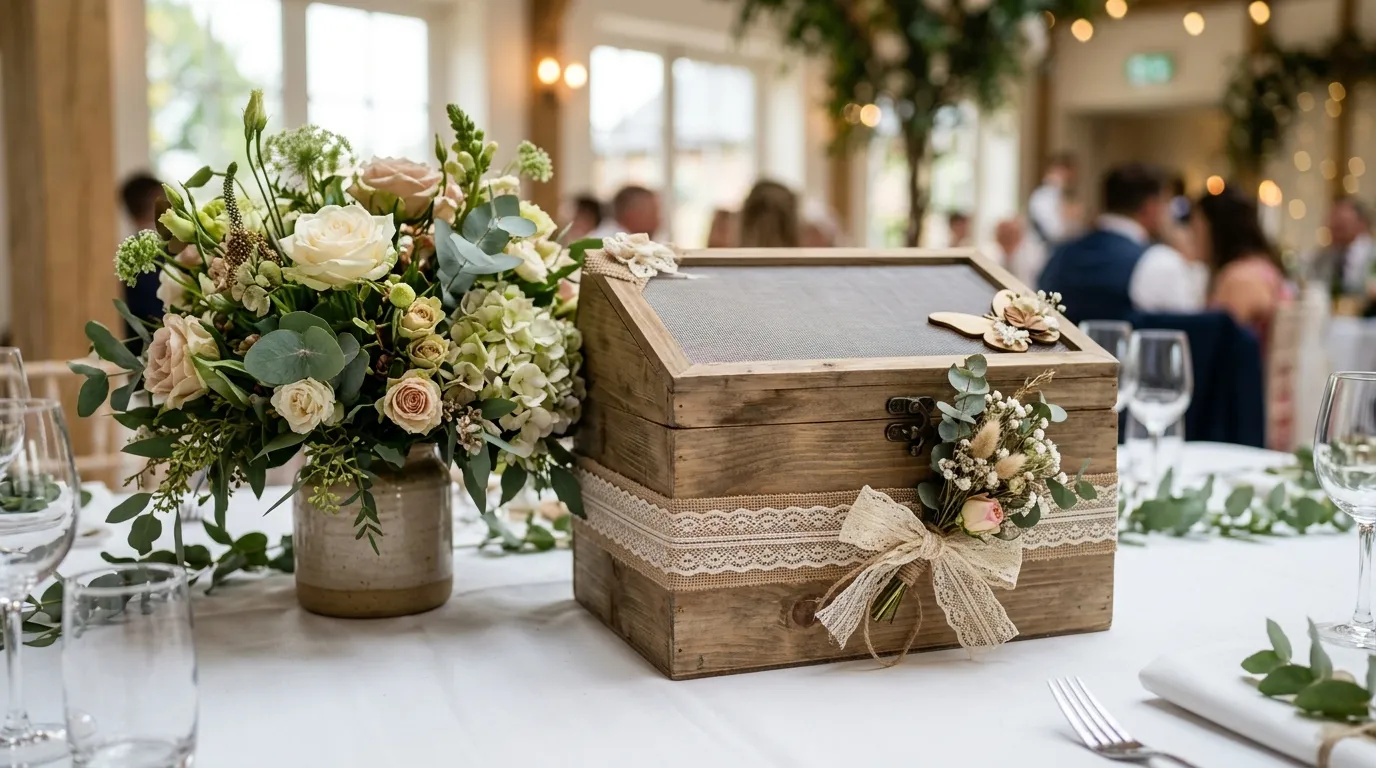
Mass release boxes are decorative wooden or cardboard containers holding anywhere from 12 to 300 butterflies. The lid is spring-loaded or opens with a ribbon pull so that dozens of butterflies fly out at once. Some breeders sell heart-shaped boxes for weddings, hexagonal boxes for memorials, and plain white boxes for school assemblies or conservation events.
The advantage of a mass release is that the effect is genuinely striking when it works. A few dozen painted ladies taking flight in front of a hundred guests is the kind of thing people remember. The disadvantage is that if the weather is wrong (too cold, too windy, or raining), a mass release can end with butterflies crawling on the ground instead of flying, which is uncomfortable to watch and rough on the insects.
Which Species Are Sold Commercially
In North America, two species make up the overwhelming majority of commercial release sales. A smaller number of breeders also sell regional natives or tropical species for specific events.
The painted lady (Vanessa cardui) is the workhorse of the commercial release industry. It breeds fast in captivity, accepts artificial diets, has a wide natural range across most of the continent, and the adults live about two weeks under good conditions. The species is a strong flier and tends to take off cleanly when released, which is exactly what event hosts want. Painted ladies are also the standard species sold in classroom butterfly kits for elementary school science curricula.
The monarch (Danaus plexippus) used to dominate the higher-end release market because of its iconic status and larger size. Since 2020, interstate shipments of farmed monarchs have been restricted by the USDA, so any monarch release you see today is usually sourced from a breeder within the same state. The US Fish and Wildlife Service’s monarch species profile covers the federal conservation context, and the population decline of wild monarchs is a major reason conservation groups argue against captive releases of this species specifically.
A few other species show up in regional markets – the giant swallowtail in the southeast, the zebra longwing in Florida, and the mourning cloak in some western states – but these make up a small fraction of total sales. Tropical species like morphos are sometimes used at indoor events like butterfly pavilions and greenhouse weddings, but they can’t legally be released outdoors because they don’t belong in the local ecosystem.
The NABA Controversy and Conservation Concerns
Here’s where things get complicated. The North American Butterfly Association has a formal position statement opposing commercial butterfly releases, and it’s been in place since the 1990s. Their argument rests on four main points that are worth understanding before you buy a release box.
First, disease transmission. Captive breeding operations keep butterflies at very high densities, which lets parasites and pathogens spread quickly. The OE parasite in monarchs is the best-documented case, but painted ladies can also carry microsporidians and bacterial infections that may be uncommon in wild populations. Released insects can transmit these to local wild butterflies with no natural resistance.
Second, genetic pollution. Commercial painted ladies and monarchs are often sourced from breeding stock that has been in captivity for many generations. Their genetics may differ from regional wild populations in ways we don’t fully understand, and when released individuals interbreed with locals, it can weaken traits that wild populations have adapted specifically to their own area – things like timing of emergence, cold tolerance, or host plant preferences.
Third, interference with scientific data. Monarch migration is tracked by citizen scientists who tag and report butterflies along flyways. When farmed monarchs are released in places or at times that don’t match wild behavior, it corrupts the data biologists use to measure wild population trends. The Xerces Society has written extensively on this – their “keep monarchs wild” guidance is the clearest conservation rationale against the practice.
Fourth, range distortion. Painted ladies do migrate but not in predictable north-south patterns like monarchs. Releasing farmed painted ladies in places where the species might not be naturally present at that time of year can affect local food web dynamics and predator-prey relationships in ways nobody is measuring.
How to Handle a Release Box Humanely
If you’ve weighed the arguments and still want to go ahead with a release, handling the box properly is the single biggest factor in whether the butterflies survive. Done wrong, a release can kill most of the insects within an hour. Done right, the butterflies fly off strongly and have roughly the same life expectancy as any other captive-bred adult.
Keep the shipping box at refrigerator temperature (around 55 to 60 F) until about 30 to 45 minutes before the release. Don’t let it sit in a hot car or on a sunny porch. If the butterflies warm up too early, they’ll start fluttering inside the box and damage their wings against the cardboard walls – by release time, many will be unable to fly.
Release only when outdoor air temperature is above 65 F, the sun is shining, and wind is under about 10 mph. Butterflies can’t thermoregulate well at lower temperatures and will drop to the ground in cold or cloudy weather. Rain is worse – a wet butterfly can’t fly at all and usually dies where it lands. If your event day has bad weather, most reputable breeders will ship replacement butterflies or refund the order, but you need to reschedule in advance.
When you’re ready to release, bring the box into the sunlight and open the lid slowly. The butterflies need about 60 seconds of warming before their flight muscles work properly. Don’t shake the box or try to tip butterflies out – let them walk to the edge and launch on their own. This is the same principle as handling any wild butterfly you might be catching for observation or photography, where gentle handling is the difference between a healthy insect and a damaged one.
Alternatives to a Butterfly Release Box
If the conservation arguments have given you second thoughts but you still want a butterfly moment at your event, there are a few options that deliver a similar feel without the biological baggage.
A live butterfly garden planted at the venue is the most meaningful alternative. If you have six to eight weeks of lead time, you can plant host plants like milkweed (for monarchs), parsley or dill (for swallowtails), and nectar flowers like zinnias and lantana, and wild butterflies will find them on their own. Your guests get to see real local butterflies visiting the flowers during the ceremony, and nothing was shipped in a box.
Some people also choose to raise a few butterflies at home from commercially available caterpillar kits (painted ladies are the usual species), then release the adults in their own yard during the event. This is a middle-ground option that avoids the mass shipping and high-density breeding issues, though the genetic and disease concerns still apply at a smaller scale. If you want to go further, raising swallowtails indoors from eggs collected in your own garden sidesteps the commercial breeding chain entirely.
A third option is a symbolic release – pressed paper butterflies, seed paper butterfly confetti, or biodegradable butterfly-shaped rice paper. These don’t involve any live insects and can be a nice visual without any of the ethical weight.
Frequently Asked Questions
How much does a butterfly release box cost?
Pricing varies widely by species and quantity. Individual painted lady release envelopes typically run $10 to $15 per butterfly when ordered in quantities of 12 or more, while monarchs (where legal) cost $15 to $25 each. Mass release boxes for weddings generally range from $250 for a dozen butterflies up to $1,500 or more for a custom 100-butterfly box with decorative packaging. Shipping is usually extra and requires overnight delivery with cold packs, which can add $40 to $75 to the order.
Is it legal to release butterflies at a wedding?
In most US states, yes, as long as the butterflies were purchased from a USDA-permitted breeder. The legal situation changed for monarchs after 2020 when interstate shipments became restricted, so check your state’s rules before ordering. A handful of states have also added local restrictions on non-native butterfly releases, and national parks, national forests, and most state parks prohibit releases of any kind. If your venue is on public land, get written permission from the managing agency before booking a release.
How long do released butterflies live after the ceremony?
A released painted lady or monarch typically lives two to four weeks if the weather is warm and nectar sources are available. That’s similar to the lifespan of a wild adult butterfly of the same species. If the release happens in poor weather or the insects are already damaged from the shipping process, many will die within hours or days. Our full guide to how long butterflies live by species covers the normal adult lifespan for the common commercial species.
Can butterflies survive in a release box overnight?
Yes, if the box is kept in a refrigerator or cool place between 45 and 55 F. Breeders design the boxes for overnight chilled storage, and the butterflies enter a resting state that can last up to 48 hours without harm. Past 48 hours, survival drops off quickly as the insects deplete their fat reserves. Never leave a release box at room temperature or in direct sunlight, and never put it in a freezer – temperatures below about 40 F can cause irreversible cold damage to the wing muscles.
Why does the North American Butterfly Association oppose commercial releases?
NABA opposes commercial releases mainly on four grounds: disease transmission from captive-bred insects to wild populations, genetic contamination of local wild populations through interbreeding, corruption of citizen-science data used to track migrations (especially monarchs), and the introduction of species or genetic lineages into regions where they don’t naturally occur. Their position statement has been cited by state wildlife agencies and university extension programs, and it’s the foundation for most of the conservation arguments against the practice.
What happens if it rains on my release day?
Don’t release in the rain. Wet butterflies can’t fly and will crawl on the ground until they’re eaten or die from exposure. If the forecast is bad, contact your breeder at least 48 hours before the event to reschedule shipping. Most reputable breeders will either reschedule the delivery or issue a partial refund for weather cancellations. If the butterflies have already arrived and the event can’t be moved, keep the box refrigerated and attempt the release during a break in the weather, or in a covered outdoor area with good light.
Should I use a butterfly release box at all?
That’s a personal call, and conservation biologists and commercial breeders will give you very different answers. If your main goal is a dramatic visual moment and you’re OK with the possibility of disease spread and genetic effects on wild populations, a painted lady release from a reputable breeder is probably the lower-impact commercial option. If you’d rather not contribute to those concerns, planting a pollinator garden at the venue or using symbolic paper butterflies gives you the visual without the biological cost. There’s no perfect answer – just a trade-off between ceremony and conservation that you get to weigh for your own event.