


Raising swallowtails indoors gives you a front-row seat to one of the most dramatic life cycles in North America. It also dramatically increases survival rates. In the wild, fewer than 5% of swallowtail eggs make it to adulthood. Predators, parasitoid wasps, harsh weather, and disease take out the vast majority. Indoors, with proper care, you can push that survival rate above 90%. This guide covers the full process from finding eggs or caterpillars through release day, including the specific host plants, housing setups, and common problems you’ll run into along the way.
Key Takeaways
- Swallowtail caterpillars can be raised indoors in mesh popup cages or clear containers with ventilation, and each species needs its own specific host plant to feed on.
- Black swallowtails are the easiest species for beginners because their host plants (parsley, dill, fennel) are cheap, widely available, and simple to grow at home.
- Chrysalis management requires patience and the right humidity level – most swallowtails pupate for 10 to 14 days in warm months, but some enter diapause and won’t emerge until the following spring.
- The two biggest threats to indoor-reared swallowtails are tachinid fly parasitism (which often starts before you collect the caterpillar) and bacterial infections from contaminated food or unsanitary enclosures.
Choosing the Right Swallowtail Species to Raise
Not every swallowtail species is equally suited to indoor rearing. Your best bet depends on what host plants you can reliably source and where you live.
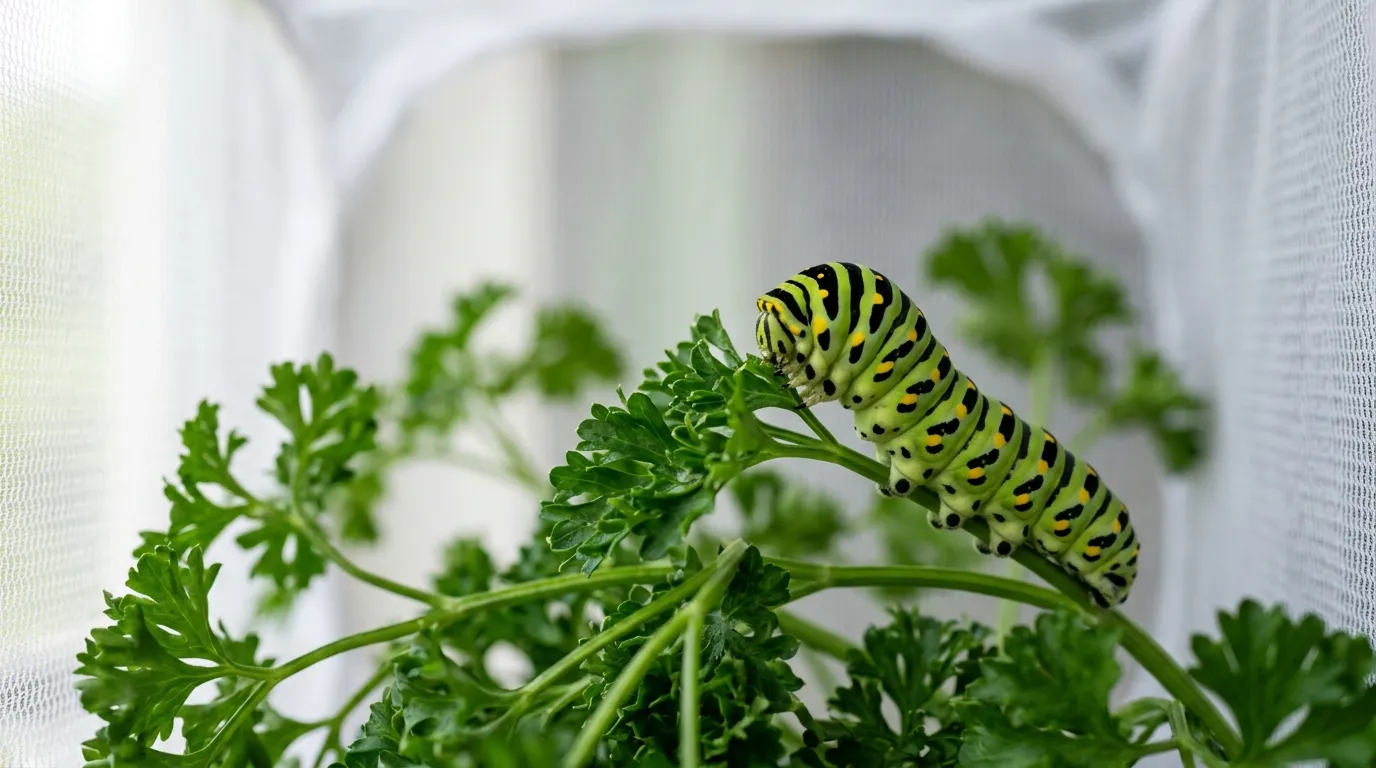
Black swallowtails (Papilio polyxenes) are the go-to starter species. Their caterpillars eat plants in the carrot family – parsley, dill, fennel, Queen Anne’s lace, and rue. You can buy a $3 pot of curly parsley at any grocery store and feed a caterpillar through its entire larval stage. These caterpillars are also bold and handleable, which makes daily care less stressful for beginners.
Giant swallowtails (Papilio cresphontes) feed on citrus leaves and plants in the Rutaceae family, including prickly ash and hop tree. If you live in the southern U.S. or have potted citrus trees, giant swallowtails are a solid choice. Their caterpillars look like bird droppings, which is fascinating to watch up close. Just know they need more leaf material than black swallowtails because they grow considerably larger.
Spicebush swallowtails (Papilio troilus) require spicebush (Lindera benzoin) or sassafras as host plants. If you want to read more about what these caterpillars need, check out this spicebush swallowtail host plants guide. Spicebush caterpillars create silk leaf shelters and have striking false eyespots that make them look like tiny snakes. They’re rewarding to raise but harder to keep fed since you can’t just buy their host plants at the supermarket.
Eastern tiger swallowtails feed on tulip tree, wild cherry, and sweetbay magnolia. They’re less commonly reared indoors because their host plants are full-sized trees, making leaf sourcing impractical unless you have those trees in your yard. You can learn about their larval stage in this piece on eastern tiger swallowtail caterpillars.
Setting Up Your Rearing Enclosure
The enclosure you use matters more than most people realize. Good airflow prevents mold and bacterial growth. Enough space lets caterpillars move and find fresh food. And visibility lets you monitor without constantly opening the container and stressing the larvae.
Mesh Popup Cages
Mesh popup cages (sometimes sold as butterfly habitats or insect rearing cages) are the gold standard for indoor rearing. They come in various sizes, but a 12x12x12 inch cage works well for raising two to four caterpillars at a time. The mesh walls allow air circulation while keeping caterpillars contained and safe from household hazards like pets and ceiling fans.
Place host plant cuttings in a small jar or vase of water inside the cage. Wrap the jar opening with plastic wrap or foil to prevent caterpillars from falling in and drowning. This keeps the cuttings fresh for two to three days, which cuts down on the number of plant changes you need to do.
Clear Plastic Containers
For very young caterpillars (first and second instar), a clear deli cup or small plastic container works well. Line the bottom with a paper towel for easy cleanup. Poke small holes in the lid for ventilation, or cover with a piece of fine mesh secured by a rubber band. The advantage of small containers is that tiny caterpillars can find their food more easily when it’s right next to them.
Transfer caterpillars to a larger mesh cage once they reach their third instar. By that point they’re eating more, producing more frass, and need better airflow to stay healthy.
What to Avoid
Glass aquariums and sealed terrariums are poor choices. They trap moisture, promote mold growth, and create stuffy conditions that stress caterpillars and encourage disease. If you must use a glass tank, replace the solid lid with a screen cover and keep it in a room with decent air movement.
Finding Eggs and Caterpillars
You have two options: go find them in the wild, or attract egg-laying females to your garden and collect from there.
Swallowtail eggs are tiny spherical objects, usually pale yellow or cream-colored, laid singly on the leaves of host plants. Black swallowtail females lay their eggs one at a time on parsley, dill, and fennel. Check the tops of leaves and along stems. The eggs are about 1mm across, so you’ll need to look carefully.
If you plant a patch of dill or parsley in a sunny spot, black swallowtail females will typically find it within a few weeks during the growing season. Watching a female methodically test each plant with her front feet before depositing an egg is worth the wait on its own.
Collecting caterpillars is easier than finding eggs. Look for frass on leaves as a telltale sign. Young black swallowtail caterpillars are black with a white saddle mark, while older instars display the familiar green, black, and yellow banding. When you find one, gently transfer it along with the plant stem it’s on. Don’t pull a caterpillar off its leaf – let it walk onto a new piece of host plant, then move the whole thing into your enclosure.
Daily Care and Feeding
The daily routine for raising swallowtails indoors is straightforward but needs to be consistent.
Replace host plant cuttings every one to three days, or whenever the leaves look wilted or dried out. Caterpillars won’t eat dead or dried leaves. Always wash fresh cuttings under running water before offering them – this removes any pesticide residue, dirt, or parasitoid eggs that might be hitchhiking on the plant surface.
Clean out frass daily or every other day. Accumulated frass in a humid environment breeds bacteria fast. If you’re using a paper towel liner, just swap it out. In a mesh cage, you can shake the frass out through the bottom or use a small brush.
Keep your rearing setup at room temperature, roughly 68 to 78 degrees Fahrenheit. Swallowtail caterpillars will eat and grow faster in warmer conditions but do fine anywhere in that range. Avoid placing cages in direct sunlight, which can overheat a small enclosure rapidly. A bright room with indirect light is the sweet spot.
You don’t need to mist or add extra water. Caterpillars get all the moisture they need from the leaves they eat. Adding water to the enclosure just raises humidity and increases the risk of fungal problems.
Handling Swallowtail Caterpillars Safely
Swallowtail caterpillars have a unique defense organ called the osmeterium – a bright orange or yellow forked gland they evert from behind their head when threatened. It releases a foul-smelling chemical that deters predators. If your caterpillar flashes this at you during handling, it’s telling you to back off. The smell is unpleasant but completely harmless to humans.
When you need to move a caterpillar, the gentlest method is to place a piece of host plant in front of it and let it walk on. If you need to pick it up directly, let it crawl onto your finger rather than grabbing it. Their prolegs grip surprisingly hard, and pulling a caterpillar off a leaf by force can injure its legs or the silk pad it’s standing on.
Avoid handling caterpillars during a molt. You can tell a molt is coming when the caterpillar stops eating, sits motionless for 12 to 24 hours, and its head capsule appears slightly detached. Leave it completely alone during this period. The new skin underneath is soft and vulnerable, and any disturbance can cause a failed molt that kills the caterpillar.
Understanding the Full Lifecycle Indoors
The swallowtail butterfly life cycle follows the same four stages whether the butterfly develops outdoors or in your kitchen. But raising them indoors lets you observe details that are almost impossible to catch in the field.
Eggs hatch in about four to ten days depending on species and temperature. The tiny first-instar caterpillar usually eats its own eggshell first – it contains nutrients the caterpillar needs before it starts on plant material. From there, swallowtail caterpillars go through five instars (growth stages), shedding their skin between each one.
The entire caterpillar stage takes roughly two to four weeks. During the final instar, the caterpillar will eat voraciously for several days, then stop eating and begin what’s sometimes called the “wandering phase.” It leaves the host plant and searches for a suitable pupation site. In an indoor setting, many caterpillars will crawl to the top or sides of the cage and attach there.
A swallowtail caterpillar forms its chrysalis differently from monarchs. Instead of hanging upside down from a silk button, swallowtail caterpillars attach with a silk girdle – a thin band of silk around their midsection that holds them upright against a vertical surface, like a climber leaning back on a rope. They also attach their rear end to a silk pad. The whole setup holds the chrysalis at an angle against whatever surface the caterpillar chose.
Chrysalis Management and Timing
Once a caterpillar forms its chrysalis, your job shifts from active feeding to patient waiting. The pupal stage for most swallowtails lasts 10 to 14 days during warm summer months. But there’s a major variable that trips up a lot of first-time rearers: diapause.
Diapause is a dormancy period triggered by shortening day length and cooler temperatures. Swallowtail caterpillars that pupate in late summer or fall often produce chrysalises that won’t eclose (the term for a butterfly emerging) until the following spring. The chrysalis is alive but in a state of suspended development. This is completely normal for the last generation of the season.
If you’re raising caterpillars in August or September, expect a decent percentage of your chrysalises to enter diapause. You can overwinter them outdoors in a sheltered spot like an unheated garage, shed, or covered porch. The chrysalis needs to experience natural temperature cycles through winter. Keeping a diapausing chrysalis in a heated house can cause it to emerge too early when there are no flowers or mates available.
According to the Florida Museum of Natural History, swallowtail chrysalises that are overwintered in conditions too warm or too dry often fail to develop properly. Aim for temperatures between 35 and 50 degrees Fahrenheit during the winter months, with occasional light misting if the air is very dry.
To tell whether a chrysalis is alive, look for subtle color changes as development progresses. A few days before emergence, the chrysalis may darken as the wing patterns become visible through the pupal shell. If a chrysalis turns black, shrivels, or develops soft spots, it has likely died from disease or desiccation.
Release Day: Getting It Right
Eclosion usually happens in the morning. The butterfly splits the chrysalis at the top and pulls itself out over a period of about one to three minutes. Its wings are crumpled and wet at first. The butterfly pumps hemolymph (insect blood) into the wing veins to expand them, then hangs motionless for one to two hours while the wings dry and harden.
Do not touch the butterfly or its wings during this drying period. The wings are extremely soft, and even gentle pressure can cause permanent damage. Let the butterfly tell you when it’s ready – it will start slowly opening and closing its wings, then fluttering and attempting short flights.
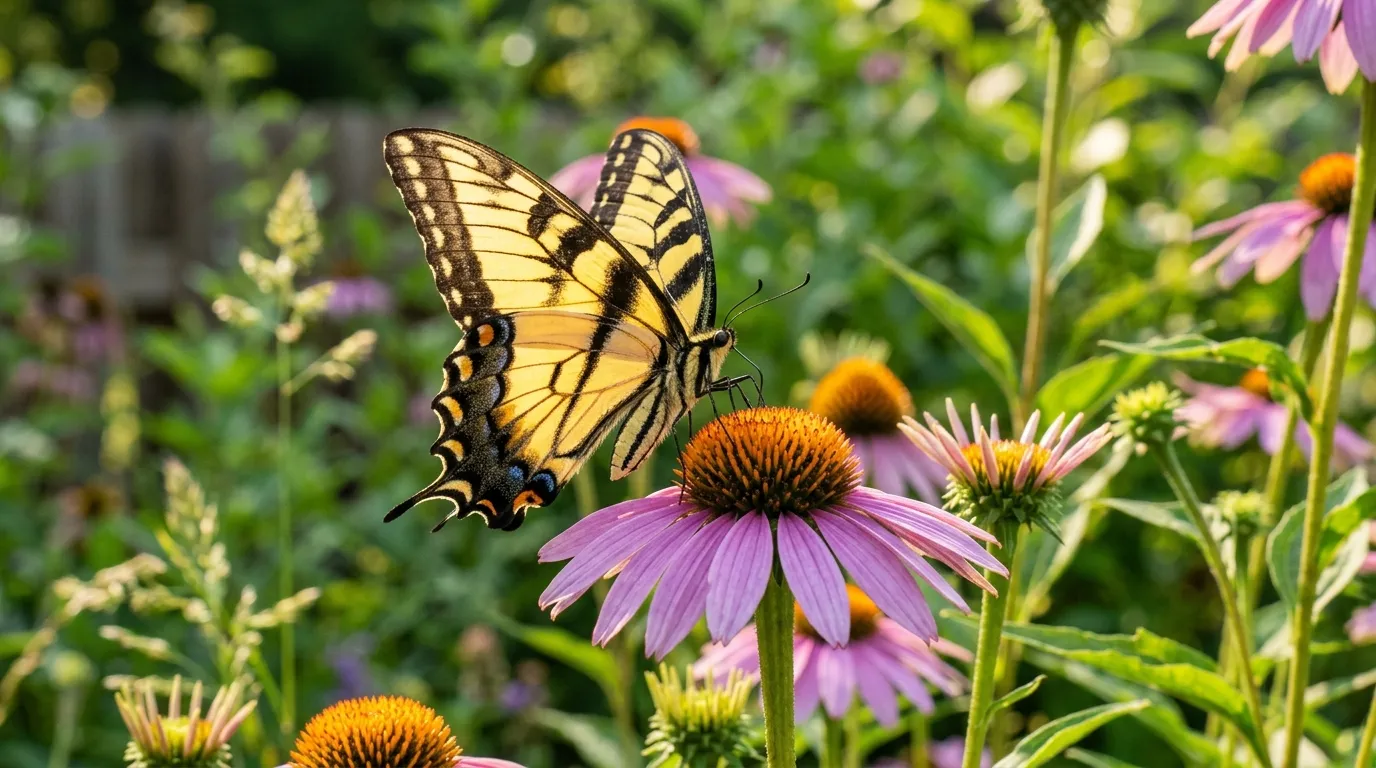
Release in the morning on a warm, calm day with temperatures above 60 degrees Fahrenheit. Avoid releasing during rain, strong wind, or late in the evening when the butterfly won’t have time to find shelter and nectar. Place the butterfly on a flower or sunny surface and let it take off on its own schedule. Some leave immediately. Others sit for 10 to 20 minutes warming up before their first flight.
If a butterfly emerges during a stretch of bad weather, you can keep it indoors for a day or two. Offer a cotton ball soaked in sugar water (one part sugar to four parts water) as a temporary food source. Place it near the butterfly’s feet – they taste with their front tarsi and will often unfurl their proboscis when they detect sugar.
Common Problems and How to Handle Them
Tachinid Fly Parasitism
Tachinid flies are the most common parasitoid of swallowtail caterpillars. The adult fly lays tiny white eggs on the caterpillar’s skin, or in some species, deposits larvae directly into the caterpillar’s body. The parasitoid larvae develop inside the caterpillar, feeding on non-vital tissues at first, then killing the host during or after pupation.
Signs of tachinid parasitism include small white eggs stuck to the caterpillar’s skin (look behind the head and on the thorax), unusual lethargy, and – most distinctively – white or tan maggots emerging from the chrysalis instead of a butterfly. If you see white eggs on a caterpillar you’ve just collected, you can gently scrape them off with a damp cotton swab, but internal larvae that were deposited before collection can’t be removed.
There’s no treatment once a caterpillar is internally parasitized. According to the University of Florida’s Featured Creatures database, tachinid flies are widespread biological control agents with over 1,300 species in North America. Losing some caterpillars to tachinids is a normal part of the process.
Nuclear Polyhedrosis Virus (NPV) and Bacterial Infections
Black liquefied caterpillars are usually the result of NPV or bacterial infections. An infected caterpillar stops eating, turns dark, becomes limp, and eventually ruptures. The virus is highly contagious – if one caterpillar in your enclosure gets it, isolate it immediately and disinfect the cage with a 10% bleach solution before adding new caterpillars.
Prevention is the best strategy. Wash all host plant material before offering it, clean frass daily, don’t overcrowd your cages, and never mix wild-caught caterpillars with ones you’ve been raising for a while without a quarantine period of at least a few days.
Failed Eclosion
Sometimes a butterfly partially emerges from the chrysalis but can’t fully extract itself. This can happen because humidity was too low and the chrysalis shell hardened too much, or because the chrysalis was in a position that didn’t give the butterfly enough room to hang and expand its wings.
If you notice a butterfly struggling to emerge for more than 15 to 20 minutes, you can very carefully use fine-pointed tweezers to peel back small pieces of the chrysalis shell. This is delicate work. Be extremely cautious not to puncture the butterfly’s abdomen or damage its wings. Even with help, butterflies that had difficult eclosions may end up with crumpled wings that never fully expand. These individuals can’t be released but can live out their short remaining lifespan in a mesh cage with sugar water and cut fruit.
Fallen Chrysalises
A chrysalis that falls from its silk girdle isn’t necessarily doomed. You can reattach it using a small dot of non-toxic school glue (like Elmer’s) applied to the cremaster (the hook-like structure at the base of the chrysalis). Press it gently against a rough surface like a piece of cork, a wooden stick, or a folded paper towel taped to the inside of the cage. The butterfly needs to hang freely so it can expand its wings after emerging. According to the Monarch Joint Venture, which provides rearing guidelines applicable to many butterfly species, reattached chrysalises have a high success rate as long as they’re oriented properly and have room below them.
Host Plant Quick Reference by Species
Matching the right plant to the right species is non-negotiable. Swallowtail caterpillars are host-specific and will starve rather than eat the wrong plant. Here’s a quick reference for the species most commonly raised indoors.
Black swallowtail caterpillars eat flat-leaf parsley, curly parsley, dill, fennel, Queen Anne’s lace, rue, and golden alexanders. Parsley and dill are the easiest to source year-round from grocery stores.
Giant swallowtail caterpillars eat citrus leaves (orange, lemon, lime, grapefruit), prickly ash (Zanthoxylum americanum), hop tree (Ptelea trifoliata), and common rue (Ruta graveolens). Potted citrus from nurseries works well.
Spicebush swallowtail caterpillars eat spicebush (Lindera benzoin), sassafras (Sassafras albidum), and occasionally tulip tree. Fresh-cut branches in water stay usable for three to four days.
Pipevine swallowtail caterpillars eat pipevine (Aristolochia species) exclusively. These plants contain aristolochic acid, which makes both the caterpillars and adult butterflies toxic to predators.
Eastern tiger swallowtail caterpillars eat tulip tree (Liriodendron tulipifera), wild cherry (Prunus serotina), sweetbay magnolia, and ash. Leaf cuttings from these trees in water stay fresh for about two days before needing replacement.
Frequently Asked Questions
How long does it take to raise a swallowtail from egg to adult?
The full process takes roughly four to six weeks during warm months. Eggs hatch in four to ten days, the caterpillar stage lasts two to four weeks across five instars, and the pupal stage runs 10 to 14 days. Chrysalises that enter diapause in late summer won’t produce adults until the following spring, which extends the timeline to several months.
Can I raise swallowtails year-round indoors?
Not easily. Swallowtails are seasonal breeders, and you’d need a continuous supply of fresh host plants, which is hard to maintain in winter unless you grow parsley or dill under grow lights. You’d also need to manipulate photoperiod (day length) to prevent caterpillars from producing diapausing chrysalises. Most hobbyists raise swallowtails from late spring through early fall and take a break during winter.
Is it legal to raise swallowtails indoors?
Raising native swallowtail species in small numbers for personal observation and release is generally permitted throughout the United States. Some states do regulate captive rearing, especially for commercial purposes. Endangered species like the Schaus’ swallowtail and the Oregon silverspot are federally protected and cannot be collected or reared without permits. Always check your state’s wildlife regulations if you’re unsure.
What should I do if my caterpillar isn’t eating?
First, confirm you have the right host plant for your species. A swallowtail caterpillar on the wrong plant will refuse to eat and starve. If the plant is correct, the caterpillar may be preparing to molt – they stop eating for 12 to 24 hours before shedding their skin. If neither explanation fits, check the plant for pesticide contamination. Grocery store herbs are sometimes treated with systemic pesticides that can sicken or kill caterpillars even after washing.
How many caterpillars can I keep in one cage?
For a standard 12x12x12 inch mesh cage, four to six caterpillars is a comfortable number. Overcrowding increases competition for food, raises humidity from excess frass, and creates stress that can make caterpillars more susceptible to disease. If you’re rearing larger numbers, use multiple cages and keep populations separated rather than cramming them all into one enclosure.
My chrysalis has been hanging for three weeks with no sign of life. Is it dead?
Not necessarily. If the chrysalis formed in late summer or fall, it has probably entered diapause and won’t emerge until spring. A living chrysalis maintains its shape and color (green or brown depending on species). A dead chrysalis typically becomes discolored, develops dark or soft spots, or feels hollow and lightweight when gently touched. If you’re unsure, give it time. Diapausing chrysalises can remain dormant for six to nine months and still produce healthy butterflies.