



Exploring the Vibrant World of Tiger Moths
Tiger moths are some of the most recognizable moths in North America and Europe. Belonging to the subfamily Arctiinae (previously classified as their own family, Arctiidae), these insects stand out with loud color combinations of orange, red, black, and white that warn predators to stay away. Around 11,000 species exist worldwide, and their caterpillars – particularly the woolly bear – are among the few insects most people can name on sight.
What makes tiger moths unusual isn’t just the way they look. They pack a range of chemical defenses, and some species can produce ultrasonic clicks that interfere with bat echolocation. That combination of bold appearance and sophisticated survival tactics puts them in a class of their own among the Lepidoptera.
Key Takeaways
- Tiger moths belong to the subfamily Arctiinae and include roughly 11,000 species worldwide, many of them displaying aposematic (warning) coloration in orange, red, black, and white.
- Their defense systems go beyond color – many tiger moth species sequester toxic alkaloids from host plants, and certain species produce ultrasonic clicks from tymbal organs to jam bat sonar.
- The Isabella tiger moth’s caterpillar, the banded woolly bear, has been used in North American folklore to predict winter severity for over a century, though the band width actually reflects larval age and food quality.
- Common species you’re likely to encounter include the garden tiger moth, Isabella tiger moth, Virginia ctenucha, and scarlet tiger moth, each with distinct patterns that make field identification straightforward.
Why Tiger Moths Look the Way They Do
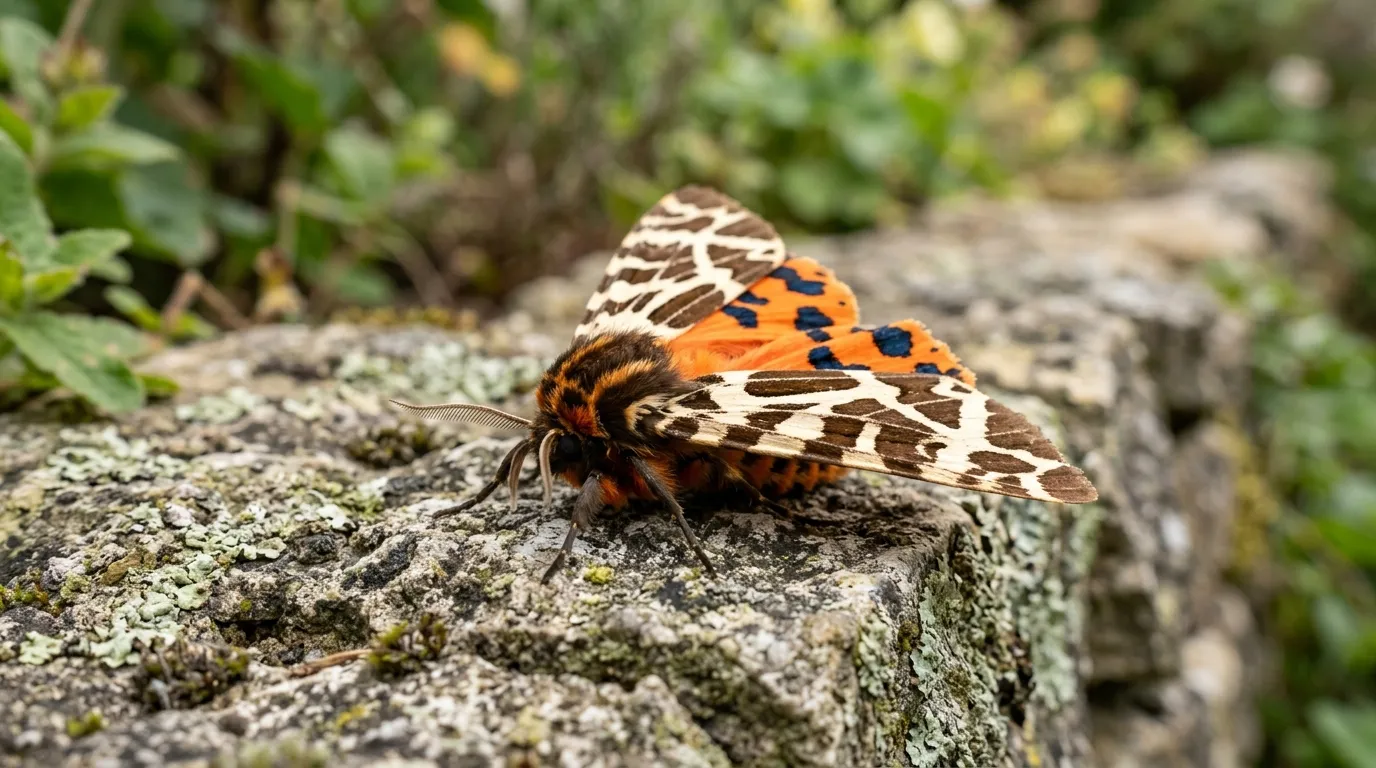
The bold patterns on tiger moths serve a specific purpose. In biology, this kind of coloring is called aposematic – a visual signal that tells predators the animal is toxic, foul-tasting, or otherwise not worth eating. Birds that bite into a garden tiger moth once tend to remember the experience and avoid anything with similar markings in the future.
Many tiger moth species back up those visual warnings with real chemical defenses. As caterpillars, they feed on plants containing pyrrolizidine alkaloids and other toxic compounds. Instead of breaking these chemicals down, the larvae store them in their body tissues, carrying the toxins through pupation and into the adult moth. Some species can even synthesize their own defensive chemicals if their larval diet didn’t provide enough.
The color schemes vary across species, but the pattern is consistent: high-contrast combinations that are easy for a predator to learn and remember. Cream and chocolate brown forewings paired with bright orange hindwings. Scarlet wings crossed with black spots. Metallic blue bodies topped with orange heads. None of it is accidental. Each combination acts as an advertisement that this particular moth will make a terrible meal.
This defense strategy works well enough that some non-toxic moths and even a few butterfly species have evolved to mimic tiger moth patterns, freeloading on the protection those warning colors provide.
Clicking Back at Bats
Color patterns work against birds and lizards that hunt by sight. But tiger moths also fly at night, which means they face a predator that doesn’t care what they look like: bats.
Bats hunt using echolocation, sending out ultrasonic pulses and listening for the returning echoes that reveal an insect’s position. Several tiger moth species have evolved a direct countermeasure. Using structures called tymbal organs on their thorax, these moths produce rapid bursts of ultrasonic clicks when they detect bat sonar. Research published in the journal Science confirmed that these clicks actively jam bat echolocation, causing bats to miss their targets during attack runs.
The clicking serves more than one function. In some species, the sounds act as an acoustic version of warning coloration – a bat hears the clicks, associates them with a bad-tasting meal from previous experience, and veers off. In other species, the clicks genuinely scramble the bat’s sonar return, making the moth’s position harder to pinpoint. A few species appear to use both strategies depending on the situation.
Not all tiger moths can do this. The ability seems concentrated in certain genera, and the effectiveness varies. But the basic principle – a moth that can talk back to a bat in its own acoustic language – remains one of the more remarkable defense adaptations in any insect group. The differences between moths and butterflies run deep, and bat defense is one area where moths have had to develop tools that daytime butterflies never needed.
Common Tiger Moth Species Worth Knowing
With thousands of species globally, no single guide can cover them all. But a handful of tiger moths are widespread, frequently encountered, and distinctive enough that you can learn to recognize them without magnification or specialized knowledge.
Garden Tiger Moth (Arctia caja)
The garden tiger moth is the species most people picture when they hear the name “tiger moth.” Found across northern Europe, northern Asia, and parts of North America, it has cream-colored forewings marked with irregular chocolate brown patches – no two individuals have exactly the same pattern. The hindwings are bright orange with large blue-black spots, and the moth flashes them when disturbed to startle a predator.
Garden tiger moth populations have declined noticeably in the UK over the past several decades. According to data from the Butterfly Conservation trust, the species has experienced significant population drops linked to warmer, wetter winters that kill overwintering caterpillars. The larvae – large, dark, and extremely hairy – used to be a common sight in British gardens. They are less frequently spotted now.
Isabella Tiger Moth (Pyrrharctia isabella)
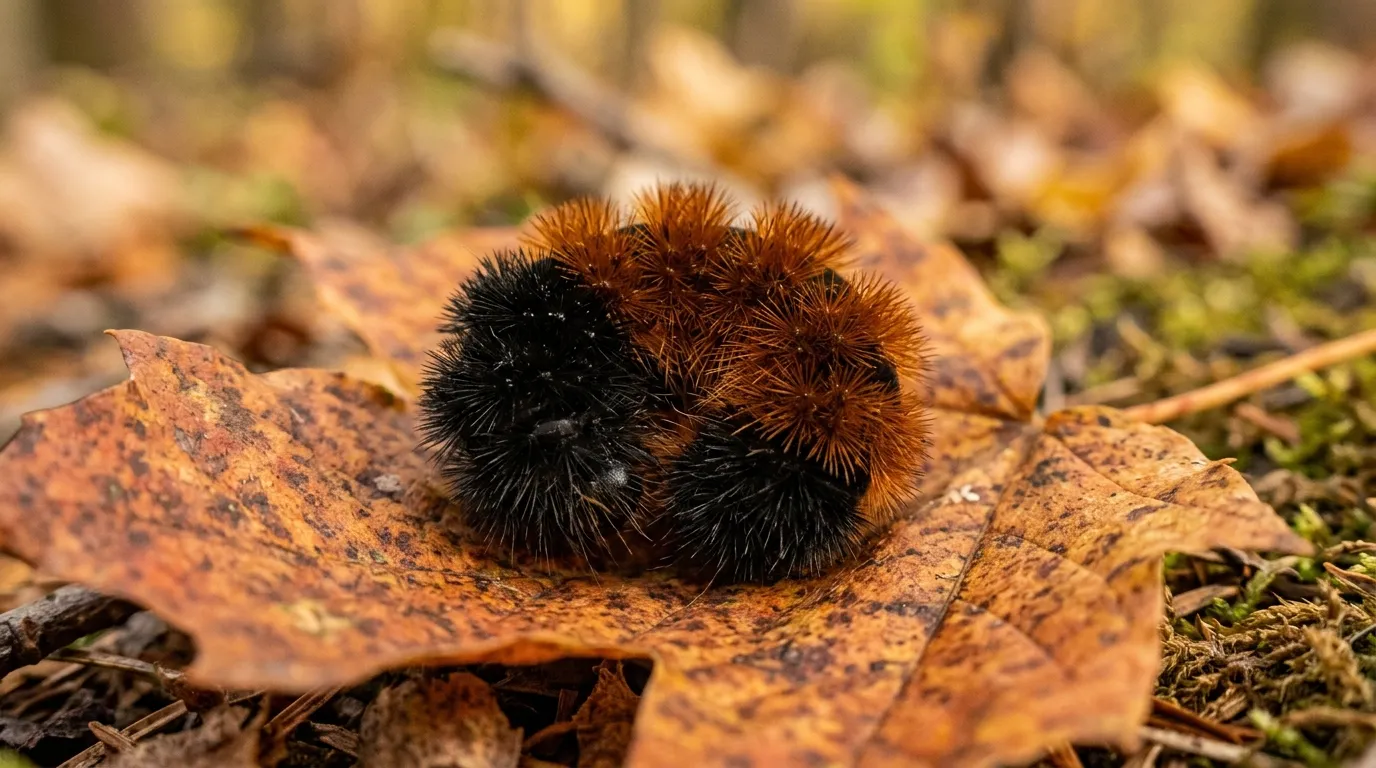
The adult Isabella tiger moth is a plain, yellowish-tan moth that few people would look at twice. Its caterpillar, though, is famous. The banded woolly bear – covered in dense bristles of black at both ends and reddish-brown in the middle – is one of the most recognized caterpillars in North America.
Woolly bears are commonly seen crossing roads and sidewalks in autumn as they search for sheltered spots to spend the winter. They can survive freezing temperatures by producing cryoprotectant compounds in their blood, essentially their own natural antifreeze. In spring, they thaw out, eat for a few more weeks, and then pupate into the unremarkable adult moth.
The species ranges across virtually all of North America, from southern Canada to northern Mexico. It feeds on a wide variety of low-growing plants, which makes it one of the most adaptable tiger moth caterpillars around. Insect lifespans vary wildly across the Lepidoptera, and the Isabella tiger moth’s strategy of overwintering as a larva rather than a pupa gives it an unusually long caterpillar stage – sometimes over eight months.
Virginia Ctenucha (Ctenucha virginica)
Virginia ctenucha moths break the typical tiger moth mold. Instead of bright orange or red warning colors, they sport a metallic blue-black body, dark wings with a faint bronze sheen, and a bright orange head. The overall look is closer to a wasp than a typical moth, which may be part of the point – wasp mimicry provides its own layer of protection.
These moths are day-fliers, active in meadows and fields during June and July across the northeastern US and southeastern Canada. You’ll often see them nectaring on flowers alongside butterflies, which surprises people who assume all moths are nocturnal. Their caterpillars feed on grasses and sedges, and the larvae are covered in tufts of yellow and black bristles.
Scarlet Tiger Moth (Callimorpha dominula)
The scarlet tiger moth is a European species that flies during the day. Its forewings are glossy black with white and yellow spots, while the hindwings are scarlet red with black markings. It’s a striking insect, and because it flies in sunshine through meadows and along hedgerows, it gets noticed more than most moths.
Scarlet tiger moths have played a genuine role in the history of genetics. The population at Cothill Fen in Oxfordshire, England was studied by ecological geneticist E.B. Ford and others for decades as a case study in genetic drift and natural selection. The moths at that site show a rare pattern variant called medionigra, and tracking the frequency of this variant over generations provided some of the earliest real-world evidence that natural selection could cause measurable changes in wild populations. The work contributed to the field that became known as ecological genetics – the same field where the peppered moth became another landmark case study.
The Woolly Bear Winter Prediction Myth
Every fall in the eastern US, someone will pick up a woolly bear caterpillar and announce what kind of winter is coming based on the width of its brown band. Wide brown band means a mild winter. Narrow brown band means a harsh one. This bit of folk wisdom has been around since at least the colonial era, and it still gets media coverage every October.
The tradition got a scientific-sounding boost in 1948 when Dr. C.H. Curran of the American Museum of Natural History collected woolly bears in Bear Mountain, New York and compared their band widths to the subsequent winter weather. He reported a correlation. The study was informal and the sample sizes were small, but it caught public attention and cemented the woolly bear’s reputation as a weather prophet.
The actual science is more straightforward. The width of a woolly bear’s brown band is determined by how old the caterpillar is and how well it has been eating. Caterpillars that hatched earlier in the season or found better food supplies tend to have wider brown bands because they’ve molted more times – the brown section grows wider with each successive molt while the black ends stay roughly the same. A field full of well-fed, early-hatching woolly bears will show wide bands regardless of what the winter has planned.
Still, the Woolly Bear Festival in Vermilion, Ohio has been running since 1973, drawing thousands of visitors each October. The caterpillars may not predict the weather, but they’ve built a small tourism industry just the same.
How to Identify Tiger Moths in the Field
Tiger moths are generally easier to identify than many moth groups because their bold patterns make them stand out. A few features will help you confirm that you’re looking at an arctiine rather than something else.
Body shape comes first. Tiger moths tend to have thick, furry bodies – densely covered in scales that give them a plush look. The thorax is often a different color from the abdomen, and many species have bright abdominal banding in orange, yellow, or red. If you see a moth that looks like it’s wearing a fur coat, there’s a good chance it falls somewhere in Arctiinae.
Wing patterns are the primary identification tool for most species. Look at the forewing first – the color, the arrangement of spots or bands, and whether the pattern is regular or irregular. Then check the hindwings, which many tiger moths keep hidden at rest and only flash when disturbed. The hindwing color (orange, red, yellow, or white) combined with the forewing pattern usually narrows the field to one or two species.
Caterpillar identification follows different rules. Most tiger moth larvae are conspicuously hairy, often covered in dense tufts of bristles that can be black, brown, orange, white, or a mix. The woolly bear look is common across the subfamily, though the exact bristle arrangement and color pattern varies. Some tiger moth caterpillars carry urticating hairs that can cause skin irritation, so handling them bare-handed isn’t recommended.
Time of year and behavior also help. Day-flying tiger moths like the Virginia ctenucha and scarlet tiger are easy to spot. Nocturnal species often come to porch lights and can be found resting on walls and window screens in the morning. Many species have a single generation per year with a predictable flight window, so knowing when to expect local species simplifies the identification process.
Frequently Asked Questions
Are tiger moths dangerous to humans?
Adult tiger moths are harmless. They don’t bite, sting, or carry diseases. Some tiger moth caterpillars have bristly hairs that can cause mild skin irritation or a rash if handled, similar to fiberglass splinters. The chemical defenses these moths carry are targeted at bird and bat predators and don’t pose any risk to people at the concentrations involved. You can safely observe and photograph tiger moths at close range without concern.
Do woolly bear caterpillars really predict winter weather?
No. The width of a woolly bear’s brown band reflects the caterpillar’s age and nutritional history, not future weather patterns. Caterpillars that hatched earlier in the season or had access to better food sources grow wider brown bands through successive molts. Multiple studies have found no statistically significant correlation between woolly bear band width and subsequent winter severity. The tradition is persistent folk wisdom, but it has no predictive value.
Where can I find tiger moths?
Tiger moths are found on every continent except Antarctica. In North America, the greatest diversity is in temperate regions with mixed vegetation. Check meadows, gardens, woodland edges, and grasslands during summer months. Many species come to lights at night, so a porch light or a white sheet illuminated by a blacklight will attract them. Day-flying species like Virginia ctenucha are found nectaring on wildflowers in open fields from late May through July.
What do tiger moth caterpillars eat?
Most tiger moth caterpillars are generalist feeders, eating a broad range of herbaceous plants, grasses, and low-growing vegetation. The woolly bear will eat dandelions, plantain, clover, nettles, and dozens of other common plants. Some species are more specialized – certain tropical tiger moths feed on plants rich in pyrrolizidine alkaloids specifically to accumulate those defensive toxins. Garden tiger moth caterpillars have been recorded feeding on over 100 different plant species.
How do tiger moths make ultrasonic clicks?
Tiger moths that produce clicks use paired tymbal organs located on the sides of the thorax. These tymbals are thin, ridged membranes backed by air sacs. When the moth contracts muscles attached to the tymbal, the membrane buckles inward, producing a click. When the muscle relaxes, the membrane pops back out, producing another click. The rapid contraction and release can generate trains of clicks at rates high enough to overlap with and disrupt bat echolocation frequencies, typically in the 20-80 kHz range.
Are tiger moth populations declining?
Some species are experiencing population declines. The garden tiger moth has seen significant drops in the UK, linked to changing winter weather patterns that affect overwintering caterpillar survival. Light pollution, pesticide use, and habitat loss also affect tiger moth populations in developed areas. Other species remain common and widespread. Population trends vary considerably by species and region, so blanket statements about the group as a whole don’t capture the full picture.