


Lepidoptera pronunciation trips up almost everyone the first time they see it. The word is pronounced lep-ih-DOP-ter-uh, with the stress landing firmly on that third syllable. It comes from the Greek words “lepis” (scale) and “pteron” (wing), which makes sense once you realize that every butterfly and moth wing is covered in thousands of tiny overlapping scales. Once you break it into four syllables and know where the emphasis goes, it rolls off the tongue without much trouble.
Key Takeaways
- Lepidoptera is pronounced lep-ih-DOP-ter-uh, with the primary stress on the third syllable “DOP” and the word literally means “scale wing” from Greek roots.
- The six major butterfly families each have their own pronunciation patterns – Nymphalidae (nim-FAL-ih-dee), Papilionidae (pah-PIL-ee-ON-ih-dee), Pieridae (pie-EH-rih-dee), Lycaenidae (lye-SEE-nih-dee), Hesperiidae (hes-PEER-ee-ih-dee), and Riodinidae (ree-oh-DIN-ih-dee).
- Most butterfly scientific names follow Latin pronunciation rules where every vowel is sounded and the stress usually falls on the second-to-last or third-to-last syllable.
- Common genus names like Danaus (DAN-ay-us), Papilio (pah-PIL-ee-oh), and Vanessa (vah-NESS-ah) become easy once you practice them a few times out loud.
Breaking Down Lepidoptera Pronunciation Syllable by Syllable
The trick to getting Lepidoptera right is splitting it into manageable chunks. Here is the breakdown: LEP – ih – DOP – ter – uh. Five syllables total, with the heaviest stress on DOP. A lighter secondary stress sits on the first syllable LEP.
The most common mistake I hear is people trying to say “lep-ih-DOP-teh-RAH” with the stress shoved to the end. That pronunciation comes from treating the word as if it were Italian or Spanish, but in English scientific usage, the Latin ending “-era” gets reduced to a quick unstressed “-ter-uh.” Another frequent error is “lep-ih-DOPT-rah,” which mushes the last two syllables together and skips a beat.
If you want a memory trick, think of it as “leppy DOCTOR uh” spoken quickly. That gets the stress placement right even if the vowel sounds are not perfectly matching. After saying it five or six times, the real pronunciation takes over and replaces the mnemonic.
How to Pronounce the Six Butterfly Family Names
Once you move past the order name, you run into the family names. Every butterfly on the planet belongs to one of six families within the superfamily Papilionoidea (pah-PIL-ee-oh-NOY-dee-uh). Here is each one with a phonetic guide.
Nymphalidae is the largest butterfly family and includes monarchs, fritillaries, and admirals. Say it nim-FAL-ih-dee. The stress sits on FAL. People frequently stumble by pronouncing the initial N-Y as “nime” when it should sound more like the word “nymph” with an added syllable.
Papilionidae covers the swallowtails and birdwings. It goes pah-PIL-ee-ON-ih-dee, with the primary stress on ON and a secondary stress on PIL. This one has six syllables and sounds like a mouthful, but the root word is just “papilio” – the Latin word for butterfly. You can read more about what that name means in the swallowtail scientific name guide.
Pieridae includes the whites, sulphurs, and yellows. Pronounce it pie-EH-rih-dee. The stress hits EH. This family gets its name from the Pierides, the nine muses of Greek mythology, though the connection to white butterflies may trace back to the whiteness associated with the muses in classical art.
Lycaenidae is the family of blues, coppers, and hairstreaks. This one is lye-SEE-nih-dee, with the stress on SEE. The name derives from Lycaena, which itself comes from the Greek “lykos” meaning wolf – a surprisingly fierce origin for a group of small, delicate butterflies.
Hesperiidae holds all the skippers. Say hes-PEER-ee-ih-dee, stressing PEER. Skippers get lumped in with butterflies but they sit on their own branch taxonomically, and the family name comes from the Greek “Hesperus,” the evening star.
Riodinidae covers the metalmarks. It goes ree-oh-DIN-ih-dee, with the stress on DIN. This small family is most diverse in the American tropics, and the name refers to the small metallic spots on many species’ wings.
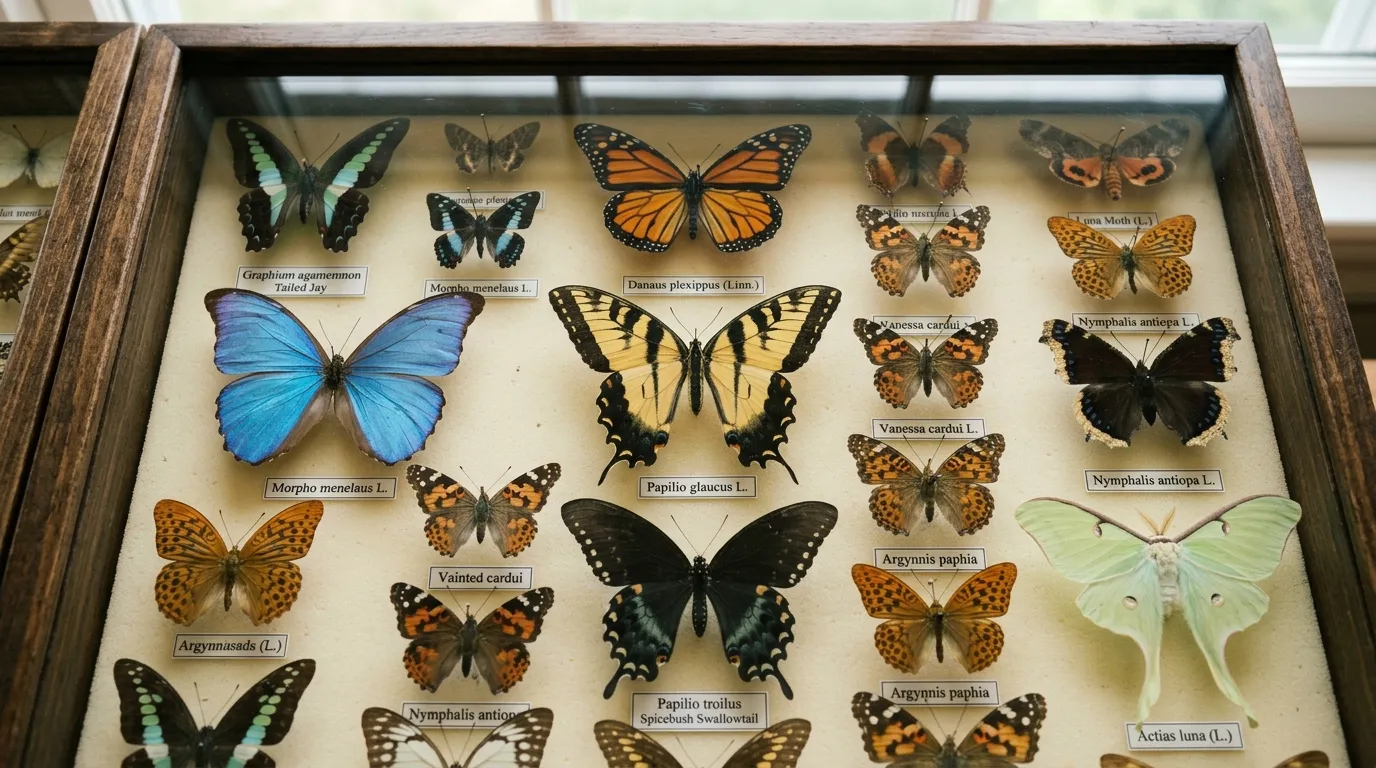
Pronouncing Common Butterfly Genus Names
Genus names are the first part of a species’ two-part scientific name. These show up constantly in field guides and nature articles, so knowing how to say them saves you from that awkward pause when you are trying to tell someone what you spotted.
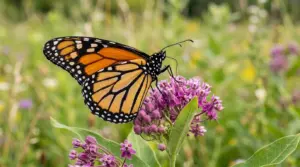
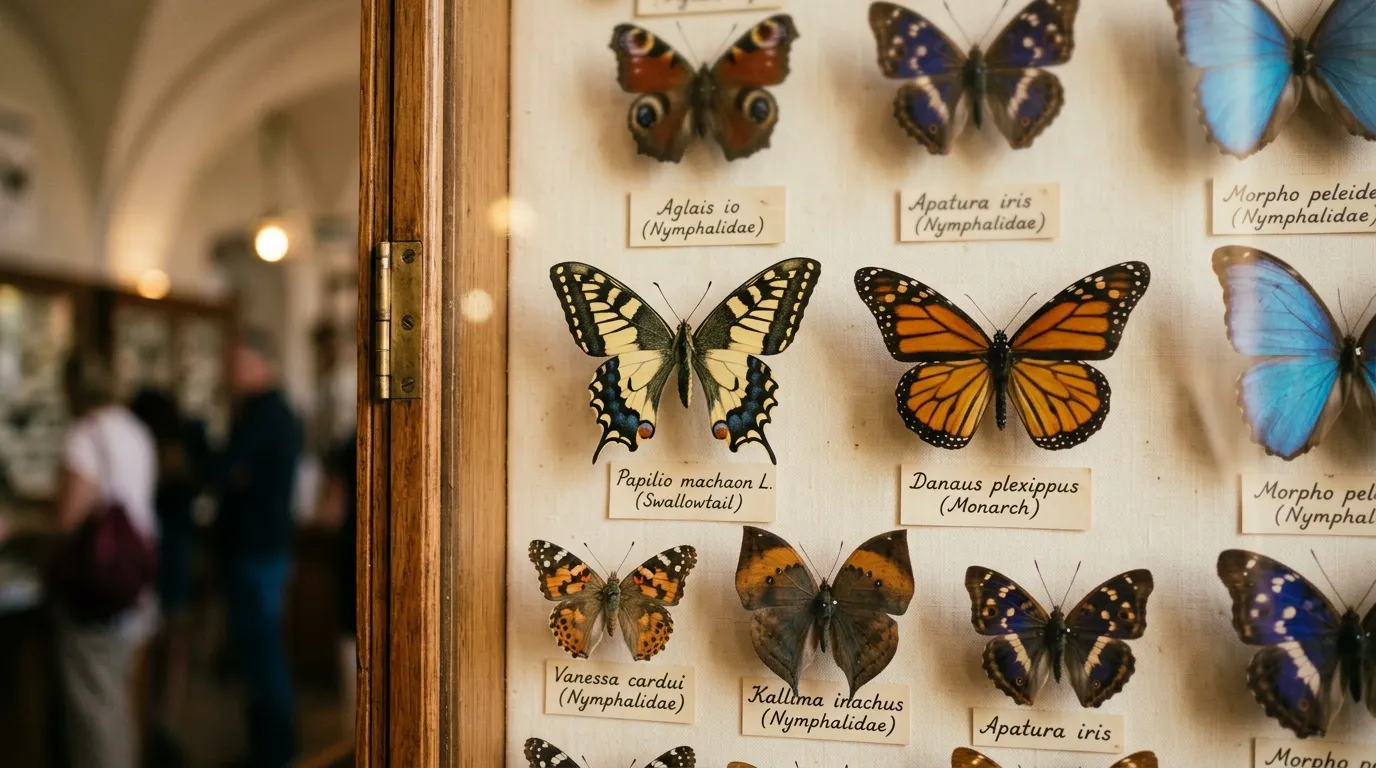
Danaus (DAN-ay-us) is the monarch genus. Three syllables, stress on DAN. Named after Danaus, a king in Greek mythology. The full name for a monarch butterfly is Danaus plexippus (DAN-ay-us plex-IP-us).
Papilio (pah-PIL-ee-oh) covers many swallowtail species. Four syllables, stress on PIL. This is straight Latin for “butterfly.” When someone says “a Papilio species,” they are talking about swallowtails like the black swallowtail or the Old World swallowtail.
Vanessa (vah-NESS-ah) includes the painted lady and red admiral. This one is easy because it sounds like the common first name. Three syllables, stress on NESS.
Colias (KOH-lee-as) is a genus of sulphur butterflies. Three syllables, stress on KOH. The clouded sulphur is Colias philodice (KOH-lee-as fil-OD-ih-see).
Heliconius (hel-ih-KOH-nee-us) encompasses the longwing butterflies of Central and South America. Five syllables, stress on KOH. These are the ones famous for Mullerian mimicry and feeding on pollen.
Morpho (MOR-foh) needs no complicated breakdown. Two syllables, stress on MOR. The blue morpho butterfly is one of the most recognized insects in the world, and at least this name is mercifully simple to pronounce.
Lepidoptera Pronunciation vs. Moth and Butterfly Subgroup Names
Knowing the difference between moths and butterflies also means knowing a few moth-specific taxonomic names. The order Lepidoptera contains both groups, but moths make up the vast majority – roughly 160,000 species compared to about 18,000 butterfly species.
Some common moth family names and their pronunciations include Sphingidae (SFIN-jih-dee) for hawk moths, Saturniidae (sat-ur-NEE-ih-dee) for giant silk moths, Geometridae (jee-oh-MET-rih-dee) for inchworm moths, and Noctuidae (nok-TOO-ih-dee) for owlet moths. Each follows the same Latin pronunciation convention where the “-idae” ending is always pronounced “ih-dee.”
That “-idae” ending is your friend. It marks every family-level name in zoological taxonomy. Once you internalize that it always sounds like “ih-dee,” you have cracked the ending for dozens of scientific names. You will never see it pronounced “eye-day” or “ih-day” in standard English scientific usage.
General Rules for Pronouncing Scientific Names
Latin scientific names follow patterns that make them more predictable than English spelling. Here are four rules that will get you through most butterfly names without embarrassment.
Every vowel gets pronounced. Unlike English, where vowels often go silent, Latin treats each one as a separate sound. The word “Pieridae” has four syllables (pie-EH-rih-dee), not two or three. Skipping vowels is the single biggest source of mispronunciation in scientific names.
The letter C is hard before A, O, and U (like “cat”) and soft before E and I (like “cell”). So Colias starts with a hard K sound, but the “ce” in Lycaenidae uses a soft S sound. The letter G follows the same general pattern – hard before A, O, U and soft before E and I – though this rule has more exceptions.
Stress in Latin names typically falls on the second-to-last syllable (penultimate) if that syllable is “long,” or the third-to-last syllable (antepenultimate) if the penultimate is “short.” You don’t need to memorize vowel length rules. Just knowing that the stress is usually somewhere in the middle of the word – not at the beginning or the end – gets you close enough for conversation.
The “ae” diphthong is traditionally pronounced like “ee” in classical Latin but most English-speaking entomologists say it as “ee” or “ay.” Both are accepted. You will hear Lycaenidae as either lye-SEE-nih-dee or lye-SAY-nih-dee depending on who is speaking, and neither is wrong. According to the Smithsonian Institution’s entomology division, there is no single authority governing pronunciation of taxonomic names, so regional variation is normal.
A Quick-Reference Pronunciation Table
Here is a reference list you can come back to. I have grouped them by category so you can find what you need fast.
Order level: Lepidoptera (lep-ih-DOP-ter-uh). Superfamily level: Papilionoidea (pah-PIL-ee-oh-NOY-dee-uh).
Butterfly families: Nymphalidae (nim-FAL-ih-dee), Papilionidae (pah-PIL-ee-ON-ih-dee), Pieridae (pie-EH-rih-dee), Lycaenidae (lye-SEE-nih-dee), Hesperiidae (hes-PEER-ee-ih-dee), Riodinidae (ree-oh-DIN-ih-dee).
Common genera: Danaus (DAN-ay-us), Papilio (pah-PIL-ee-oh), Vanessa (vah-NESS-ah), Colias (KOH-lee-as), Heliconius (hel-ih-KOH-nee-us), Morpho (MOR-foh), Battus (BAT-us), Limenitis (lih-MEN-ih-tis), Speyeria (SPAY-ree-ah).
Moth families: Sphingidae (SFIN-jih-dee), Saturniidae (sat-ur-NEE-ih-dee), Geometridae (jee-oh-MET-rih-dee), Noctuidae (nok-TOO-ih-dee).
Species names you might encounter: Danaus plexippus (DAN-ay-us plex-IP-us), Papilio glaucus (pah-PIL-ee-oh GLAW-kus), Vanessa cardui (vah-NESS-ah KAR-doo-ee), Pieris rapae (PIE-ris RAP-ee), Lycaena phlaeas (lye-SEE-nah FLEE-as). For a deeper look at how these classification levels connect, the University of Kentucky entomology department has a good overview of Lepidoptera taxonomy.
Frequently Asked Questions
What is the correct Lepidoptera pronunciation?
Lepidoptera is pronounced lep-ih-DOP-ter-uh. The primary stress falls on the third syllable “DOP.” It has five syllables total, and the word comes from the Greek “lepis” (scale) and “pteron” (wing), describing the scaled wings shared by all butterflies and moths.
Why do people mispronounce Lepidoptera?
The most common error is putting the stress on the wrong syllable, usually the last one. People often say “lep-ih-dop-TEH-rah” as if it were an Italian word. Others compress it into three or four syllables by skipping vowels. The word is long enough that people rush through it, which causes them to drop sounds.
How do you pronounce Nymphalidae?
Nymphalidae is pronounced nim-FAL-ih-dee. Four syllables, with the stress on FAL. This is the largest butterfly family and includes monarchs, painted ladies, admirals, and fritillaries. The initial “nym” sounds like the first syllable in “nymph.”
Is there only one correct way to say scientific names?
No. Scientific names are based on Latin, but they are used by speakers of many different languages. A French entomologist and an American entomologist will pronounce the same species name somewhat differently, and both are considered acceptable. The Smithsonian Institution and most taxonomic authorities acknowledge that no single pronunciation standard exists for scientific nomenclature.
What does the “-idae” ending mean and how is it pronounced?
The “-idae” suffix indicates a family-level classification in zoological taxonomy. It is always pronounced “ih-dee.” Every butterfly and moth family name ends with this suffix – Nymphalidae, Papilionidae, Pieridae, Sphingidae, and so on. Learning this one ending gives you the last two syllables of dozens of scientific names.
How do you pronounce Danaus plexippus?
The monarch butterfly’s scientific name is pronounced DAN-ay-us plex-IP-us. Danaus has three syllables with stress on DAN, and plexippus has three syllables with stress on IP. The genus name references King Danaus from Greek mythology, and plexippus was one of his sons.