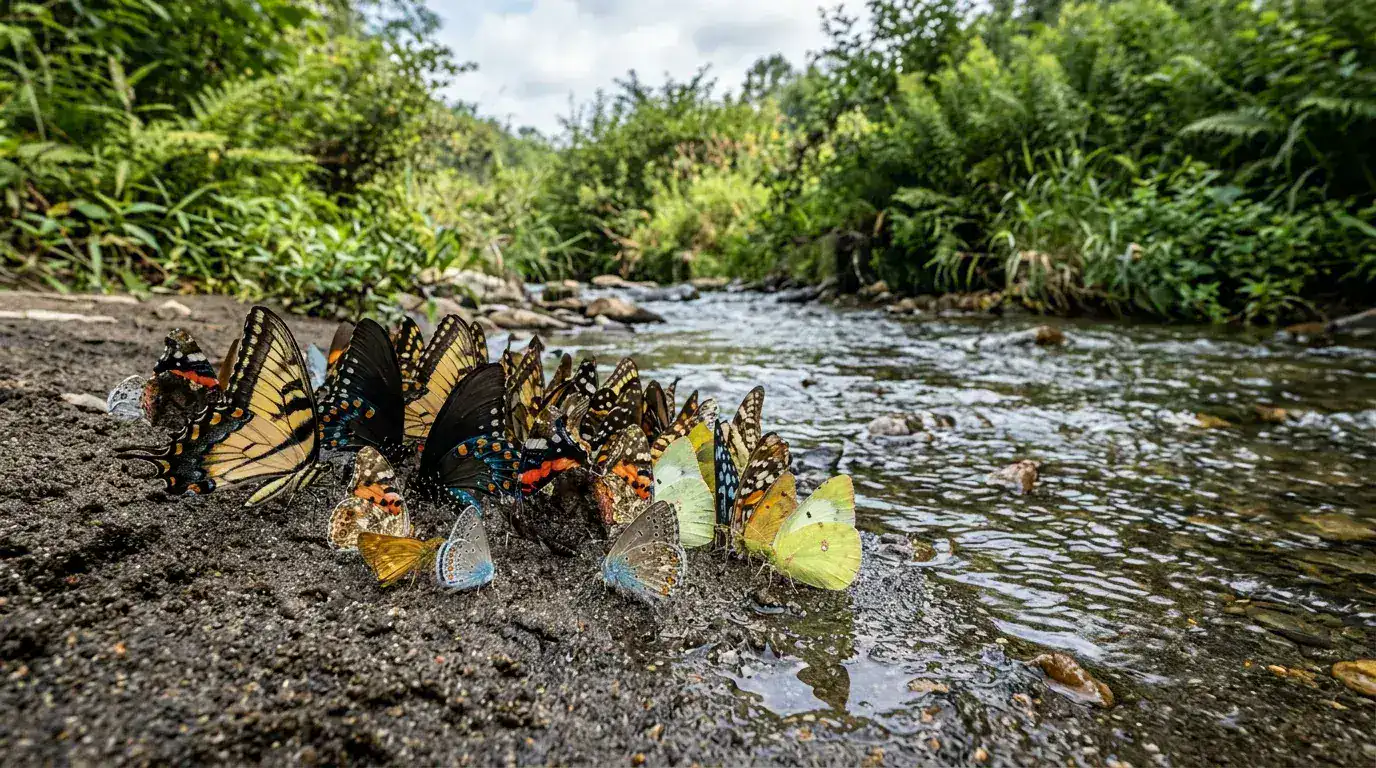


Papilio butterflies make up one of the largest genera in the order Lepidoptera, with over 200 described species spread across six continents. These are the true swallowtails, the group that gave the entire family Papilionidae its common name.
If you have ever watched a large, tailed butterfly glide through a summer garden, there is a good chance it belonged to this genus. Carl Linnaeus applied the name Papilio, Latin for butterfly, in 1758 when he first classified the group.
From the Old World Swallowtail drifting over alpine meadows in Europe to the Giant Swallowtail patrolling citrus groves in Florida, these butterflies span an enormous range of habitats and climates.
Key Takeaways
- The genus Papilio contains more than 200 species of true swallowtail butterflies, found on every continent except Antarctica.
- All Papilio caterpillars share an osmeterium, a retractable forked organ behind the head that releases foul-smelling chemicals to repel predators.
- North American species like the Eastern Tiger Swallowtail (P. glaucus) and Black Swallowtail (P. polyxenes) are among the most commonly seen garden butterflies in the eastern United States.
- Habitat loss and pesticide exposure threaten multiple Papilio species, with the Oregon Swallowtail and Homerus Swallowtail listed as conservation priorities by the IUCN.
Taxonomy and Classification
Papilio sits within the family Papilionidae, subfamily Papilioninae, separating it from apollos and birdwings. The Integrated Taxonomic Information System (ITIS) currently recognizes over 200 species, though the exact count shifts as molecular studies split or lump populations.
Linnaeus originally placed a huge variety of butterflies under Papilio, including species now in completely different families. Centuries of revision narrowed the genus to a group united by wing venation, genitalic structure, and larval morphology.
Some researchers still favor splitting out genera like Pterourus and Heraclides, so the boundaries remain fluid.
Shared Characteristics of Papilio Butterflies
The most obvious field mark is size. Wingspans typically range from 80 to 140 millimeters, and most species carry tail-like extensions on the hindwings, the “swallowtails” that give the family its common name.
Wing patterns tend toward bold combinations of black, yellow, and blue, often with red or orange eyespots near the hindwing tails. These eyespots function as deflection marks, directing predator strikes toward the expendable wing margin rather than the body.
Research published in Proceedings of the Royal Society B (Vallin et al., 2006) showed that eyespots significantly reduce predation success rates.
All Papilio caterpillars share the osmeterium, a Y-shaped organ retracted behind the head. When threatened, the caterpillar everts it, releasing terpene-based chemicals with a sharp, acrid smell that repels parasitoid wasps and small birds.
Our swallowtail species identification guide covers osmeterium behavior across multiple species.
Six Standout Papilio Species
Old World Swallowtail (Papilio machaon)
The type species for the genus, P. machaon ranges across Europe, temperate Asia, and into northwest North America. Adults show a creamy yellow base color with bold black vein borders and blue crescents along the hindwing margin.
Larvae feed on carrot-family plants including fennel, dill, and wild carrot.
Eastern Tiger Swallowtail (Papilio glaucus)
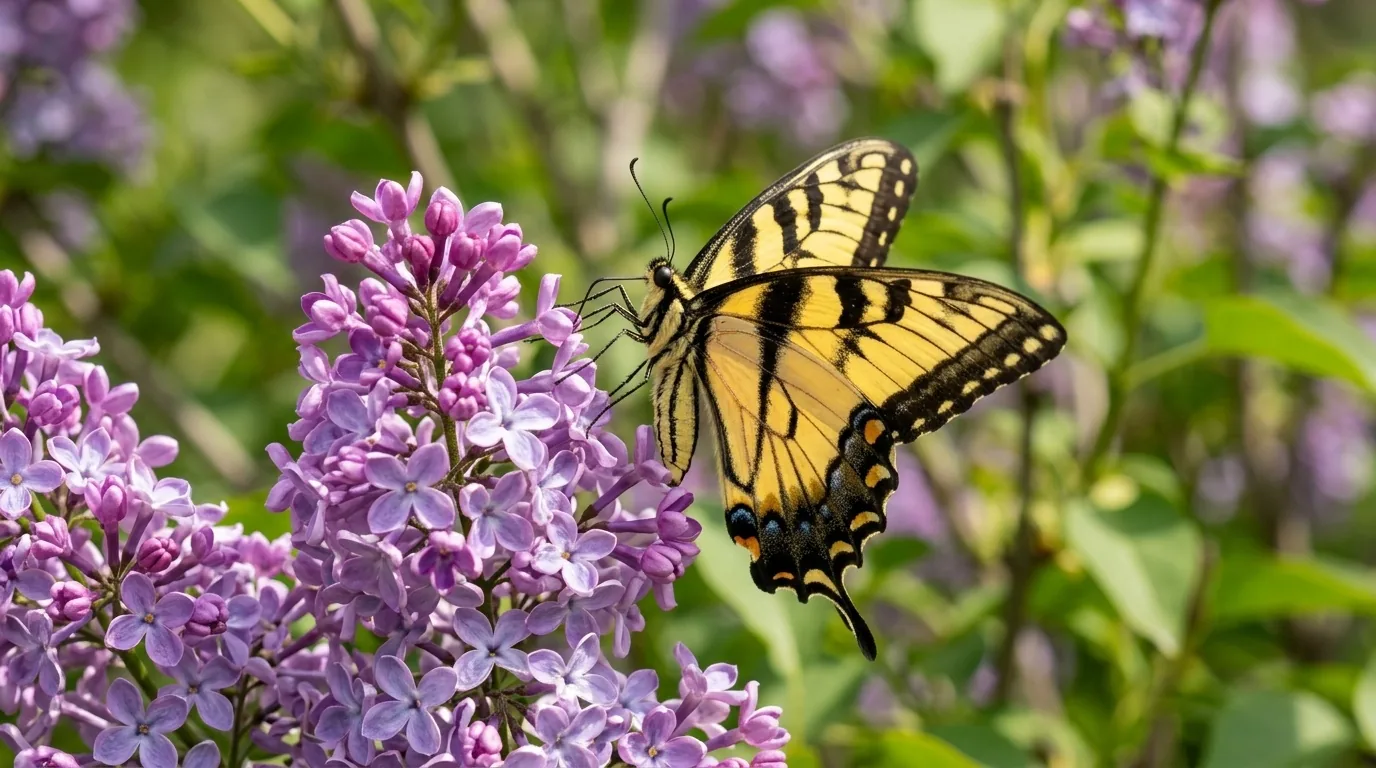
Males are bright yellow with black tiger stripes, while females come in two forms: a yellow morph and a dark morph that mimics the toxic Pipevine Swallowtail. According to the Butterflies and Moths of North America database (BAMONA), this species has been recorded in every state east of the Rocky Mountains.
Caterpillars feed on tulip tree, wild cherry, and ash.
Black Swallowtail (Papilio polyxenes)
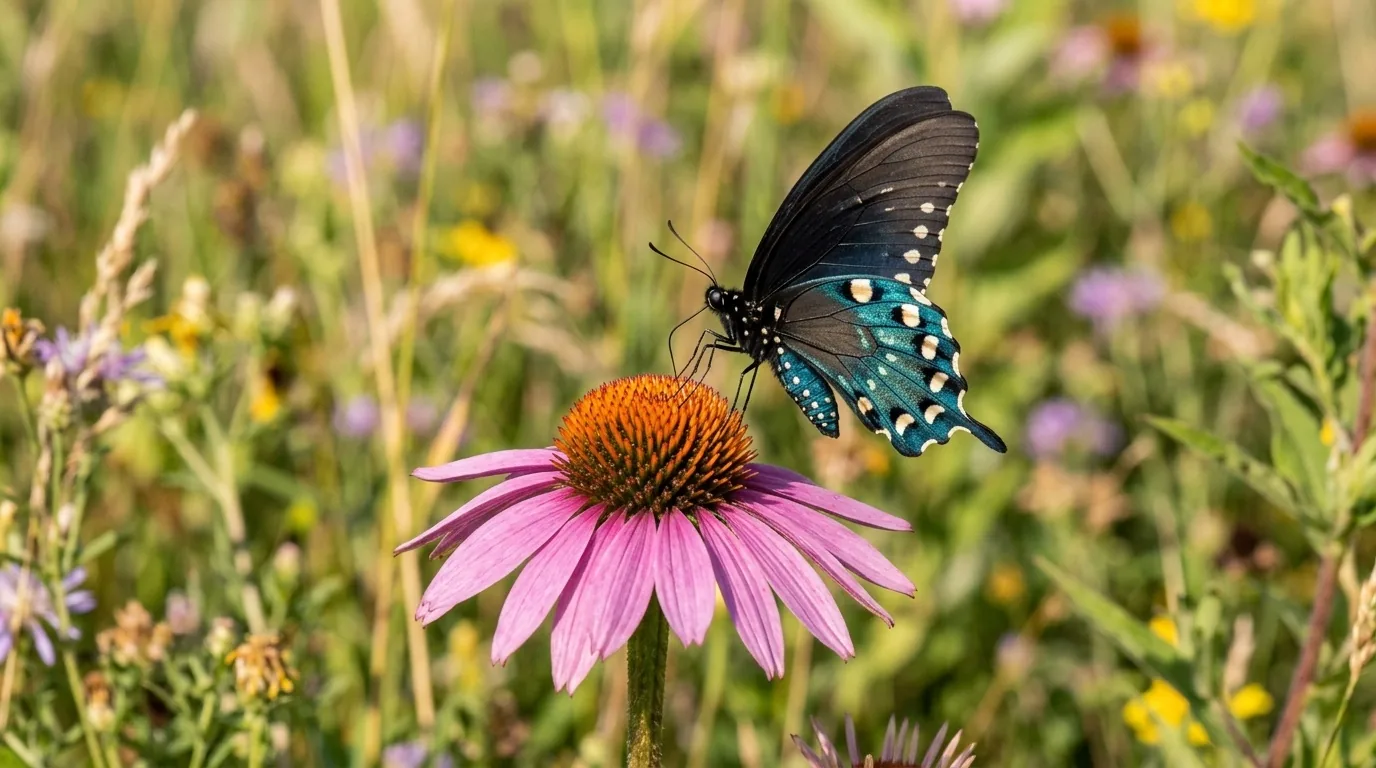
The species most likely to show up in a backyard herb garden, the Black Swallowtail lays eggs on parsley, dill, fennel, and carrot tops. Adults display a mostly black dorsal surface with rows of yellow spots and iridescent blue hindwing patches.
The range extends from southern Canada through Central America.
Giant Swallowtail (Papilio cresphontes)
At up to 150 millimeters in wingspan, the Giant Swallowtail is the largest butterfly in North America. Dorsal wings are dark brown-black crossed by a diagonal yellow spot band, while the ventral surface shows mostly pale yellow.
Larvae, called “orange dogs” by citrus farmers, feed on prickly ash and citrus leaves.
Spicebush Swallowtail (Papilio troilus)
Named for its primary larval host, the spicebush (Lindera benzoin), this forest-edge species features adults with a greenish-blue hindwing sheen. The caterpillars rank among the best snake mimics in the insect kingdom, with enlarged false eyespots on a swollen green thorax.
Adults often visit garden flowers known to attract butterflies, including bee balm, joe-pye weed, and lantana.
Citrus Swallowtail (Papilio demodocus)
A common garden species across sub-Saharan Africa, P. demodocus feeds on cultivated citrus and rue. Adults resemble the Old World Swallowtail in general layout but lack the prominent blue hindwing crescents.
Global Distribution
Papilio butterflies occupy every major landmass except Antarctica, with the highest species diversity in Southeast Asia, Central America, and sub-Saharan Africa. Temperate regions support fewer species but often host abundant populations of generalists like P. glaucus and P. machaon.
Some species cover enormous ranges. P. machaon stretches from the British Isles across Asia to Alaska.
P. demoleus, the Lime Swallowtail, reached the Caribbean in 2004 after apparently crossing the Atlantic, a colonization event tracked by the Butterflies of America project.
Island populations tend toward endemism. Jamaica’s Papilio homerus is the largest butterfly in the Western Hemisphere and lives nowhere else.
Host Plants and Larval Ecology
The ancestral host association for Papilio appears to be with Rutaceae (citrus relatives) and Apiaceae (the carrot family). These two families account for the majority of recorded larval food plants across the genus, though individual species are typically specialists.
North American species split neatly along host-plant lines. P. polyxenes sticks to Apiaceae, while P. cresphontes and P. troilus use Rutaceae and Lauraceae, respectively.
P. glaucus stands out as a generalist, accepting plants from Magnoliaceae, Rosaceae, and Oleaceae. Our guide to common butterfly species pairs each species with its preferred hosts.
Conservation Status and Threats
Most widespread Papilio species maintain stable populations. The problems concentrate among island endemics and habitat specialists.
The IUCN Red List classifies Jamaica’s Papilio homerus as Endangered, with deforestation as the primary driver.
The Oregon Swallowtail (P. machaon oregonius) has declined due to agricultural conversion of sagebrush steppe habitat, according to monitoring data from the Xerces Society.
Climate change is shifting ranges for multiple species. P. cresphontes now breeds in southern Ontario, a northward expansion that did not exist thirty years ago.
Frequently Asked Questions
How many species of Papilio butterflies exist?
Taxonomists currently recognize over 200 species in the genus Papilio, with the exact number fluctuating as molecular studies revise species boundaries.
New species descriptions still appear every few years, particularly from tropical Asia and Africa where remote forest habitats remain under-sampled.
What makes Papilio butterflies different from other swallowtails?
Papilio is a genus within the broader family Papilionidae. Other swallowtail genera include Battus (pipevine swallowtails), Graphium (swordtails), and Parnassius (apollos).
Papilio species are distinguished by specific wing venation patterns, the structure of male genitalic claspers, and larval characteristics including the osmeterium organ shared by all members.
Do all Papilio butterflies have tails on their hindwings?
Most do, but not all. A small number of Papilio species have reduced or completely absent tail extensions.
The tails serve a defensive function by creating a false “head” at the rear of the butterfly, misdirecting predator attacks away from the actual body.
What do Papilio caterpillars eat?
Host plants vary by species, but the two most common plant families are Apiaceae (carrot family) and Rutaceae (citrus family). Some species like the Eastern Tiger Swallowtail feed on trees in the magnolia and cherry families instead.
Gardeners who grow fennel, dill, parsley, or citrus trees in the right regions can expect to find Papilio caterpillars feeding on their plants.
Are any Papilio species endangered?
Yes, the Homerus Swallowtail (P. homerus) of Jamaica is classified as Endangered by the IUCN. Several other species with restricted island ranges face similar pressures from habitat destruction.
Widespread species like the Eastern Tiger Swallowtail and Black Swallowtail remain common and are not considered at risk.
Can I attract Papilio butterflies to my garden?
Planting larval host plants is the most direct approach. Fennel and parsley draw Black Swallowtails, while spicebush and sassafras support Spicebush Swallowtails.
Citrus or prickly ash attracts Giant Swallowtails in southern regions.
Adults also need nectar sources. Zinnias, lantana, phlox, and butterfly bush all work well for attracting adult Papilio species to a garden setting.