




Rare UK butterflies are a group of species clinging to survival across Britain, and several are in genuine danger of disappearing for good. Of the roughly 59 resident butterfly species in the UK, at least a dozen qualify as rare or threatened. I’ve been following their conservation stories for years, and while there are real success stories – the Large Blue’s return from extinction being the standout – the overall picture is one of shrinking habitats and declining populations. If you care about butterflies, the UK’s rarest species deserve your attention and, where possible, your support.
Key Takeaways
- The UK is home to roughly 59 resident butterfly species, and at least 12 are classified as rare, endangered, or critically at risk due to habitat loss and land management changes.
- The Large Blue was declared extinct in Britain in 1979 but has been successfully reintroduced through one of Europe’s most celebrated conservation projects.
- Species like the High Brown Fritillary, Duke of Burgundy, and Heath Fritillary depend on very specific habitat conditions that have become increasingly scarce in modern landscapes.
- Organizations like Butterfly Conservation and Natural England are running active recovery programs, and you can support them through volunteering, habitat management, or simply recording sightings.
The Large Blue – Back From the Dead
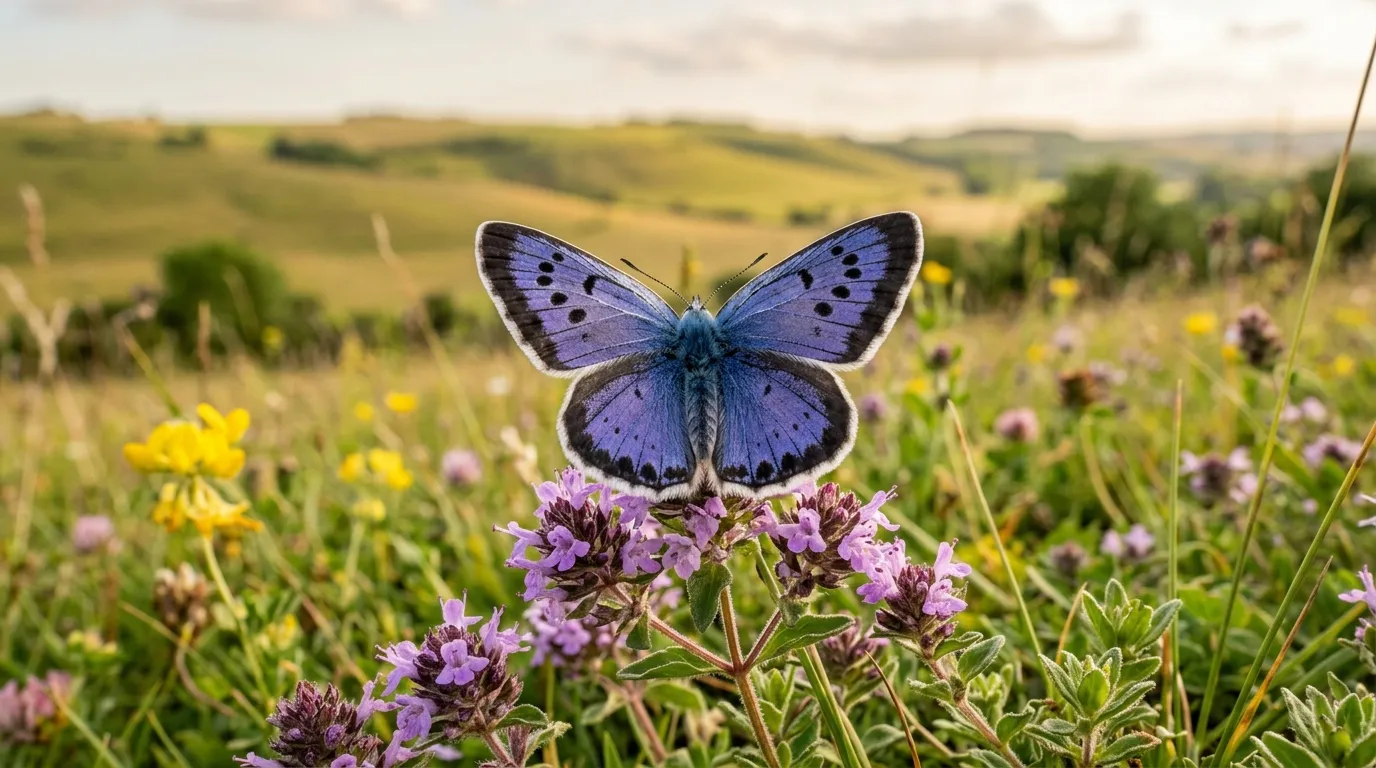
The Large Blue (Phengaris arion) is the poster species for butterfly conservation in Britain. It was declared extinct in the UK in 1979 after the last colony in Devon died out. The cause wasn’t a mystery – changes in land management meant grasslands were no longer grazed short enough for the ants the Large Blue depends on.
This butterfly has one of the most unusual life cycles of any type of butterfly in the world. Its caterpillars trick red ants (Myrmica sabuleti) into carrying them underground by mimicking ant larvae chemical signals. Once inside the nest, the caterpillar feeds on ant grubs for about ten months before pupating and emerging as an adult.
Professor Jeremy Thomas led the reintroduction effort starting in 1983, using stock from Sweden. By restoring the correct grazing regimes to warm south-facing grassland slopes, the team recreated conditions where Myrmica sabuleti thrives. Today, there are over 30 Large Blue colonies across Somerset, Gloucestershire, and parts of the Cotswolds. According to Butterfly Conservation, the UK population now exceeds pre-extinction levels.
It’s a genuine conservation triumph, but it took decades of painstaking research and landscape management to pull off.
The Swallowtail – Britain’s Largest and Most Restricted
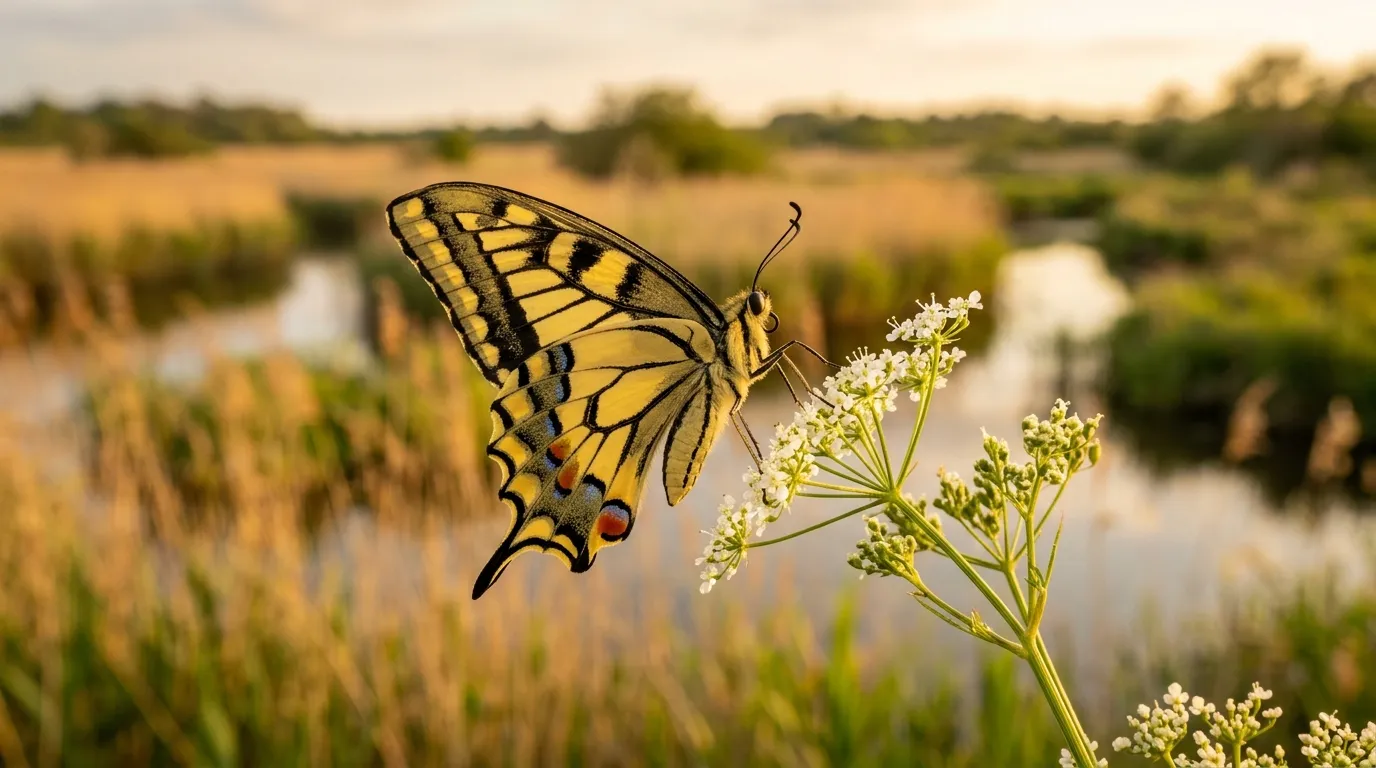
The British Swallowtail (Papilio machaon britannicus) holds two distinctions among rare UK butterflies – it’s the largest resident species, and it has the most restricted range. This subspecies is found only in the Norfolk Broads, a network of rivers, lakes, and marshland in East Anglia. You won’t find it anywhere else in Britain.
Unlike its continental European relatives that use a wide variety of umbellifers as foodplants, the British subspecies feeds almost exclusively on milk parsley (Peucedanum palustre), a plant of fenland and wet meadow habitats. This dependence on a single hostplant in a single region makes it extremely vulnerable to changes in water management, reed cutting schedules, and sea level rise.
The best time to see Swallowtails is late May through June, with a partial second brood sometimes appearing in August. Hickling Broad, Strumpshaw Fen (an RSPB reserve), and How Hill are reliable spots. When you see one sailing across a fen on a warm June morning, it’s immediately clear why people travel across the country for the experience.
Fritillaries in Freefall
The UK’s fritillary butterflies are among the hardest hit by habitat changes, and two species stand out as especially threatened.
The High Brown Fritillary (Fabriciana adippe) is widely considered Britain’s most endangered butterfly. It needs bracken-covered hillsides and open woodland with patches of violets for its caterpillars. This combination was once common across England and Wales, but the decline of traditional woodland management – coppicing, in particular – has left the High Brown with fewer than 50 known colonies, mostly concentrated in Morecambe Bay, Exmoor, and a handful of Welsh valleys.
The Heath Fritillary (Melitaea athalia) came perilously close to extinction in the 1980s when it was down to just a few colonies in Kent and one in Devon. Active coppice management in woodlands like Blean Woods National Nature Reserve has stabilized its numbers, but it remains one of the UK’s rarest resident species. Its caterpillars feed on cow-wheat in woodland clearings – the kind of open, sunny patches that only exist when trees are regularly cut back.
Both species illustrate the same core problem. These butterflies evolved in landscapes shaped by centuries of traditional land use. When that management stops – when woods grow dense and grasslands become rank – these species lose the specific conditions they need and their lifespans are cut short by population collapse rather than natural causes.
The Duke of Burgundy and Other Specialist Species
The Duke of Burgundy (Hamearis lucina) is a small, brown-and-orange butterfly that looks like a fritillary but is actually the UK’s only member of the metalmark family. It was once widespread across England, but it has lost around 84% of its sites since the 1970s. Its caterpillars feed on primrose and cowslip in sheltered, south-facing grasslands and woodland edges.
What makes the Duke of Burgundy so hard to conserve is how specific its needs are. It requires short turf with scattered scrub for shelter, an abundance of its foodplants in the right growth stage, and warm microclimates. Even within a seemingly suitable meadow, the butterflies often concentrate in tiny pockets where all these conditions align. Natural England has included this species in targeted recovery plans for calcareous grasslands.
Other notable rare UK butterflies include the Wood White (Leptidea sinapis), which has declined heavily across England and is now largely restricted to parts of the West Country and Herefordshire. The Glanville Fritillary is naturally confined to the Isle of Wight’s southern coast and a few managed mainland sites. And the Silver-studded Blue, while locally abundant where it survives, has lost the majority of its lowland heathland sites.
Why These Butterflies Are Declining
The causes of decline among rare UK butterflies are well understood, even if solving them is complicated. Habitat loss and degradation sit at the top of the list. Over 97% of wildflower meadows in Britain have been lost since the 1930s. Ancient woodlands have been cleared, fragmented, or left unmanaged. Lowland heaths have been swallowed by housing development and agriculture.
The abandonment of traditional land management is a recurring theme. Coppicing, hay-making, light grazing by cattle and ponies – these practices created the mosaic of habitats that rare butterflies need. When economic pressures ended these traditions, the landscapes changed and the butterflies disappeared with them.
Climate change adds another layer of pressure. While warmer temperatures might seem beneficial, they can push species out of sync with their foodplants or ant hosts. For the Large Blue, even small changes in soil temperature could affect the distribution of Myrmica sabuleti ants. The Joint Nature Conservation Committee monitors these climate-related shifts across all UK butterfly species.
Nitrogen pollution from agriculture encourages rank grass growth that smothers the low-growing wildflowers many rare species need. And habitat fragmentation means that even where suitable patches exist, they’re often too isolated for butterflies to colonize naturally. A colony of High Brown Fritillaries on one hillside can’t easily reach another suitable hillside if there’s miles of improved farmland in between.
How to Help and Where to See Rare UK Butterflies
Supporting rare UK butterflies starts with supporting the organizations doing on-the-ground conservation work. Butterfly Conservation runs species recovery programs, manages key sites, coordinates volunteer recording networks, and campaigns for better habitat protection policies. Becoming a member or donating directly funds conservation action.
Recording sightings through the UK Butterfly Monitoring Scheme or the iRecord app contributes directly to conservation science. Population data drives funding decisions and management priorities. Every confirmed sighting of a rare species matters.
If you manage land – even a garden – you can make a difference. Planting native wildflowers, maintaining rough grassland patches, and avoiding pesticides all contribute to the wider habitat network that rare butterflies depend on. A well-planted butterfly bush won’t save the High Brown Fritillary on its own, but gardens that support common butterfly species reduce pressure on wild habitats and maintain pollination networks that benefit entire ecosystems.
For those who want to see these species in the wild, here are some reliable locations. Collard Hill in Somerset is the best-known public access Large Blue site. The Norfolk Broads remain the only place for British Swallowtails. Arnside Knott in Cumbria is a Duke of Burgundy stronghold. And Blean Woods in Kent is the place for Heath Fritillaries in June and July.
Frequently Asked Questions
How many butterfly species are endangered in the UK?
Around a quarter of the UK’s 59 resident butterfly species are listed as threatened on conservation priority lists. The High Brown Fritillary is classified as endangered, while species like the Duke of Burgundy, Heath Fritillary, Wood White, and Glanville Fritillary are all considered vulnerable or near-threatened. The exact number depends on which classification system you reference, but Butterfly Conservation currently lists over a dozen species as priorities for conservation action.
Is the Large Blue butterfly still extinct in the UK?
No. The Large Blue was declared extinct in Britain in 1979, but a reintroduction program beginning in 1983 brought it back using Swedish stock. The project required restoring the precise grassland habitat conditions needed for the ants that Large Blue caterpillars depend on. Today, over 30 colonies exist across southwest England, and the species is more numerous than it was before going extinct.
Where can I see Swallowtail butterflies in Britain?
The British Swallowtail is restricted to the Norfolk Broads in East Anglia. The best sites include Hickling Broad, Strumpshaw Fen RSPB reserve, and How Hill. The flight season peaks in late May and June, with a smaller second brood sometimes appearing in August. Morning visits on warm, sunny days give the best chances of sightings, particularly around areas where milk parsley grows alongside dykes and fen edges.
What is the rarest butterfly in the UK?
The High Brown Fritillary is generally considered the UK’s rarest resident butterfly. It has fewer than 50 known colonies, mostly in Morecambe Bay, Exmoor, and a few Welsh sites. It has declined by over 90% since the 1970s, primarily due to the loss of its preferred bracken and violet habitat caused by changes in woodland management practices.
Can I help rare butterflies by planting specific flowers?
Planting native wildflowers in your garden supports the wider ecosystem that all butterflies depend on, though the rarest species need specific wild habitats that gardens can’t replicate. Primrose and cowslip support the Duke of Burgundy. Violets feed several fritillary caterpillars. Native nectar plants like bird’s-foot trefoil, knapweed, and devil’s-bit scabious provide food for adults of many declining species. Avoiding herbicides and leaving areas of rough grass also helps.
Why do rare UK butterflies need specific habitats?
Rare UK butterflies tend to be habitat specialists. They evolved over thousands of years to exploit specific ecological niches – a particular caterpillar foodplant, a certain grassland height, the right soil temperature for host ants, or the exact amount of shade in a woodland glade. Generalist species like the Peacock or Red Admiral can adapt to many environments, but specialists like the Large Blue or High Brown Fritillary are locked into narrow habitat requirements. When those conditions disappear, the butterflies go with them.


