

These interesting facts about butterflies all come with a source you can check, from the Natural History Museum’s record book to peer-reviewed studies. The short version: butterflies are older than flowers, some cross oceans, and they taste their food with their feet.
We grouped the 20 facts by theme, from speed and size records to the strange ways butterflies sense and defend themselves.
Key Takeaways
- Fossil wing scales show moths and butterflies were flying about 200 million years ago, long before flowering plants.
- Painted lady butterflies make a 9,000-mile journey from tropical Africa to the Arctic Circle over as many as six generations.
- Skippers can fly up to 37 miles per hour, and the largest butterfly spans about 27 centimeters.
- Butterflies taste with sensors on their feet, a fact first proven experimentally in the early 1920s.
Record-Breaking Butterfly Facts
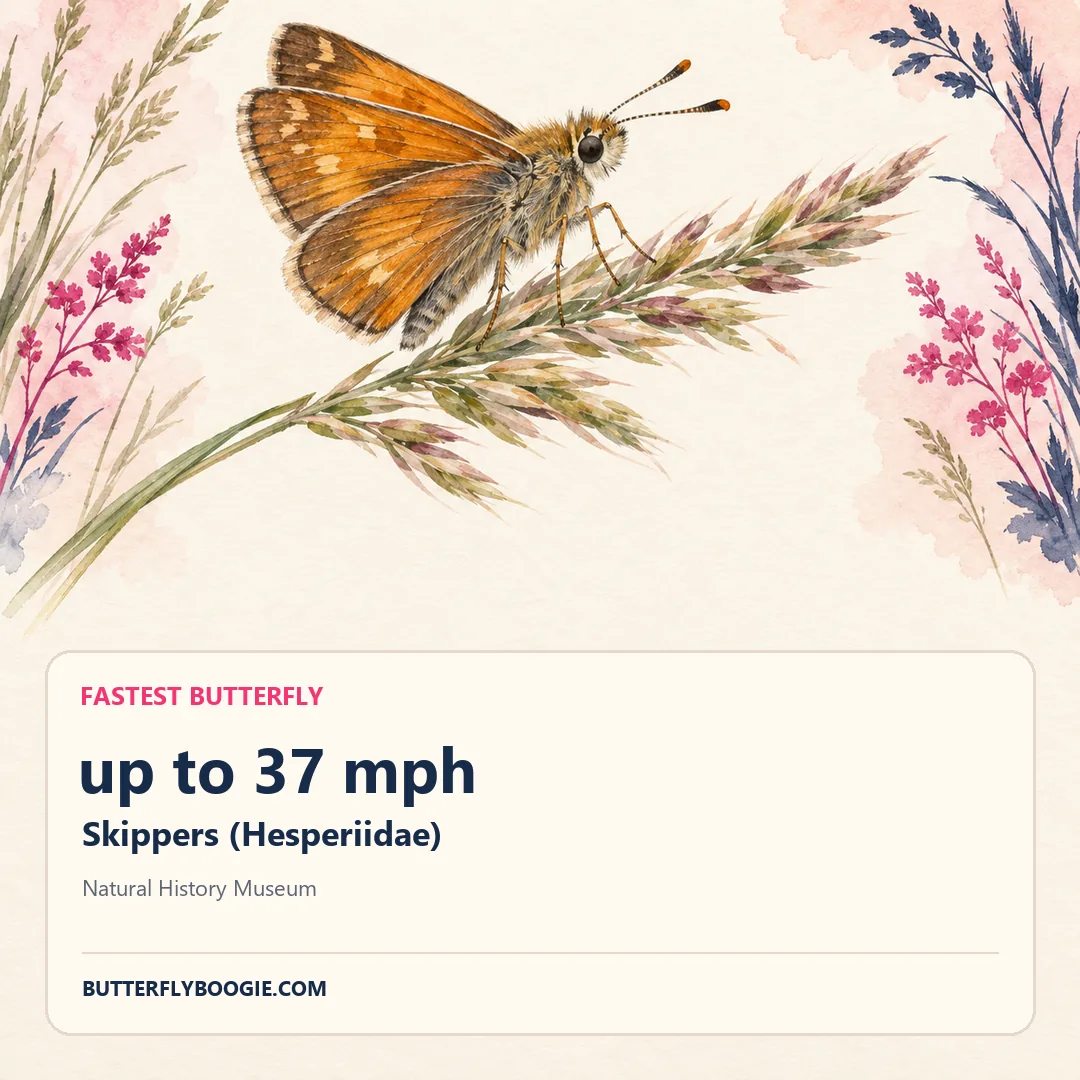
- The fastest butterflies are skippers, which can reach up to 37 miles per hour and react at least twice as quickly as a human, according to the Natural History Museum.
- The largest butterfly is Queen Alexandra’s birdwing from Papua New Guinea, with females spanning around 27 centimeters and a record specimen measuring 27.3 centimeters.
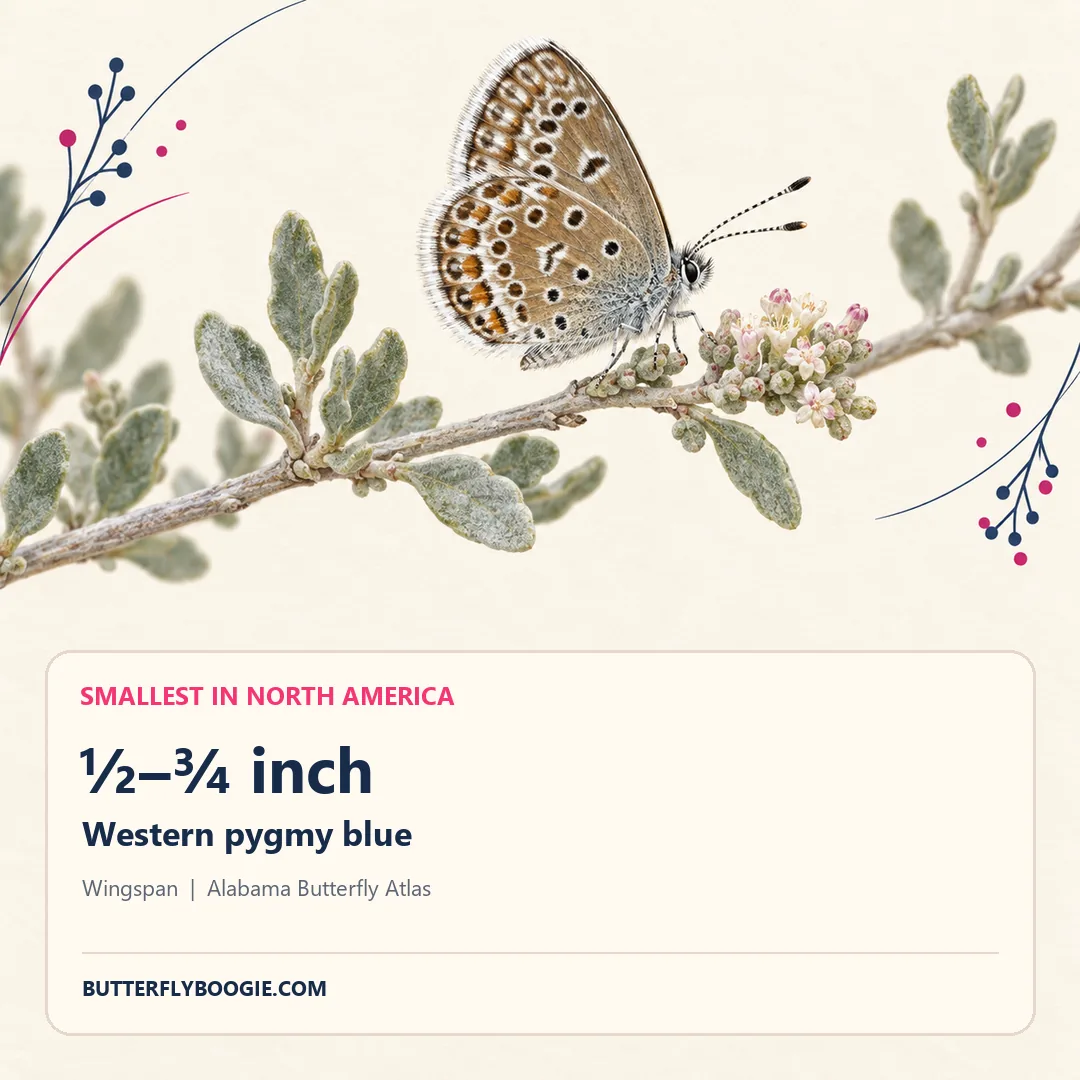
- The western pygmy blue is the smallest butterfly in North America, with a wingspan of only half to three-quarters of an inch, according to the Alabama Butterfly Atlas.
- The highest-flying butterfly on the Natural History Museum’s list, Piercolias forsteri, lives about 4,200 meters above sea level in the Bolivian Andes.
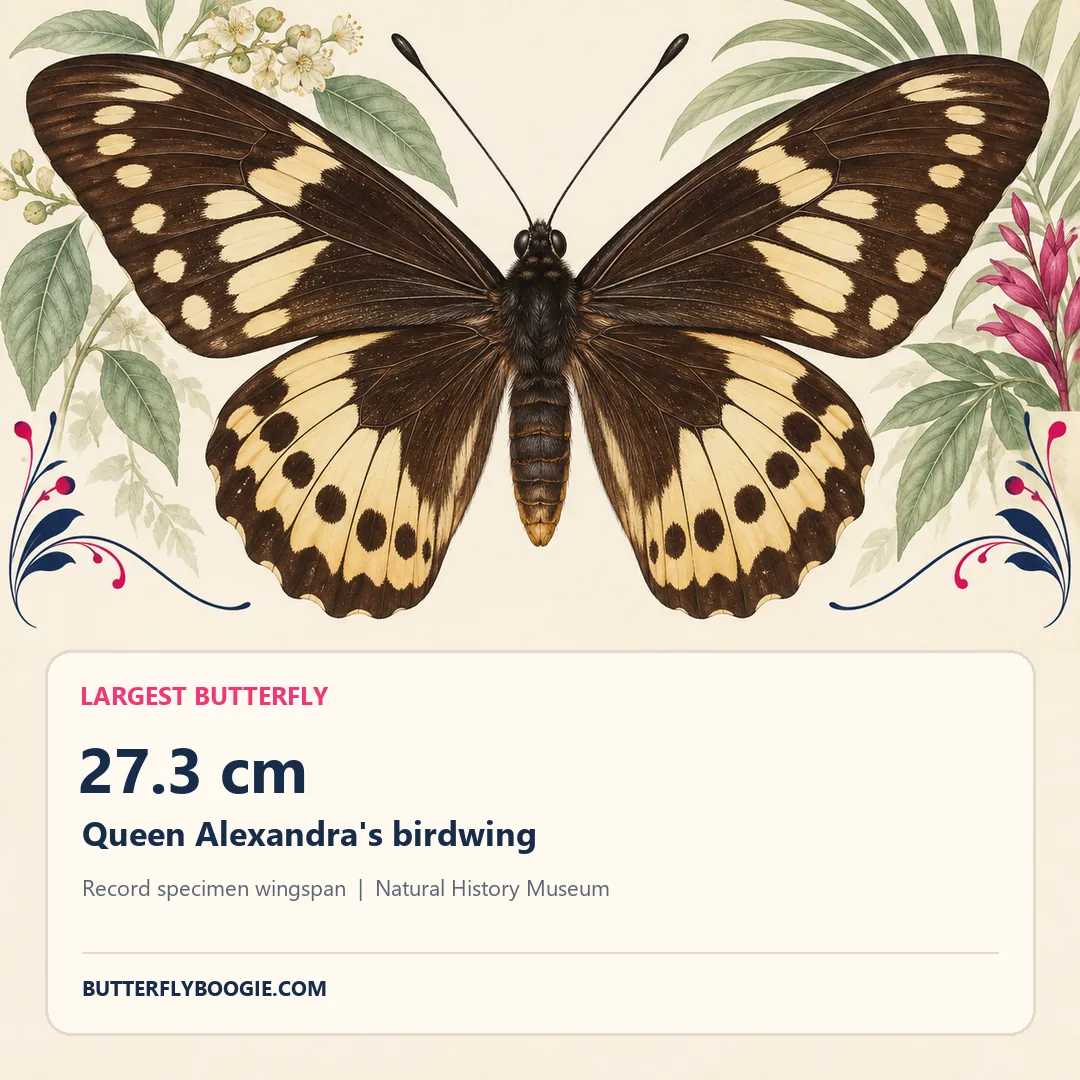
Our profile of Queen Alexandra’s birdwing covers the giant in more detail, including why it’s so rare.
Butterfly Travel Facts
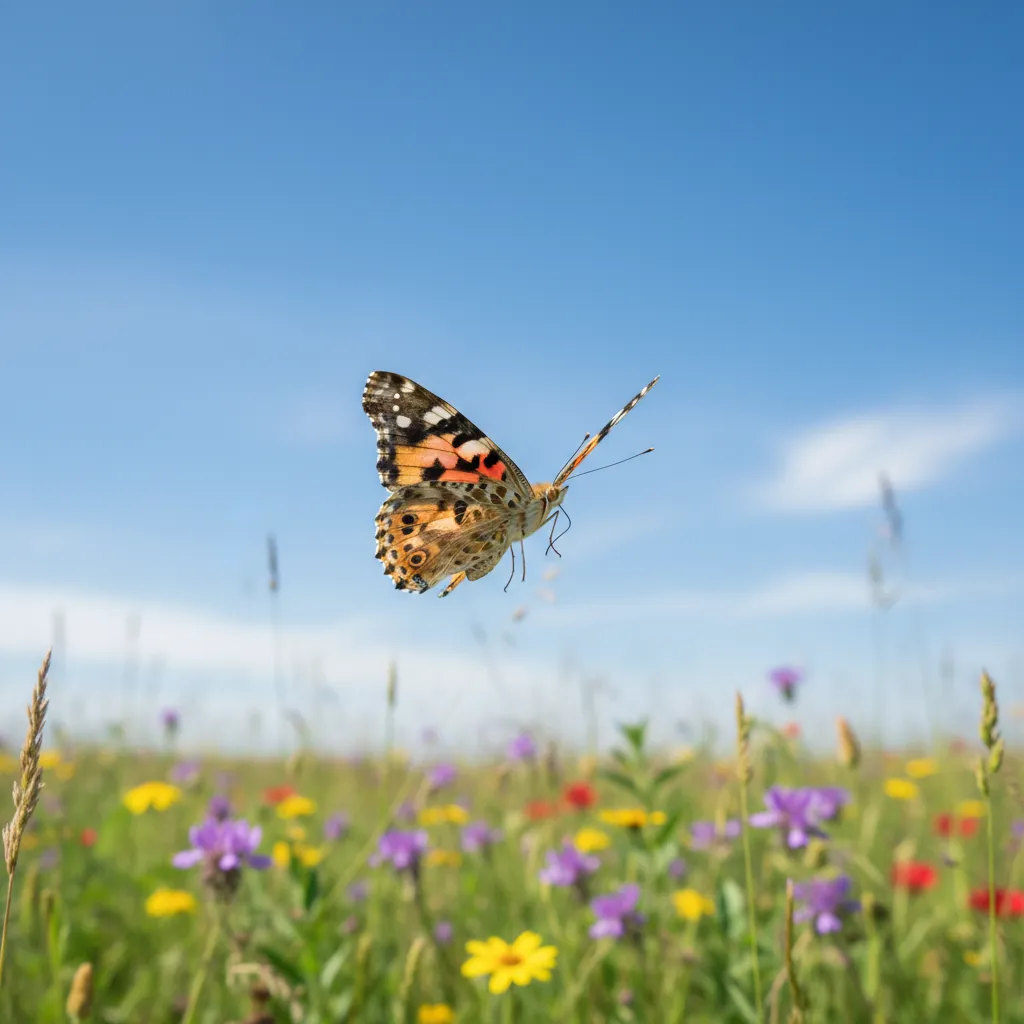
- Painted ladies make the longest known butterfly migration, a 9,000-mile trip from tropical Africa to the Arctic Circle that takes up to six successive generations.
- Each year, painted ladies also fly about 12,000 kilometers across the Sahara and back, a round trip researchers confirmed in 2018.
- Some painted ladies have crossed the Atlantic, with a 2024 study tracing a flight of over 4,200 kilometers from West Africa to South America in Nature Communications.
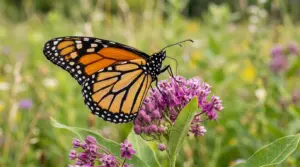
- Monarch butterflies fly 2,000 to 3,000 miles to Mexico each fall while weighing less than a gram, according to the USDA Forest Service.
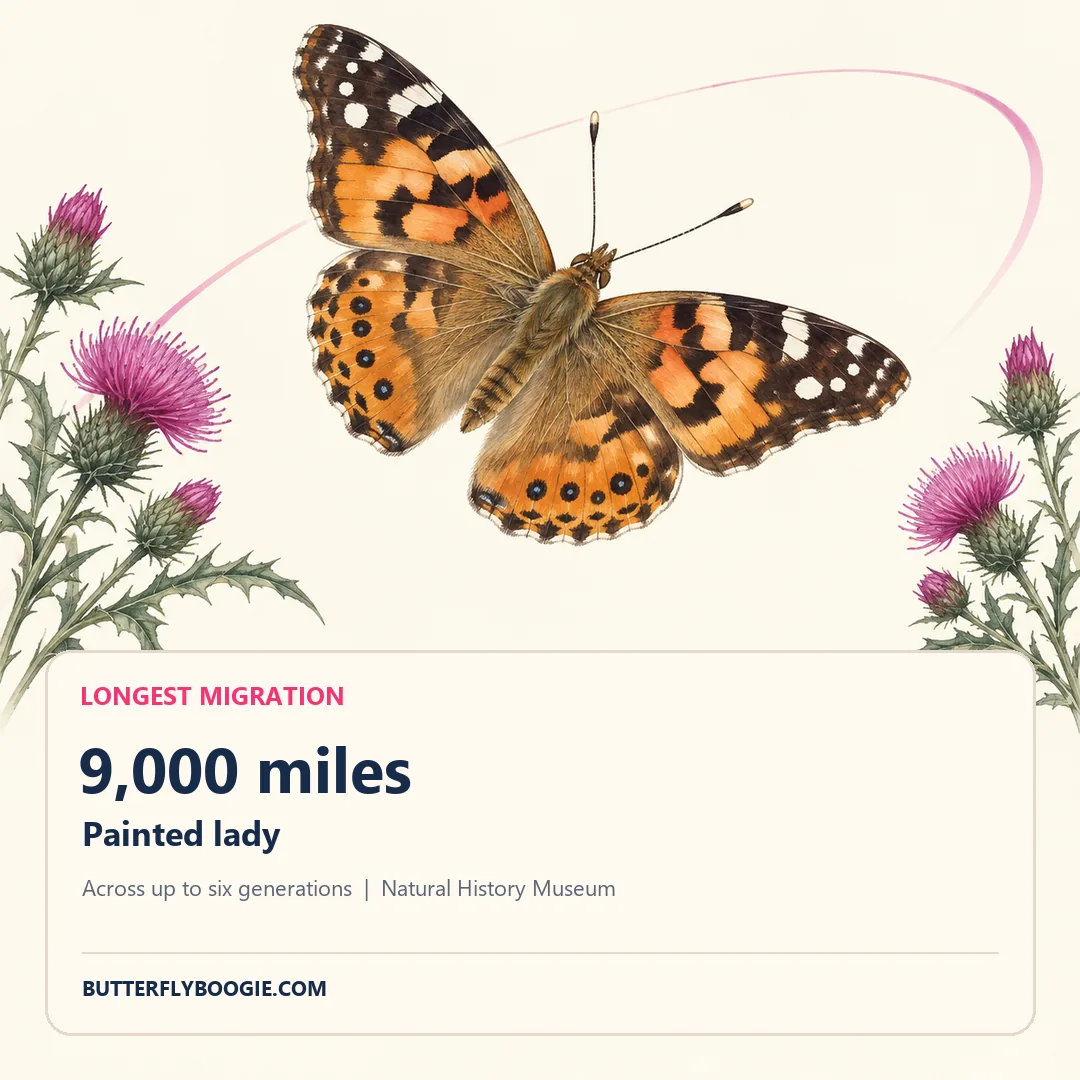
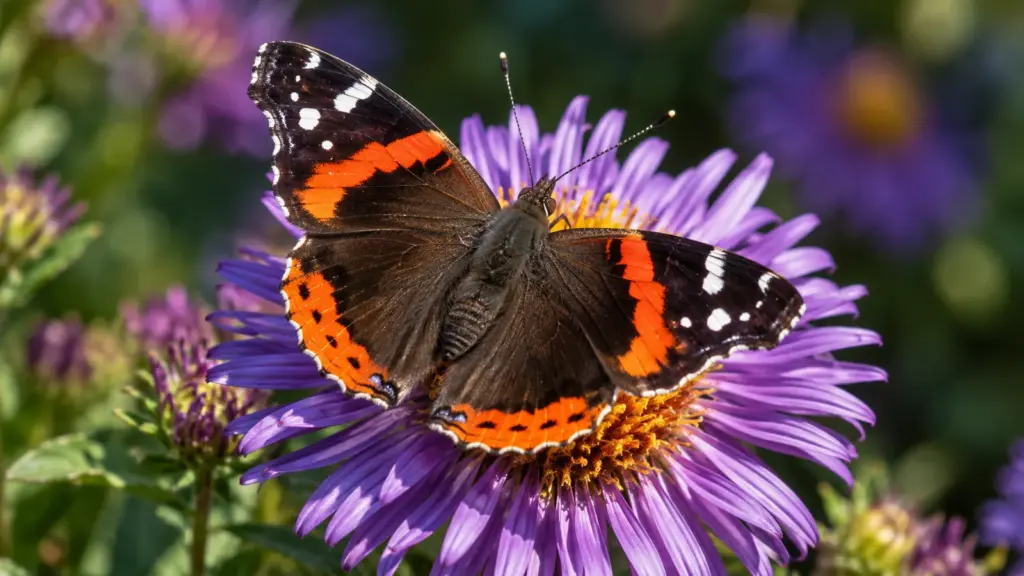
Painted ladies live on every continent except Antarctica and Australia, which helps explain how far they roam. Our painted lady guide maps the migration.
Facts About How Butterflies Sense the World
- Butterflies taste with chemical sensors on their feet, which researcher Dwight Minnich demonstrated in the early 1920s by touching butterflies’ feet with sugar water and watching their tongues uncoil.
- The order name Lepidoptera comes from Greek words for “scale” and “wing,” because the wings are covered in tiny overlapping scales.
- The glasswing butterfly’s clear wing panels carry sparse, bristle-like scales and a wax coating that keeps them from reflecting light, which we cover in our glasswing butterfly guide.
- Skippers’ fast reactions help them dodge predators, and they are a huge group, with nearly 4,000 species worldwide.
Life Cycle Facts
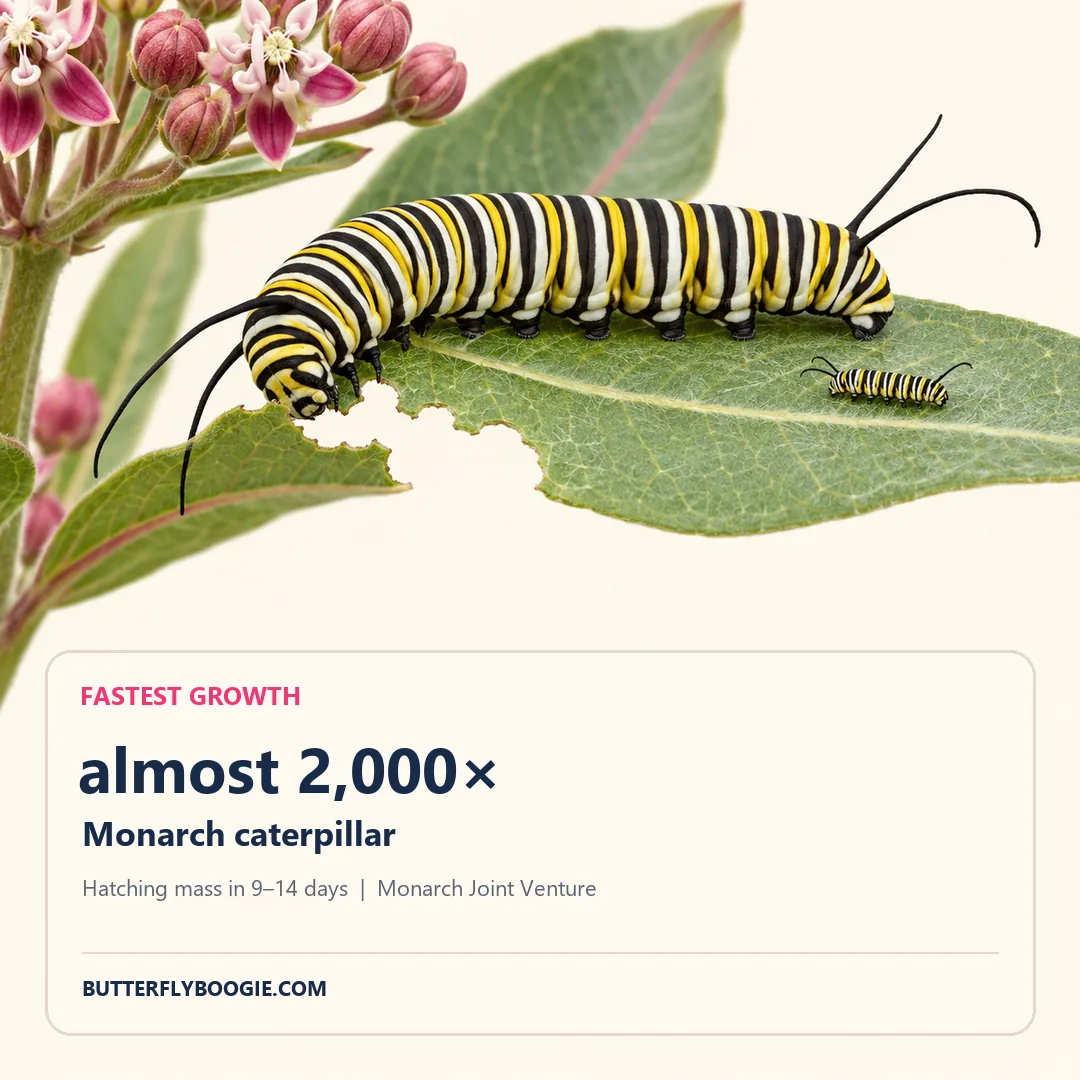
- A monarch caterpillar grows to almost 2,000 times its hatching mass in 9 to 14 days, according to the Monarch Joint Venture.
- Summer monarchs live 2 to 5 weeks as adults, while the migratory generation can live as long as 9 months.
- Only about 5% of monarchs survive to the last caterpillar stage, with predators such as ants, spiders and wasps taking many of the rest.
- Tachinid flies parasitized 9.8% of the more than 20,000 wild monarchs raised by volunteers, which we break down in our look at monarch parasites.
Deep History Facts
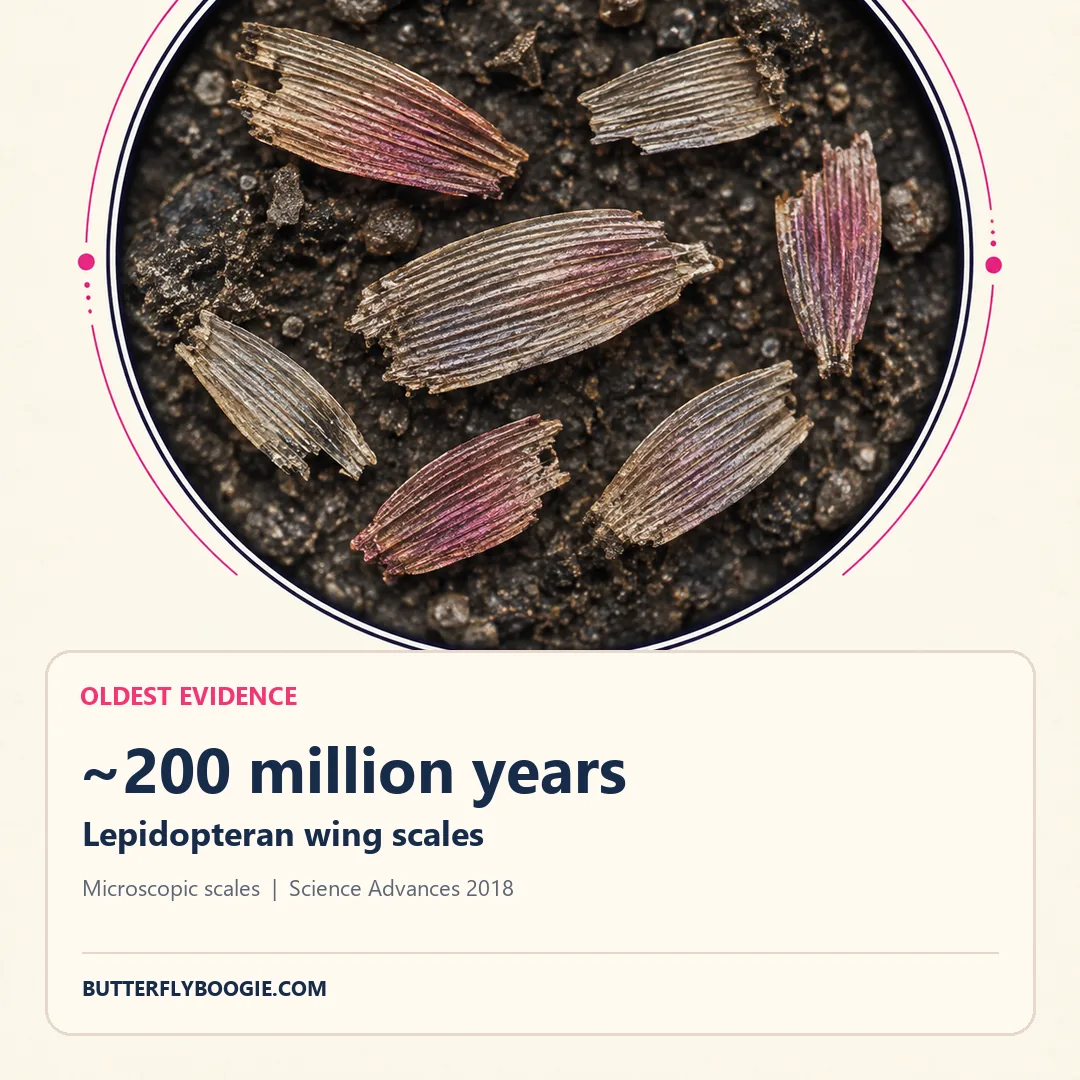
- The oldest known moth and butterfly fossils are wing scales about 200 million years old, found in a drill core in northern Germany and described in Science Advances in 2018.
- Some of those scales were hollow, a trait found only in the group of moths and butterflies with a sucking proboscis.
- That puts drinking mouthparts more than 70 million years ahead of the oldest known flowering plant fossils.
- The researcher behind the discovery picked the tiny scales out of ancient sediment using a needle tipped with a human nose hair.
Defense Facts
- Monarchs are poisonous to many birds because their caterpillars store toxins from milkweed.
- The viceroy was long thought to be a harmless monarch copycat, until a 1991 study found birds rejected viceroys too, as our viceroy butterfly guide explains.
- Eyespots like the common buckeye’s can steer a bird’s strike toward the wing edge instead of the body, as covered in our buckeye butterfly guide.
- Male glasswing butterflies collect plant alkaloids that make them taste bad, then use the same chemicals to make courtship scents.
FAQ
What is the most interesting fact about butterflies?
A strong candidate is their age. Fossil scales show moths and butterflies were around about 200 million years ago, before the first flowers.
Do butterflies really taste with their feet?
Yes. Sensors on their feet detect sugars and other chemicals, which helps them find food and pick plants for their eggs.
What is the fastest butterfly?
Skippers, which can fly up to 37 miles per hour, according to the Natural History Museum.
How far can a butterfly fly?
Painted ladies hold the record, with a 9,000-mile migration spread across several generations.
Individual painted ladies have crossed more than 4,200 kilometers of open ocean.