
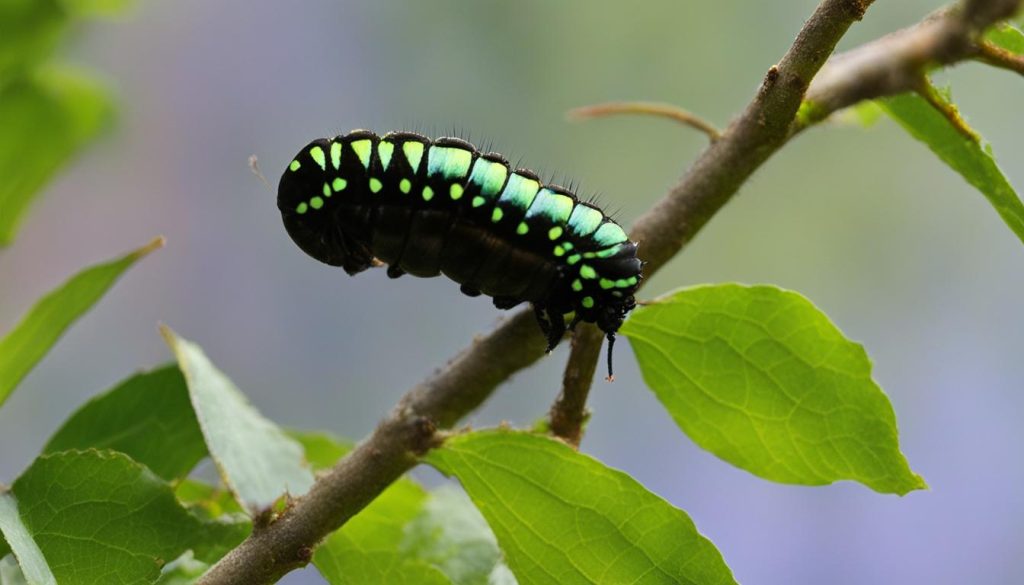

The spicebush swallowtail life cycle runs from a pale green egg on the underside of a spicebush leaf all the way to a large black butterfly with iridescent blue hindwings, and it’s one of the more theatrical transformations in the eastern woodland insect world. Papilio troilus goes through four distinct stages – egg, five caterpillar instars, chrysalis, and adult – and along the way the caterpillar pulls off two completely different disguises to stay alive. The early instars look like wet bird droppings. The later instars morph into fake snakes with enormous eye spots. All of it happens in about five to seven weeks during the warm months, with two to three generations per year across most of the species’ range.
I’ve watched this cycle play out in my backyard every summer since I planted a spicebush shrub along the fence line. The first time I saw one of the older caterpillars stare back at me with those fake eye spots, I genuinely flinched before my brain caught up and remembered it was a harmless caterpillar. That’s the point of the disguise, and it works on humans just like it works on the birds these caterpillars are trying to fool.
Key Takeaways
- The complete spicebush swallowtail life cycle takes roughly five to seven weeks during summer, with egg (4-10 days), caterpillar (3-4 weeks across five instars), chrysalis (10-20 days in summer or months in winter), and adult (2-4 weeks) stages.
- Early caterpillar instars mimic bird droppings with dark brown and white coloration, while late instars transform into bright green fake snakes with large false eye spots on the thorax.
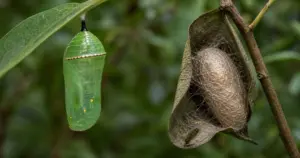
- The chrysalis comes in two colors – bright green in summer generations and brown resembling a dead leaf in the overwintering generation – triggered by day length and temperature during pupation.
- Most populations produce two to three generations per year, with the final generation overwintering as a brown chrysalis and emerging as adults the following spring.
Egg Stage: Pale Green Spheres on Spicebush Leaves
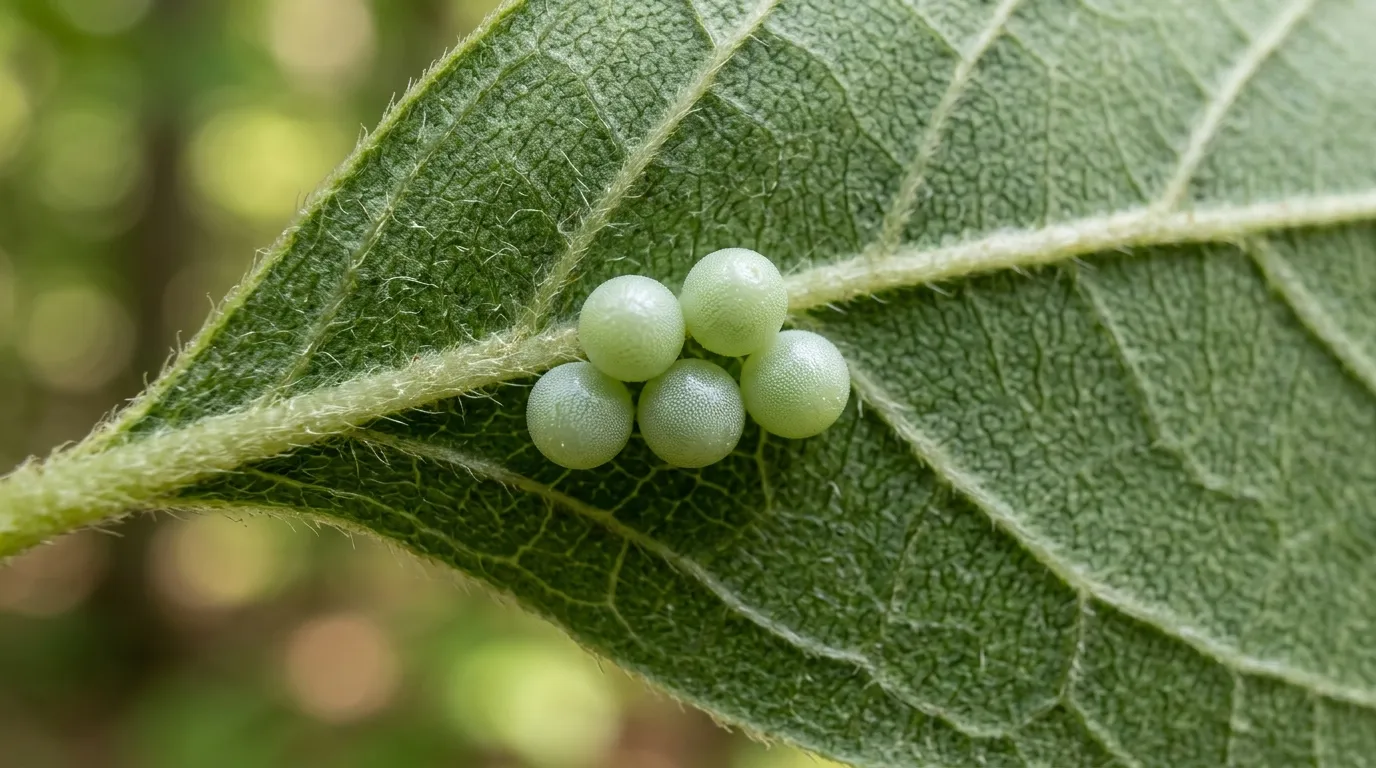
The spicebush swallowtail life cycle begins when a mated female lands on a suitable host plant and taps the leaves with her front legs to confirm she’s in the right place. Female butterflies have chemoreceptors on their feet that can identify host plant chemistry before they commit to laying an egg. Once she’s satisfied, she curls her abdomen under the leaf and deposits a single pale green, nearly spherical egg on the underside. She almost never lays eggs in clusters – each egg gets its own leaf, and the female moves on to find another site.
The eggs are about 1 millimeter in diameter and glossy when first laid. Over the next day or two, they darken slightly as the embryo develops inside. You can sometimes see a dark spot forming where the head capsule of the caterpillar is taking shape. If you want to find spicebush swallowtail eggs in the wild, the underside of fresh new leaves on spicebush and sassafras host plants is where to look. I’ve found them most often on young shoots about waist-high in partial shade.
Egg stage duration depends on temperature. In warm summer conditions around 75 to 85F, eggs hatch in four to six days. In cooler spring weather, it can stretch to eight or ten days. When the tiny first instar caterpillar is ready to emerge, it chews a hole through the top of the egg and crawls out, often consuming the empty eggshell as its first meal. This eggshell contains nutrients the caterpillar needs before it starts eating leaf tissue.
Caterpillar Stage: Five Instars and Two Disguises
The larval stage of Papilio troilus runs through five instars – the growth phases between molts – and covers about three to four weeks of active feeding. What makes this caterpillar one of the most studied in eastern North America is how dramatically it changes appearance between instars. The early stages and late stages look like completely different animals, and both serve specific defensive purposes.
From the moment it hatches, the caterpillar constructs a leaf shelter by using silk to pull the edges of a spicebush leaf together into a folded pocket. It hides inside during the day and emerges to feed, usually at dawn and dusk when bird predation pressure is lower. This shelter-building behavior continues through all five instars, with each new, larger caterpillar building a bigger folded-leaf hideout. The full progression through the caterpillar stages shows one of the clearest examples of mimicry progression in any North American butterfly.
First Through Third Instars: Bird Dropping Mimicry
The first instar caterpillar is only 3 to 4 millimeters long when it hatches, mostly dark brown and black with a whitish saddle across the middle of its back. The combination of colors and the way the caterpillar arches its body creates a convincing impression of a fresh bird dropping on a leaf. Second and third instar caterpillars maintain this pattern as they grow, refining the disguise and adding a glossy wet-looking sheen that sells the illusion.
Bird dropping mimicry is one of the most common defensive strategies in caterpillars of the Papilio genus. Birds that would normally eat a small caterpillar have no interest in pecking at what appears to be another bird’s waste, and that behavioral disgust keeps the caterpillar alive. The trick works on visually-hunting predators including jays, warblers, and vireos – the same birds that would otherwise clean out a caterpillar population within a few days.
During these early instars, the caterpillar stays almost entirely inside its leaf shelter between feeding bouts. It only comes out long enough to chew a few mouthfuls of leaf tissue before retreating back inside. The combination of physical concealment in the leaf fold plus the bird dropping disguise gives the tiny caterpillars two layers of defense stacked on top of each other.
Fourth and Fifth Instars: The Snake Mimic Transformation
After the third molt, something remarkable happens. The caterpillar emerges from its old skin looking completely different. The dark bird dropping pattern is gone. In its place is a bright green body with large yellow and black eye spots on the swollen thorax, plus smaller orange spots along the sides. The caterpillar now looks unmistakably like a small snake peering out from the folded leaf shelter, and when disturbed it rears up its front end and points those fake eyes directly at whatever startled it.
The snake mimicry in fourth and fifth instar spicebush swallowtail caterpillars is among the most convincing visual bluffs in the insect world. Research documented by Butterflies and Moths of North America notes that the eye spots contain a black pupil, a dark outer ring, and a pale highlight that mimics the reflective surface of a real eye. When a bird approaches, the caterpillar inflates the front of its body and the eye spots appear to bulge, exaggerating the snake impression.
If the snake bluff fails and a predator actually attacks, the caterpillar has a backup weapon. It everts an osmeterium – a forked orange organ that pops out from behind the head and releases a pungent chemical smell. The osmeterium is a signature feature of swallowtail caterpillars across the Papilio genus, and it produces volatile terpene compounds that birds and parasitoid wasps find repulsive.
Fifth instar caterpillars grow to about 5.5 centimeters long and can consume entire spicebush leaves in a single feeding session. They also change color one more time just before pupation, shifting from the bright green snake form to a dull yellow or orange as they prepare to pupate. This color shift signals that the caterpillar has stopped feeding and is entering the wandering phase, where it leaves the host plant in search of a pupation site.
Chrysalis Stage: Green or Brown Depending on Season
When a fifth instar caterpillar is ready to pupate, it wanders away from the host plant and looks for a sheltered twig or stem where it can attach itself. It anchors its rear end to the substrate with a silk pad and cremaster hook, then spins a silk girdle around its middle to hold itself upright at a roughly 45-degree angle. Over the next day the caterpillar molts one final time, and what emerges is a chrysalis that looks nothing like the soft green snake caterpillar that went in.
The spicebush swallowtail chrysalis is one of the clearest examples of color polyphenism in North American butterflies. In summer generations that will emerge as adults within a few weeks, the chrysalis develops a bright green color that blends in with fresh leaves and green stems. In the final generation of the year that will overwinter through the cold months, the chrysalis develops a mottled brown color that resembles a dead leaf or dry stick. The difference isn’t random – it’s controlled by environmental cues during pupation, specifically day length and temperature experienced by the late instar caterpillar.
Research from the University of Florida entomology department notes that caterpillars experiencing short day lengths and cooler temperatures as they enter the pupation phase produce brown chrysalises programmed for diapause. Caterpillars pupating under long summer days produce green chrysalises that develop quickly and skip diapause. This dual-color system lets a single population match its pupal disguise to the surrounding environment across the full calendar year. If you want a deeper breakdown of how pupation stages work across butterfly species, the difference between a chrysalis and a cocoon is a good place to start.
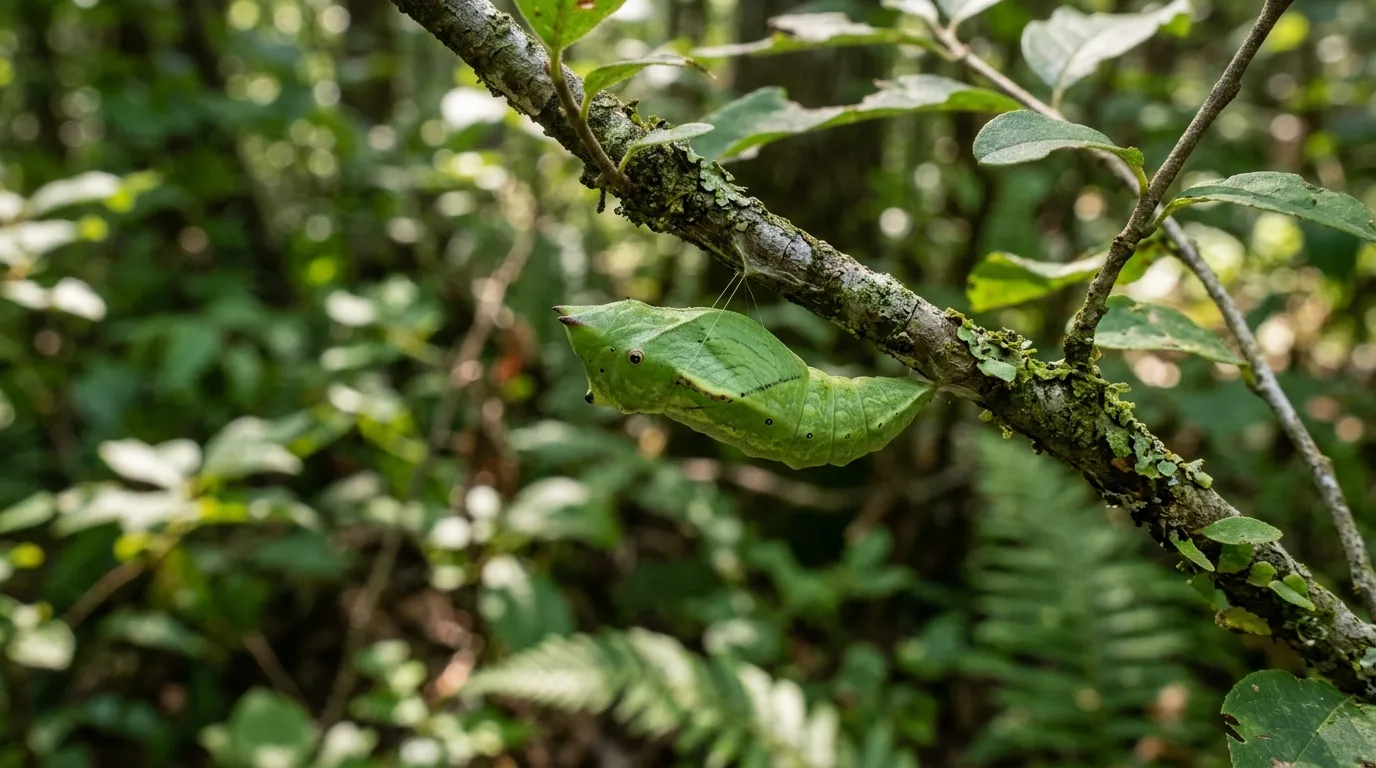
Summer chrysalises complete development in 10 to 20 days and the adult butterfly emerges to start a new generation. Overwintering chrysalises sit dormant through fall, winter, and early spring – sometimes five to seven months total – before rising temperatures and lengthening days trigger the adult to emerge. Anyone who finds a brown spicebush swallowtail chrysalis attached to a twig in late autumn and thinks it’s dead is usually looking at an animal that’s simply waiting out the cold.
Adult Butterfly Stage and Reproduction
The adult Papilio troilus that emerges from the chrysalis is a large black swallowtail with iridescent blue or blue-green scaling on the hindwings of females, and more greenish iridescence on males. Wingspan ranges from 3.5 to 4.5 inches. The adults have the signature swallowtail “tails” projecting from the hindwings, and a row of white or cream-colored marginal spots along the edges of both wings. The ventral (underside) view shows rows of orange spots on a darker background that help distinguish this species from the similar-looking black form pipevine swallowtail.
Fresh adults emerge from the chrysalis with wings that are still soft and crumpled. They find a safe spot to hang with wings pointing down, and over the next hour or two they pump fluid from the abdomen into the wing veins to inflate and harden them. Once the wings are fully expanded and dry, the butterfly can fly. First flights are usually short hops to nearby vegetation while the muscles warm up. Within a few hours, the adult is capable of sustained flight and starts looking for nectar sources. The complete identification and habitat details for adult spicebush swallowtails shows just how distinctive this butterfly becomes once it’s flying.
Adult spicebush swallowtails live two to four weeks in the wild. During that time they feed on nectar from jewelweed, bee balm, honeysuckle, thistles, milkweed, and joe-pye weed, and the males spend much of their time patrolling sunny forest edges and stream banks looking for receptive females. Males often gather at wet mud or damp sand in a behavior called puddling, which lets them take up sodium and other minerals they later transfer to females during mating. Once a female mates, she begins searching for spicebush, sassafras, or occasionally tulip tree to lay her eggs, and the cycle starts over.
Timing and Generations Per Year
Spicebush swallowtails produce two to three generations per year across most of their range, though the exact number depends on latitude and growing season length. In the northern parts of the range – New England, the Great Lakes region, and southern Canada – there are usually two generations. In the mid-Atlantic and Midwest there are typically two to three. In the Deep South and along the Gulf Coast, three generations per year is standard and occasionally a partial fourth generation squeezes in before cold weather.
The first adults of the year emerge from overwintering chrysalises in April or May, depending on how far north you are. These first-generation adults mate, lay eggs, and die within a few weeks. Their offspring develop through the egg, larval, and pupal stages during late spring and early summer, with second-generation adults emerging in July. A third generation, where it occurs, produces adults in August and September. The caterpillars from this last generation are the ones that produce brown overwintering chrysalises, and those chrysalises sit dormant through fall and winter until the following spring.
The National Wildlife Federation species profile notes that spicebush swallowtails range from southern Canada through most of the eastern United States, with the species extending as far west as central Texas and the eastern Great Plains. The number of generations at any given site generally scales with how long the frost-free growing season lasts. A site with six frost-free months can often squeeze in three generations, while four or five frost-free months typically limits the population to two.
Timing also varies year to year based on temperature. A warm early spring triggers earlier emergence from overwintering chrysalises and can shift the entire season forward by two or three weeks. A cold wet spring delays everything. Phenology records from long-term monitoring sites show that first-emergence dates for spicebush swallowtails in the northeastern US have shifted roughly five to seven days earlier over the past few decades, consistent with broader warming trends in spring temperatures.
Frequently Asked Questions
How long does the complete spicebush swallowtail life cycle take?
A summer generation completes the full cycle from egg to adult in about five to seven weeks. Eggs hatch in four to ten days, the caterpillar grows through five instars over roughly three to four weeks, and the green summer chrysalis takes ten to twenty days before the adult emerges. The overwintering generation stretches this out to five to seven months because the brown chrysalis stays dormant through winter before producing an adult the following spring.
Why do spicebush swallowtail caterpillars look like bird droppings at first?
Small caterpillars in the first three instars are especially vulnerable to bird predation. Looking like a fresh bird dropping is a defense that relies on predator disgust – most birds avoid pecking at what appears to be waste, so the disguise keeps the caterpillar alive until it gets big enough to switch to its snake mimicry form. Many Papilio species use some version of this bird dropping bluff in their early instars.
Are the eye spots on the caterpillar real eyes?
No. The large black and yellow eye spots on the thorax of fourth and fifth instar caterpillars are purely decorative markings on the skin. The caterpillar’s actual eyes are tiny simple ocelli on the head capsule, hidden under the front of the body. When a predator approaches, the caterpillar rears up and presents the fake eye spots, creating the illusion of a small snake or lizard staring back. The trick works well enough that it’s fooled me more than once in my own garden.
Why are some chrysalises green and others brown?
The chrysalis color is determined by environmental signals the caterpillar receives during the late larval stage. Long summer days and warm temperatures trigger a bright green chrysalis that blends with summer foliage and develops quickly. Short fall days and cooler temperatures trigger a mottled brown chrysalis that resembles a dead leaf and enters diapause for winter. The same species produces both forms depending on the time of year.
What do spicebush swallowtail caterpillars eat?
The main host plants are spicebush (Lindera benzoin) and sassafras (Sassafras albidum), both members of the laurel family. Female butterflies also occasionally lay eggs on tulip tree (Liriodendron tulipifera), sweet bay magnolia, and related plants. If you want to attract spicebush swallowtails to a backyard habitat, planting a spicebush shrub in part shade is the single most effective thing you can do.
How many generations of spicebush swallowtails are there each year?
Two to three generations per year is standard across most of the range. Northern populations typically produce two generations with adults flying in spring and midsummer. Southern populations produce three generations with adults flying from spring through early fall. The final generation of each year pupates as a brown overwintering chrysalis that emerges the following spring, regardless of how many generations came before it that year.